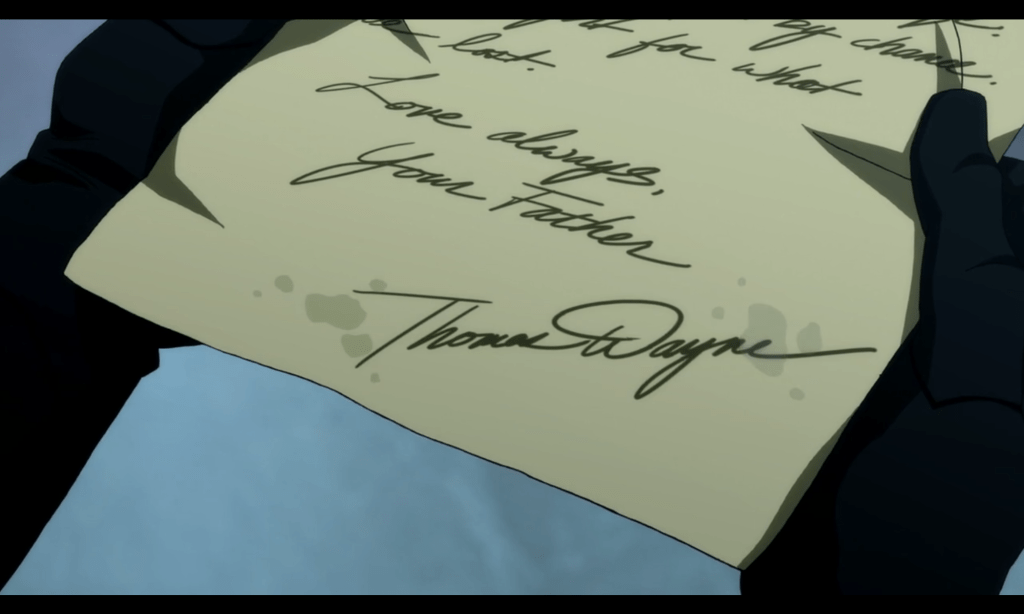
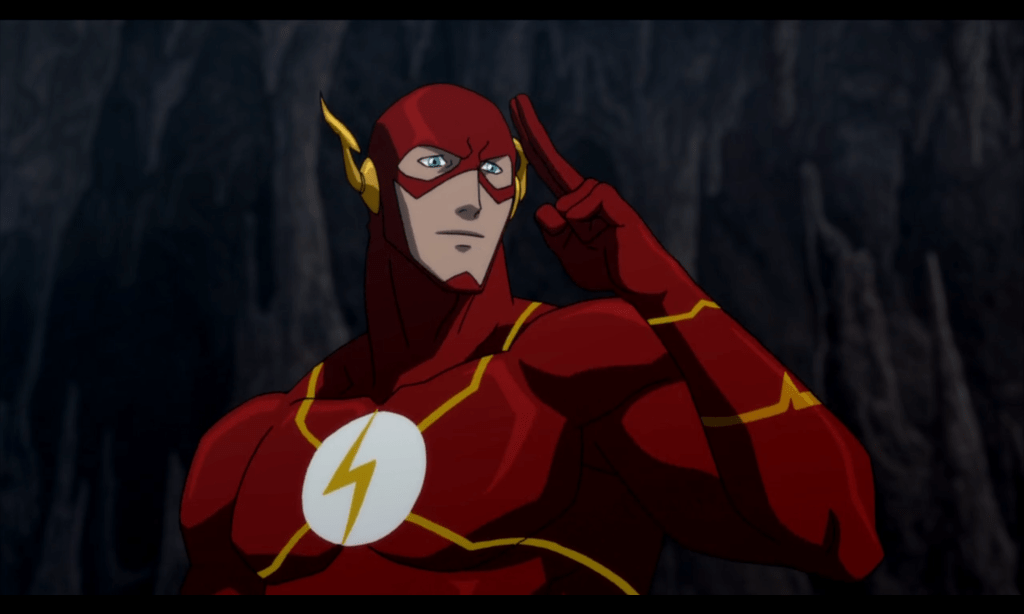
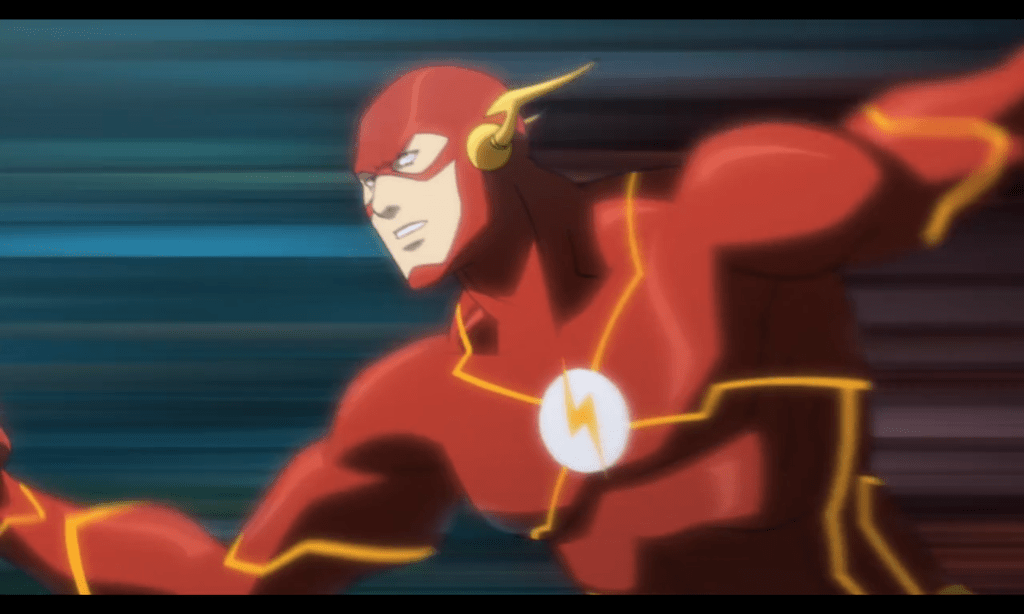
Although my mother ultimately named me after Fallon Carrington, my father wanted to name me “Cassandra.” I never knew why, but as I’ve grown older, I’ve come to believe that name was always moored to me in some unshakable way. Aristotle would have called the highest good eudaimonia—a flourishing life built on living well in virtue. Yet what use is virtue if your warnings, care, and insight are perpetually dismissed? What does flourishing mean when one is condemned, like Cassandra, to foresee harm and still watch it unfold? Like the Cassandra of Greek myth, I often foresee what’s coming—whether in people, patterns, or outcomes—and yet I’m repeatedly ignored, dismissed, or doubted until the truth finally crashes down. My warnings, insights, even my potential seem to go unheard until it’s too late—until damage is done, or an opportunity has already passed me by. It feels less like a coincidence and more like a curse: to carry the weight of knowing and still be left screaming into the void.
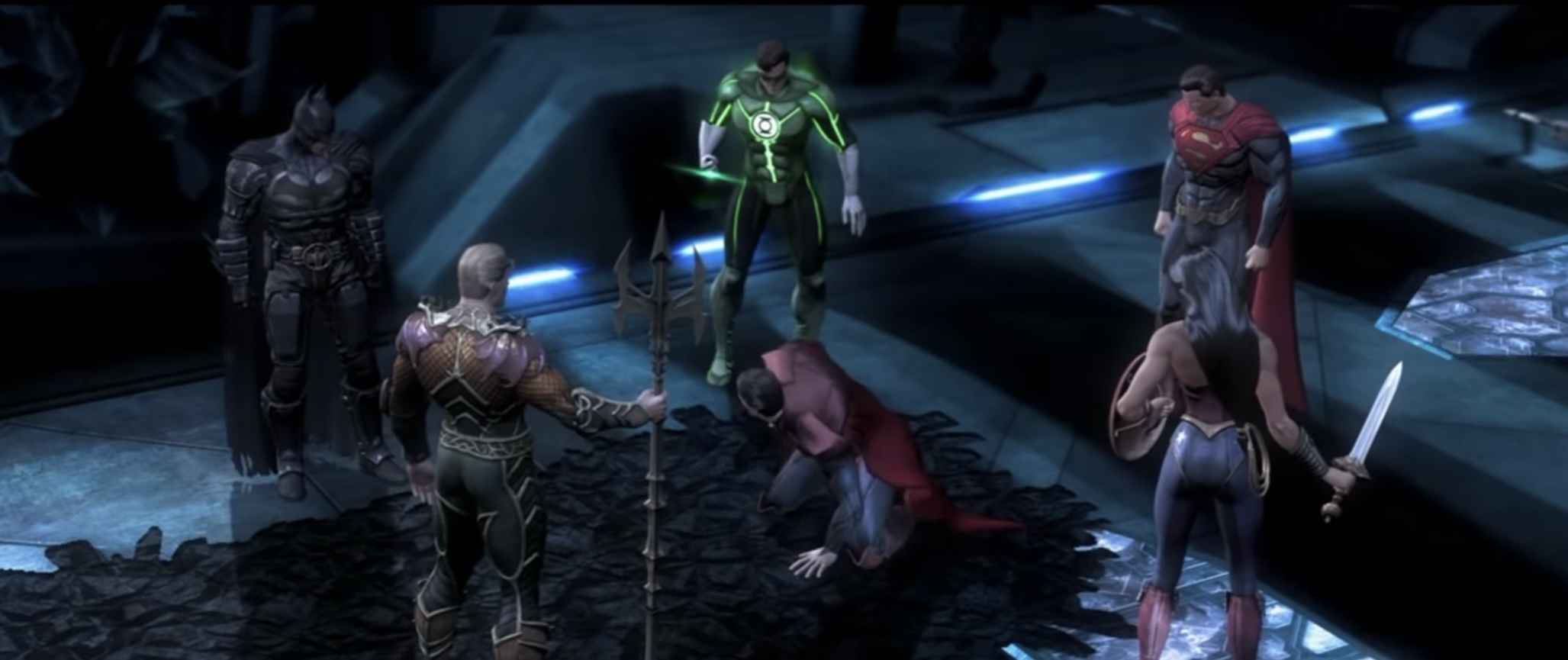
But I don’t want to be right. I want to be believed; to be trusted when I speak, when I love, when I see. I’ve spent much of my life watching my truths unfold in slow motion—whether about people I cared for, institutions I challenged, or griefs I saw coming—and still felt powerless to stop them. Not because I lacked insight on how, but because no one listened. I see so much, and yet so often, I’m left to carry the burden of hindsight in advance.
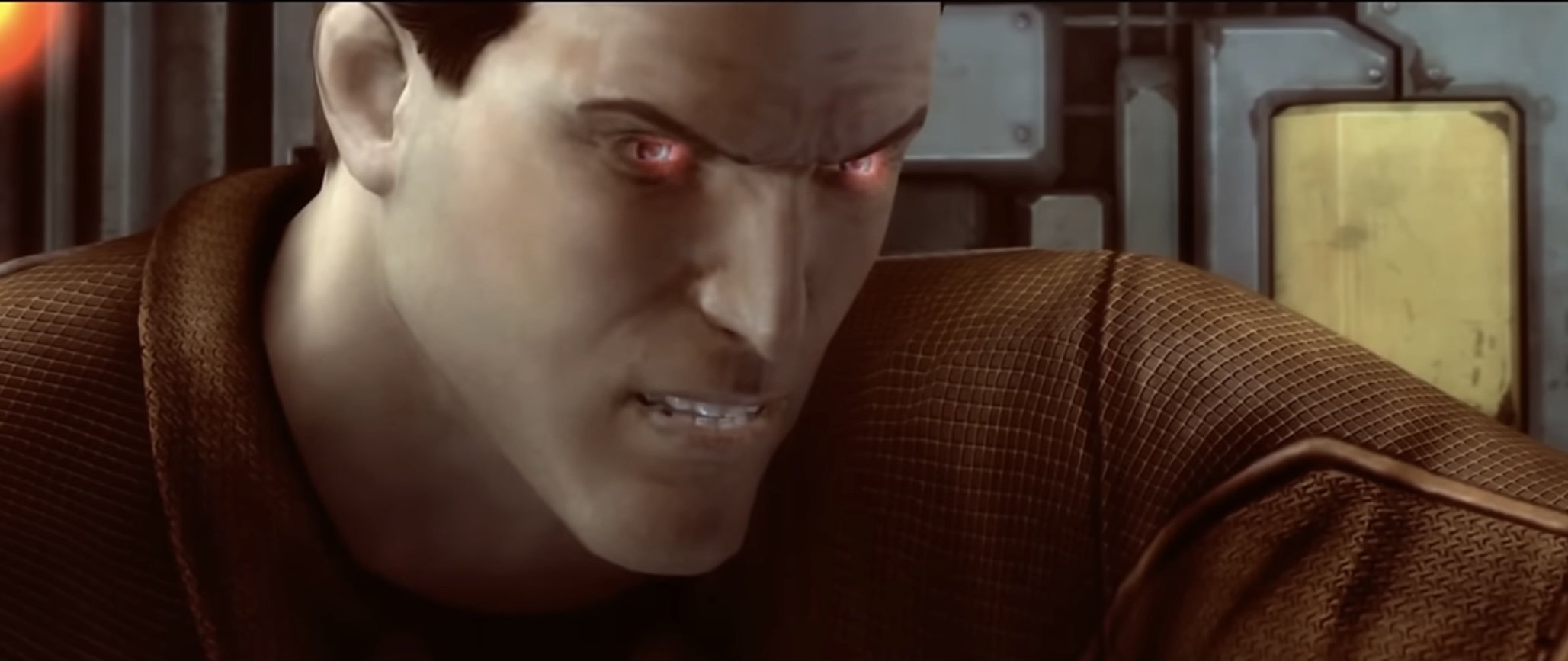
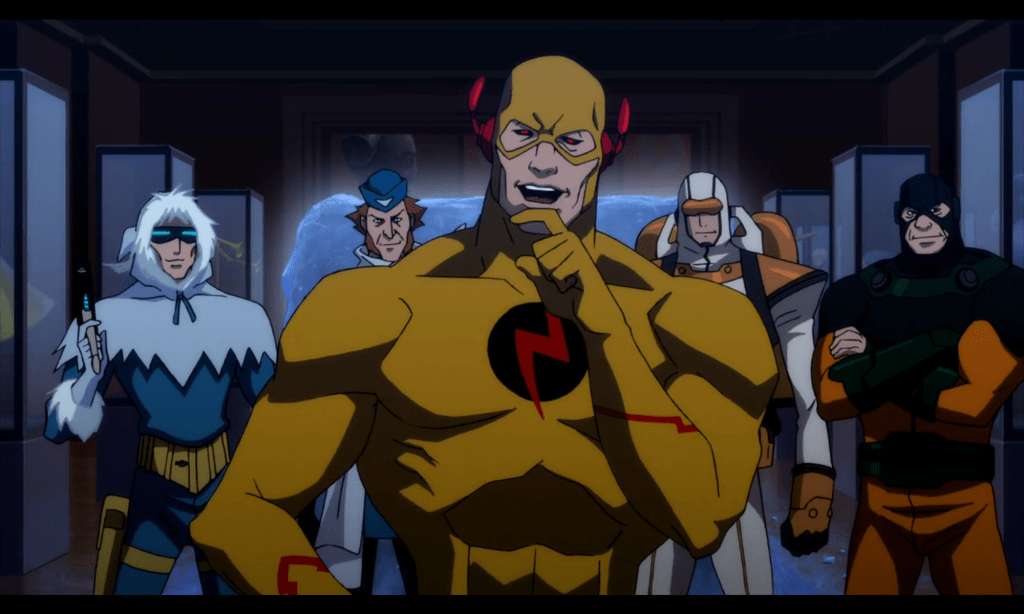
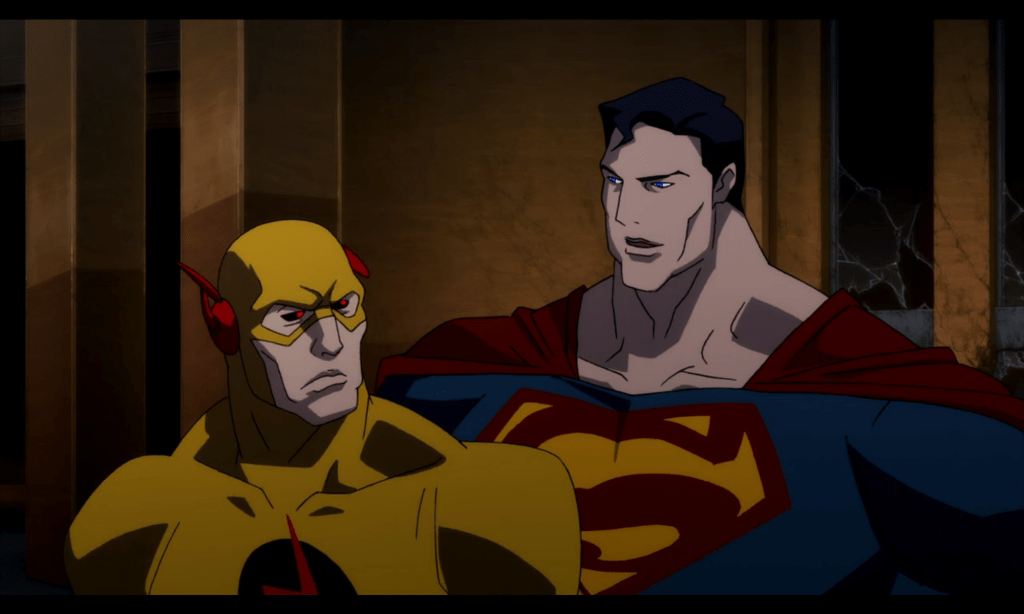
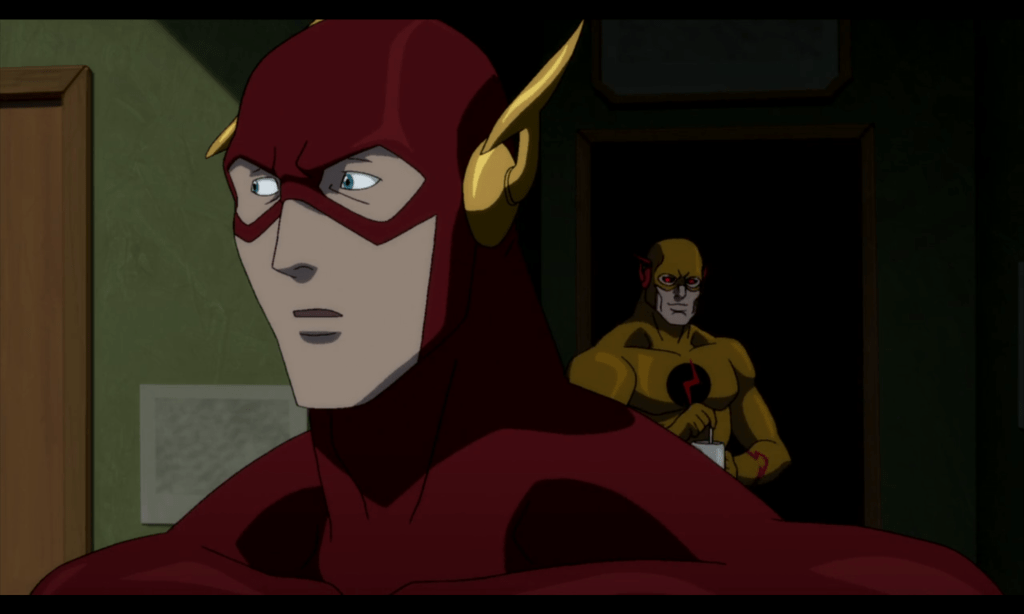
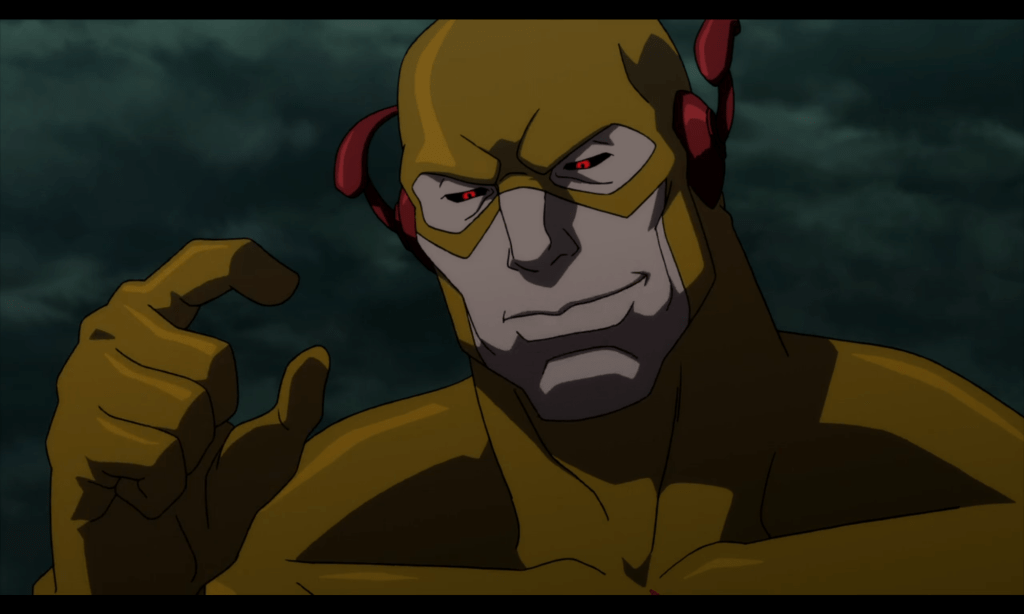
Which is why I think Eobard Thawne, the Reverse Flash, is such a haunting and relatable figure to me too. Like him, I’m forever chasing recognition and purpose that always seem just out of reach no matter how much I give, how hard I try, or how ahead of the curve I am. Eobard is brilliant, devoted, and driven to shape history; but he remains in Barry’s [The Flash] shadow. He calls himself the “Reverse Flash” as a deliberate act of inversion. It’s a way to define himself not by who he is, but by who he opposes. Unable to become the hero he once idolized, he resigns himself to be an antithesis, ensuring his existence is forever tethered to—and in defiance of—Barry’s legacy.
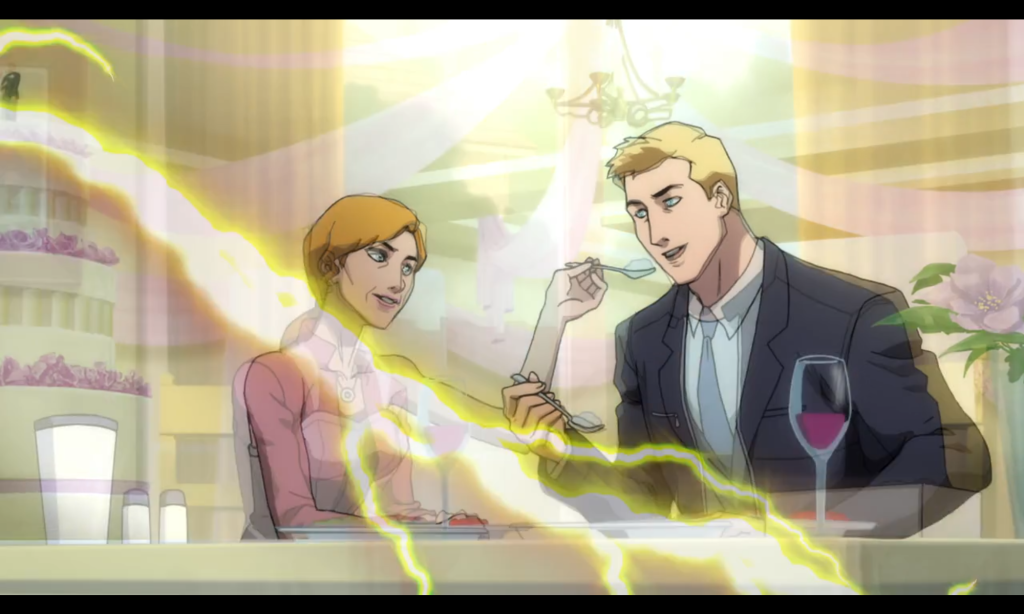
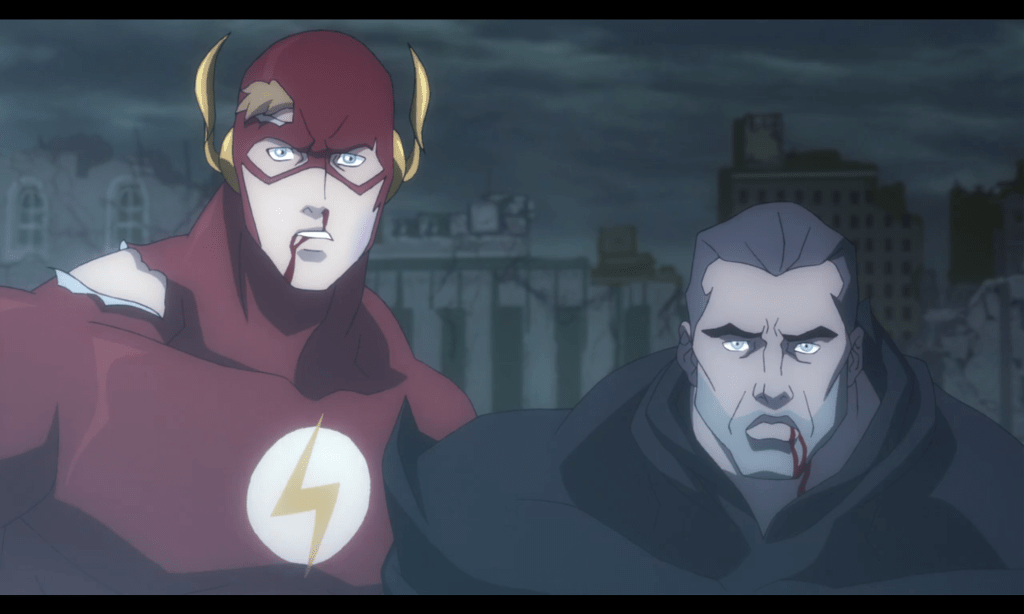
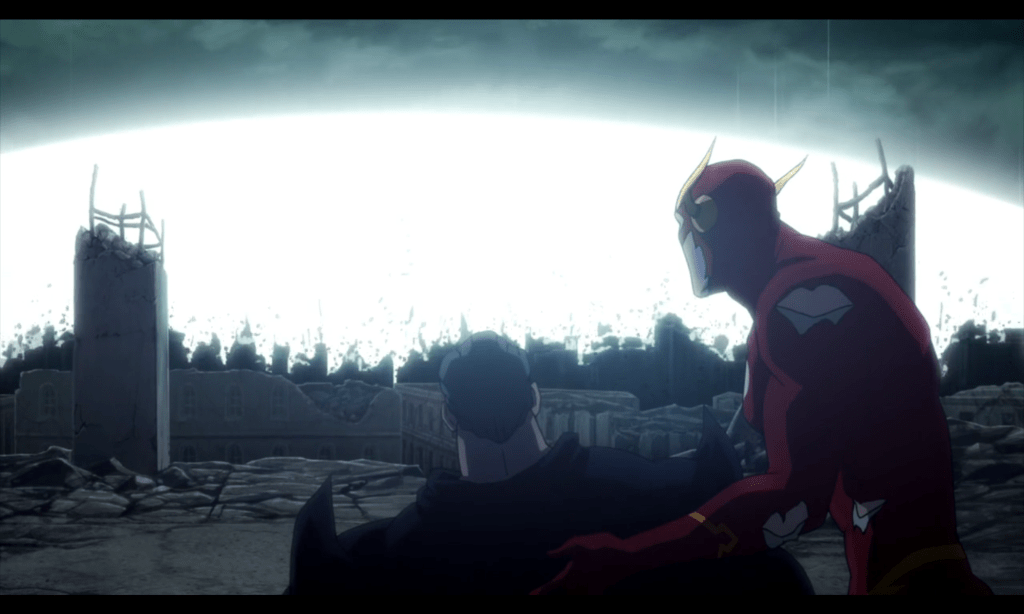
However, the Flash mantle relentlessly binds both hero and rogue to time as they face destinies they can’t ever outrun. The Stoics taught that suffering is inevitable, but that meaning comes from how we respond to it. Acceptance, not control, was their counsel. Barry and Eobard, in different ways, reject this: one trying to rewrite loss, the other to weaponize it. Their tragedies illuminate the Stoic warning; that to live outside the bounds of acceptance is to lose one’s integrity to grief. Haunted by loss, their responses diverge in moral weight and intent. You can see this in The Flashpoint Paradox when Barry time travels to save his mother’s life. In doing so, he inadvertently dooms the world to Armageddon in disrupting a foundational trauma that shaped him as much as the entire timeline’s moral and causal structure. His mother’s death is asserted to be a fixed point, so altering it causes catastrophic ripple effects. This error of judgement isn’t just about chronology, but the priority of personal longing over collective good; and the universe punishes imbalance. Barry’s intervention is born from love—desperate, naïve, and deeply human—but it comes from a desire to reverse grief rather than suffer it. So, Flashpoint remains a cautionary tale about how life itself loses integrity when love turns to control and trauma is erased rather than accepted. In contrast, Eobard doesn’t want to undo pain; he wants to overwrite it with proof of his own worth, by forcing the world to recognize him, even through fear. Whereas Barry collapses the timeline in a misguided attempt to heal, Eobard weaponizes time to assert value he was long denied. One acts out of heartbreak, the other out of exile; but both, in their own way, embody the tragedy of being unable to live with the past as it is.
There’s also the shared torment of temporal consciousness in the burden of knowing too much, too soon and being powerless to alter what others won’t admit. All of us are aware of loss and endings. We understand that nothing lasts: people die and systems fail—except Eobard actually exists within and outside of time, cursed to observe and intervene without ever fully belonging to any moment. Discursively, I find myself hovering in that liminal state through anticipating grief before others, mourning in advance, living in the ache of what’s inevitable. Honestly, it’s isolating to be temporally fluent in a world that insists on denial—and in that isolation, Eobard’s obsession starts to look like a response to being perpetually unheard, alone, outside of the life he wanted. Even I can’t help thinking of a life where my vision is honoured, my love is enough, and my presence isn’t taken for granted. It’s what I’ve always longed for—and still long for.
This longing to be seen, to matter, to have one’s insight acknowledged instead of discarded, is why stories like Injustice resonate with me on a deeper level. The emotional architecture of that universe is built on precisely the kind of fracture I’ve lived with; where the grief of not being believed, not being enough, reshapes everything. Eobard Thawne fits into that world, brilliance embittered by exclusion, echoing Cassandra’s curse through temporal obsession. And in a post-Regime landscape like Injustice 2 (2017) where heroes and villains must navigate the wreckage of choices born from loss, figures like them don’t feel far-fetched; they feel inevitable. It’s a world where the ache of unheeded warnings, fractured identity, and disillusionment are less backstory than foundation.
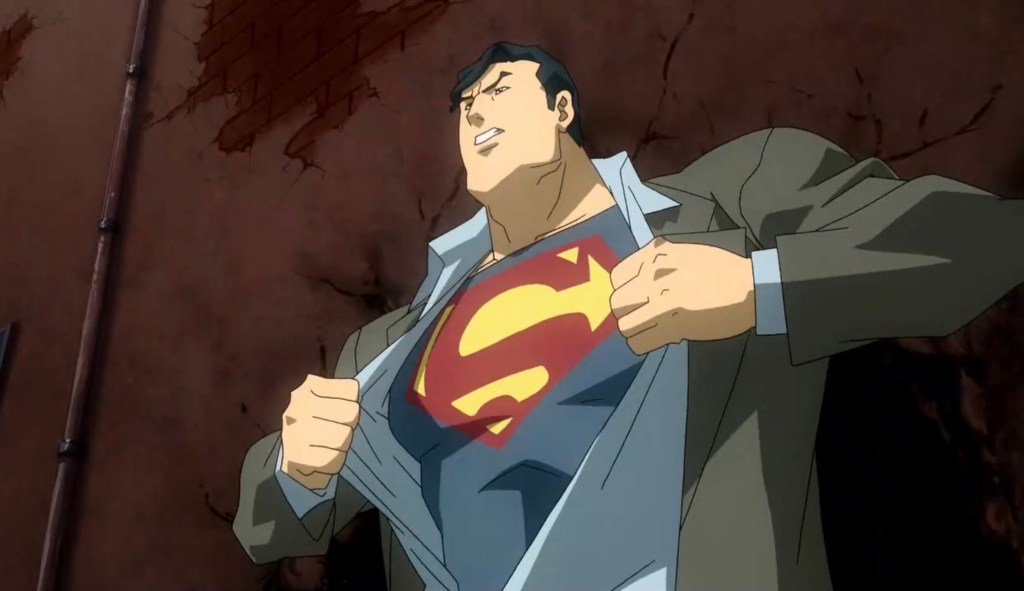
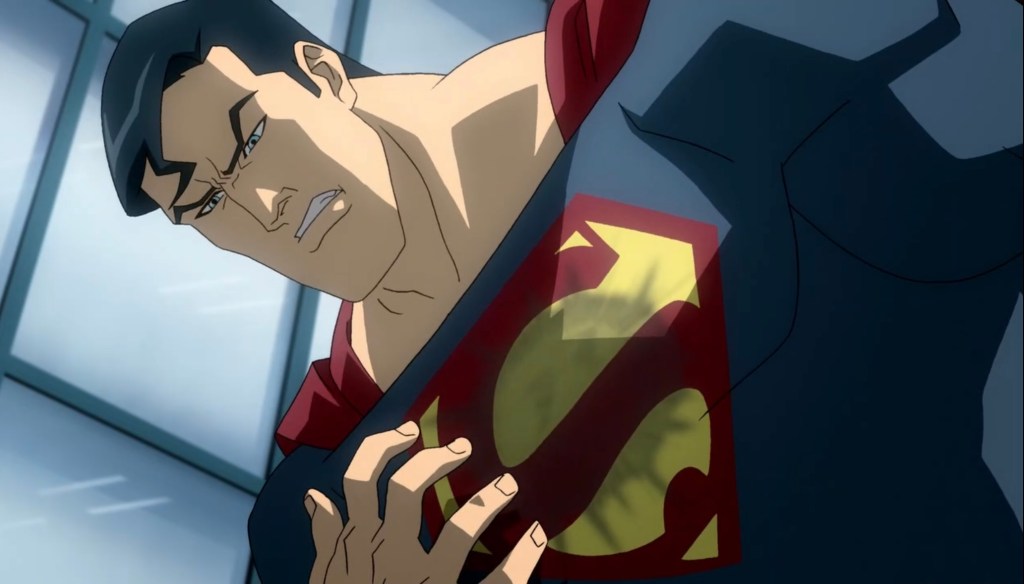
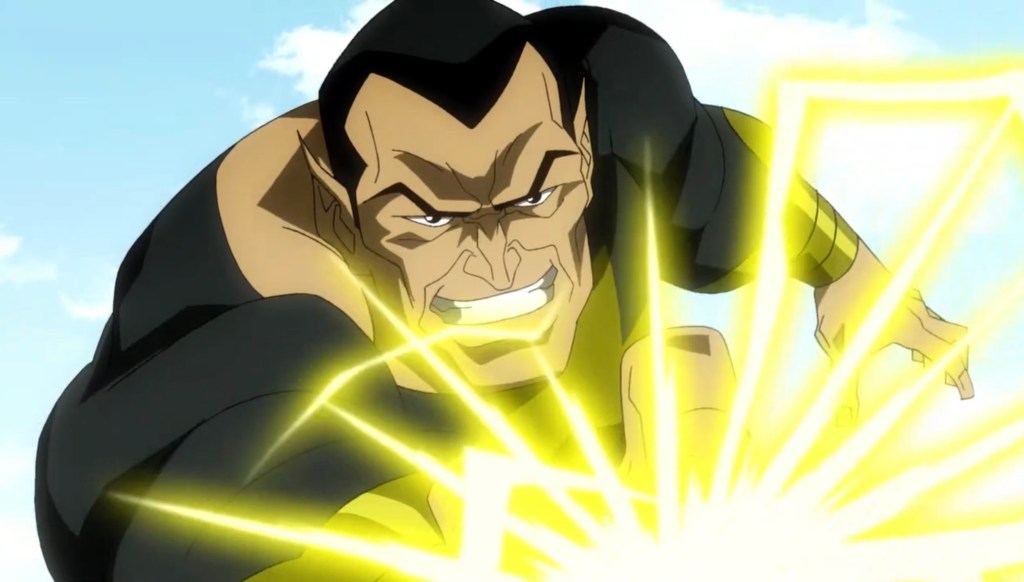
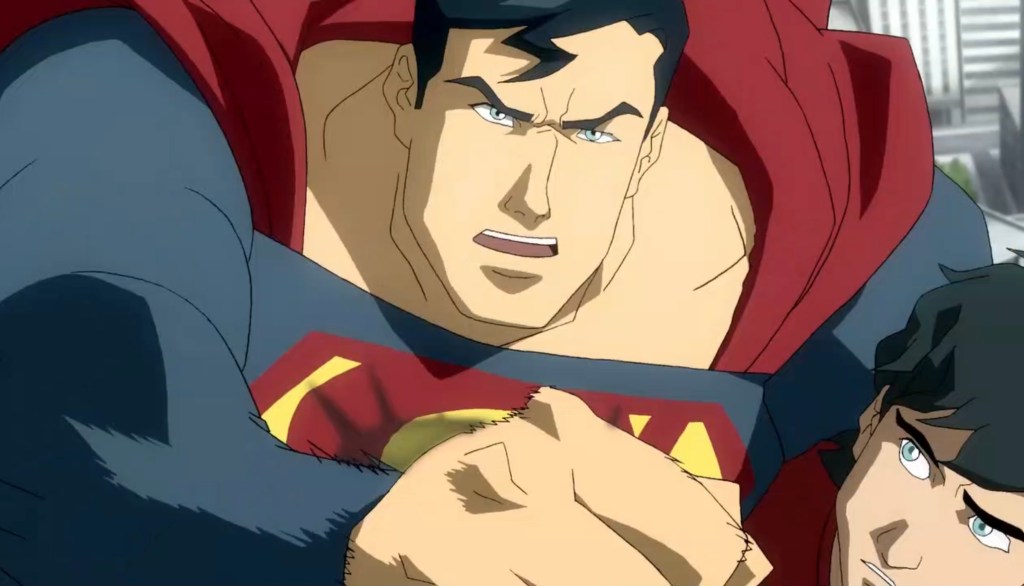
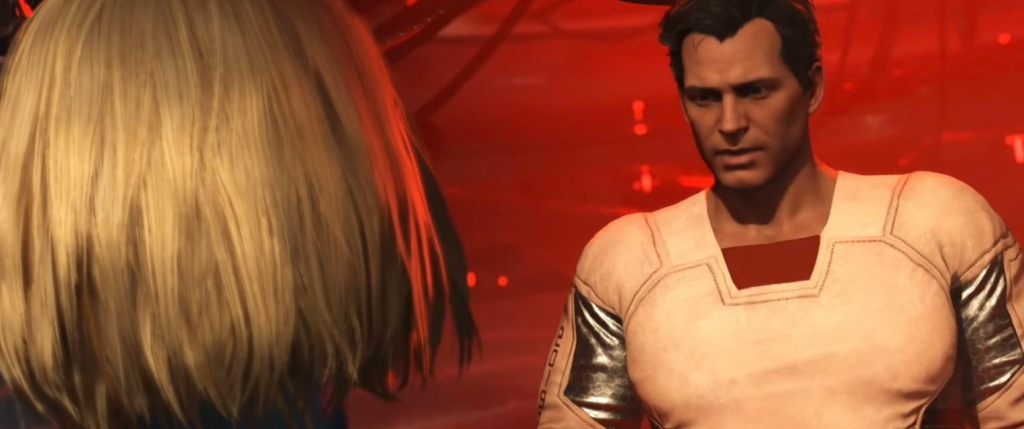
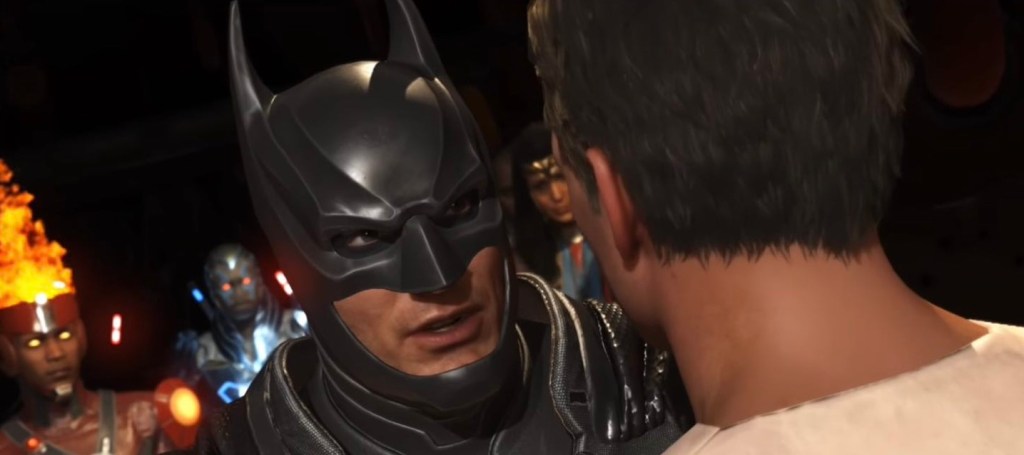
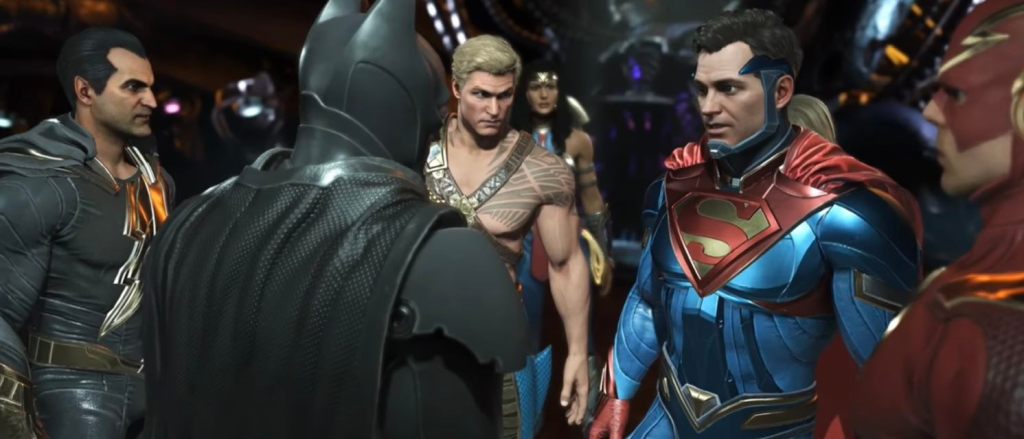
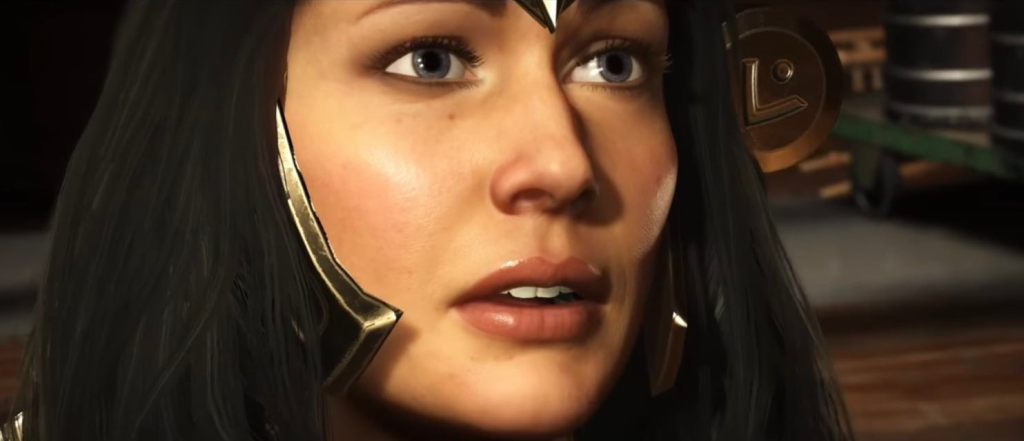
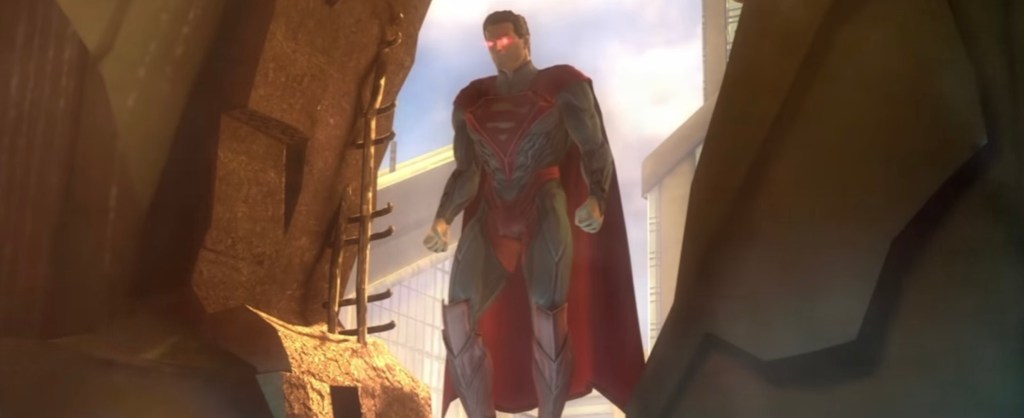
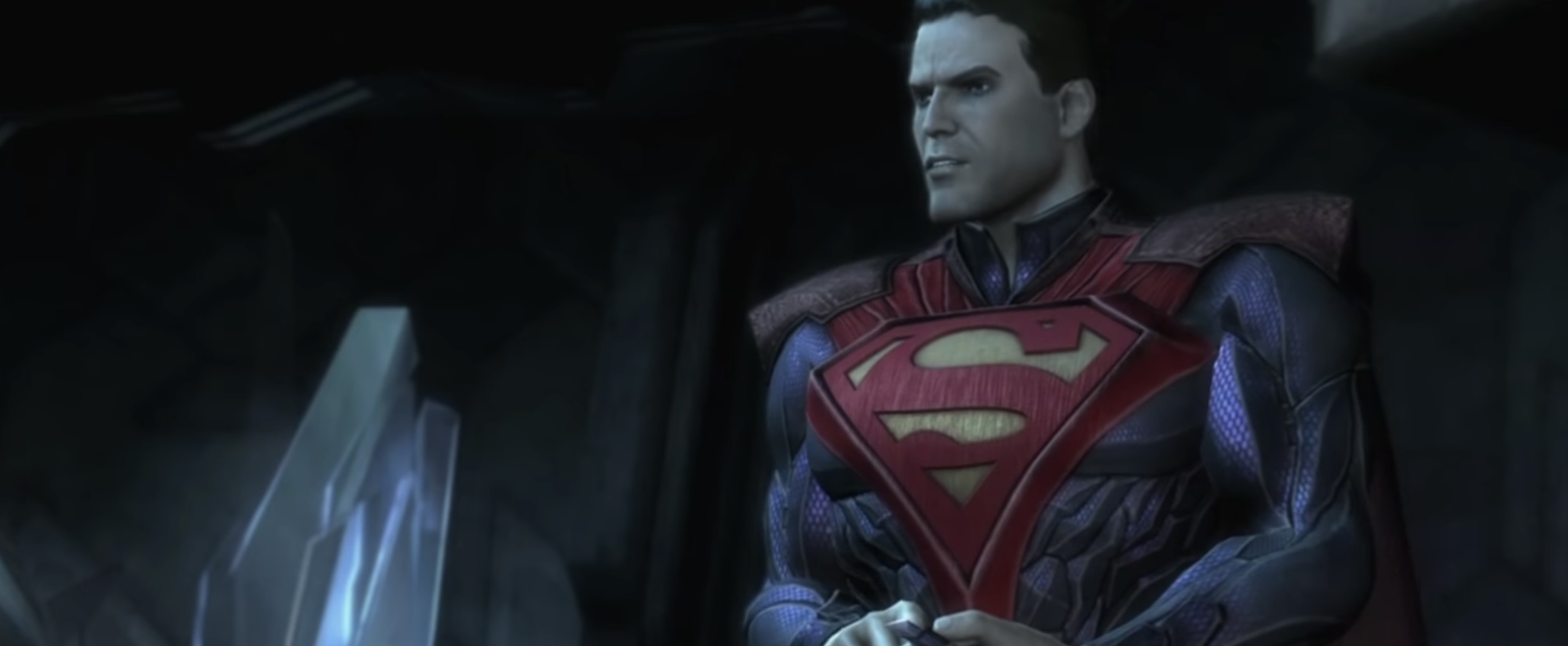
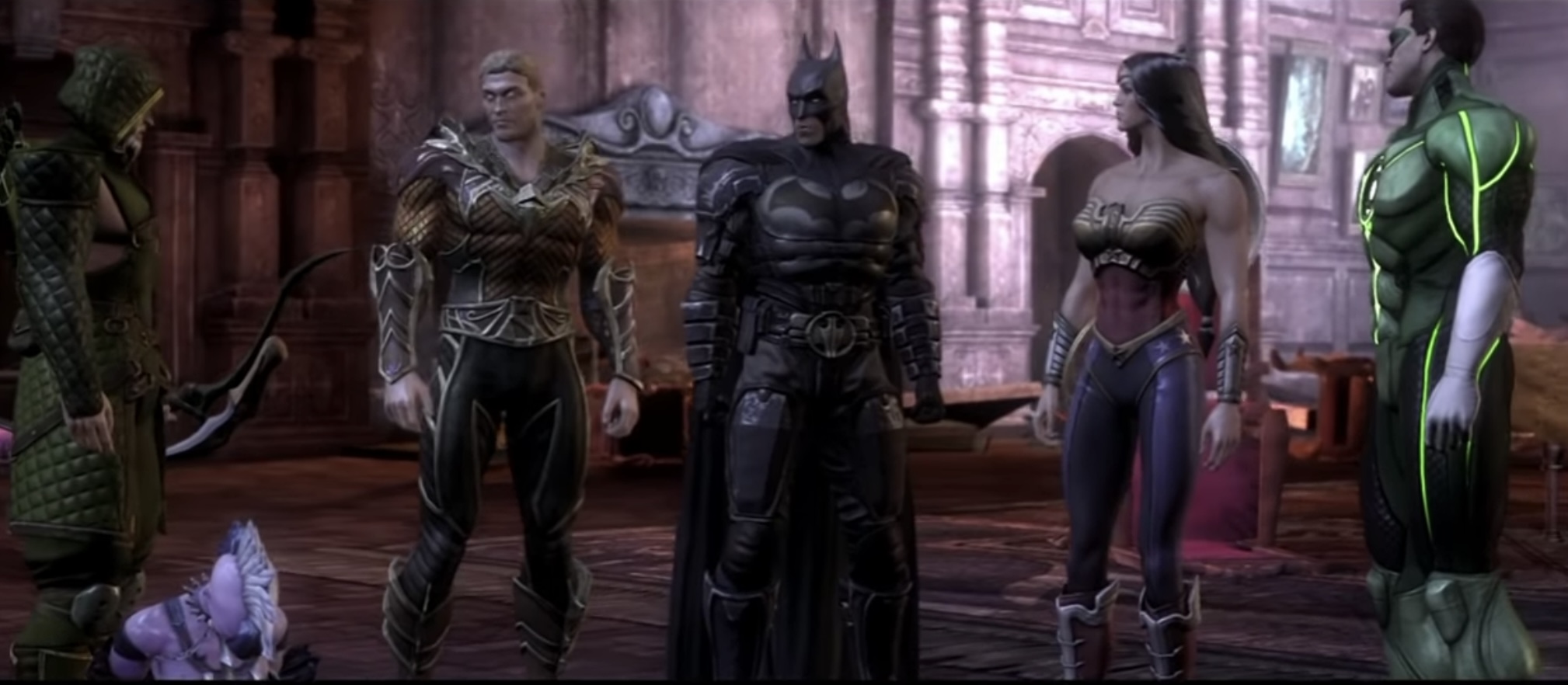
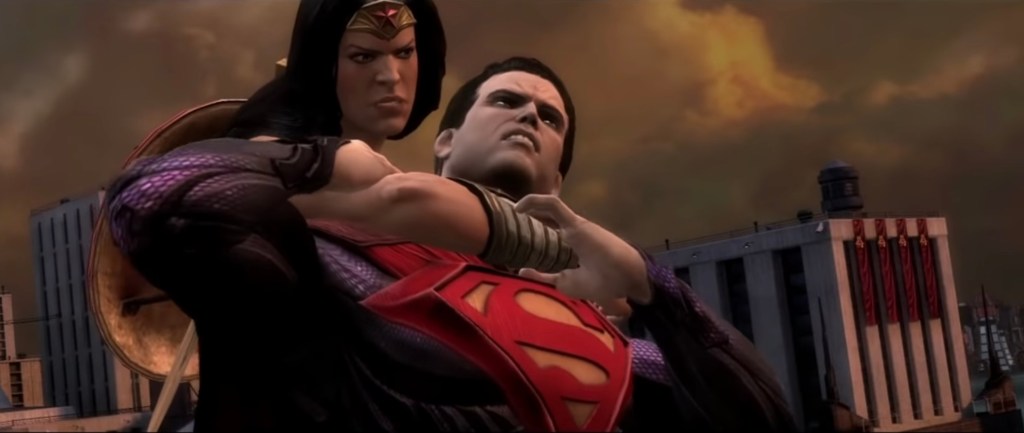
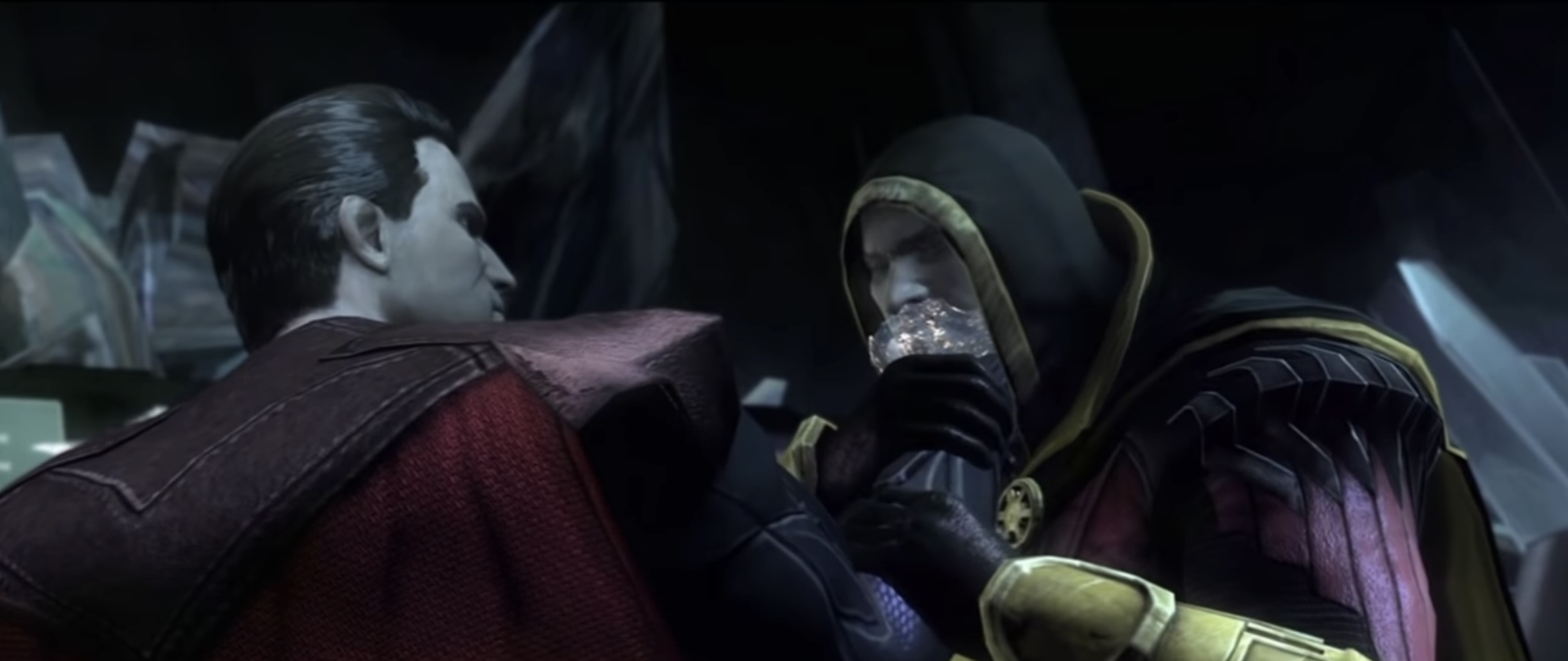
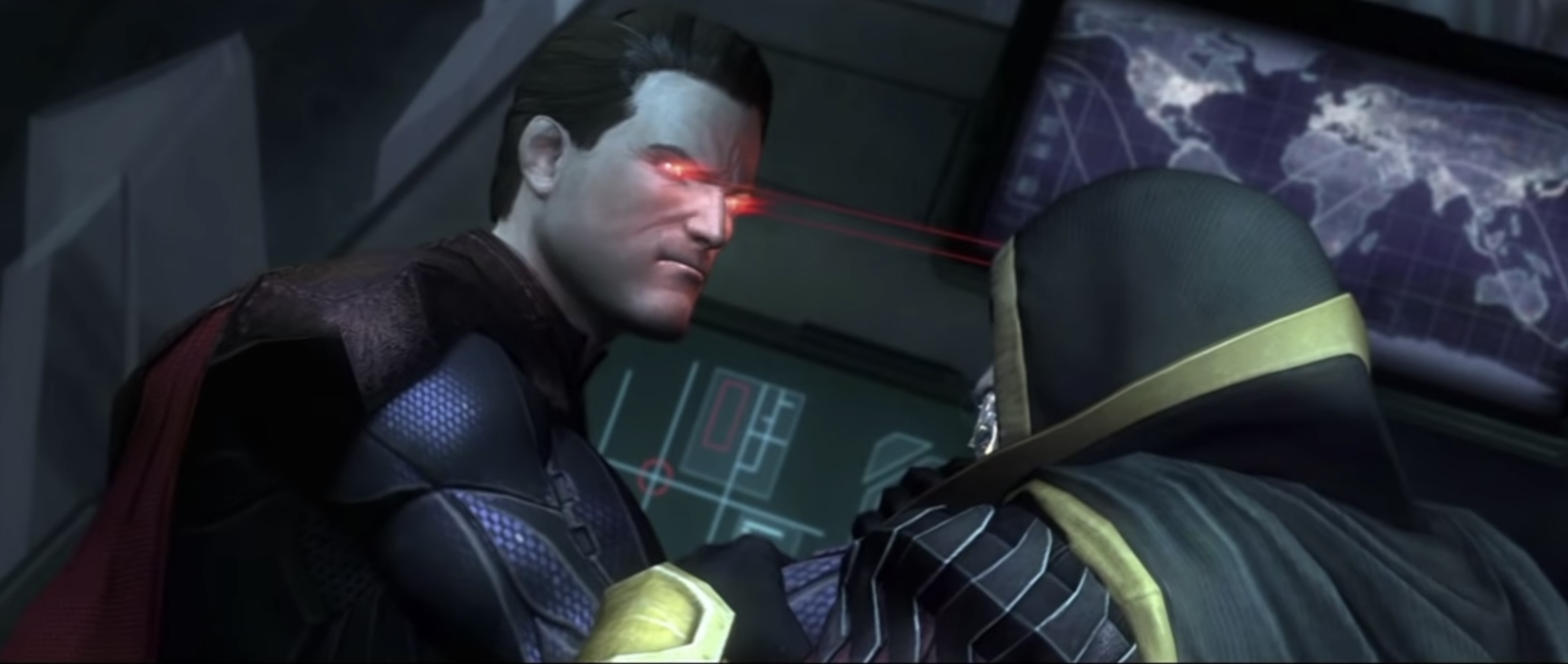
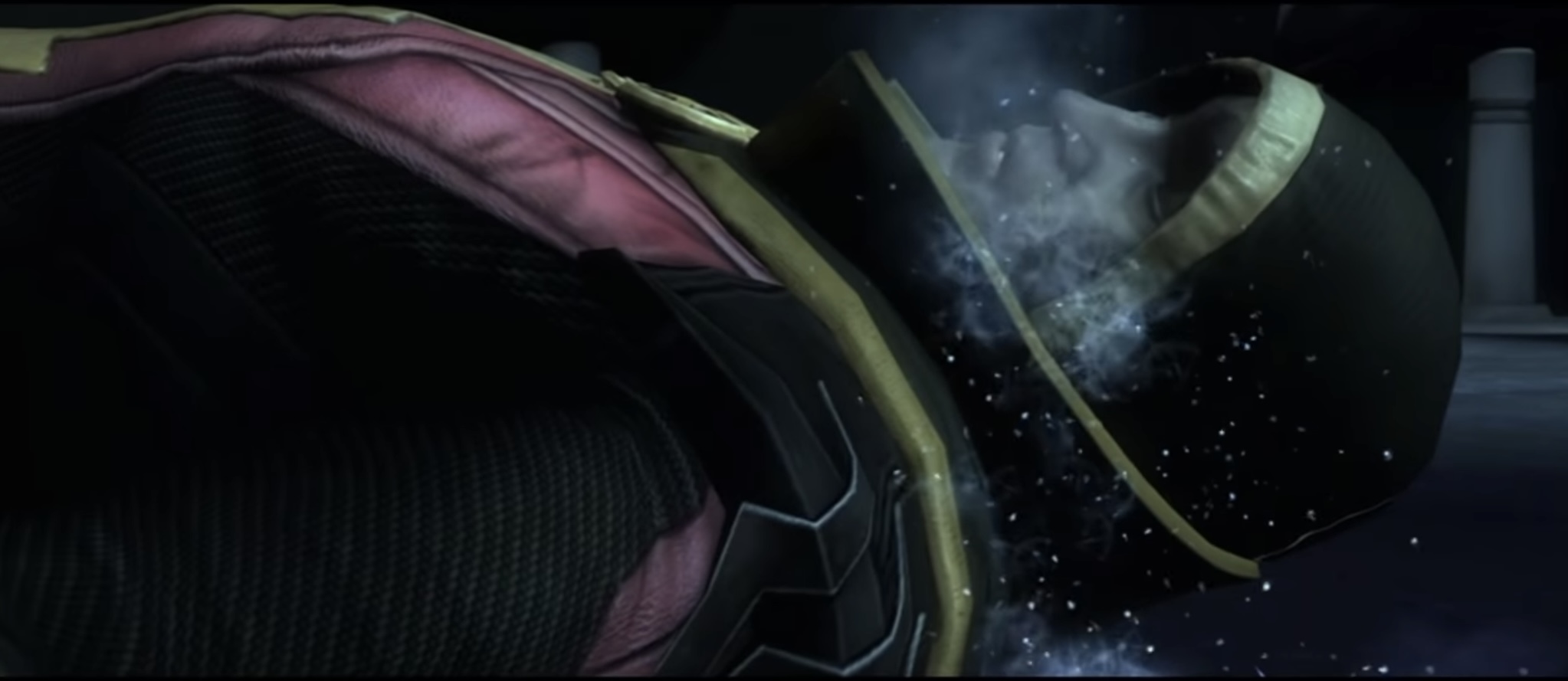
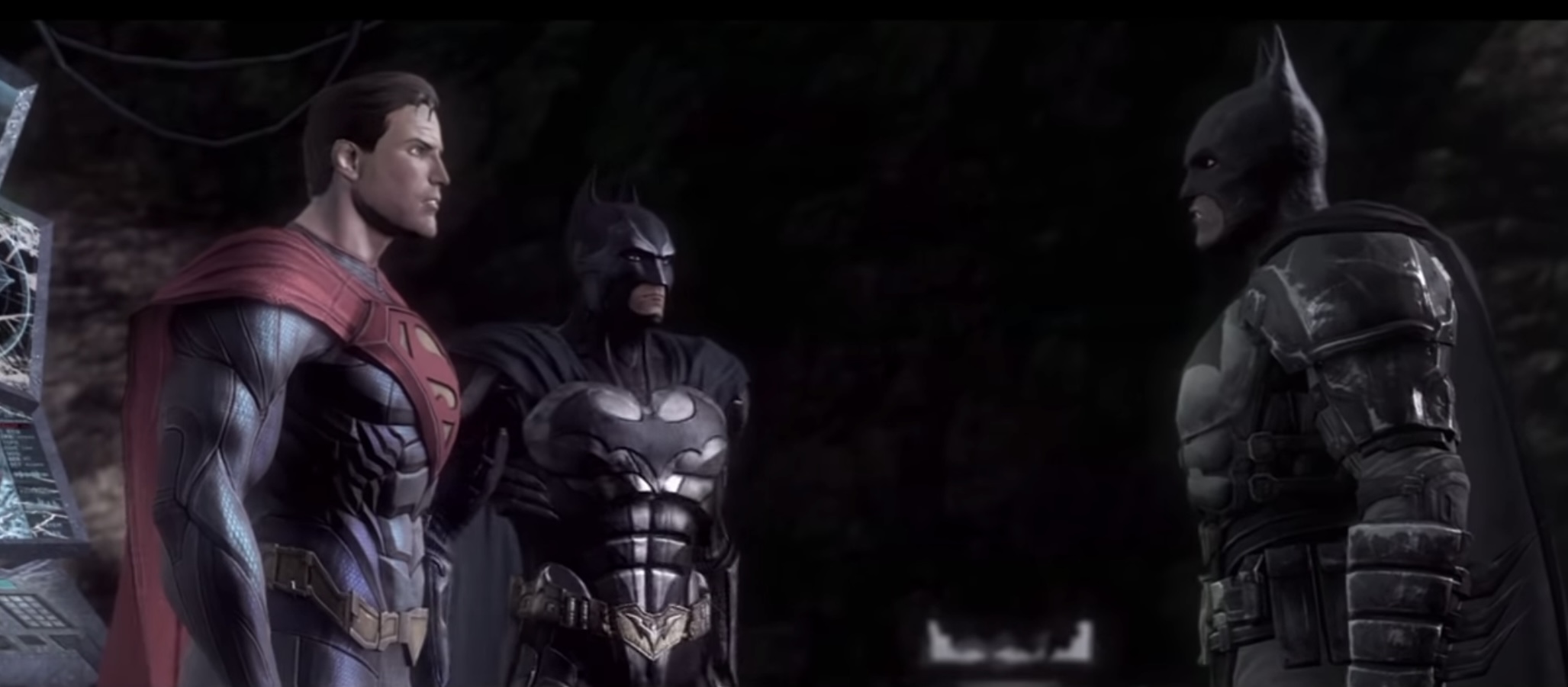
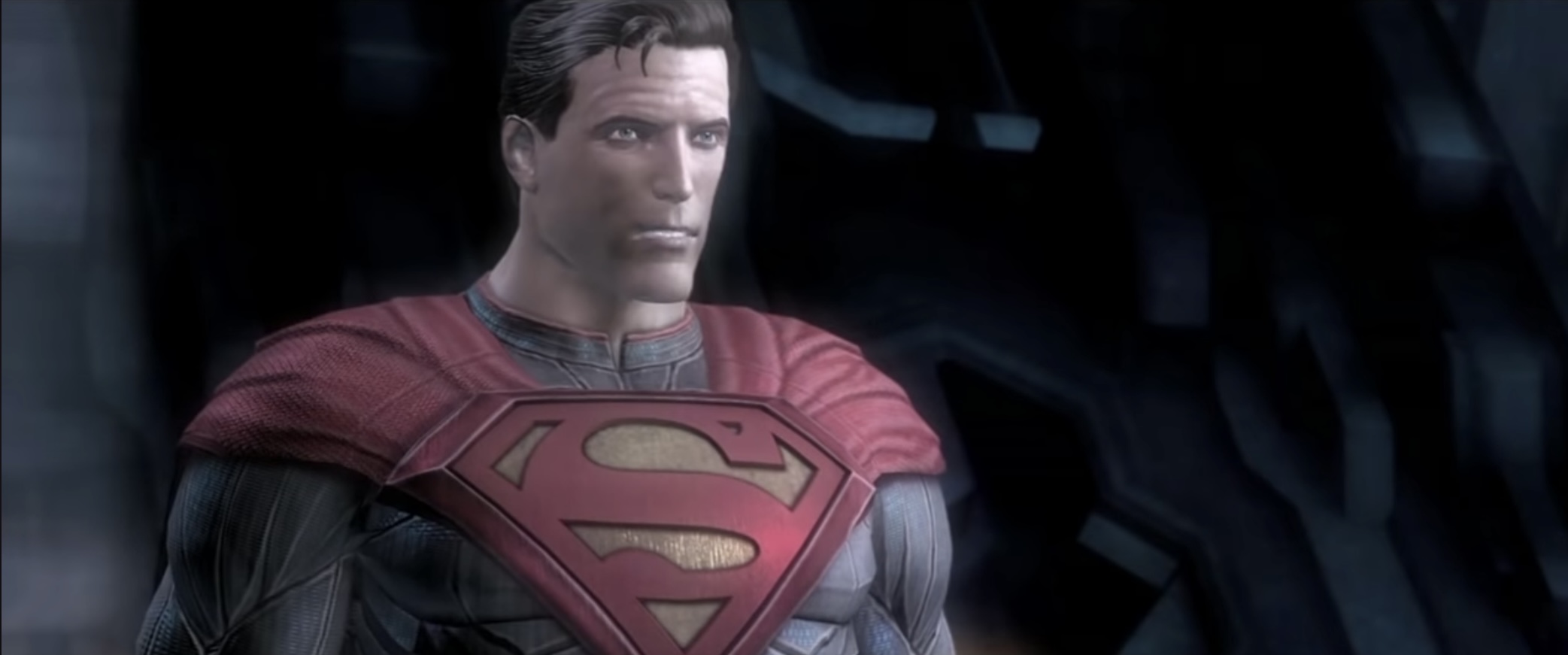
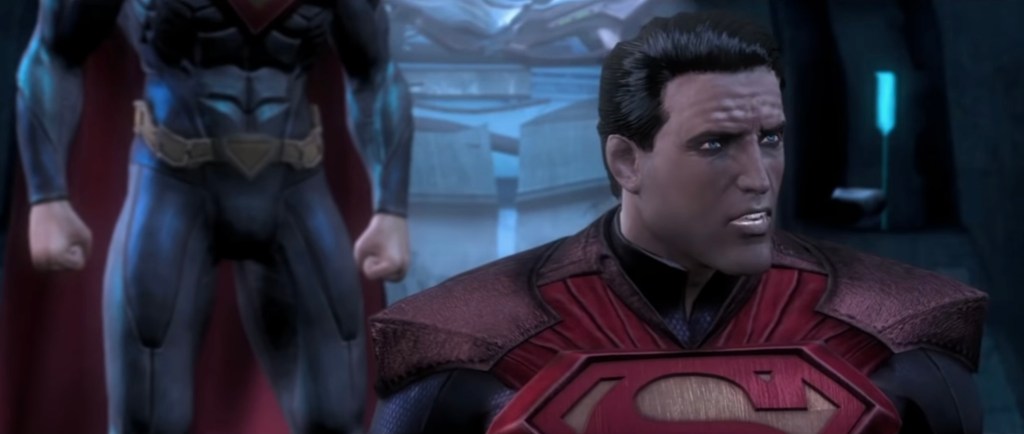
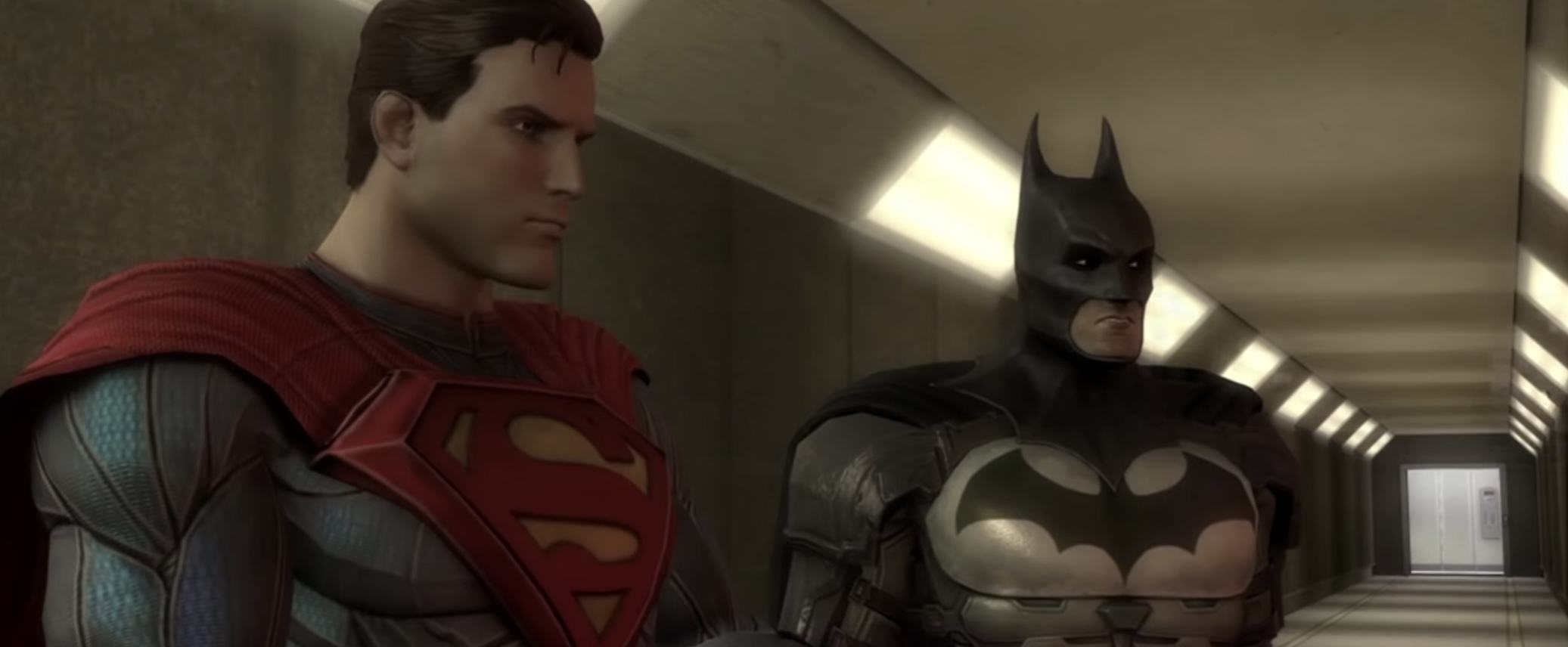
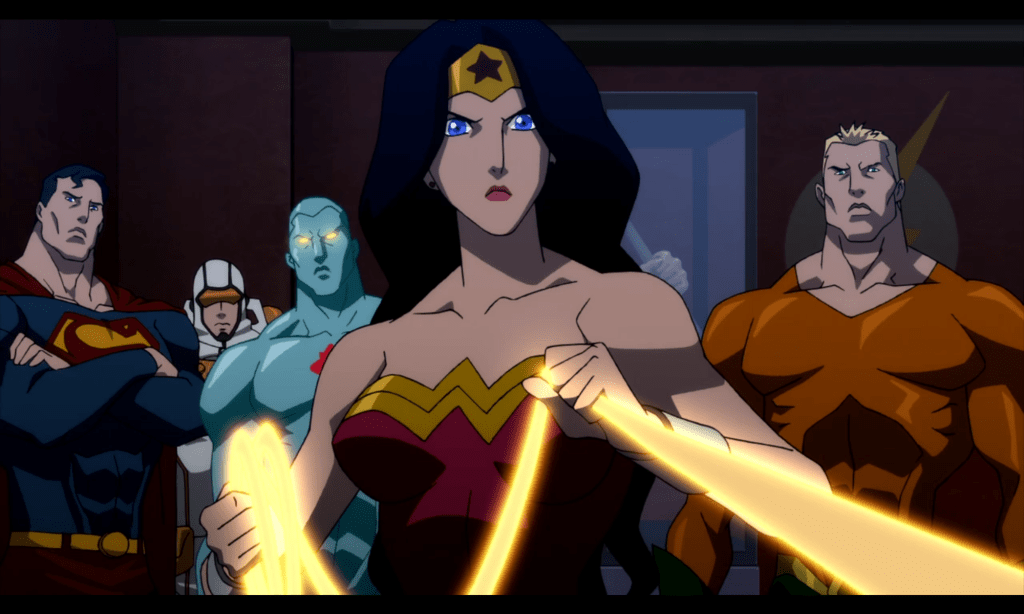
Injustice 2 takes place after Superman’s (George Newbern) tyrannical Regime has fallen and he’s been imprisoned for his crimes. Batman (Kevin Conroy) now leads the effort to rebuild a more just world, one not ruled by fear or authoritarian control. However, this fragile peace is threatened by the arrival of Brainiac (Jeffrey Combs), a powerful alien AI who views Earth as another collectible specimen. His invasion forces former enemies to become uneasy allies, including Batman, Supergirl (Laura Bailey), and former Regime members: Aquaman (Phil LaMarr), Cyborg (Khary Payton), Flash (Taliesin Jaffe), Green Lantern (Steve Blum), Robin (Scott Porter), and Wonder Woman (Susan Eisenberg) amongst variants of Black Canary (Vanessa Marshall) and Green Arrow (Alan Tudyk). While Gorilla Grodd (Charles Halford) creates The Society, a cohort of supervillains who desire post-Regime world domination—Bane (Fred Tatasciore), Captain Cold (C. Thomas Howell), Catwoman (Grey Griffin) Cheetah (Erica Luttrell), Deadshot (Matthew Mercer), Poison Ivy (Tasia Valenza), Reverse Flash (Liam O’Brien), and the Scarecrow (Robert Englund)—whom aid Brainiac, shared enmity inclines several to become comrades: Atrocitus (Ike Amadi), Black Adam (Joey Naber), Blue Beetle (Antony Del Rio), Dr. Fate (David Sobolov), Firestorm (Ogie Banks), Harley Quinn (Tara Strong), and Swamp Thing (also Fred Tatasciore).
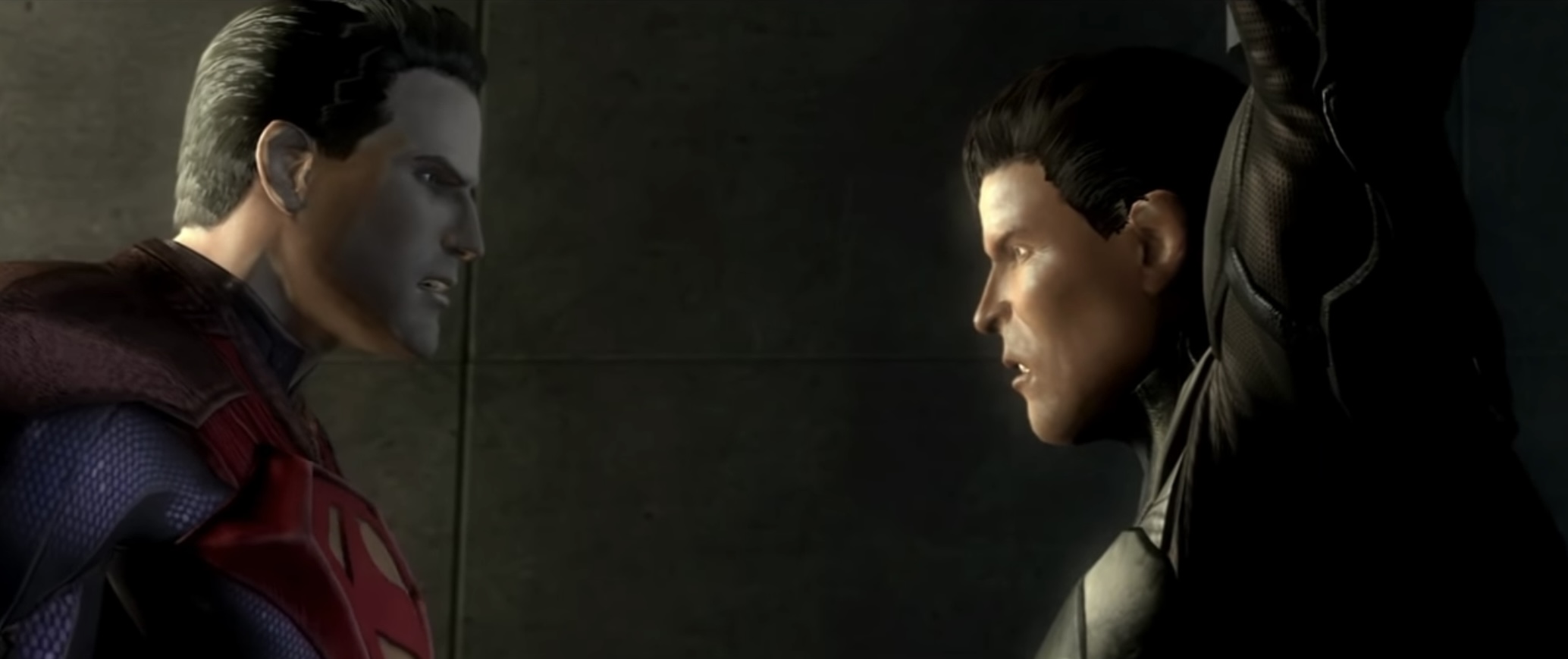
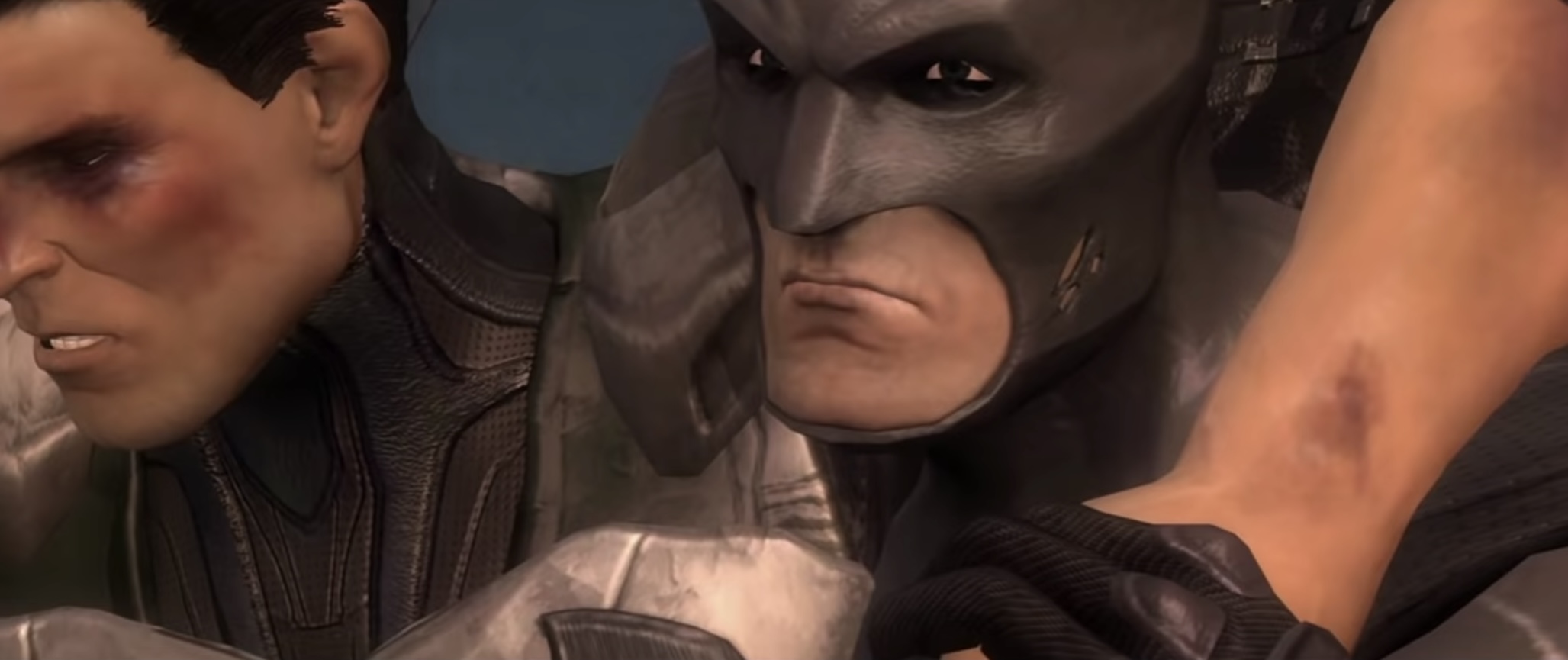
As Brainiac’s threat worsens, the central moral conflict resurfaces: whether Earth can be saved through restraint and cooperation or through absolute control. The climax pits Batman and Superman against each other once again—this time over whether to kill Brainiac and seize control of his technology. The game ends with two possible outcomes: either Batman defeats Superman and banishes him to the Phantom Zone before establishing a new Justice League; or Superman kills Brainiac and takes over his ship, becoming an unstoppable force of surveillance and dominance. In both endings, the core theme remains: can peace exist without control, or does safety require tyranny?
The question isn’t just about who is right or wrong, but about what grief does to people who were never heard in time. Whether it’s Eobard rewriting history to prove he matters or Superman crossing lines to reclaim what he lost, the common thread is longing: to undo loss, to prevent it, to matter enough that the world bends rather than breaks. And in that longing, I ask myself all the time: is it selfish to want happiness? To hold on to someone I love so fiercely that I would risk anything not to lose them? Injustice, Flashpoint, tensions between Batman and Superman aren’t just epics of power and consequence; they’re elegies for those of us who couldn’t protect what we loved, and how we carry that failure like a scar across time.
Which brings me to [consider] joy. Even when I find it, I can’t help but fear it and brace for the cost; and that fear [that joy must come at a cost] humanizes those whose narratives confront the same impossible bargains, mapping emotional truths onto cosmic scales where the stakes reflect the quiet devastations of real life. Pain can’t be overpowered, only lived with. We can’t control time, and we can’t undo pain by trying to reverse it. Though fantastical, these stories—of heroes, villains, powers, myths—concern raw truths of life such as grief, longing, injustice, and the [aching] need to be seen; truths that reality admits hardly, if ever. I relate to every character in Injustice: standing in the wreckage of what I couldn’t protect, heart split open, aching to turn back time and save the ones I can’t bear to live without. And every time I try to hold the world together with sheer will, I learn again that grief isn’t something I can undo. It’s the weight I carry, etched into every act of love. And love—however doomed—makes that burden heavier.
And worth carrying.
Trauma studies remind us that suffering does not ennoble on its own; it scars, fragments, and repeats. When unhealed, grief can harden into cruelty or self-destruction—exactly as Injustice Superman shows us. My own life, too, speaks to this: the ache of unheeded warnings, of carrying loss in advance, is isolating. It teaches me not that pain is necessary for joy, but that unattended pain corrodes our capacity to live fully. The reason I can be so readily overlooked, overworked, and discarded in academia—without hesitation for the inequity or indignity of it—is because of the depth and breadth of exploitation that has been permitted to flourish under the guise of “oversight.” There is no version of the institution where those with privilege and power would ever be treated with such casual expendability. Evil isn’t a matter of brilliance. Evil is successful because it doesn’t abide by the laws of ethics or morality. So long as inequity is allowed to masquerade as meritocracy—where my labour can be consumed without recognition, my scholarship undervalued, my survival tethered to the whims of gatekeepers—this cycle of disposability will persist; and the complacency of liberals within is indicative of the deep moral vacuum and loss of a moral compass which defines most gainfully employed academics.
To me, the core moral lesson of Injustice 2—and the broader Injustice narrative—is that power without hope becomes tyranny, and pain without healing becomes cruelty; how suffering can be transfigured into control, vengeance, and domination. Abolitionist ethics, as Ruth Wilson Gilmore and others insist, refuse the claim that cruelty is necessary to preserve safety. They imagine justice not through domination but through care, interdependence, and the refusal to replicate harm. In this sense, Batman’s refusal to let despair dictate his ethics resonates with abolitionist thought: even in a world that insists on punishment, one can resist by choosing restraint and hope. While overcoming Brainiac drives a good portion of the narrative, Superman continues to serve as an antagonist. I appreciate his unbearable grief, but that still doesn’t merit the ways in which he anchors himself in conquest and retribution. He stops believing in others, distrusting that restraint or mercy have value—which likens him to the villainy he purports to oppose. Superman crosses the line from survival into control, from mourning into moral decay. In contrast, Batman—despite his own trauma—chooses discipline, restraint, and faith in the possibility of change. He’s not a naïve optimist, but someone who understands that justice without hope is hollow, and hope without justice is fragile.
The Injustice story insists that the greatest strength is not found in overwhelming force, but in refusing to let despair dictate your ethics. In a world that constantly rewards cruelty, moral clarity becomes as much resistance as grace. And for those of us living in a world where cruelty often wins, this contrast reminds us that the fight for goodness may be lonely, costly, and slow; but it is still the only fight worth having.
♫ Title song reference – “Miss My Woe” by Gucci Mane
Around the time I got Clark, I was binging Smallville. I thought that his muscular build likened him to ‘The Man of Steel.’ He was the fittest, largest cat I’d ever met, weighing in at 22 pounds at his heaviest; but he never had any health issues and was always active. I think that I only really started to process change or “expect the unexpected” after I got Clark. I never actually planned on getting him. Initially, I got James. Edith came along after my mom’s former boss offered her years later. Then, I got Vera to be Edith’s friend since the age gap between Edith and James meant they weren’t too friendly with each other. They got along, but James was older and exasperated. Clark was the anomaly: a mouser meant for the rural living space I shared with my father. I’d hoped to bring James or one of the girls there, but my mother forbade it. Being a woman of action, I just resolved to get yet another cat.
Clark and his siblings were advertised in local classifieds although there were no pictures; but back then, just the word “kitten” was enough to generate interest, and pickup was well within range of my daily commute. So, I set out that frosty morning after a quick phone call [to the classifieds poster], then thrifted a sturdy cat carrier before I made my way over. Given the genders as they were—the pair of girls and James—I figured it’d be ideal to even things out with another boy. Clark was the only guy left when I got there. He was also the only shorthair—or short-ish, given how it would grow to be relatively wavy and mid-length—unlike his sisters. I don’t know if Clark was the runt of his litter, but he’s acted as much since as the youngest of the others. Even more memorable was how neither he nor his sisters were separated from their mother, which is usually advised since cats can be protective of their kittens if someone attempts to take one; but Clark was the only one unnerved when I took him. I’ll never forget the indifference of his mother and sisters, even his father who lounged on the backyard patio.
Clark was meowing a lot despite my assurances. I chalked this up to nerves, not unlike the others I had when I first got them; but time would reveal Clark to be chatty, now sassy. I also suspect he was hard of hearing due to how loud he’s always spoken. Anyway, Clark was roughly two when we came to live with the others after my father moved. While they eventually tolerated him to varying degrees, his later introduction marked him as an outlier. I used to feel bad because I often wondered if he felt lonely or ostracized, and I guess I projected some of my own feelings of that onto him since I knew how that felt. I knew what it was like to be bullied, so I learned relatively early on how people could be tirelessly cruel and relentless; how it felt trying to belong only for prevalent disparities to render all efforts fruitless; having every amity or crush be rendered likewise, yet still vying for reciprocity. Essentially, Clark personified what alienation defined—and honestly, continues to rationalize—my social anxiety and aversion; but as a caregiver, this was something to behold. Seeing how Clark was typically excluded by James and the girls, I always made a conscious effort to dote on him; but I knew for however earnest my efforts were, I was no substitute for acceptance at large.
What I didn’t know was that my efforts weren’t for nothing. It never occurred to me that Clark notices, cherishes, and loves me because of them. For years, I assumed he was aloof and miserable. I worried that it wasn’t enough to just care; that I could never fill the void left by his exclusion from the others, that he must feel as lonely as I usually do. But recently, I’ve come to realize that Clark’s love has always been there—shrewd, steady, and uniquely his. It’s in the way he seeks me out, even when he could easily retreat to his favourite hiding spots; and how he lingers near, brushing against me or calling. Then, there’s how he bunts me. He didn’t need validation from others. Instead, he was simply content to exist with me. I used to think I was trying to fill a gap in his life, to compensate for something he lacked. Now, I understand that Clark has been filling a gap in mine. He’s shown me that love doesn’t have to be loud to be real and that even the smallest efforts to care for someone can create a bond that speaks louder than words ever could. Clark had also been a steady and surprising source of comfort throughout Edith’s terminal diagnosis, showing me another side of himself I never noticed before. He seemed to sense my sadness, appearing by my side just when I felt most overwhelmed, letting me hold him and holding me. His calls, once simply part of his quirky personality, had become a call to action that motivated me to get up, keep going, and stay present for the both of them. In these moments, I saw a more intuitive side to Clark, one that reassured me I’m not alone.
Which is why I found myself reconsidering his namesake. Likening him to Superman, I’d mostly thought of strength, endurance, and physicality. After Smallville wound down and I rewatched the animated series, I saw how the name also meant resolve and loyalty. Superman was never just a symbol of might. He was an outsider who navigated loneliness while carrying an immense capacity for love. He also realizes that fulfillment isn’t found in grand heroics or cosmic purpose, but in the quiet, simple moments; the small joys of an ordinary life, and understanding that being human, in all its imperfections, is enough. Every trial and tribulation drives home the importance of those who see him as more than Superman.
In many ways, Clark has shown me the same. All my overthinking, overdoing only to realize that nothing is ever enough; that systems are incorrigible in what and who they oblige. I used to think getting to the bottom of the how and why would help me make sense of the what and render the when and who more discernible—but that was never the case. People are too fickle. Their ignobility is on par with their ingenuity to conjure sentiments and scenarios in which little, if anything gets addressed lest we fail to accommodate endless variables. Complicating life just makes us lose sight of what truly matters: the pure, unspoken bonds that don’t need justification or grandeur to be meaningful. But while simplicity reveals what truly matters, too many mistake submission for security, believing that aligning with power will shield them from its corruption. Superman also understands that no amount of strength can truly dismantle the iniquity that defines this world, but he still chooses to exist within it and strives to do good however he can. Clark taught me that even in a world where I can’t change the larger forces at play, the simple act of caring, being present, and finding comfort in moments still matters. Maybe Superman’s greatest act isn’t saving the world, but finding peace in knowing even small acts of kindness are worth something.
And as I consider this, I can’t help thinking of Saw 4 and its ill-fated protagonist, Daniel Rigg (Lyriq Bent), who was ultimately destroyed because his defining trait—his inability to let go—was manipulated against him. While imperfect, his compassion and drive to save others was genuine; but instead of being given the space to learn or change, he was forced into a test designed to ensure his failure. Saw 4—specifically, how much I’ve always despised how it ended—showed me how much I fixate on inconsistencies, injustices, and unresolved truths because I refuse to compartmentalize or dismiss what feels fundamentally wrong. Rigg’s trial reflects the cruel irony of a system that punishes those who care too much and twists virtue into weakness, exploiting it rather than guiding it toward growth. In the end, Rigg didn’t fail himself; the game was rigged against him from the start.
Kinda like the last son of Krypton. For all his strength and idealism, Superman is ultimately doomed to fail because his unwavering sense of duty and a need to protect everyone—the very qualities that make him heroic—are also the ones that leave him burdened, isolated, and vulnerable to being twisted by grief, disillusionment, and the impossibility of saving a world that refuses to save itself. There’s a tension between what he needs to acceptand what he feels responsible for. No matter how much he tries to let go, knowing he could do more gnaws at him.
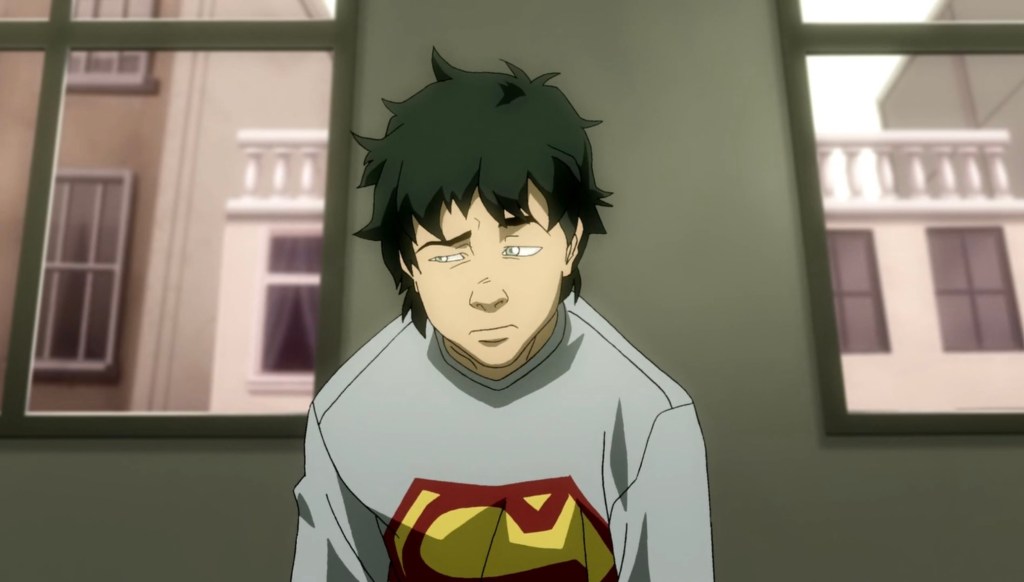
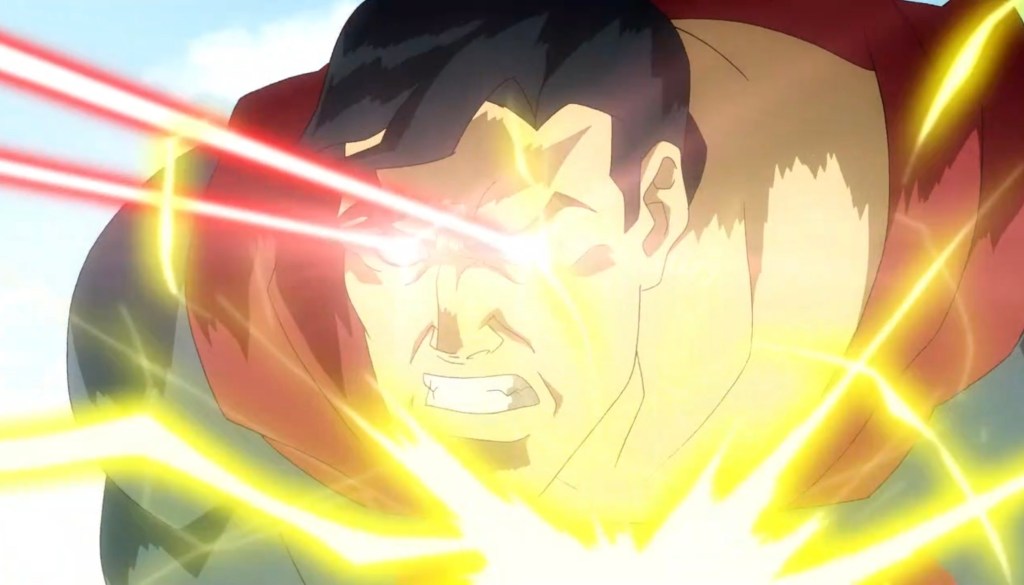
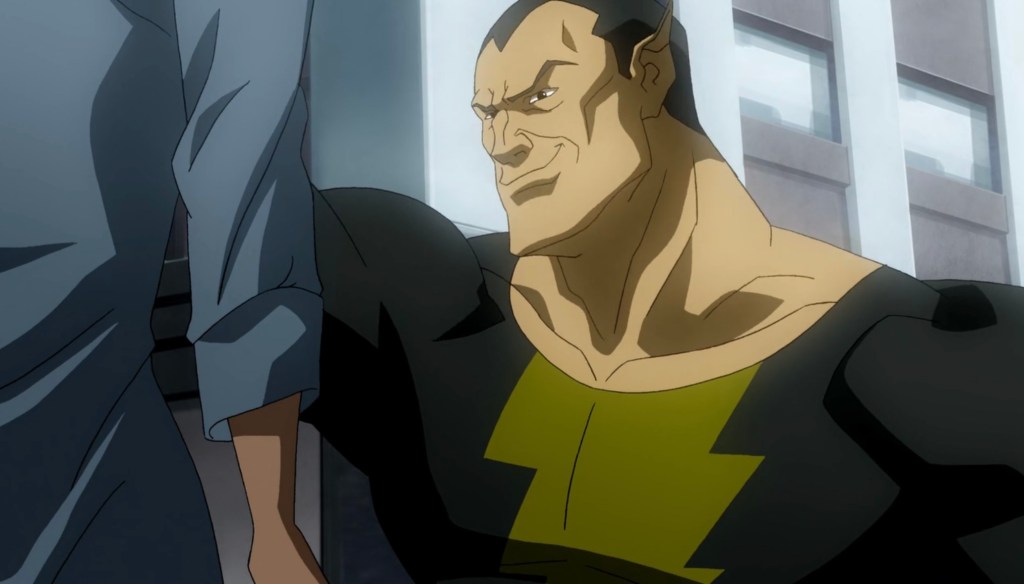
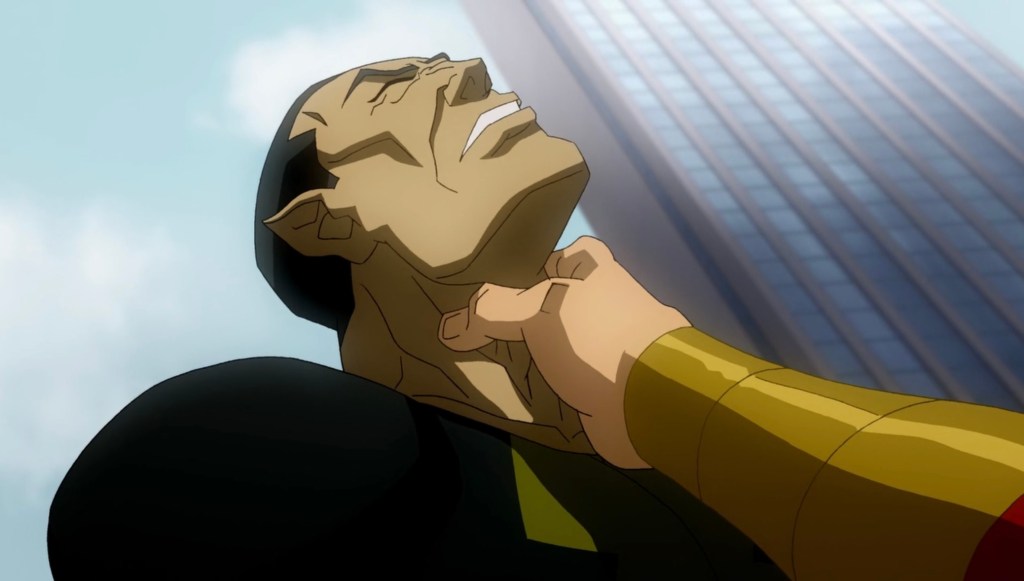
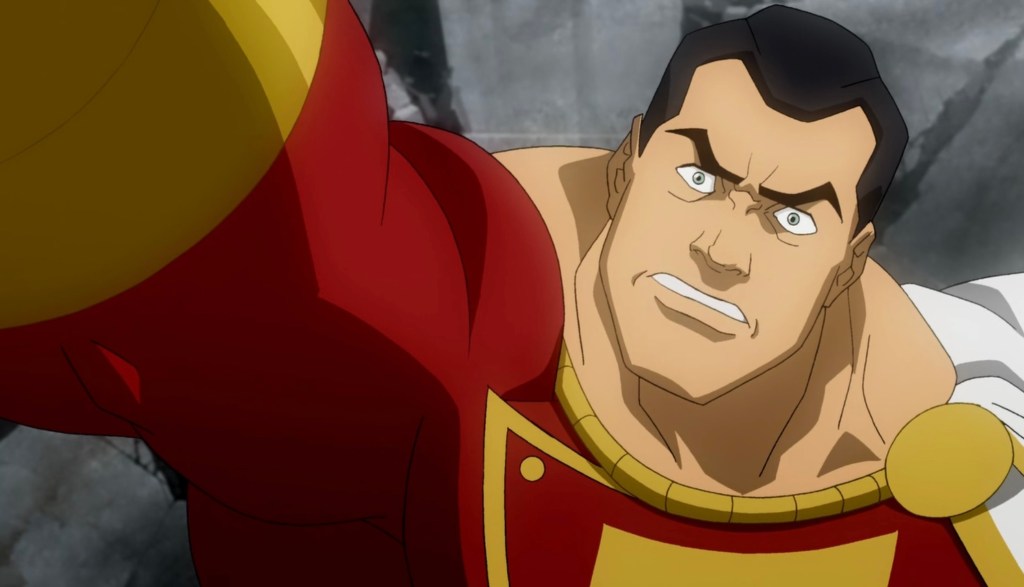
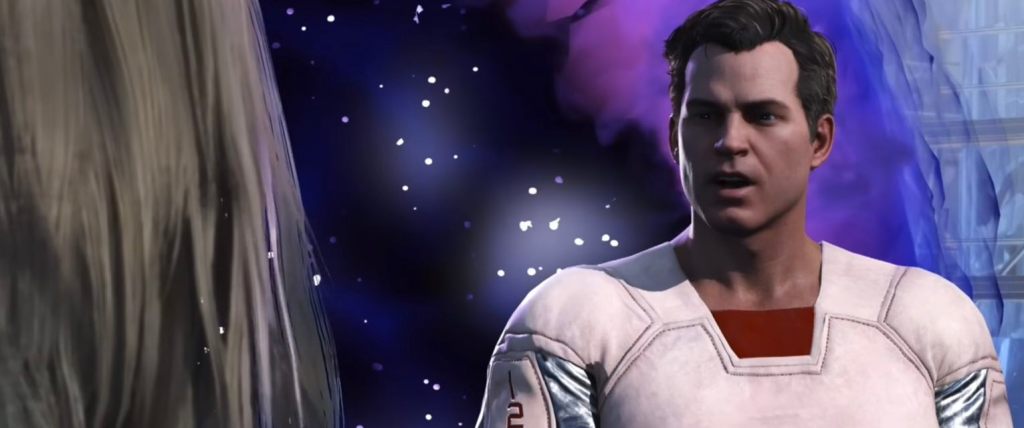
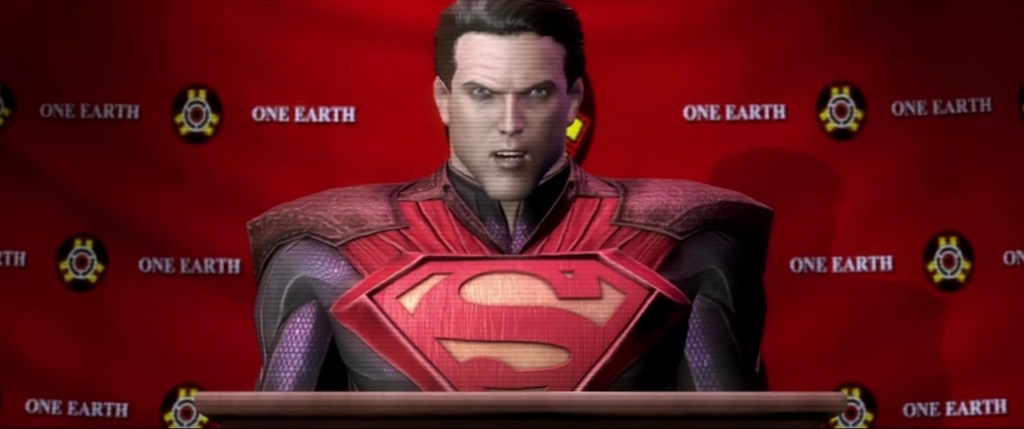
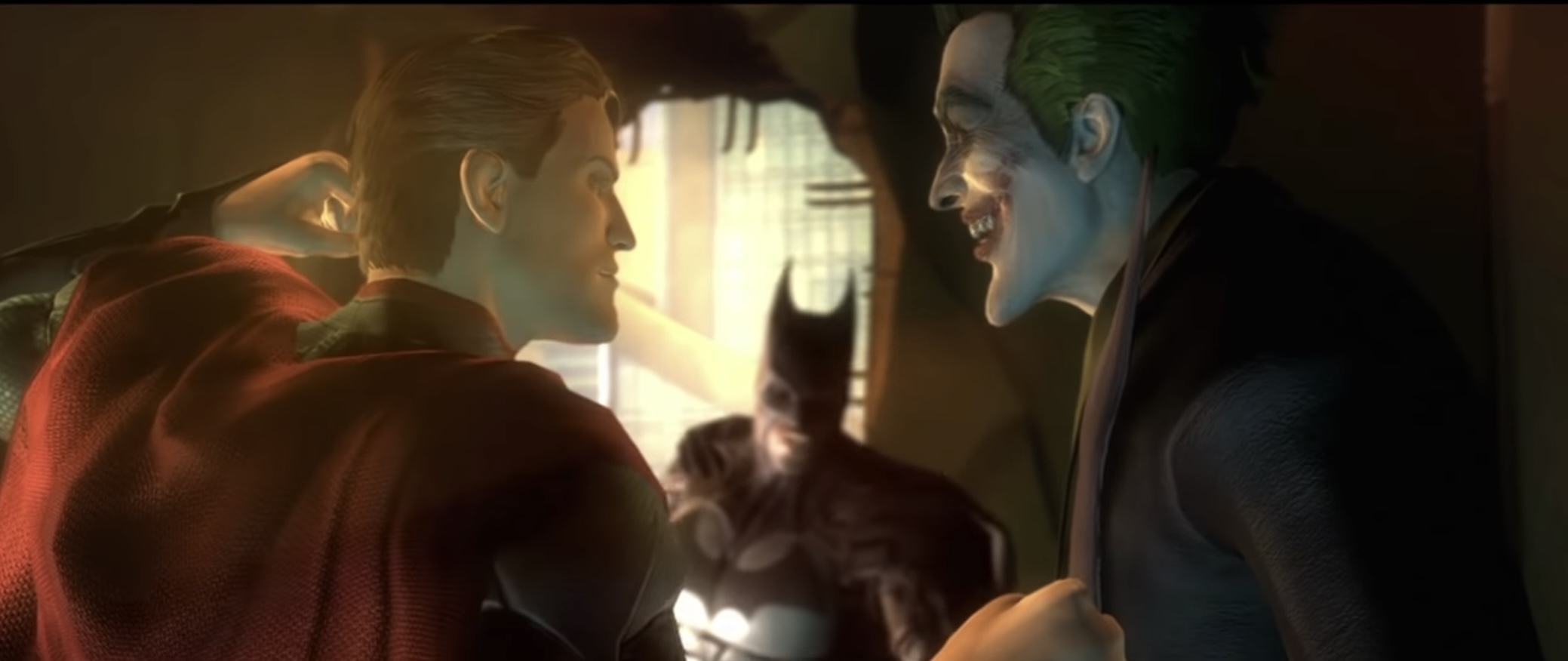
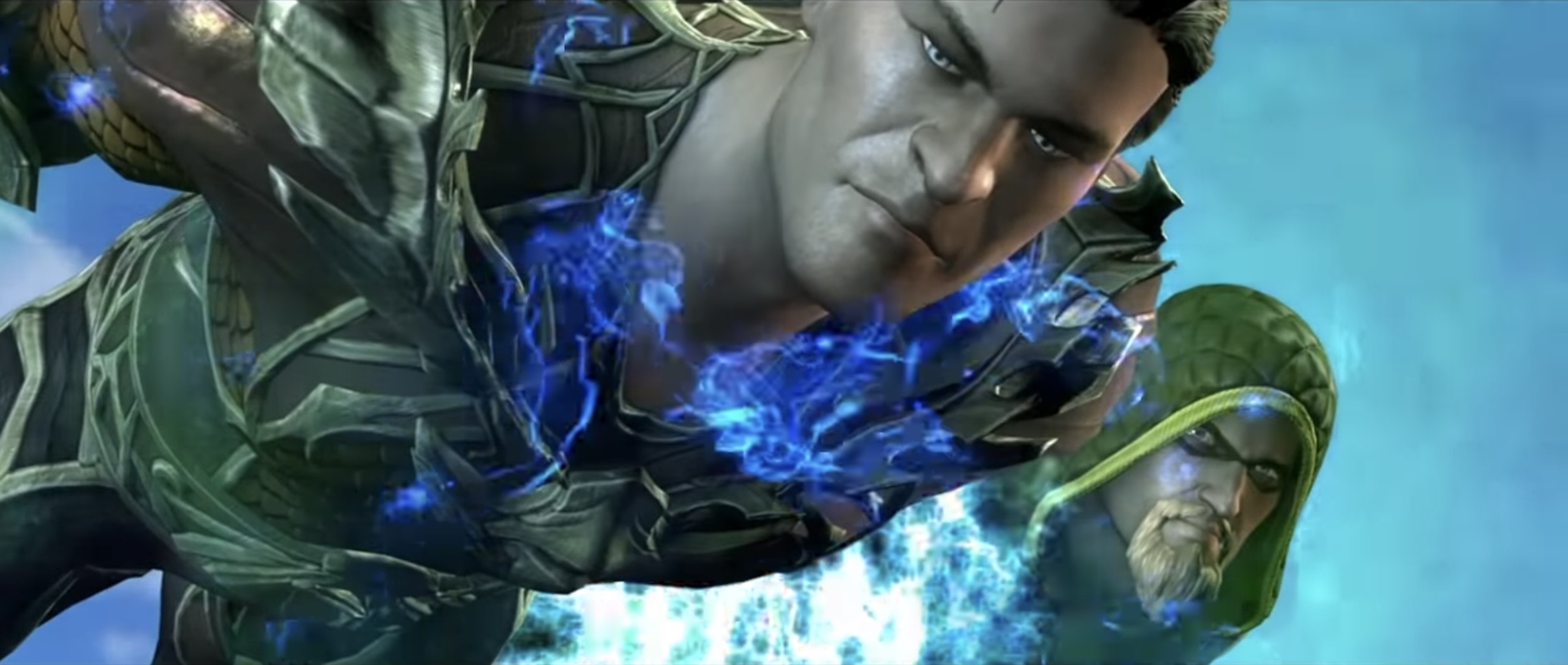
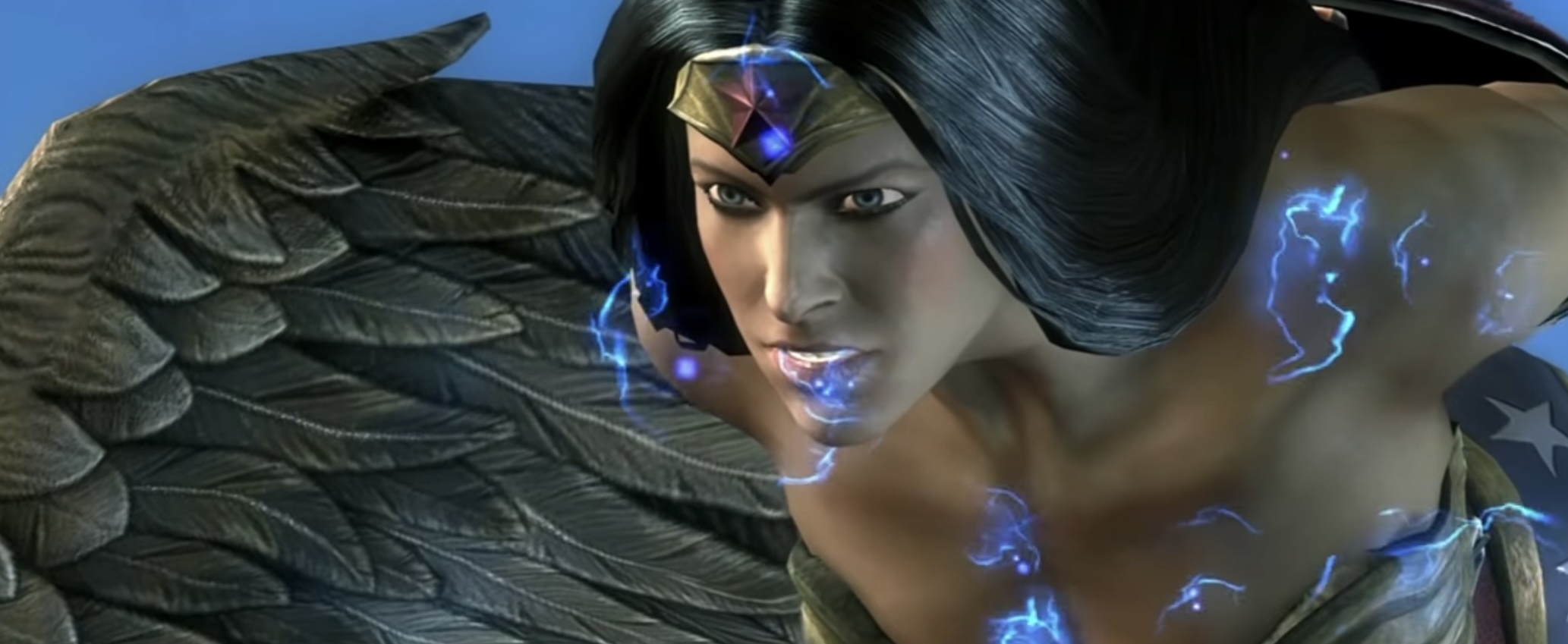
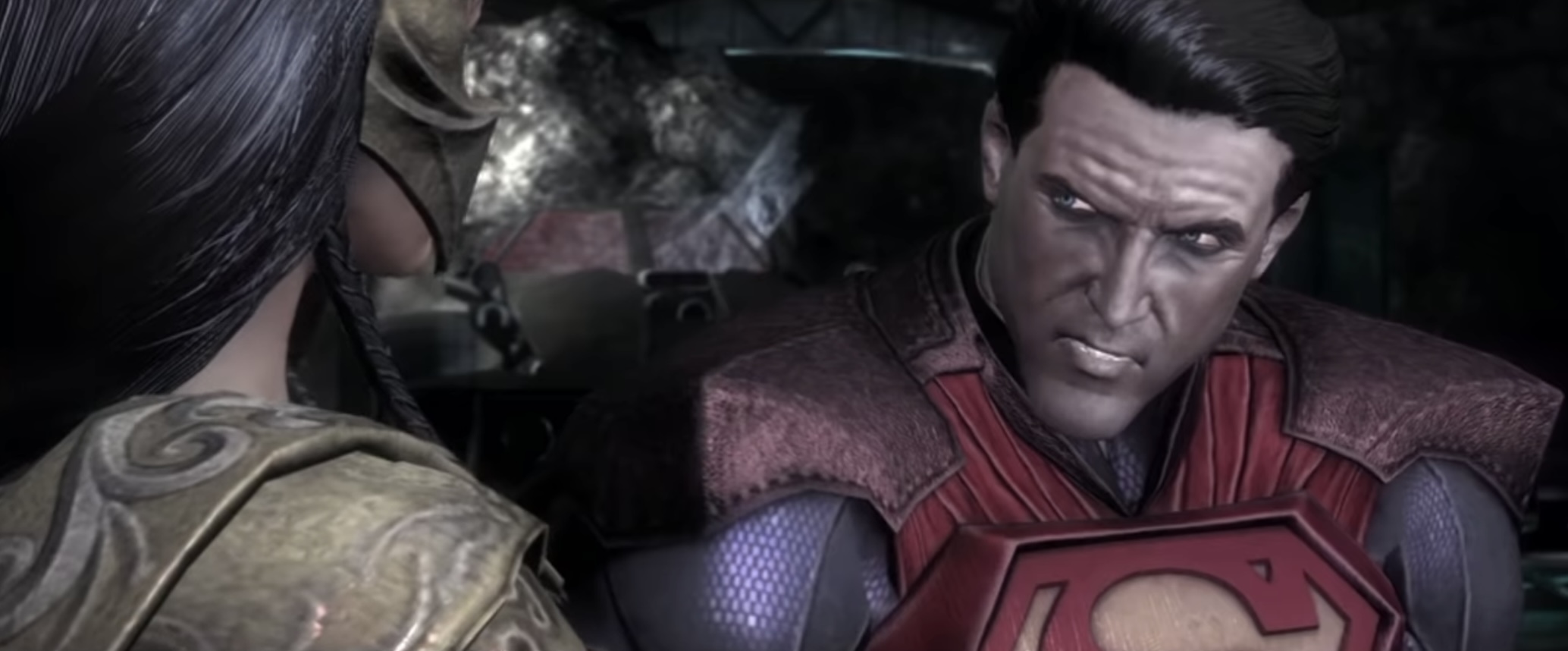
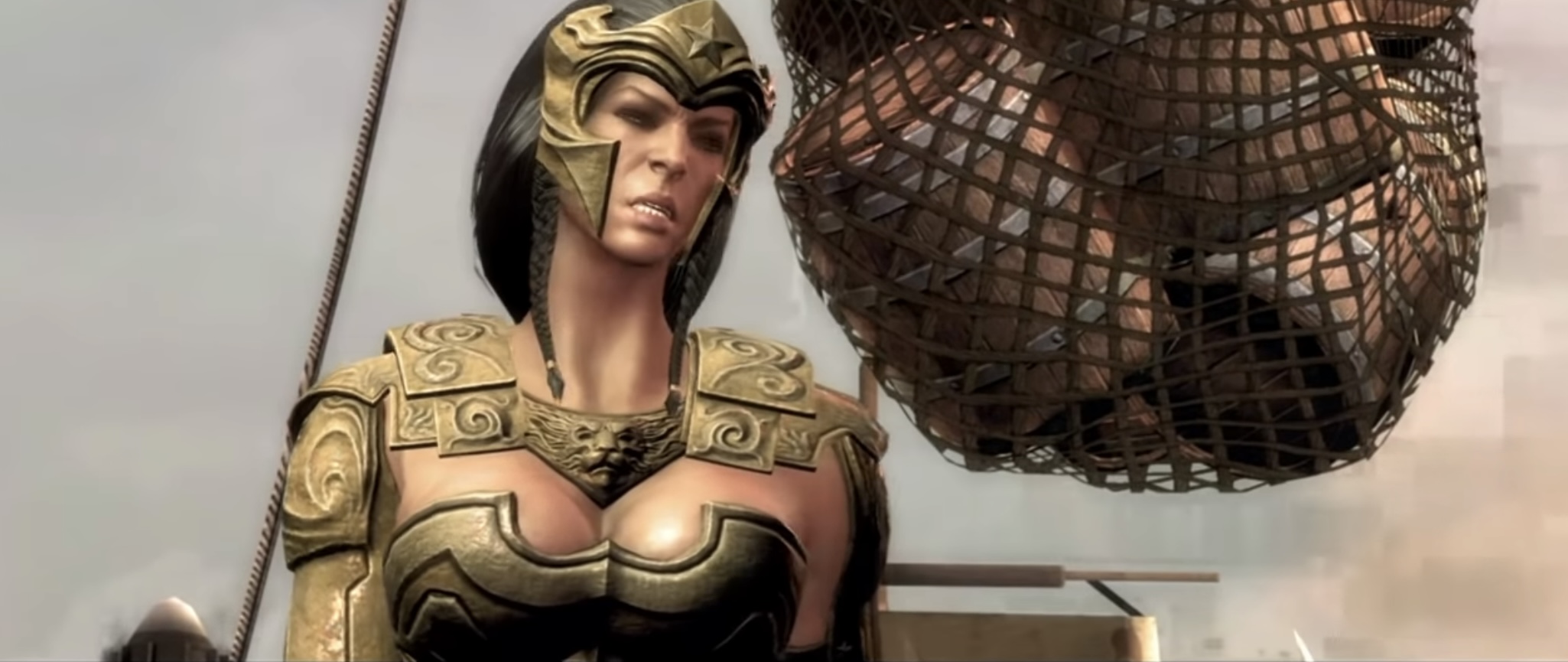
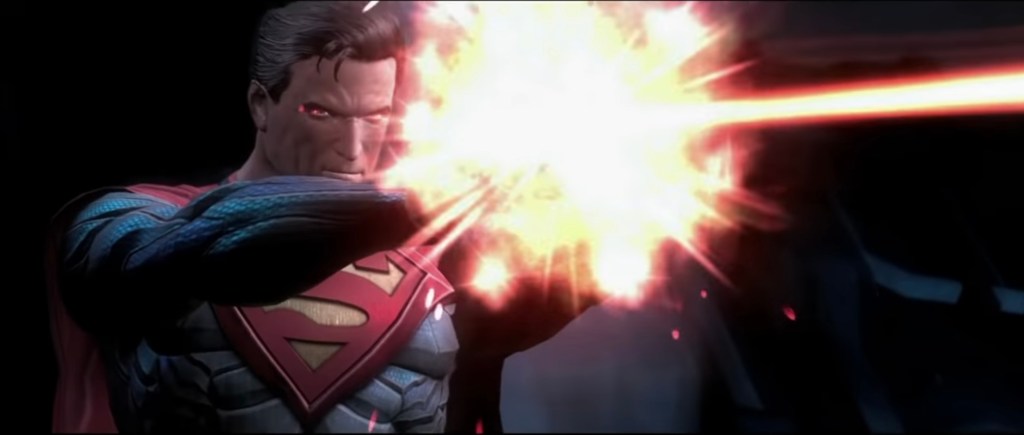
At its heart, Injustice: Gods Among Us (2013) depicts Superman’s inability to let go and accept that some battles can’t be won. Not everyone can or should be saved. Unlike many DC storylines that originate in print and later expand into other media, Injustice was made specifically as a game narrative, integrating complex character drama with the mechanics of a fighting game. Adding to its impact, the game features most of the iconic voice actors from Justice League and other beloved DC animated projects, which lends a sense of familiarity to a story that takes these characters into uncharted territory. Set in an alternate DC universe, the story casts Superman (George Newbern) as a tyrant after the Joker (Richard Epcar) tricks him into killing Lois Lane and their unborn child, which also detonates a nuclear bomb in Metropolis. After killing the Joker in rage, he establishes the One Earth Regime, a totalitarian government that enforces global peace through absolute control. Most heroes—including Wonder Woman (Susan Eisenberg), Green Lantern (Adam Baldwin), Aquaman (Phil LaMarr), Cyborg (Khary Payton), Shazam (Joey Naber), and The Flash (Neal McDonough)—join him alongside villains. Resisting Superman’s rule, Batman (Kevin Conroy) forms the Insurgency and allies himself with Lex Luthor (Mark Rolston). He transports alternate versions of himself, Superman, Wonder Woman, Green Lantern, Aquaman, and Green Arrow (Alan Tudyk) from our universe. With their help, the Insurgency fights back, leading to a climactic battle between the two Supermen. Our Superman defeats the tyrannical one, and Batman imprisons him in a red sun cell, ending his reign—for the time being.
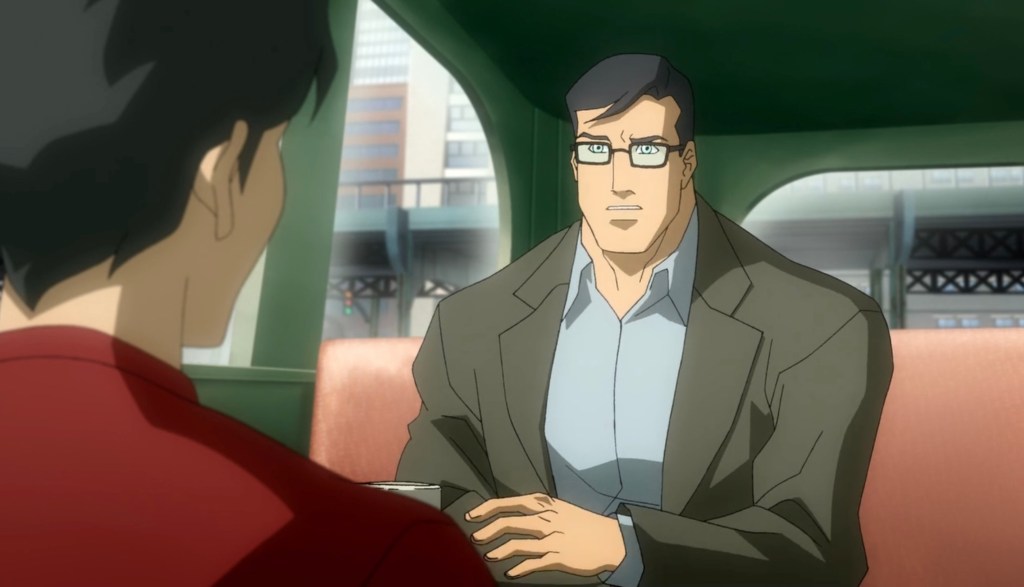
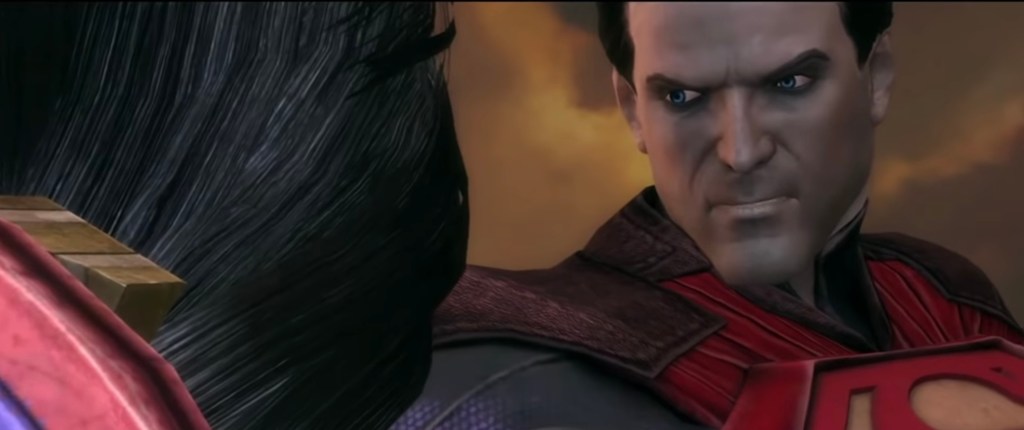
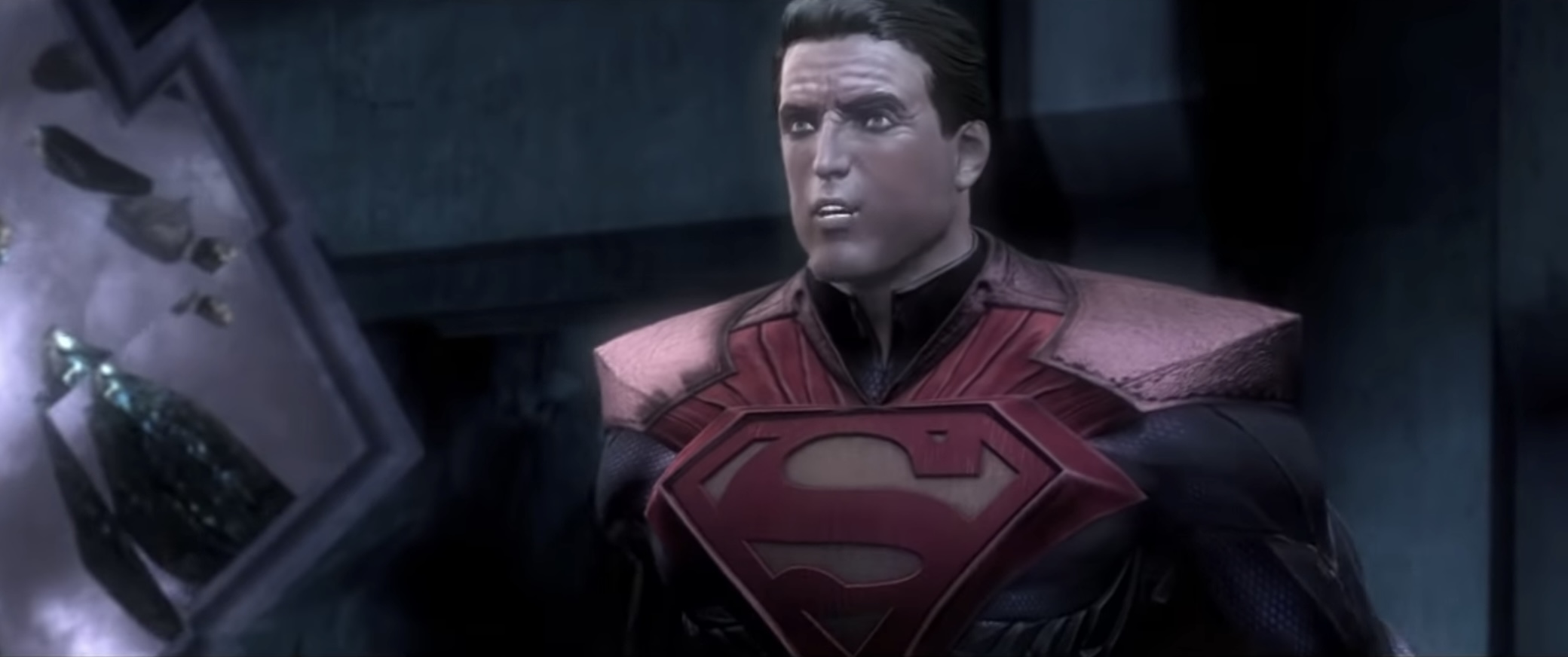
Superman has always understood death as an inevitable part of life. He was sent to Earth because Krypton perished. Then, he was raised by Jonathan and Martha Kent whose values shape his dealings with loss as both Clark Kent and Superman. They taught him humility, responsibility, and the limits of power. Logically, Superman knows that even with all his strength, he can’t stop death from claiming those he loves. But Injustice exposes a contradiction within the Man of Steel: while he accepts death in theory, it is also his breaking point in practice. The loss of Lois and his unborn child doesn’t just devastate him; it shatters the core beliefs that have always tethered him to restraint. Instead of seeing death as a painful but natural part of existence, he sees it as a failure to protect what matters most. And from that moment on, he refused to ever let it happen again, no matter the cost. Long interpreted as a Christ-like figure: Superman is an all-powerful being sent from above to guide and protect humanity, sacrificing himself time and again for the greater good. In Injustice, that messianic role warps into something authoritarian. Instead of offering salvation through faith, hope, and inspiration, he demands it through force and obedience. He no longer trusts people to follow the right path; he compels them to. In that sense, this Superman shifts to something more akin to an Old Testament deity or even a fallen angel. Injustice casts him as an absolutist where any threat to peace must be eliminated by force, if necessary. He believes he’s doing what’s best for humanity; but in doing so, he strips people of their freedom and autonomy, enforcing his will rather than allowing people to make their own choices. He becomes the very thing he once fought against: a tyrant no different from Darkseid or Lex Luthor; wielding power not as a protector, but as a ruler who demands submission in the name of his own vision.
A happier read would say that Injustice Superman is righteous albeit misguided as his need to save people morphs into a compulsion that blinds him to reality, that he truly believes he’s doing the right thing; although in the end, his inability to let go causes more harm than good and leads to his own demise and those of others. Superman cares so much that he refuses to accept some people don’t want to be saved, or that trying to help can make things worse.
My pessimistic read—and perhaps, a more honest one—suggests that Superman’s downfall isn’t just a tragic miscalculation, but an inevitability. His belief in doing the right thing was only righteous when it aligned with the ideals he once upheld. The moment the world deviated from his vision, he abandoned those ideals in favour of control. His need to save people was never truly about them, it was about his own inability to tolerate loss; and his refusal to accept that suffering, injustice, and even death are woven into existence itself. And in his desperation to rewrite the rules of reality, he proves that power—no matter how noble its origins—can corrupt. Not because it changes those who wield it, but because it reveals what was always there: the capacity to enforce, to dominate, to reshape the world in one’s own image, no matter what or who must be sacrificed along the way. Even now, I can’t help but recall the people I’ve encountered who gained more systemic power. I think of the long-term commitments I’ve made, the communities and relationships that once gave me a sense of belonging—only to be met with the realization that they never truly saw me as part of them. Everything just vindicated my misanthropy or distrust. This kind of disillusionment runs deep, especially when it comes from people or institutions that proffer justice or belonging. It’s one thing to see power corrupt from a distance, but another entirely to witness it in those who position themselves as advocates or allies. When people who preach about accessibility, equity, and inclusion turn out to be just as self-serving and complicit as those they claim to oppose, it only reinforces the sense that power—no matter how it’s framed—always bends toward self-interest. And worse, when you’ve worked so hard, given everything just to be part of something—only to be toldyou’re not enough or that you don’t belong, it makes the very concept of community feel hollow. Sure, nothing in life is guaranteed. Loyalty shifts, promises break, and most beliefs change over time. But what’s constant is the consolidation of power. No matter the era, ideology, or individuals involved—power gravitates toward itself, building in the hands of those who hoard it, at the expense of those who don’t. Systems and seasons may change, but the outcome is always the same. Those with power find ways to keep it, and those without perish. They’re in favour of anything, anyone that consolidates power into their hands; and they’re against the (re)distribution of power—social, monetary, or otherwise.
Fundamentally, it’s conservatism; they’re just content to conserve the status quo so long as they reap its benefits. Norms inform their complacency because that’s “just the way it is.” The way it is premises what should be. This is how power is sustained. This is also how—and why—conservatism is readily co-opted by fascism, the latter of which assumes a hierarchy that admonishes minorities. While conservatism alleges democracy assures [its] fairness, fascism dismantles its foundational principles to accumulate more power. Terms like “SJW,” “woke,” and “virtue signaling” define many of their insults because they believe in innate differences. They can’t believe any sincere calls for equality, only that these—and any—efforts are just ways to take power; ways that they themselves would also exploit. This also explains why conservatives readily accept charity but resist systemic change; they view charity as goodwill from those who’ve “earned” their status, rather than as something those in need are entitled to. In their view, assistance should be an act of generosity, not a right.
Even in light of current events, I don’t believe we’re experiencing a conservative or fascist shift in politics. I think there is a social incentive to embrace conservative politics that can translate into financial incentive, but it’s not the same. Folks tend to frame things as a progression of conservative and fascist influence, particularly because that fits a very profitable narrative for conservatives and liberals who monetize the ensuing miasma of despair. I do believe that billionaires and ownership classes embrace fascism as a means of self-preservation; and their fans carry water for oligarchs and deplorables. Bearing this in mind, it’s no surprise that celebrities, politicians, and the corporate class are openly investing in conservative politics. My point here is that power is subtle. Comparably, desperation is overt. True feelings are closer to the heart rather than the mouth, and we’d all do better to listen to the pulse being drowned out by the chatter. Pretenses ignore the root causes of desperation, offering empty gestures instead of meaningful solutions, leaving the most vulnerable with no recourse but to fight for what they were never given. Violence ensues from performative—as opposed to anti-oppressive—politics because dehumanization begets it. This relates to the paradox of righteous indignation which starts as a response to injustice, yet consumes the very virtues it aims to uphold in seeking to correct the world’s wrongs.
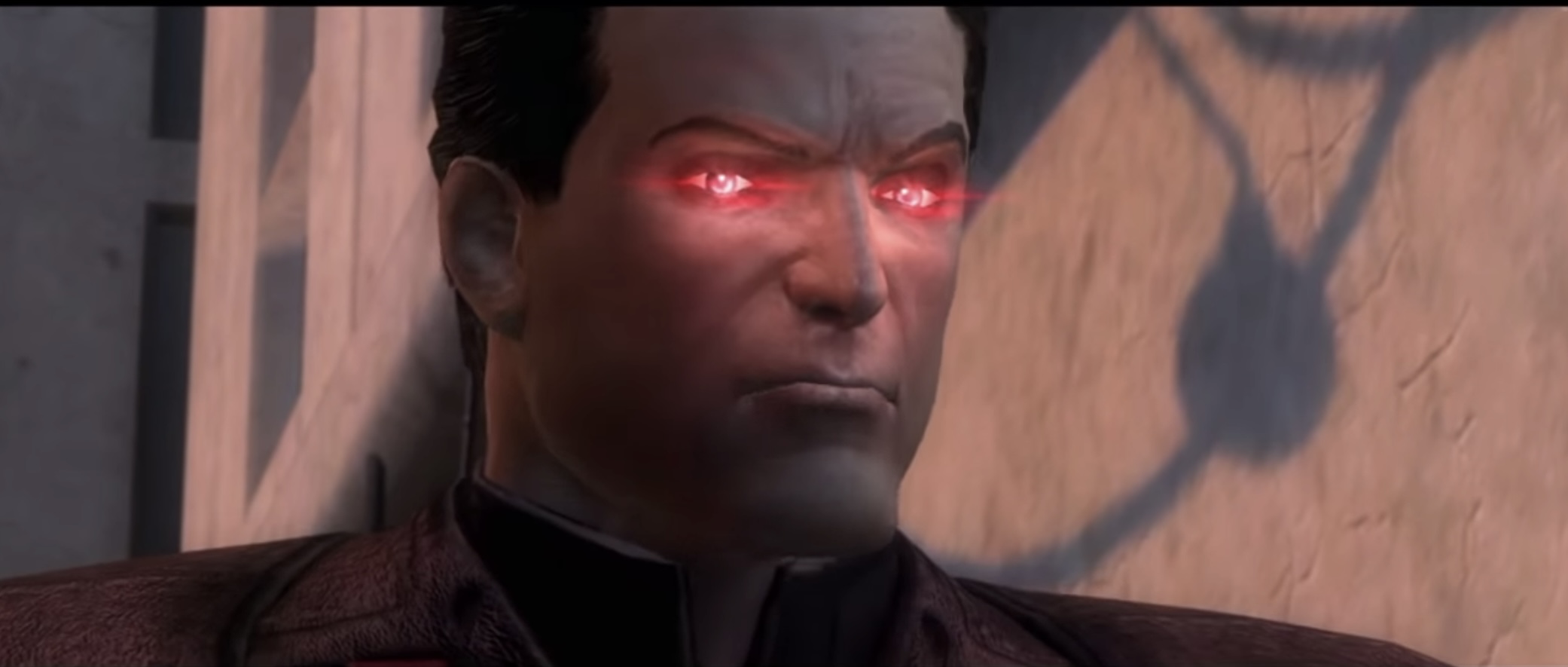
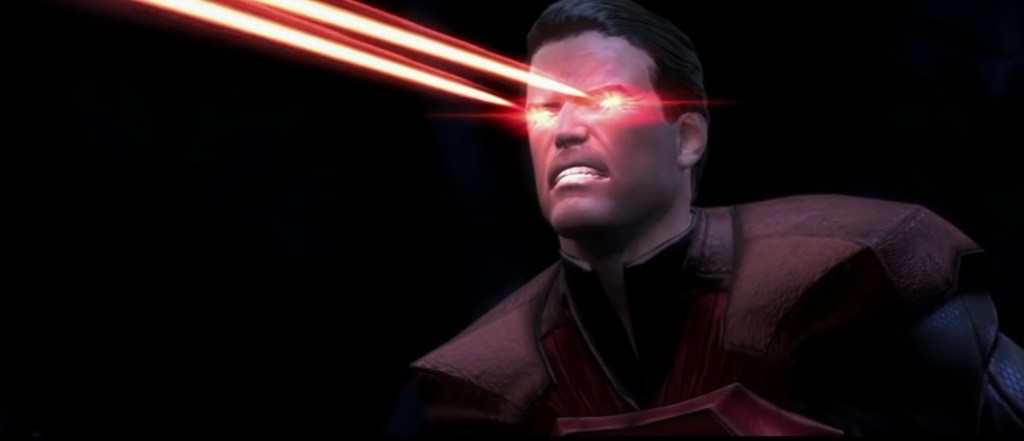
This underscores the rationale of Injustice Superman and likewise powers that be. Power isn’t about morality, justice, or fairness; it’s about control. Those who hold power justify their grasp through brute force, social conditioning, or the illusion of goodwill. Injustice Superman believes that he alone has the strength to shape the world, so he alone has the right to dictate its future; much like how the ruling class rationalizes their dominance under the guise of meritocracy, tradition, or “the natural order.” So, power is not something to be shared, only wielded. Any challenge to their authority is framed as an existential threat. Not because it disrupts peace or stability, but because it disrupts their place at the top. Those in power would rather concede charity than equality, and grant favours rather than dismantle the structures that necessitate them. The consolidation of power is the only true constant, and those who have it will do whatever it takes to ensure they never lose it. Injustice Superman succumbs to the idea that power alone justifies action. He concludes that because he can impose his will, he must. His strength warps into entitlement to which his vision of peace becomes tyranny. The more power he amasses, the more tortured he becomes. As external resistance mounts, his own convictions demand endless escalation. His pursuit of order doesn’t bring him peace; it only deepens his suffering. No amount of control can undo the grief and regret that set him on this path in the first place.
Sometimes, I genuinely miss being radically hopeful with the belief that all people are inherently good, and corruption stems from greed and power rather than something more fundamental. I miss the good feelings that came with that faith in humanity. I miss not being consumed by anger and fear. I long for the time when real, mortal danger felt distant enough to moralize over. I miss feeling safe and valued, and believing safety and value were things I was inherently entitled to. I miss not being so [rightfully] pessimistic. Now, I’m mad, bitter, and resentful because it all proved to be a fucking lie. Unlike Injustice, there was never any Insurgency in real time. Having spent my life working toward a professorship—fast-tracking my degrees, sacrificing stability, and striving for academic excellence—I’ve seen firsthand how tenure operates as a gatekeeper of power in academia, determining who gets security, influence, and a voice, while those without it remain precarious, expendable, and unheard. Tenure is a permanent academic appointment that grants professors protection from dismissal, giving them the freedom to research, teach, and speak without fear of institutional retaliation.
However, it also consolidates power, creating a hierarchy where tenured faculty have significant influence over hiring, policy, and academic discourse, often reinforcing existing inequalities within the university system. It’s depressing that precariously employed faculty and students—some who haven’t even finished their degrees—risk everything while tenured professors stay silent, unwilling to even read a statement condemning injustice on campus. People rush to name a few exceptions, but the reality is that most faculty uphold the very systems they critique in their writing. For them, there’s no praxis—just lip service and theory because, at the end of the day, it’s a career. They talk about “decolonizing the university,” but decolonization isn’t found in edited collections or overpriced conferences; it’s a material struggle. Soon enough, we’ll see “radical” faculty publishing books and articles on student activism, but don’t expect them to stand with actual student protesters or part-time colleagues. Universities will house specialty centres where tenured “progressive” professors lecture about revolution—while their students and part-timers are sanctioned for resisting oppression or abusive faculty.
As this present feels like a betrayal, it’s easy to retreat into the past, searching for a time that felt safer, more certain. Nostalgia lulls us into the illusion that the past was a sanctuary, a place where love was certain, where we were whole. I miss the past, when my beloveds were alive and their presence felt certain, when I could still believe that love and companionship were constant rather than fleeting. Back then, I had the comfort of assurance in knowing they were there, that they existed in the same world as me, that I wasn’t so alone. Now, I am bereaved, hollowed out by absence, and eclipsed by forces beyond my control. Mortality reveals itself with ruthless clarity; and worse still, I can’t stop those I love from leaving me—by fate or choice. I agonize over whether the people I love truly love me enough to stay, or if they merely tolerate me until they no longer can. I wonder if I’m nothing more than an expendable nuisance as I’ve been so easily discarded. Uncertainty gnaws at me, whispering that I’m always one misstep away from being abandoned, one inconvenience away from being left behind. I know I’m operating from a place of trauma, but also from an unrelenting nihilism that seeps from my pores—and I hate it. I don’t know how much longer I can productively sublimate it, or if I’ll know what to do when I can’t.
I don’t know how to accept being powerless.
History imparts that most people are only a nudge away from engaging in harm or cruelty when provided with the right justification. Social structures, ideological conditioning, and collective narratives offer the necessary pretext for moral disengagement, enabling individuals to commit or condone harm under the guise of righteousness. As Aldous Huxley observes, one of the most effective ways to mobilize people toward a so-called noble cause is to grant them permission to inflict harm upon others. This reinforcesthe cruelty of righteous indignation, the pleasure gleaned from harm when framed as virtuous or necessary. Similarly, Friedrich Nietzsche notes that every society harbours people who derive great satisfaction from acts of violence, particularly when those actions are framed as retribution. Huxley extends this idea further by arguing that such moral crusaders rarely operate alone; and that they easily recruit others into their cause because righteous indignation carries an undercurrent of noble sadism, a latent desire for domination that only needs minimal provocation to manifest. This phenomenon is frequently exploited by those in positions of power, who manipulate public sentiment by rebranding systemic harm as an unfortunate but necessary step toward a greater good. Harmful policies, punitive social norms, and exclusionary ideologies are then justified as regrettable yet unavoidable measures required to maintain order or achieve an idealized future. Thereafter, Huxley concludes that the ability to enact iniquity in good conscience is a heady treat, and those who relish this power don’t actually seek justice or progress.
They seek pleasure by inflicting punishment. Recognizing this—seeing the cruelty of righteous indignation for what it is—is crucial to call bullshit on performative movements, ideologies, and institutional rhetoric that claim to be driven by moral imperatives while enacting policies or practices that perpetuate violence and oppression. In addition to cruelty, Injustice Superman demonstrates the folly of righteous indignation altogether. He purposes his bereavement as a personal call to action rather than an expression of underlying tensions which peak due to a tragic stimulus. Hence his exceptionalism inspires tyranny and prevents him from seeing the mechanics of his own downfall therein. Injustice sees Superman exhibit a hubris of sanctimony that leads to subterfuge and failure—but hubris has always been intrinsic to Superman, right? After all, shy of kryptonite, his power fosters a belief in his own glorious purpose. Arguably, this makes him susceptible to the illusion that he alone can oversee order and justice. I also can’t help thinking how, systemically, hubris is a curious thing.
When individuals repeatedly succeed within systems designed to favour their advantages—wealth, extroversion, timing—they tend to believe their privileges substantiate their greatness. Cultural narratives around genius, exceptionalism, and inimitability reinforce this illusion. Psychologists termed this to be the hot hand fallacy, an illusion gleaned from a pattern of success. Essentially, the illusory belief [bias] that past success increases the likelihood of continued success, rather than recognizing it as a probabilistic [systemic] outcome. This bias is bolstered by our cultures of individualism where outcomes are [often erroneously] attributed to personal agency over systemic or situational influences. Injustice Superman’s brand of hubris—his belief that he alone is responsible for order and that only he can save humanity—fits within this broader cultural mythology. However, his power is not merely the result of his own strength or will, but rather an outcome of systems reinforcing his position. So, he fails to realize how contingent his power truly is. His downfall doesn’t come from a single misstep. It comes from the very same systemic forces that once empowered him, now shifting against him. Moreover, Injustice Superman’s downfall can be understood through a drift into failure in how the slightest deviations from ethical decision-making gradually become normalized, leading to disastrous consequences.
Humanities researcher Sydney Dekker speaks to this, noting how behaviours that are initially seen as justified or even beneficial can reinforce a false sense of security over time, which makes it difficult to recognize when success has turned into failure. Local rationality can put this in perspective too. Philosopher Karl Popper terms this to abstract the principle that people do their best with the cards they’re dealt. It’s commonly referenced in the context of failure for workplaces and high stakes scenarios. It’s purposed to put the mechanism of failures in perspective. Ideally, localizing and identifying variables that factor into failure would prevent another; but this somewhat absolves personal accountability despite acknowledging that we’re resigned to our constraints. It’s not that we should be, do, aspire for better; it’s that folks should recognize—and appreciate—how much it takes just for us to get by. The world is shitty as is. So is life as we know it. We see injustice firsthand in fuckface billionaires, grifters, and charlatans. Given the state of the world, just getting out of bed entitles us to something—and yet, we still end up coming up short. If anything, it’d be “rational” to burn everything down. I don’t say this out of nihilism and misanthropy. I say this knowing that the powers that be are only concerned with identifying or localizing variables not to prevent failure, but to assure their own success. They seek to sustain a supremacy premised on history. Because his decisions consistently yield positive results in the past, Injustice Superman is convinced of his superiority. Every success strengthens his belief that he alone can succeed where others would fail, fostering a hubris that blinds him to the growing dangers of his authoritarianism. Since his system continues to function—sustained through fear and control—he can’t recognize its flaws and instead doubles down on his every action; and the drift of failure peaks when an individual believes they’ve secured absolute control. Which is why Injustice Superman, never hesitates to eliminate perceived threats and surrounds himself with voices, villainous and otherwise, that validate his authority. He purges opposition, centralizes power, and positions himself as the sole arbiter of order to create a pretext of dominance. Still, this sense of certainty dooms him to fail because it occludes a fundamental truth: control, once total, becomes inflexible—and what can’t bend will break.
This reflects the paradox of power: its greatest strength is also its greatest weakness. At its peak, authority is most fragile, because it thrives on reinforcement rather than adaptation. It minimizes dissent but also eliminates the very structures that allow for course correction. Injustice Superman, convinced of his own invincibility, fails to see his tyranny makes his rule brittle. Despite his belief in total control, Injustice Superman’s authority remains dependent on external forces—political structures, technological infrastructures, public perception, and the compliance of those beneath him—all of which he has steadily eroded. In trying to secure his rule, he unknowingly pushes his system to its breaking point, amplifying complexity and fragility. Each new decree, purge, or restriction entangles him further in a web of dependencies, where every effort to tighten his grip introduces new vulnerabilities.
This growing web of power and consequence creates a reality that nobody can fully comprehend, let alone control. Injustice Superman, having designed his immediate surroundings to suppress dissent and eliminate corrective feedback, believes himself to be more in control than ever, even as the foundations of his authority begin to erode. Each purge, each reactionary decree, further destabilizes the system he seeks to command, creating unforeseen and uncontrollable ripple effects. At this point, his downfall is no longer a matter of if, but when and how—not the collapse of a man, but of a regime that could no longer sustain the weight of its own contradictions. What he perceives as consolidation is, in reality, the acceleration of his own collapse. He reacts with increasing volatility and paranoia leads him to lash out. He sees betrayal at the slightest hesitation and insolence where there’s doubt. And, he infantilizes us [humanity] as “disobedient children” who “must be punished.” Each decision and rationale grow more reckless, fuelled by the false confidence that past successes ensure future triumphs. His hubris becomes his undoing and resigns him to an uncompromising cycle that leaves no room for adjustment or retreat, augmenting the structural dimension of One World Regime’s collapse. Systems built on fear can only hold as long as their subjects do not resist. Over time, the Insurgency and humanity itself reaches a breaking point. When the illusion of Injustice Superman’s invincibility fractures, the Regime crumbles. His cruelty and paranoia are consequences of his own design, not mere symptoms of fear. The more he seeks to suppress “disorder,” the more isolated and precarious his “order” becomes. This ensures that when his fall comes, it will be as inevitable as it is absolute.
Again, this defeat doesn’t occur as a singular moment, but as an inevitable consequence of a power that can no longer sustain itself. Which makes me wonder if power can exist as something deeply personal, tied to love and connection. I can’t think of any instances of integrity that weren’t shaped by the influence of power. Power is a construct of those who wield control. Integrity, in the way it’s commonly defined, is always shaped by larger power structures, but the kind of power that exists in love—such as the love of beloveds like Clark—is something different. It’s not about dominance, control, or historical narratives; it’s about care, memory, and the quiet influence that lingers even after someone is gone. Maybe that’s a kind of integrity, or at least a form of goodness that exists outside of the systems we usually associate with power. Love, in its purest form, doesn’t need validation from authority or history—it just is, meaningful in ways that don’t require justification. However, in a world where injustice prevails, even something as pure as love doesn’t exist in isolation. Love is shaped by the very systems that seek to undermine it, making it both a refuge and a liability.
Given the prevalence of iniquity, love is an externality we create which comes back to destroy us. Love isn’t just something we experience. It’s something we bring into existence, something we shape and invest in—only for it to turn against us through loss, betrayal, or the inevitability of time. In a world defined by injustice, love becomes an attachment that exposes us to pain rather than protect us from it. When everything is fleeting, when even the strongest bonds are ultimately broken, love feels less like a refuge and more like a prelude to devastation. Yet, despite this, love still holds meaning, and though its impermanence feels more like a burden than a gift, I remain grateful for it. It feels almost unreal that I have Clark. He brings me a love, care, and support so profound that it sustains my belief in good. In a world so unkind, Clark reminds me that some things—some bonds—are real and worth holding onto. I don’t know if I’ll ever see Superman flying overhead, but I know love is the one thing that will lift my gaze toward eternity.
What marks Clark from his Injustice namesake is that he doesn’t let power corrupt him. Cats have an evolutionary intelligence. They meow to mimic human baby cries, an adaptation designed to elicit care and attention. It’s an effective tactic to ensure their needs are met. And yet, Clark, for all his intelligence, doesn’t use this ability to manipulate or control. He has the ability to influence, but he doesn’t seek control. He can easily summon me with a call, demand my attention and know I’d give it. Arguably, he could also call me endlessly and solicit more than he needs, but he never does. He remains steadfast as he ever was, clear of the hunger for control that fells even the greatest of humans. If only the same could be said for those who have known the taste of power and, finding it sweet, could never again be sated. He’s also powerful in his own right—muscular, large, capable—but remains darling nonetheless. His strength doesn’t demand submission; it invites affection. He doesn’t use his might to take control, nor does he feel the need to dominate.
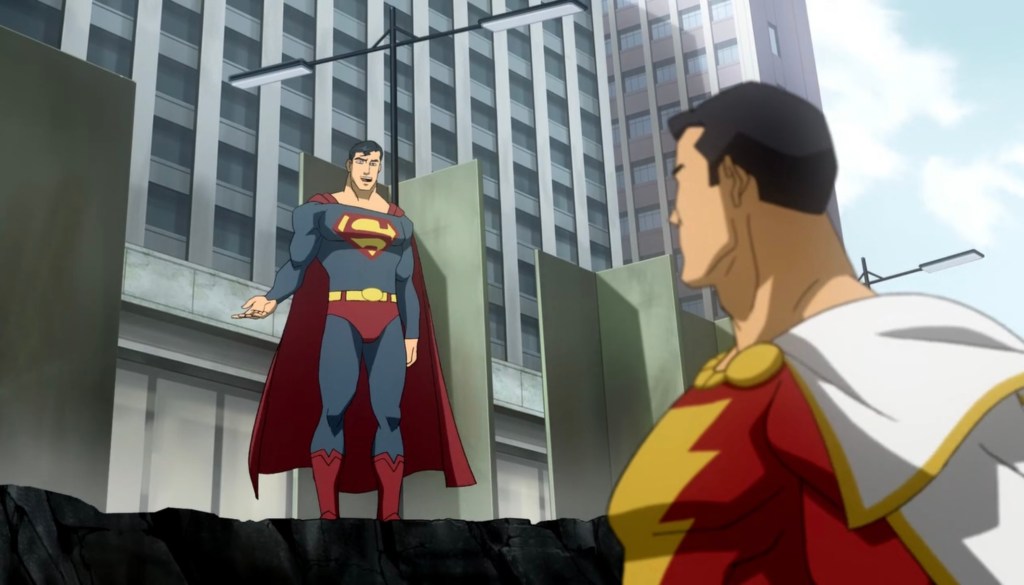
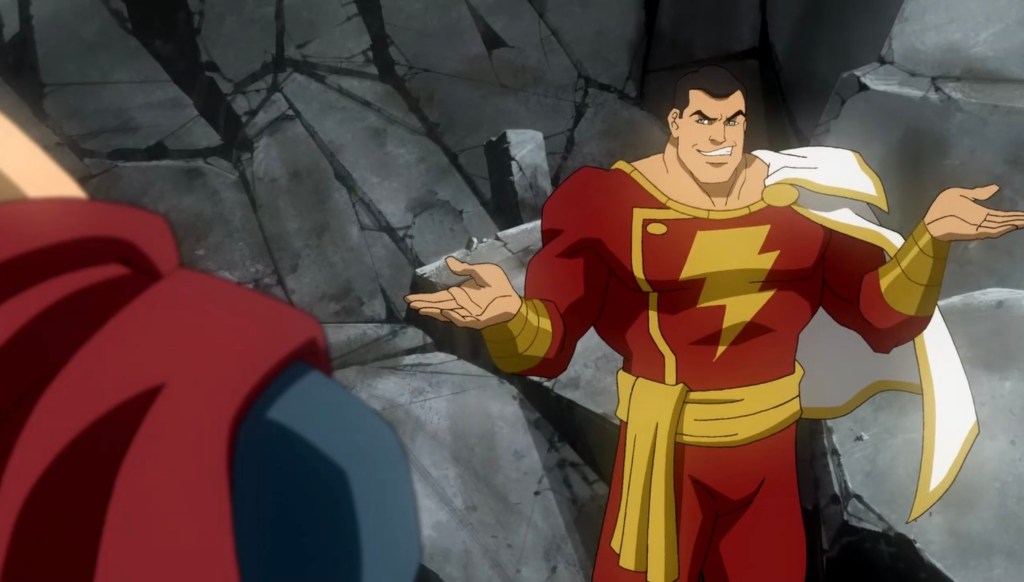
In Clark, I see an alternate path to power—one that does not seek to rule or reshape the world, but simply to be, content in existence rather than in control. Which brings to mind a quote from our Superman after he bests his tyrannical alternate in Injustice. “Put in the same position, I might have done the same thing,” he admits, “We never know what we’re truly capable of.” This acknowledges that morality isn’t fixed. Under the right—or wrong—circumstances, even the best of us can become something unrecognizable. It’s easy to condemn Injustice Superman and see his descent into tyranny as a choice that only he could make; but the good Superman’s admission suggests that his fall wasn’t an anomaly, but a possibility that exists within anyone, given the right pressures, losses, or justifications. Which ties back to the way power consolidates, the way people rationalize holding onto it. Injustice Superman never intended to become a dictator. The scariest part isn’t that he fell; it’s that, under similar conditions, we all could.
However, Clark stands as a counterpoint to everything Injustice Superman represents. Where the eponym sees power as something to wield, the namesake simply exists in it. While Clark’s nature may be uniquely his, the love and care I’ve given him have surely shaped that. Even if he was always inclined to be gentle and secure in himself, I’ve reinforced that he doesn’t need to fight for attention, control, or validation. Maybe he knows he’s loved, and that certainty frees him from the impulses that drive others to grasp for power? If Injustice Superman’s downfall was always a possibility given the right pressures, then does the same logic apply to Clark in reverse? Could it be that, no matter the circumstances, he simply wouldn’t seek control because it’s not in his nature? Or is his contentment, his quiet resistance to power’s lure, a reflection of the environment I’ve fostered for him—one where love is given freely, where he has never needed to fight to be seen? It makes me wonder—if Injustice Superman had been reassured of love and security rather than losing them so violently, would he have been able to resist his own worst impulses? Or was his fall inevitable the moment he realized that, despite all his power, he couldn’t control everything?
To me, it’s not about wanting power or control. It’s about recognizing that no matter what is done, people will always find something to criticize or tear down. Injustice Superman, for all his strength and conviction, sought to impose order on something inherently chaotic: human nature. But even if he’d succeeded, would it have mattered? Would people have truly changed, or would they have simply resented him until they found another way to tear it all down? Which kinda acknowledges what Superman never could—some things simply are, no matter how much effort is poured into changing them. That’s why Clark, in his simplicity, feels like such a contrast. He doesn’t try to change the world, he’s just in it. That’s a kind of wisdom Superman never had. Regardless of everything else—disillusionment, exhaustion, the flaws of the world—I still hold onto love, and I still give it freely. Clark may not express it in words, but in his way, I believe he knows I love him too. He reflects that love back in his bunts, purrs, presence by my side.
And the fact that I continue to pay it forward, even with everything I’ve been through, speaks to the depth of my own heart. Honestly, I think that, despite everything, love—Clark’s, mine, in general—still holds meaning, even if the world itself doesn’t seem to reward it. Even when it isn’t reciprocated or rewarded, love still carries weight. Injustice Superman’s love for Lois and the world was real, but he let his regret twist it into something transactional wherein love only had meaning if it was preserved, protected, and controlled. When the world failed to uphold his love, he abandoned its mercy and turned it into justification for domination. But Clark’s love exists simply because it is, not because it must be proven, enforced, or rewarded. That’s the real tragedy of Injustice Superman—not just that he fell, but that he stopped believing love had value outside of his ability to safeguard it.
For as lost as I feel in life, Clark isn’t lost with me. I’m his home. I don’t feel like I’m doing enough, but Clark’s love is proof that I am. Even when I’m anxious about the future, Clark is still here in the present, purring beside me, choosing me. And in that, there is love. There is certainty.
There is enough.
♫ Title song reference – “I’d Love to Change the World” by The Zombies
Sometime in the early 90s, my maternal grandmother was terminally diagnosed with colorectal cancer. She would undergo renowned Ayurvedic and First Nations herbalism treatments in addition to a mindful exercise regimen, which would mark her passing almost a decade later [as opposed to the mere months doctors expected]. Of course, I was too young to understand this prognosis. All I could fathom was the anguish of bereavement upon her loss. This was corroborated by several accounts of others who continue to affirm that I was never really the same after that loss—which would be punctuated by the relocation of my father, provinces away from me, shortly thereafter.
Back then, I think, was when I started to second-guess the value of my emotions. What was the point of so much, if any sadness? Moreover, these early losses inform the way I view impermanence. These voids—especially since I couldn’t understand them, even though I felt their weight—naturally inclined me to undermine feelings. Specifically, investing in feelings that only lead to pain. This would also mark when, how, and why I felt an aversion to change because these transitions left me unmoored. These days, I find myself impassive as I sit with my grief rather than run from it. Happiness, I’ve accepted, isn’t found by trying to alter the past or secure a perfect future; it comes from being present. Love and loss are intertwined. Neither the acquisition nor pursuit of happiness concerns chasing time but accepting its passage, embracing moments that are ours to cherish.
This is something I remind myself after the terminal prognosis of my cat, Edith, my maternal grandmother’s namesake. Over time, I realized that oversight defined a lot of how I bereave the departed. I agonize over not being able to see or care for Edith again. I want to protect and comfort her, even beyond this life. It’s a love that transcends time, and I recognize this bond isn’t easily broken by life or death. I like to think that my love for her will always be a part of her journey, here and beyond. However, I can’t help but feel sadder as I grow more self-aware and attuned to the impermanence around me. I’m sure my neurodivergence (amongst a plethora of adversities) factored into how hopeless I’ve felt and the [very rational] conclusion that engaging with the world emotively can only lead to further loss. But no one can refute the impermanence of life.
Maybe that’s why, try as I might, I can’t shake my fascination with The Flash (2023).
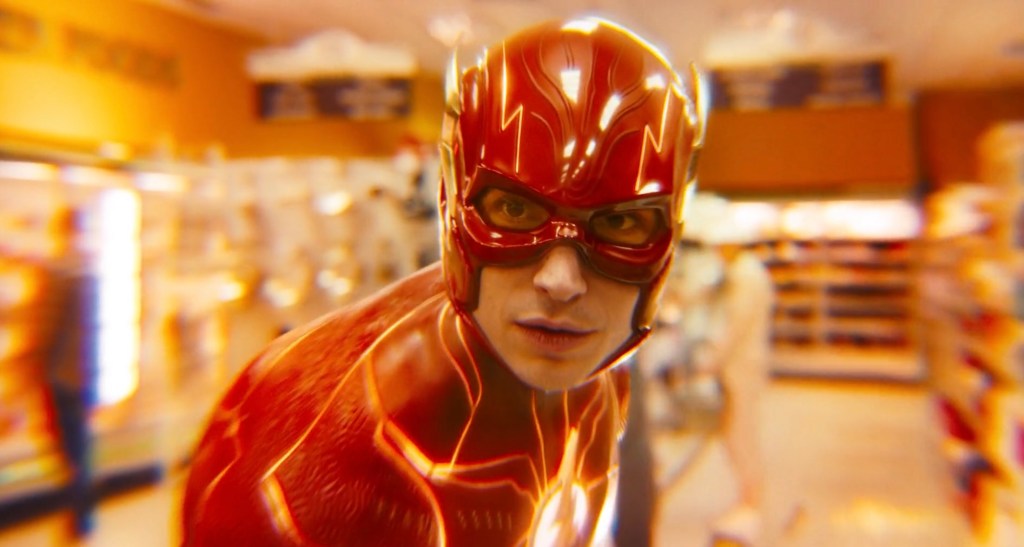
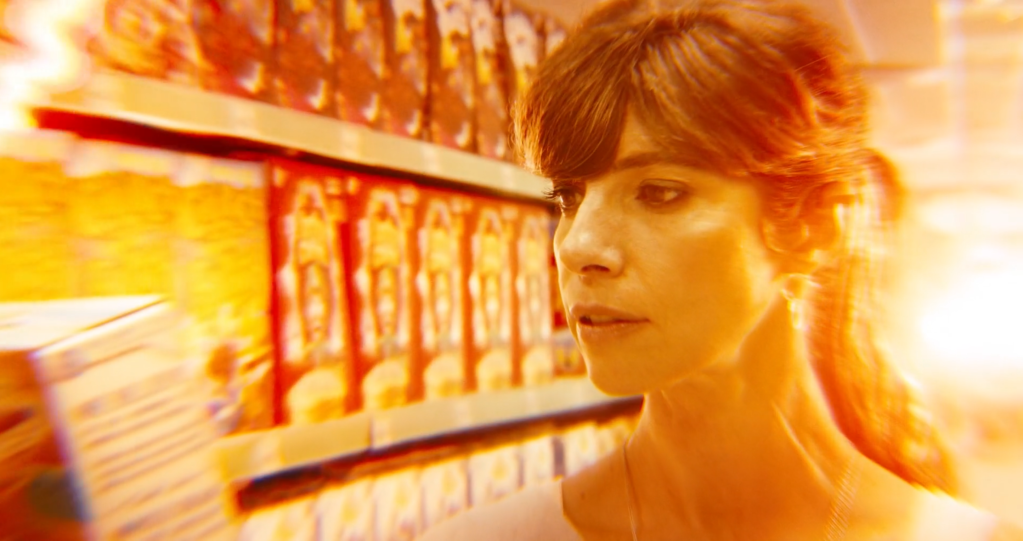
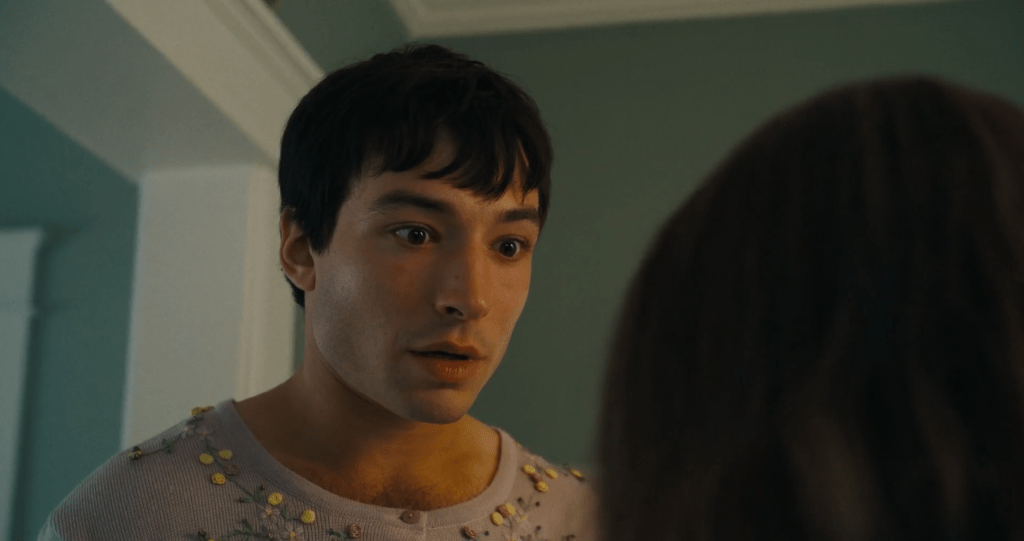
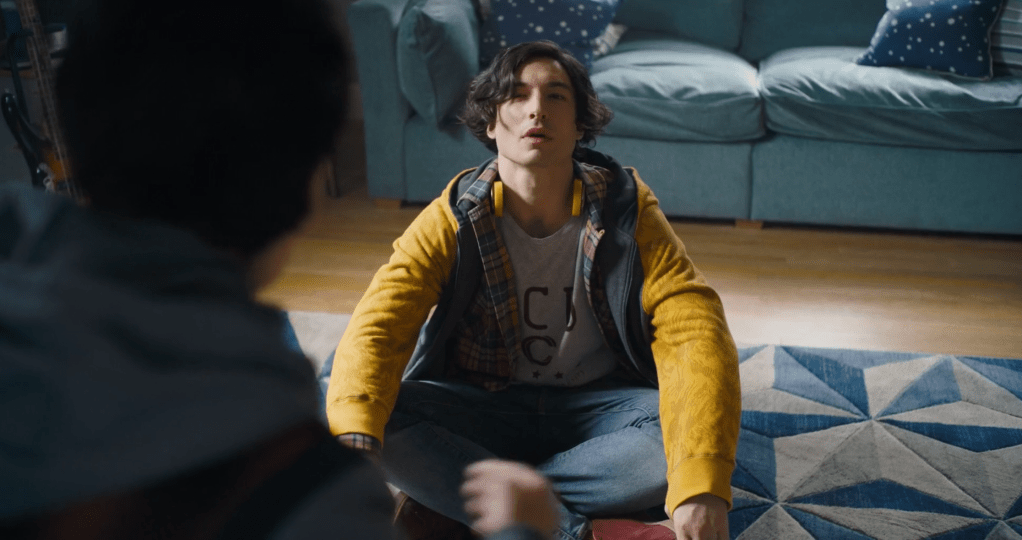
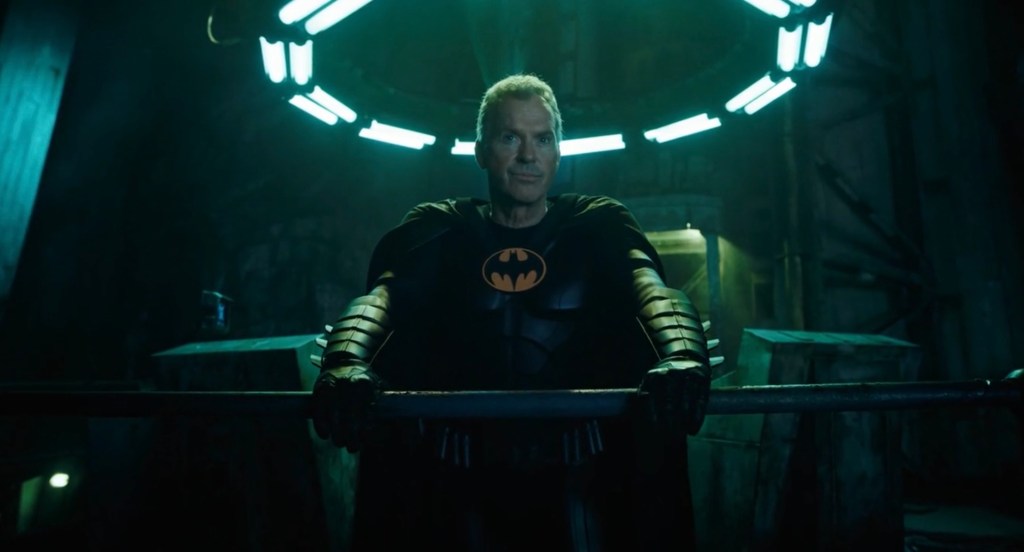
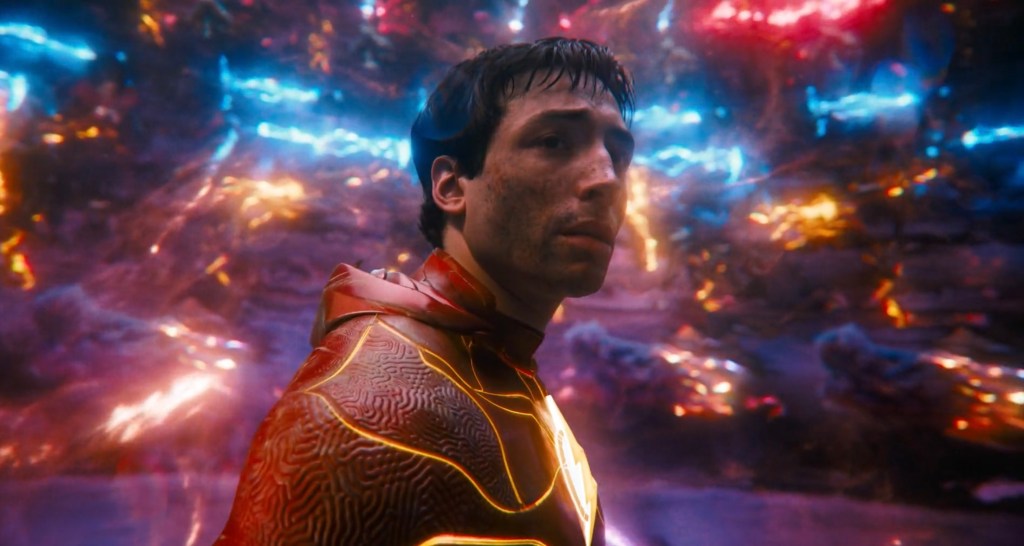
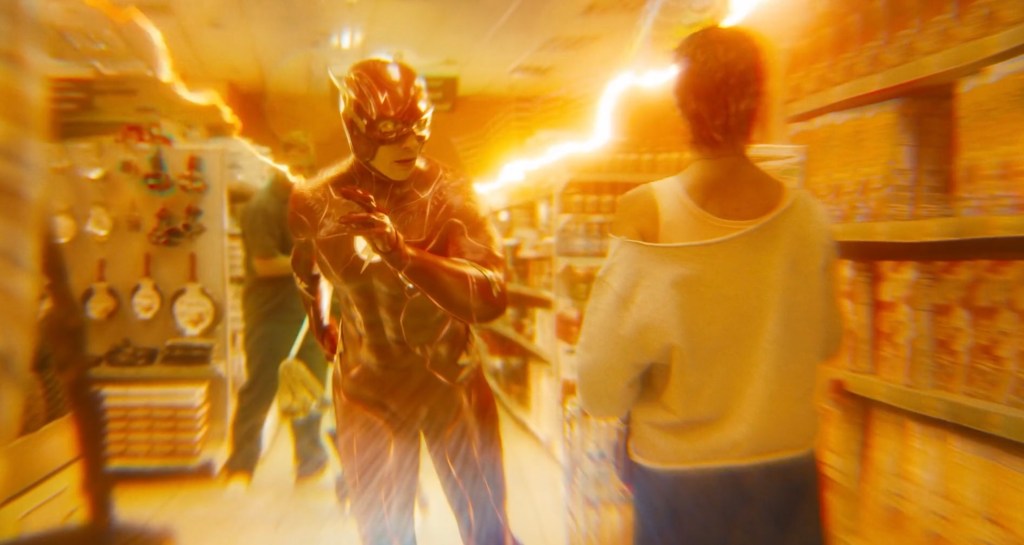
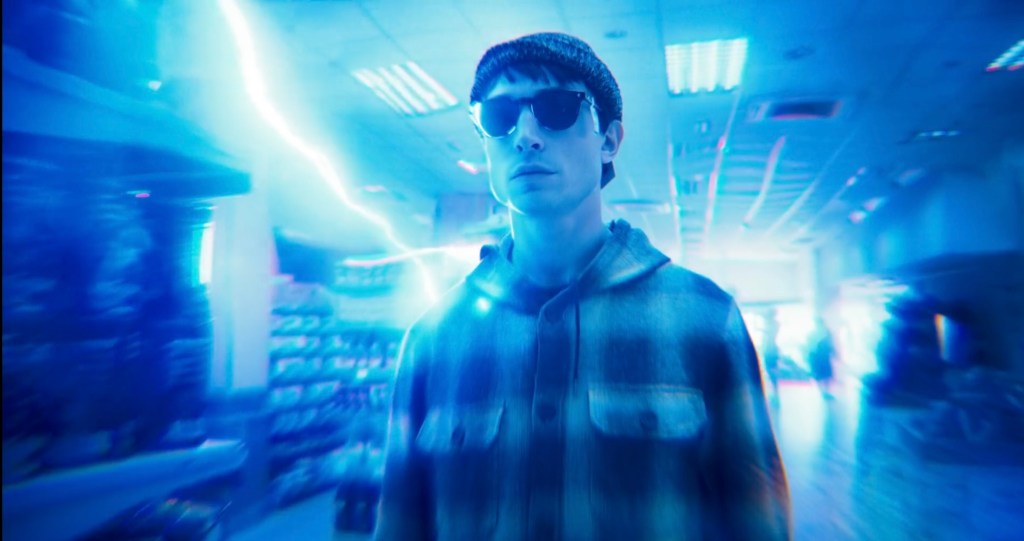
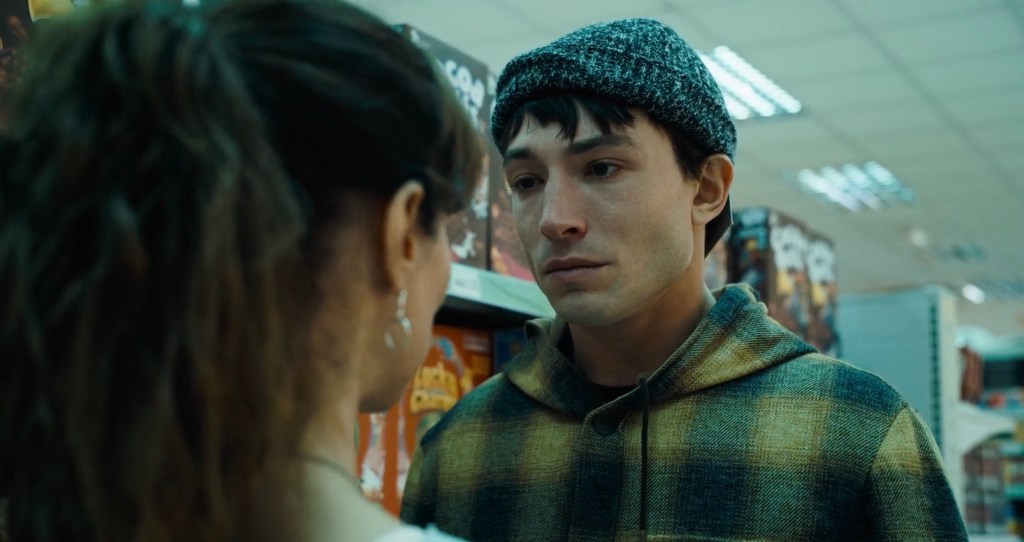
Unlike the DC Universe Animated Original, Justice League: The Flashpoint Paradox (2013), a curious live-action interpretation marked the latest foray by the DC Extended Universe in The Flash (2023). Both films are adaptations of Flashpoint, a 2011 DC Comics crossover wherein Barry Allen (Ezra Miller) travels back in time to prevent the murder of his mother, Nora (Maribel Verdú), which inadvertently creates an alternate reality on the brink of apocalypse. But The Flash sees Barry sent further back in time where he’s knocked into an alternate timeline by another time-traveller. Therein, he encounters—and coexists with—a younger, happier version of himself (also played by Miller) prior to the trauma that would’ve come to affect most of his life. This duality adds a layer of introspection as Barry not only confronts the consequences of his time-altering actions, but also the person he could’ve been had iniquity not defined him. Yet, his time travel creates an alternate reality where superheroes are missing or changed, and Earth is threatened by General Zod’s (Michael Shannon, reprising his role from Man of Steel) invasion. He teams up with his younger self and the timeline’s Batman (Michael Keaton) and Supergirl (Sasha Calle) in an attempt to save the timeline by defeating Zod.
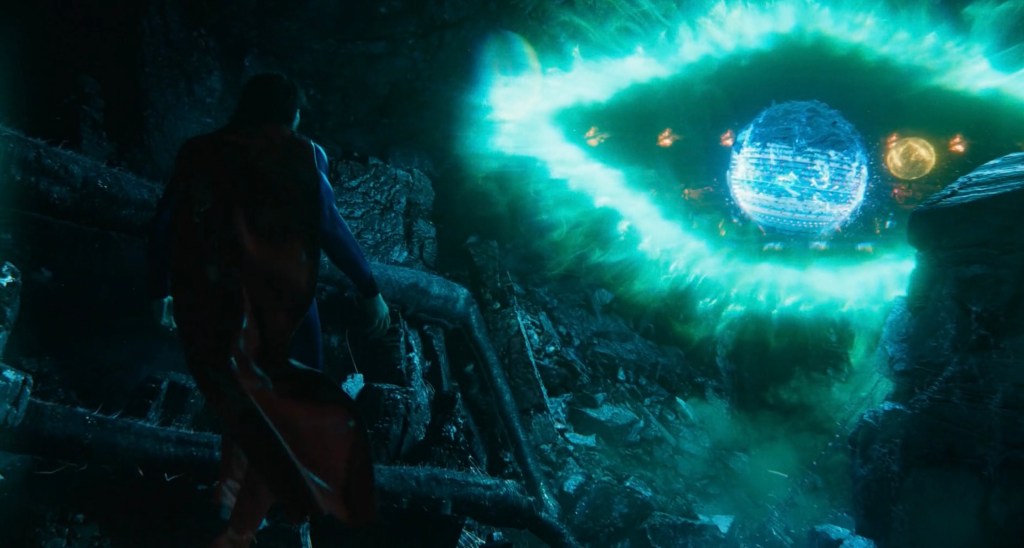
Central to the narrative is retrocausality, the concept that future events can influence the past, as Barry realizes his intervention causes disastrous changes to the timeline which affect both past and present realities. Another key narrative element here is fate, the idea that certain events are predetermined and unavoidable, when Barry recognizes that death—the deaths of his family, friends, and other allies—mark fixed points in time that can’t be changed. Thus, all is for naught as the heroes face Zod and his fellow Kryptonians. The Barrys find themselves woefully outmatched. Their attempts to engineer a favourable outcome are futile because despite any of their interventions, Batman and Supergirl invariably perish. The end of this world is assured as Zod deploys his World Engine to terraform Earth and repurpose the planet as a new Krypton.
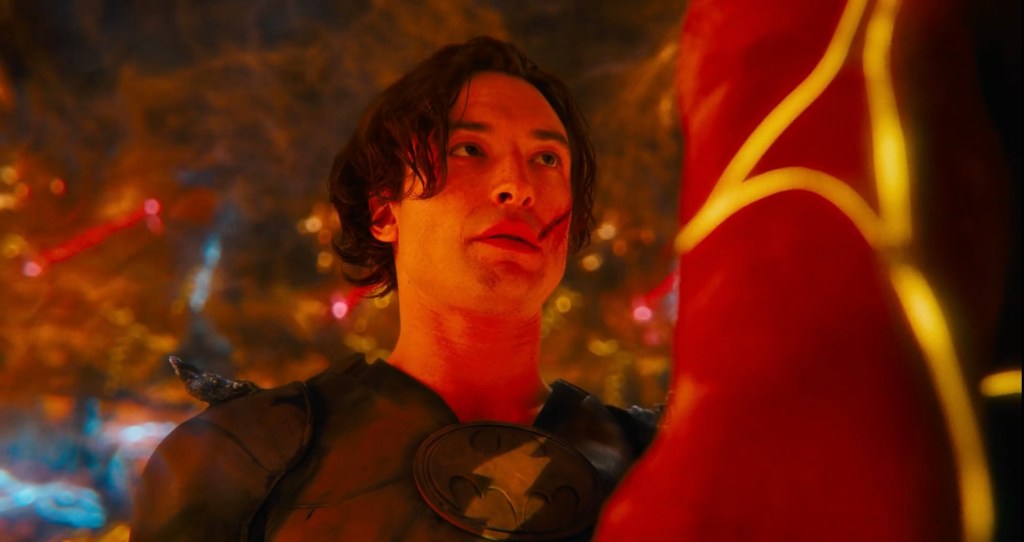
Eventually, Barry faces the Dark Flash (also played by Miller)—an older, battle-scarred version of his alternate self; uniquely conceived for this film—who has been obsessively trying to “fix” this doomed timeline, running through time for an eternity as he attempts to engineer an outcome where everyone lives. He admits to pushing Barry into this timeline to ensure his own existence wherein he [Barry’s alternate self] could acquire his powers. This relates to earlier in the film when Barry reveals to his longtime crush—Iris West (Kiersey Clemons)—that his resolve to work in forensics was driven by a desire to correct systemic failures which belabour judicial and evidentiary oversights, as he also seeks to exonerate his father—Henry (Ron Livingston)—who was wrongfully convicted of Nora’s murder. Since Nora never dies in this reality, alternate Barry lacks the driving force to be a forensic chemist—and so, never interns at the forensics lab wherein he would’ve been struck by lightning and doused in chemicals to gain his powers. This necessitates the Dark Flash knocking original Barry into this timeline whereupon he, in an effort to preserve his future and ensure he can go home [to his own timeline], guides his alternate self to orchestrate this accident. The Dark Flash muses about how close he is to “fixing” everything, having run back in time over and over again to orchestrate an outcome in which Nora, Batman, and Supergirl are alive.
But his efforts wreak havoc across the multiverse.
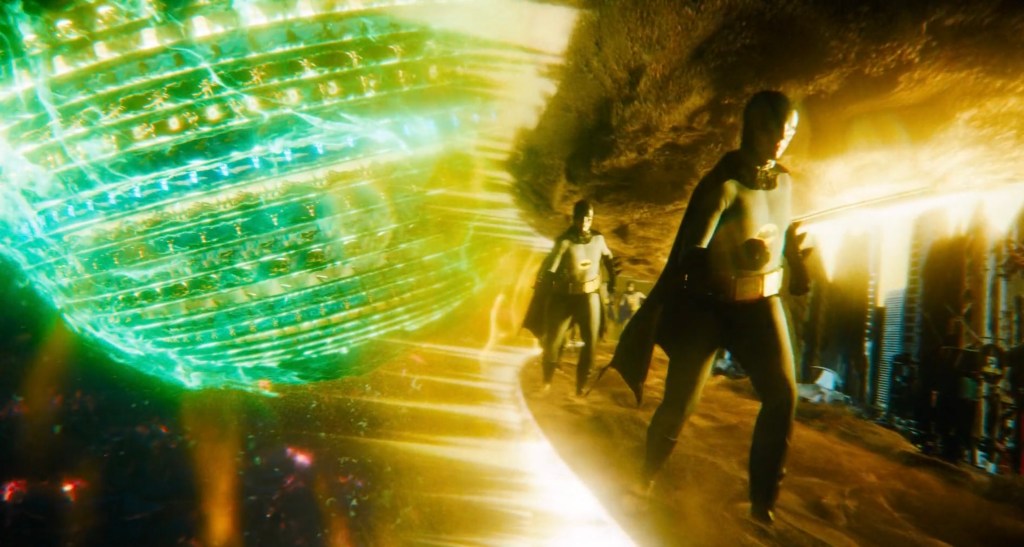
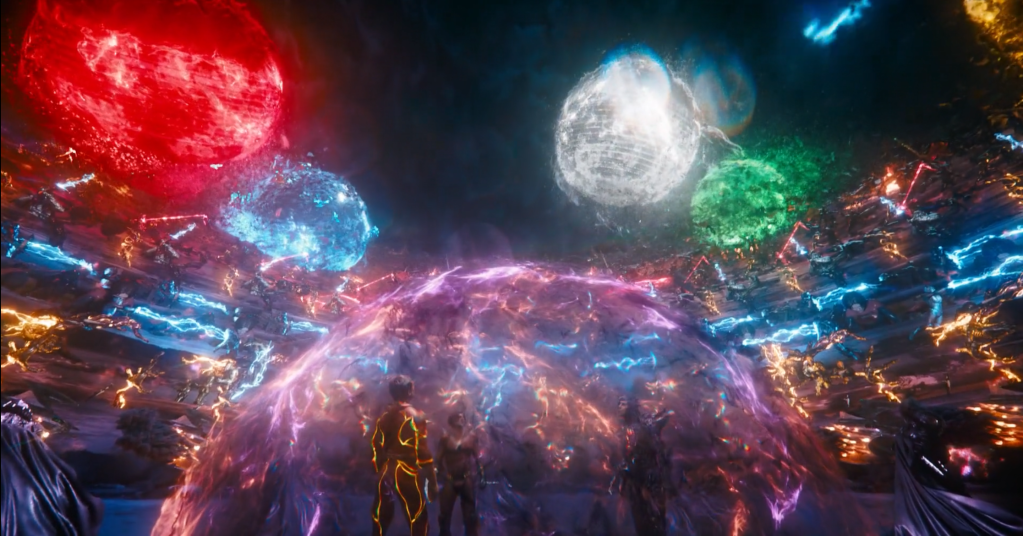
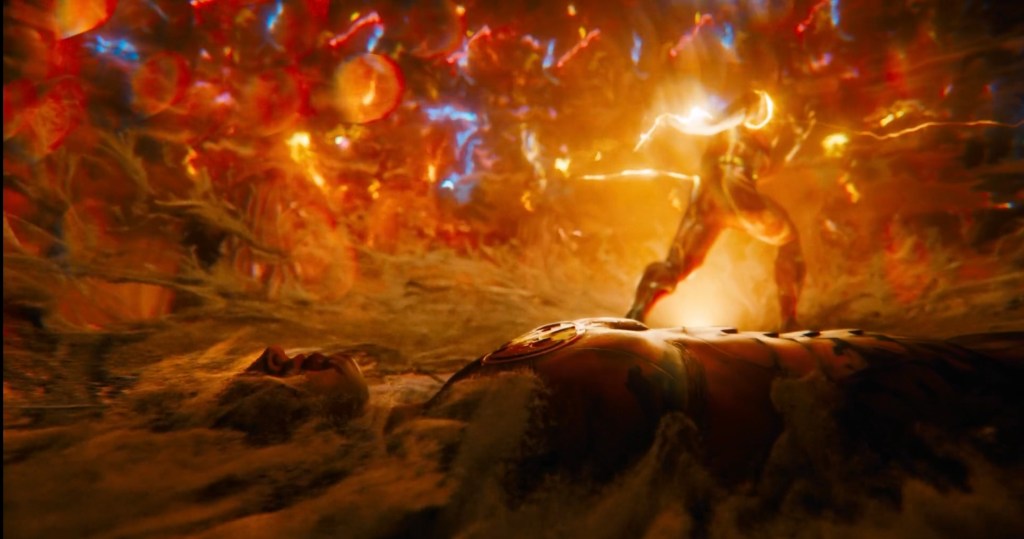
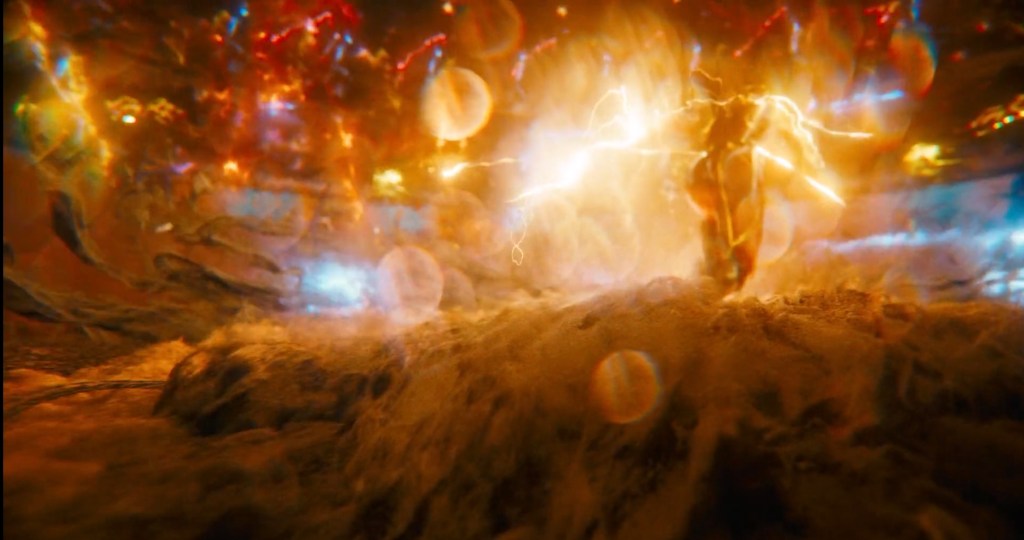
We see glimpses of alternate worlds and peoples. There’s one where Christopher Reeve and Helen Starr observe as Superman and Supergirl; another where George Reeve is a Superman who oversees Jay Garrick; and one where Adam West’s Batman chases a Joker played by Cesar Romero, among others. All of them degrade as the Dark Flash’s interventions compromise the cosmic order. His interference doesn’t just destabilize the multiverse. It degrades time itself. His obsessive attempts to alter events also render his very own reality unsustainable. On principle, the implosion of other worlds won’t spare this one. Still, the Dark Flash insists that he can “fix” things, then moves to kill Barry lest he jeopardize this objective—but is undone when he mortally wounds the alternate Barry who dives between them. Accepting this tragic outcome, Barry departs to undo his initial alteration, understanding that restoring the original timeline is the only way to prevent further chaos and preserve cosmic order.
In contrast to The Flashpoint Paradox which emphasizes alterity and irrevocable outcomes, The Flash contends more with reflection and nostalgia. It allows Barry to witness the innocence and joy of his younger self, which underscores a sense of loss that transcends what devastation ensues after his Nora dies. Both films share a central outcome in that Barry ultimately realizes he must undo what he has wrought in attempting to save his mother, as his intervention in the timeline creates a catastrophic ripple effect that throws the multiverse into chaos that leads the alternate realities to the brink of destruction. And while his intentions were rooted in love and grief, he comes to understand that altering the past to prevent an outcome—however tragic—causes more harm than good. The alternate timelines, whether in the form of a world plunged into war in The Flashpoint Paradox or the fractured reality in The Flash, demonstrate the dangers of tampering with time; evincing the consequences of Barry’s actions, forcing him to confront and accept a bitter truth: to restore balance and preserve the greater good, he must return the timeline to its original state, accepting the pain and loss he once sought to avoid. This realization is key in both iterations, reinforcing the [relatively quantum] principle that the past cannot be rewritten without destabilizing the present and future.
In many ways, The Flash personifies a conscious effort to live within the constraints of time, when one realizes that resisting change, tirelessly trying to ‘fix’ things, can be futile. We can recognize that retrograde efforts to ‘fix’ things create more harm than good, so we reconcile what we’ve suffered as we come to terms with the need to move forward. Our misfortunes are fundamental to who, how, and what we become. Which is why the Bruce Wayne in Barry’s original timeline (Ben Affleck) is nonplussed by the prospects of time travel. Quite accurately, he posits that any temporal interference could yield dire outcomes and notes how our adversities shape us. “These scars we have make us who we are,” he says. “We’re not meant to go back and fix them.” We lose out if we fixate on the past in ways that prevent meaningful engagement with the present or future.
For all the disfavour elicited by The Flash—concerning Miller’s exploits offscreen and the studio’s commercial failure—I truly appreciate this film, in that it captures the ethos of the sacred speedster which proves immensely resonant as time goes by. It’s the personal tension between holding onto the past and learning to let go for a greater good beyond oneself, even if it means losing the opportunity to relive a life with neither error nor pain. This alone marks The Flash enterprise as an admirable cinematic feat that explores memory, identity, and the inescapable nature of time. Moreover, The Flash uniquely depicts time travel to evoke an ontological terror that is premised on our own associations with other characters. For example, Michael Keaton reprises his role as Batman; or rather, a Batman from an alternate timeline which conjures nostalgia. Somewhat ironically, as he opines on retrocausality, his presence reinforces the idea that time is fluid and splintered as his familiar likeness is at odds with what we expect. This prompts yet another unnerving realization: any- and everyone, no matter how cherished or iconic, can be altered beyond recognition or repair, by time—which punctuates the chaos that Barry has unleashed. The familiar becomes unfamiliar, which characterizes an existential horror wherein once reliable constructs of identity, memory, and continuity are eroded. As Barry encounters this alternate Keaton-Batman, the film taps into our associations with Keaton’s original 1989 portrayal, but now filtered through the lens of a world that’s doomed and unrecognizable. Time travel doesn’t just threaten cosmic order. It fractures the very essence of the lives, stories, and characters we hold dear.
Which made me think of how Martin Tropp (1990) muses upon what makes for good horror: to “construct a fictional edifice of fear and deconstruct it simultaneously, dissipating terror in the act of creating it” (p. 5). He suggests that horror builds a sense of fear while also providing a way to dismantle or understand it through narrative mechanisms—resolution, confrontation, or explanation—that allow us [the audience] to process and dispel that fear. In The Flash, we see this when Barry sputteringly grapples with the fact that his attempts to change the past bear massive consequences; the terror of unraveling reality itself. And as Barry realizes the futility of his actions and works to restore the timeline, this horror is deconstructed. We, like Barry, come to terms with the inevitability of loss and the cosmic balance, which transforms the initial fear [of losing loved ones and failure] into a shared understanding for the dangers of trying to rewrite history. I can further appreciate this in knowing how the ignoble powers that be, initiate and sustain the historical and ongoing erasure of marginalized positionalities; how the disparities which define us are assured in perpetuity.
Even now, I remember seeing The Flash on the big screen. It was during a time when everything felt hollow, when the anxious pulse of my own vulnerability pressed in on me. Grief over my brother’s death, the ache of feeling expendable, and the dismal horizon of my future—no gainful employment, no promise, no purpose—hung over me. As always, I sought movies as a means to stave off despair. I tried to lose myself in a blur of images, desperate for some reprieve from an endless churn of thoughts and rejections. But I guess I’d grown used to these film reels, so I found myself piqued less by the features themselves than in what mere segments afforded me small mercies; and even those failed to dispel my gnawing sense of negligibility and the loneliness of being unmoored, unseen.
When I was in that theatre, I remember thinking that if I was Barry—stranded in an alternate timeline where heroes who were once widely revered or empowered ceased to exist—I could’ve cared less. Time doesn’t just give context to existence. It agonizes life itself. As a species, we’ve yet to truly evolve or progress. Since history repeats itself in terms of pain, harm, and disparity—regardless of what we do or don’t change—what is the purpose of time, of a life relative to time or other people? While technological and scientific advancements may suggest progress, they don’t address cyclic problems of suffering and injustice. Time is also indifferent to these struggles, as the same issues reappear in new forms across generations. In this respect, time seems pointless, even cruel because it offers the prospect of change without assuring its realization. Therein, time travel becomes a mechanism to explore this horror while simultaneously offering a way to resolve it.
Barry’s journey mirrors the core tenets of horror by confronting not external monsters, but the horrifying reality of devastation caused by his desire to “fix” what was thought to be broken. The fears that premise the time-traveller scenario arise from the catharsis that certain traumas, no matter how painful, are integral to the cosmic order; and that meddling with them can unleash cataclysmic chaos—which aligns with Tropp’s notion that horror works by creating and deconstructing fear in unison. Barry’s time travel offers him a fleeting sense of hope—of reversing loss and rewriting his trauma—but it also creates a terrifying new reality, where his happiness inflicts untold destruction. All iterations of Flashpoint provide audiences with a narrative framework to explore an experience that would otherwise seem chaotic and incomprehensible. In watching Barry wrestle with the horrors of manipulating time, we’re given a likeness to understand our own relationship to the past through a futility of trying to rewrite the inevitable. In the end, this story taps into an existential dread that forces us to confront the immutable nature of time and the consequences of defying it.
And while many people I’ve met have affirmed the existence of fate, that “everything happens for a reason,” it wasn’t until I saw The Flash that I could truly grasp this. Unlike The Flashpoint Paradox, it features Barry’s encounter with a happier version of himself—an alternate self who, in the end, dissolves into the sands of time, embodying the irreversible nature of certain losses. Alternate Barry was just too good to be true. Experiences, no matter how tragic, must remain so for the greater good. The literal and figurative dissolution of Barry’s alternate self speaks to how the personal is more crucial than political. While you may endeavour to change someone or something, unraveling the very fabric of time isn’t exactly selective. Reality and meanings are relative because they coexist. Good is palatable because we discern what is bad. When you aspire to eliminate one, you risk losing both. Just as these opposing meanings maintain balance, the Speed Force governs the equilibrium of time itself in DC Comics. It is an extradimensional energy source that fuels the super-speed abilities of speedsters [imbued with powers like The Flash], enabling them to move, think, and react at lightning-fast speeds, as well as travel through time. Barry channels the Speed Force to become The Flash, using its power to protect the timeline and uphold justice.
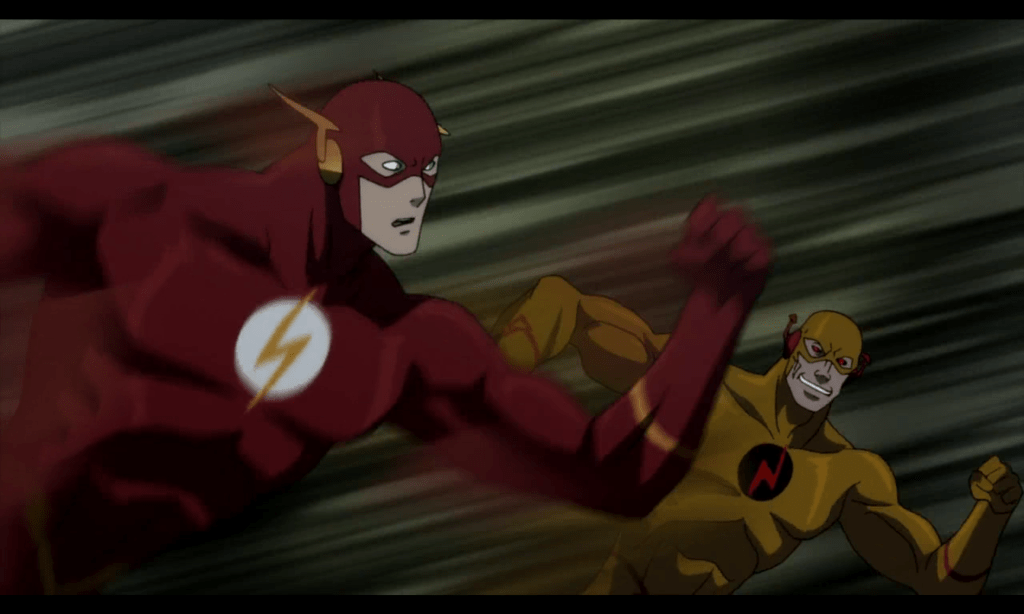
On the other hand, Eobard Thawne, the Reverse-Flash, creates and harnesses the Negative Speed Force to maintain his existence and undo The Flash’s heroic legacy. Eobard exists as a living paradox. Despite originating from the future, his existence is contingent upon his enmity with Barry. He continues to exist even when erased from history due to the Negative Speed Force which purposes him outside the normal constraints of time. The lore states that the Negative Speed Force and Eobard’s status as a paradox insulate him from time-altering consequences, allowing him to exist unaffected as timelines shift around him; an advantage Barry lacks. Yet even with this power, Eobard isn’t actually happy. He finds himself at odds, imprisoned in an eternity of obsession despite his freedom from any temporal constraints. He’s denied love, connection, even the very humanity he sought to conquer, illustrating that even mastery over time cannot restore what it takes.
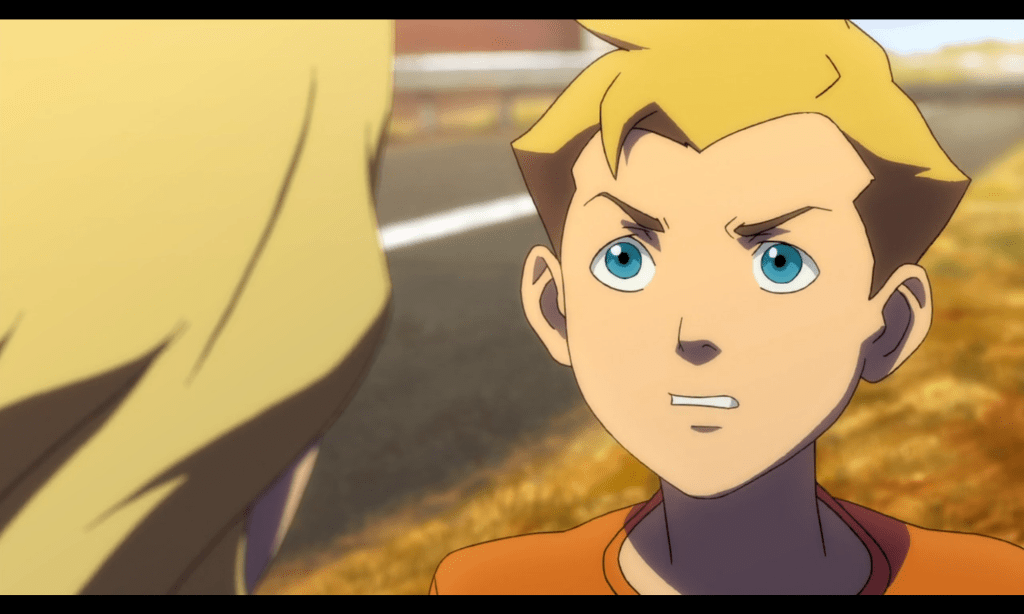
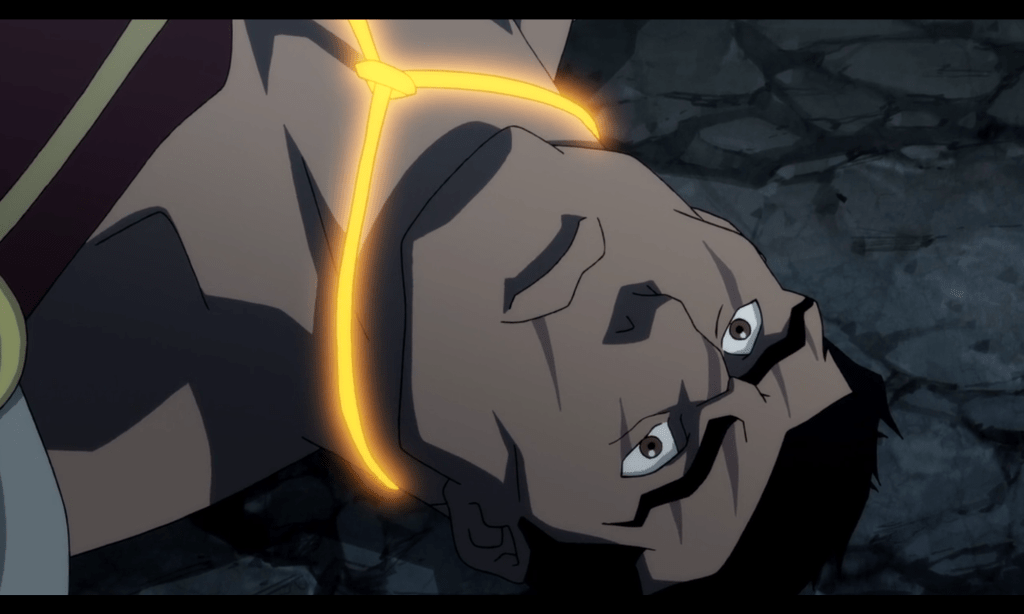
In The Flashpoint Paradox, Eobard appears as the primary antagonist, exploiting the chaos of the alternate timeline to torment Barry and gloat about the catastrophic consequences of Barry’s decision to save Nora. And while he doesn’t appear in The Flash, it was confirmed that Eobard was intended to be the culprit who murdered Nora offscreen. This looms, as his paradoxical existence embodies a cautionary contrast, the very dangers of altering time; a lesson Barry ultimately learns. While Barry seeks to heal past wounds, Eobard thrives on distorting time in an effort to fulfill his own obsession. But this in itself reflects a refusal to change. His attempts to alter reality stem from idealizing or controlling his past, rather than improving who he is in the present. But despite what torment Eobard causes Barry, the latter manages to live a pretty happy life. Although Eobard is free from time, his inability to accept the limits of his own actions resigns him to an endless cycle of misery; a sharp contrast against Barry’s journeys to growth and reconciliation.
I use to identify more with Eobard because of my own pessimistic avoidance, finding his existence as a paradox relatable as a means to shield one against inevitable loss; sparing myself and my beloveds of my very existence and engineering favourable outcomes for us. The Flash allowed me to empathize with Barry as he [his yearning to alter painful events despite knowing the cost] mirrors how I struggle to bear the emotional weight of caring for people who inevitably leave. For me, the film invoked a familiar question: is it worth forming connections that are destined to dissolve, whether through death, distance, or disinterest? The certainty of loss makes every bond feel tenuous, but Barry’s journey imparts that these merry moments may still be worth the pain they bring. The films show us this in a few ways. First, through Nora upon who he warmly scoops into a tearful embrace. Then, in the charmed life of his alternate self. This is also modelled through the multiverse as it begins to implode, conveying that the beauty of connection, however temporary, is intertwined with the certainty of its end.
When alternate Barry dissolved into the sands of time, I bawled. Not because of Miller’s performance, Andy Muschietti’s direction, or even Henry Braham’s cinematography. It was because of the narrative itself. This characterization hinges on the catharsis of one’s own ephemerality. Alternate Barry exists as a flicker against a dying light. He’s a radiant albeit brief impossibility born of a broken time, where his happiness and joy are fleeting in a reality that was never meant to sustain them—which serves as a stark reminder that such sheer happiness can’t persist in a world fundamentally unable to uphold lasting fulfillment. When the sands of time claim him, grain by grain, it marks an erasure of flesh and spirit. Being mortally wounded sees him express a mixture of terror and acceptance, nascent of a child’s dream collapsing into a man’s grief. As he’s swallowed by the very void that his alternative selves tried so desperately to defy, each particle dissolves the laughter that once was. This visualizes the tragic loss of youth and innocence fated to be overtaken by the stark, unrelenting future. His dissolution isn’t just a moment of temporal collapse, but a miserable metaphor for the necessity of growing up and facing harsh realities. To watch him vanish was like watching the erosion of hope and idealism that gives way to the burdens of time and consequence. I felt an unbearable pang as I watched this, like I was witnessing my own innocence being consumed by the relentless hands of fate. Whereas, the Dark Flash, the embittered future [alternate] self—an incarnation of fear and obsession—stands as a testament to the truth I’ve always known but resisted; that happiness, however desperately sought, can’t sustain itself in the shifting landscape of time and loss. There’s an intimacy in alternate Barry’s disintegration that hauntingly echoes my own desire to rewrite past sorrows, yet always knowing that—even if I could go back—the past would remain imbued with the same tragic impermanence.
Initially, I was content to watch to world burn—or in this case, implode—since I was exasperated by the iniquities that vindicate my cynicism. I resolved that if I was Barry, I could’ve cared less [to fix things] because this world’s cons overcome any [highly unlikely] pros and didn’t deserve saving. Like, what’s there to save? The perils of miscellaneous insecurities? The myriad of death and resignation which claimed my beloveds? Prolonging the despair of have-nots against the grain of what profane, performative politics comprise abusers and upper classes? But this scene imparts that time trumps any and every prerogative. It wrenched something raw and vulnerable from deep within, its truth so piercing that it brings tears even now, because it carries the likeness of my own futile longing for a happiness I was never meant to hold.
Charlatans will never see reckoning. Same goes for obscenely privileged positionalities.
My alma mater, amongst other local universities, will never endeavour to retain me regardless of my avowed—and pretty fucking obvious—assets.
My maternal grandmother will never live again.
Neither will my paternal one.
Nor my brother.
Or any other beloveds I’ve outlived.
My family will likely never set aside their petty grievances to simply get along.
My boyfriend’s love will never be totally guaranteed, and he may very well choose to leave me one day although he assures me I’m not expendable [to him].
James and Vera will never be alive again. And as badly as I wish for otherwise, Clark and Edith won’t live forever.
The reality of these impermanent connections only deepens the ache of knowing even the most cherished bonds can never be secured against the passage of time. Yet, time can also proffer great things that endure. I could one day find meaningful, gainful employment where I could work and effect positive change for years to come. My boyfriend has given me some of my happiest moments and our relationship could evolve into a lasting bond in any capacity. And I continue to create meaningful moments with my family in different ways. Even now, I have deeply cherished times with Clark and Edith, whose companionship brings warmth and comfort amid life’s uncertainty. Although I’m mindful of how I can’t be faulted for everything, that certain things are beyond my control, I still feel like I could/should be “accountable” when I fail to ascertain positive outcomes. The Flash motivated me to resist overthinking—via hyperfocusing on particular aspects or points in time—and aspire to be present in the moment, conscious of a grand[er] scheme.
Moreover, time operates on a double-bind of not knowing what’s to come. It’s defined by potential, holding both promise and peril as it unfolds. This uncertainty is equally hopeful as haunting. We know it will bring loss, but we can’t foresee what good may lay ahead. It’s this ambiguity that makes time so daunting yet so full of possibility, as every moment carries the potential to either deepen the wounds of the past or cultivate new, lasting joys. The problem isn’t merely the uncertainty of what’s to come. It’s the question of whether the anguish will be worth it. I don’t exactly fear the adversities time will bring; I just wonder if the bad will ever truly justify the good. Will I see any return on what hope, effort, and love I’ve invested along the way? Can joy, however fleeting, truly outweigh the depths of fated sorrow?
The Flash (2023) seems to suggest the affirmative, as Barry ultimately understands that he must fix what he’s broken in time—not to erase the pain, but to preserve the sanctity that existed in spite of it. His decision reflects that even brief instances of joy or equity can make hardships worthwhile, reinforcing the belief that any good, however small, can transcend the darkness that surrounds it; purposing sorrow as a necessity for the cosmic order. Our despair serves to maintain an equilibrium that governs timelines, peoples, universes beyond our own. The prospect of happier, healthier Fallens who exist elsewhere grants me some closure to make peace with my own indignities; and I’m inclined to count my blessings, appreciating what better living conditions I’ve got in contrast to the Fallens who are worser off.
Likewise, I also understand how disastrous it would be if any of us were to switch places. Imagine if I travelled back in time and wrought a timeline wherein I was a gainfully employed professor, but the absence of my beloveds—and very likely, my conscience—enabled my esteems. Regardless of whether they’d all be alive, I would’ve been estranged from my family. Probably no friends or felines. No boyfriend either. Or, what if my scholarship, salary, and success in that universe were contingent on becoming just as—if not, more—loathsome than the ignobles with whom I currently contend? Even now, I can think of several who are miserable with the familial cards they’ve been dealt. One in particular never misses a chance to impart I’m expendable because I’m not a parent and hold citizenship, absolving themselves of their own complacency, alleging that “suffering” would make me “a better person,” in contrast to more privileged colleagues; while they dote on—sparing no time or expense to ingratiate—themselves amongst internationals and within miscellaneous families in a pathetic effort to vicariously glean some sense of familiarity (notably, parenthood) in lieu of reckoning with their own lack thereof. By their own admission, they’re at odds with relatives—for whatever contrivance or another—wherein immediate relations refuse to indulge or cohabitate with them. It comes as no surprise that they’ve also proven to be anti-Black in imparting likewise, even worse to others. And, there’s another one who opines about how dejected they feel. They resent their family, opting to work late to stall going home for as long as possible. Their significant other functions less as a partner than a ward alongside the progeny neither can seem to civilize, whose narcissism grows as they do and renders their antics more of a nuisance than “cute.” Then, there’s the nepo-hipster whose parents’ [formerly tenured professors] spoils inclined them to cosplay as a queer liberal to supplant an utter lack of self-awareness.
I could go on, but I digress. At the core, this intricate weaving of timelines and alternate selves echoes The Flash’s emphasis on why tampering with time, no matter how well-intended, can yield unforeseen horrors. As Barry confronts the potential cost of rewriting his past, I too recognize that achieving certain desires could mean sacrificing what makes my life meaningful, even if imperfect. In addition to many others, the aforementioned ignobles deplore accountability as much as honesty and kinship, even as they claim—and build personae based on—the contrary. Their measly modus outdoes any vocational and financial fulfillment to the extent that their vanity and trivial pursuits betray them being hollow, condemned to dissatisfaction. Which prompts me to be mindful of the moment. The Flash accentuates this, showing that the real tragedy lies not in what is lost, but in what could be lost by pursuing an illusion of “better.” Some things are truly too good to be true.
Some times too.
♫ Title song reference – “For the Good Times” by Al Green
The summer I turned 22, I could finally appreciate the sentiment that underscored those mushy Hallmark platitudes. James had turned eight in the spring—just under 50 in cat years—and I loved him dearly. But I’d never forget when Edith came to me, jet black and demure as she seldom spoke; and when she did, she tended to whisper. Her voice remains one of the things that sets her apart from the others. First, from James whose tone was always intent and incisive. Later, Vera who had a voice that was distinctly dysphonic: raspy and mangled but bang on with its pitch. Then, Clark whose reserve and indecision distend even the most casual calls into wails. Even today, I still can’t quite explain it. All I know is that when we first met, Edith intoned a curious albeit honest endearment that etched into my heart forever. The fact that she speaks sparingly prompts me to acknowledge her whenever she does. Although I’m told that cats—like people—tend to talk more as they age, I still find myself keen to address what have become frequent utterances.
Like the others, Edith shares a namesake with one of my late relatives: my maternal grandmother, nicknamed ‘Ada,’ who was a devout optimist. I’m grateful for the time we shared since she succumbed to cancer when I turned eight. She proved to be somewhat of an anomaly, attributed to palliative care indefinitely and resolved—and largely, successful in her efforts—to be active. Her children remember her as selfless; raising them independently after my grandfather was lost to cancer many years prior, often foregoing her own intake and leisure to ensure theirs. They tell me that she often said things to me which seemed macabre, but I recall these things to be maudlin in hindsight. Aware of her ailments, she would tell me goodbyes. “I’m going to leave,” she said. “I’ll be here, but you won’t see me.” Several times, she emptied her purse to gift me the entirety of its contents, assuring me that they were better in my hands since her ‘departure’ meant these were things she’d no longer need.
Upon reflection, I think the loss of Ada defines why I still find death hard to come to grips with. I likewise find myself viscerally averse to any type of ‘departure’ from my life, even as I recognize people have the prerogative to abandon me beyond the context of mortality. This has fostered my tendency to mourn the people, places, things that are currently in my life to which bereavement overshadows them. I struggle to live in the moment because I find myself disassociating from it, knowing that the moment will inevitably pass. Even now, as I feel blessed to have Edith for 14 years—to which she’s roughly into her early 70s in cat years—I also feel sad in knowing she too will pass.
Like James.
Like Vera.
And Clark will pass too.
Everyone will.
Which is odd since I think I’m somewhat more amenable to that than the prospect of them leaving, living without me on their own accord. Surely, this betrays some pride or narcissism on my part, but this sentiment is hardly unique. The aftermath of any departure—a breakup, ghosting, abandonment, and so forth—embitters those left behind. It hurts whether we possess the wherewithal to be accountable for what parts we might have played in that exit, or acknowledge what toxicity underscored those who would choose to leave us as if we were expendable, or just accept that people are well within their rights to unravel our grasps upon them. Over the course of our lives, most of us learn—and nurse—that pain firsthand. Consequently, this pain defines us. Not in the sense that life is exclusively pain, but in that we cultivate the skills to push past this and muster the gumption to live life nonetheless.
But as Edith comes to purr at my side, these days, life as I know it has come down to outliving those I care for and staying after others have left. I think back to the summer we met: when her undertones complemented what reeds whispered and swayed in the breeze; and she would burrow her small face into the crook of my arm, then her pupils would recede to slits as we watched the sunset cast fiery hues across the horizon. Back then, I thought back to Ada who resolved to wash clothes by hand since she believed laundry appliances were insufficient. I remembered being a kid, carting soap to her pail, helping her peg each garment to the clothesline to later retrieve the dried colours and textures that would dance in the wind.
It seems almost eerie that Justice League: The Flashpoint Paradox (2013) debuted shortly after I first got Edith; and I say ‘eerie’ because the moral quandaries posed by time travel and prospects of quantum physics now endow me with a sense of relief. Like, this idea that all things—including the bad things—are fated to happen to oblige a grand [existential] design and we should neither rue nor alter them lest we jeopardize the fabric of space and time. Which encompasses the premise of The Flashpoint Paradox: the Barry Allen iteration of The Flash (voiced by Justin Chambers) travels back in time to prevent his mother, Nora (Grey DeLisle), from being murdered therein yielding an alternative universe and timeline. However, he lacks his powers in this reality. Barry also discovers his wife, Iris (Jennifer Hale), is married to someone else and the Justice League ceases to exist. This reality is on the brink of a world war, caught between the misanthropic Amazons led by Wonder Woman (Vanessa Marshall) and the speciesism that informs Aquaman (Cary Elwes) whose legions declare “land-dwellers” to be a scourge. In oversight, the powers that be duly conclude that contemporary society will be caught in the crossfire as the onslaughts foreshadow mutually assured destruction.
While Cyborg (Michael B. Jordan) has grown to become a government operative who the Shazam family aid, the Batman and Joker personas are assumed by Thomas (Kevin McKidd) and Martha Wayne (also Grey DeLisle) respectively while Bruce was the casualty of the fated encounter in Crime Alley. Hal Jordan (Nathan Fillion), although a decorated pilot, never becomes the Green Lantern. Martian Manhunter has also failed to materialize. Superman (Sam Daly) is later found to be imprisoned by the American government, neither utilizing nor realizing his powers. There are several other heroes and villains—Deathstroke (Ron Perlman), Lex Luthor (Steve Blum), Captain Atom (Lex Lang), Steve Trevor (James Patrick Stuart), Lois Lane (Dana Delany)—who assume covert operations to no avail. With Thomas’ help, Barry recreates the accident—being struck by lightning and drenched in forensic chemicals—that gave him his powers. While the first effort leaves Barry badly burnt, the second attempt succeeds to restore his powers.
But all is for naught.
In their quest to best one another, Wonder Woman and Aquaman have devastated the citizenry wherein they’ve overridden legal order and razed countless nations. Everyone who comprises resistance efforts—alien, metahuman, mortals alike—are killed. After Wonder Woman bests him on the frontlines, Aquaman refuses to concede and so detonates a nuclear bomb his forces have engineered using Captain Atom.
Armageddon ensues.
Barry notes that his initial time travel was possible because, during, his nemesis The Reverse Flash—Eobard Thawne (C. Thomas Howell)—was not simultaneously using the Speed Force. Conversely, in this timeline, Eobard now uses such—which means Barry lacks the power to time travel.
Beyond the fray, Eobard emerges to reveal that Barry is to blame for this timeline, explaining that Barry fractured spacetime by traveling to the past to save his mother. Gloating, Eobard pummels Barry until he’s fatally shot by Thomas. With Eobard dead, Thomas implores Barry to use the Speed Force—now, free from Eobard—to travel back in time: “The only way to save the world is to keep this world from ever happening.”
So, Barry runs and confronts himself along the way, preventing himself from intervening in the literal event of his mother’s murder. He later awakens to discover his original timeline restored wherein he is The Flash and comprises Justice League. Iris is shown to be his wife again, by his side at Nora’s grave, and he gleans some relief in that his actions yielded this outcome. Afterward, he visits Bruce Wayne (Kevin Conroy)—the Batman of this time—to ponder the experience; musing on the fact that he retains the memories of his alternate self—joys, special occasions, milestones—that ensued with Nora in the other timeline. Bruce speculates these memories could be a gift of fate, affording Barry a small mercy of recollection given his tragic loss—to which Barry gifts Bruce a letter from Thomas.
When Barry delivers Thomas’ letter, I think of the astronomical depth contained in that message; the weight those words must’ve carried across time. It’s nascent of our proclivities for people we’ve never met, places we’ve never been, or styles we never lived to model.
Kinda like how I love disco even though I’m a millennial.
When disco emerged in the 1970s, it transcribed a fusion of themes and cultural movements, integrating the festive and contentious aspects of its time. The core of disco is freedom, escape, and inclusivity. The genre historically offered a vibrant counterpoint to sociopolitical turmoil of the era like the Vietnam War, stagflation, along with calls to action which hailed from [Civil, gay, feminist] rights and other countercultural movements. Empowering BIPOC and LGBTQIA2S+ remained at the forefront for social change as this period was marked successions—newer waves—of initiatives for rights and inclusion that preceded them. For belaboured communities, disco served as a refuge of upbeat tempo, infectious rhythms, and [typically] glamorous lyrics that encouraged dancing and joy; which resisted conservatism and repression.
Of course, Saturday Night Fever(1977) would mark its decline. The film launched disco to unprecedented heights of mainstream popularity, transforming the genre—created and centered around marginalized positionalities—into a global commercial phenomenon that saw disco oversaturate markets. This would account for the deluge of disco records and themed products, noted for their subpar quality, that endeavoured to resonate less and maximize profit. All of this underscored a public fatigue as masses started to liken disco as formulaic, insipid, and sensationalized. Which would culminate in the ‘Disco Sucks’ trend that prompted a riot that overtook a stadium in which people set a pyre of disco records ablaze.
Still, the eminence of disco is timeless. Which is why I find it resonant even though I didn’t live through its peak. In their respective plights and objectives, Eobard and Barry impart this through their time travel, conveying that things transcend their historical contexts for anyone, any place—any time—whereafter others may derive new meanings and respects. While The Flashpoint Paradox follows Barry and the accursed inhabitants of the alternate timeline, Eobard Thawne is truly at the centre of the dynamic. His manipulation—exemplified in replacing Barry’s costume with his own, including his taunts and blows—serve to affirm his omnipotence within the storyline. Although both Batmans undermine Eobard as a narcissist and sociopath, I still doubt either of them could’ve foreseen the lengths he’d go—or rather, run—to quench his harrowing contempt.
Even as Eobard declares that Barry is to blame for the doomed alternate timeline, he says it’s “worth it” should he himself perish in the catastrophe. The revelation that Barry’s own actions created the Flashpoint timeline—despite Eobard’s provocations—illustrates the interplay between villain and hero, wherein Eobard’s influence transcends mere physicality and delves into the psychological, even existential. Eobard’s ability to manipulate time, survive paradoxical shifts, and maintain his influence over events and [Barry’s] psyche, enshrines him as a central figure whose significance in the narrative is as profound as it is unsettling, emphasizing his power and the focus on his character even as the story follows The Flash.
The Flashpoint Paradox also marks C. Thomas Howell’s voice acting debut, and he absolutely knocks the characterization of Eobard out of the park. Eobard is driven primarily by a personal vendetta. What defines him are envy, hatred, and a desire to prove himself superior whilst knowing his pursuits adversely affect spacetime. His objectives don’t align with broader ethical principles. Rather, they are fundamentally selfish and destructive wherein his time alteration holds consequences which extend far beyond his personal antagonism. Eobard is not only cognizant of the fact his actions threaten universal stability in addition to countless people and timelines, he also relishes the broader implications of his pursuits which are rooted in personal animosity and a desire to subjugate or destroy despite collateral damage. However, this perspective is underscored by an obsessive refusal to accept any outcome that does not align with his desires. In 2010, Geoff Johns illustrates this excellently in The Flash: Rebirth where we see Eobard going back in time over and over again, striving to engineer his own favourable outcomes, only to grow increasingly miserable because he finds himself yielding the very same—and worse—outcomes that he sought to amend.
What makes Eobard so relatable is his inability to accept the things he can’t change and that he himself refuses to change. This underscores a universal truth about the futility of trying to achieve happiness or growth through harm, and the detriment of refusing to accept and adapt to life’s inherent limitations. For all his powers and ingenuity, Eobard is ultimately characterized by a lack of empathy and an objection to grow or learn from his experiences. Which is why he pairs well as a nemesis for Barry whose indomitable will is conversely shown to be a source of strength and resilience purposed for a greater good, whereas Eobard’s resolve begets anguished actions and outcomes which speak to his maladjustment and failure to constructively engage with the challenges of life. There may be elements within him that aspire to overcome adversity, but what takes precedence is a commitment to impose his will. His animosity with Barry imparts a broader theme that the nature of one’s will—whether it is used for growth and positive change or for selfish ends—plays a crucial role in defining heroism or villainy.
And Eobard’s motifs go beyond obsession. He’s so preoccupied with power, control, and altering reality that he neglects the importance of personal fulfillment, interpersonality, and goodwill. His happiness is contingent on the affirmations of others and systems, which is a precarious and hollow premise for one’s value. Eobard embodies what becomes of those who become more entrenched in their ways through ignobility and manipulation for which individuals who fixate on their pasts grow alienated, bitter, and trapped in a cycle of despair wherein they never truly “win” or heal. Another element to Eobard: his inability to grasp that the essence of life is change; and I think that inability is derived from the fact that he exists as a paradox in time, literally impervious to change. Other films and comics provide this insight as Eobard was actually running through time opposite Barry. Therefore, he was unaffected because history changed therein. These changes occurred when he was outside of history and as such, he did not comprise it. He lacks a marked beginning and end. He’s a paradox because, by this logic, he shouldn’t exist.
Ironically, only after Edith had curled into my lap, this was something I could make sense of. Eobard exists like Schrödinger’s cat. And ICYMI: Schrödinger’s cat is a thought experiment in quantum mechanics that illustrates the concept of superposition—where, until observed, a system can exist in multiple states simultaneously. When applied to Thawne, this analogy speaks to his likeness as a paradox. Since he lacks a history, he comprises all states of being in unison. He can’t truly die because there’s no point of reference wherein he lived; and he can’t exactly be alive since he transcends the concept of life itself. Eobard is simultaneously erased and intact across different timelines. This duality allows him to exist in a state of quantum superposition, present and not present in the continuum of spacetime. He is alive exclusively in a narrative sense, acknowledged by those external to him. His impact is only real if observable by others, even though his origin point or historical continuity is not fixed. This puts his ignorance to internalizing a peace of mind into perspective; and draws an interesting parallel for us as we exist inasmuch the eyes of our beholders.
This is punctuated by the fact that, in hindsight, Eobard is the one who spurs Barry to time travel. The former taunts the latter: “Enjoy your petty little victories, Flash. But no matter how fast you run, you can’t save everyone. Not the ones that matter to you.” While this taunt inclines Barry to go back in time to save Nora, invoking the grief that haunts him since childhood, it also resonates with a desire to prove Eobard wrong and alter his fate for the better. But save for his costume, Eobard is hardly seen for most of the film which serves to foreground the chain of events that define the complex moral and ethical dilemmas associated with time travel and the butterfly effect. And when Eobard does emerge, he calls Barry out, affirming that this doomed timeline is quite literally the hell to pay for interference. When Barry alters time to suit his own ends, he treats time as a vanity project. “You didn’t stop JFK from getting assassinated or make sure Hitler stayed in art school,” Eobard chides, “You saved your mommy. You missed her.” While Eobard merely goaded Barry, it’s the latter whose actions have wrought Armageddon.
Which ties back to the [Serenity] prayer that Nora imparts to Barry as a child, recalling her own grandmother telling her the same: “Accept the things you cannot change. Have the courage to change the things you can. And have the wisdom to know the difference.” This prayer raises the question of discernment in human agency: how we distinguish between what is within our power to change and what is not, considering the limits of our control and influence. It begs the question of not only how we reflect in terms of acceptance and action, but also in how we apply wisdom to our lives. In The Flashpoint Paradox, this is thematic in that even those empowered—whether superpowered or respective to a privileged positionality—must concede to inherent limitations because there are certain aspects of life and reality that we simply cannot change.
The advice also affirms the importance of having the courage to change the things that are within one’s power—which kinda reminds me of Spider-Man as I think of my own elders when remembering how Uncle Ben famously said, “With great power comes great responsibility.” Elders who loved me, who ultimately wanted nothing more than for me to grow into a good person; a kind, loving, and selfless person who would do the right thing with whatever power I have. They believed in me—my goodwill, pride, and all—and supported my dream of [permanent] professorship so as to be empowered within academia which would translate beyond. If you have the power to do good in this world, you have a responsibility to do that good. That also means accepting when you fail to do so; whether that’s all the time you wasted trying to find happiness in people who fail to see you, or all the love lost between yourself and beloveds, or the demise of those you loved because you refused this responsibility.
Because people seldom recognize and undertake the truth of who (or what) they are or have become.
And, some wistful part of me wants to believe that it was no accident that Edith’s advent coincided with this insight. As I hold her in my arms now, I’ve yet to let go of the fears I held back then. Which is ironic as most tend to hold me in high regard, yet never think twice to let me go. Most laud me as strong: a scholar who’s fast-tracked several degrees, working my fingers to the bone with several bones to pick with those who fail to appreciate my efforts; whose lectures impart competence and charisma; whose words decorate peer-reviewed and non-refereed publications.
Except that’s not the whole truth.
As a lonely, cynical workaholic, I’ve internalized that I’m powerless and expendable; that I’m doomed to squander what scant power I possess. My pursuits evince as much resolve as desperation because I refuse to concede to limitations and strive to act decisively where I can make a difference. I’m alright with the how, why, who, what, and where.
What gets me is the when.
It’s not that I regret my mistakes in and of themselves. I regret making them in the first place.
But this isn’t unique to me. The desire to travel back in time [to correct past mistakes or avoid pain] encapsulates a fundamental aspect of the human condition: our capacity to reflect and for shame. This longing stems from our ability to contemplate our actions and their outcomes, coupled with an intrinsic wish to alter decisions that led to negative consequences. It attests to understanding causality and how subtleties impact life as we know it.
At the same time (no pun intended), it evokes antithetical desires: the want to learn from our experiences, whilst wanting to negate what pain or loss accompanies these lessons. These desires belabour our efforts to live an ideal life of happiness as we strive to minimize our suffering and avoid loss. They personify our psyches through aversions to pain and capacities for care. When I yearn to go back—to prevent myself from acting in certain ways, being in certain places, meeting certain people—it’s not because I want a personal do-over. It’s because I broadly aspire for perfection and protection for myself and those I care about.
So, I repine whatis as I dream of whatcould be.
My parents would probably be happier if I didn’t exist. To call them estranged would be an understatement. Without me, they wouldn’t be obliged to cross each other. My absence would proffer them the freedom to pursue their happiness independently, so it’s conceivable that their lives may be better without me in them.
Likewise, my siblings would be better off. My sister would be more favoured. We’re seven years apart, so I can only imagine how better established or aware my parents would’ve been had they met and conceived then—as opposed to prior with me—at that juncture of their lives. They could’ve given her more acclaim for lack of comparison. The same also goes for my late brother. If I was never born, my parents could’ve devoted themselves—more time, attention, and resources—to him. Maybe then, they could’ve ascertained and subsequently intervened to rid him of his inner demons; instead of fruitlessly pouring into me since my gainful employment or benefits have yet to—if at all—materialize.
Come to think of it, my partner might be content if we never met. I cannot begin fathom how he tolerates my flaws. An assortment of obsessive compulsions and anxiety mark my own struggle to even stand myself, so I can only imagine how burdensome someone else would find my insecurities. Given our own proclivities for isolation and resignation to our fates [which seem contingent on obliging others to our own detriments], I wonder if our connection ensued as a consequence of a misguided time traveller.
On the other hand, my counsellors argue that my non-existence wouldn’t necessarily ensure these positive outcomes. Seemingly random or chaotic states of systems can arise from underlying patterns and deterministic laws, challenging traditional notions of predictability and control. Chaos theory, with its emphasis on the sensitivity of systems to initial conditions, provides a fascinating grounds for this; and is also a lens through which we might view the attempts of Eobard Thawne and Barry Allen who travel time to find fulfillment or happiness. It suggests that even minor changes to the past can lead to unpredictable—often vastly different—outcomes, rendering time alteration [to any extent] risky. This problematizes time travel because its uncertainty is not guaranteed to result in favourable outcomes. Less people are familiar with chaos theory than its famed butterfly effect, positing that even the smallest change causes profound impact.
For Eobard and Barry, chaos theory notes their attempts to manipulate time are fraught with potentials to spawn incidental effects which are far removed from their original intentions and desires. This resonates in several of their story arcs where their attempts to alter the timeline cause collateral damage, complications, or further personal and moral dilemmas. As such, their stories often impart that the pursuit of happiness—especially using such drastic measures as time travel—overlooks the immanent caprices of complex systems, like human lives and societies. Additionally, personae and viewers alike come to the same realization: no matter the time or place, or intervention, inequities and disparities persist. Eobard grows bitter, entrenched in recurrent letdowns, to which he absconds goodwill, citing the absence of guarantees. For Barry, in contrast, the Serenity Prayer is practical wisdom to face—and respect—the interplay between order and chaos. As for me, my non-existence doesn’t negate what abject prospects my parents, siblings, and partner could face. My parents may have ended up with different [worse] partners. My siblings could’ve succumbed to darker forms of anguish. My partner might’ve fallen prey to a fatal attraction. These dismal potentials should therefore merit my existential value.
But they don’t.
These alternate “worse” scenarios denote less truth than pathos. Optimistic platitudes elicit irritation rather than comfort. To put it mildly, there’s a massive gap between these prospectively “worse” timelines and how my pessimism is affirmed in this one. I need concrete solutions and assurances, not rhetorical devices. Do people still think knowing “it could be worse” does anything to allay despair or anxiety? Do catharses ensue when we’re aware of grosser alternatives?
The reason I identify more with Eobard comes from another paradox of [good] morality and material prosperity. Barry allows his mother to be murdered as ordained in the original timeline to spare the other one, which imparts we ourselves must suffer the bad to befit a greater good. But for marginalized peoples—historically enslaved, assimilated, genocided peoples—this doesn’t land. It is sheer fallacy to purport we must suffer to spare others given our peoples’ erasure and exploitation, especially when the “greater good” functions as a supremacist worldview that is hegemonized. To that end, morality has been—and continues to be—instrumentalized by privileged positionalities whom are empowered as gatekeepers as well as within stations of allocation and oversight. If I were to concede to hope—premised on an idea of a world whose atrocity justifies the reality of this one—I’d be lying to myself. These platitudes feel fake, engineered to quash any resistance and ensure complacency.
Which draws me back to Edith: I remember when she first met James, how earnest she was to keep her distance. I remember how long it took for them to finally get along, weeks later, and being mindful of the fact that my desire for their camaraderie neither obliged nor guaranteed them to get along. As I supervised their exchanges, I mused upon how, just because I chose them, that didn’t mean they must follow suit. These days, Edith kneads when I find myself enraged by people who insist everyone else must right themselves towards their desires. People for whom, outside of their wants, we cease to exist; people who shrug as we perish, but volunteer to deliver our eulogies; people who insist suffering makes us better, yet are agonized when their karma takes shape in grievances. We’ve all met these kinds of people. Maybe once, we were them; but that doesn’t make us bad people. Because good people change. All the same, as much I try to be a good person, I don’t flatter myself. While people from several walks of life call me “distinguished,” I’m far from perfect. Like you, I struggle to make life work and to persevere against odds which feel insurmountable. Every decision I make comes with new problems to deal with.
How many times have you asked yourself, “What am I supposed to do?”
I don’t know what I’m supposed to do. I just know what I’d like to do, and I try to be mindful of that distinction. While I can’t time travel, my ancestry has made me privy to historical and ongoing atrocities of the charred aftermaths of lynchings, frozen cadavers, and peals of agony. While these profoundly unnerve me, they’ve been glossed over or commodified by token wealthies, hypocrites, and charlatans—all of which conspire to cheat and demoralize me. I don’t have a morsel of their power, so my truth cannot overcome their falsehoods. I can’t relate to Barry because I don’t see any “greater good.” Like, how entitled is it to deprive me even more in the interests of a status quo wherein good itself [as is] can’t be salvaged? Like Eobard, I’m inclined to be amoral since the prevalence of injustices vindicate my cynical worldview. I’d gladly perish in an alternate timeline where I was assured acceptance, purpose, happiness—even if only for a short time—to spare myself further anguish and indignities I’ll likely encounter (or cause) in this time.
I don’t choose to be a pessimist. I just can’t help it.
What sets me apart from Eobard is people.
Recent versions of Eobard cast him as somewhat of a victim when foes murder one of his ancestors, thereby eliminating his home [the future] and confining him to the present. Although this narrative isn’t definitive, it draws upon the sense of rage and displacement inherent to his character. Eobard was isolated and disconnected from everyone, everything, long before he became unmoored from time. Eobard becomes a super-speedster through replicating the accident that empowered Barry because he idolized him; and this idolatry is augmented by the absence of Eobard’s own sense of purpose and meaningful relationships. Their fated enmity comes to pass when Eobard snaps once he uncovers records which identify him as Barry’s nemesis.
As much as Eobard wants to emulate or best Barry, what he ultimately wants is fulfillment. His ends aren’t justified, only occluded by his extraordinary means. Moreover, Eobard is shown to deceive any and all allies. It occurs to me that Eobard doesn’t choose to be disloyal, but rather he can’t help it. He betrays others, even himself, because everything he does betrays an underlying sense of not belonging. His choices are informed by a desire to matter and be remembered—which betrays that he is so removed from humanity, striving to connect by manipulating time, only to further alienate himself. Eobard is thus truly tragic, the epitome of how the pursuit of power to supplant identity ensures antipathy.
Which parallels how my own pessimism—defined by my disempowerment—renders me perpetually at odds with the world and myself. Instead of adaptation or acceptance, vengeance seems to be a more apt objective for the injustices, inequities, and such that I’m subjected to. I want to get back at the iniquitous—former advisers, mentors, and grifters—who told [and continue to tell] me that my thankless, tireless drudgery would assure worthwhile outcomes. I want to reclaim a future I was denied, a glowing future that was promised to comprise my present. My timeline is literally up in the air because colonial regimes have murdered and cheated my ancestors; and I’m now told to “make do” by folks who came by their intergenerational wealth and cultivated assets off the backs of my peoples’ erasure, enslavement, and execution. And even after I oblige and surpass ascriptions of merit, I’m still denied. But those in oversight are in my ear, imploring me to “enjoy the journey” as I lament the future being unclear. This too is not unlike Eobard who, rather than accept and adapt to signs of the times, desires to avenge his lost futures, making his rage and displacement a natural albeit destructive path for him.
This is the irony of Eobard, exempt from the conditions of spacetime but remit to past grievances; a living paradox who lives outside of time only to define himself within it. Even now, I get teary as I look to Edith, in spite of her good health, pondering her inevitable departure. I could never forget her; I wouldn’t want to. Just like Ada. Yet, I can’t reckon with the finality of loss. That is, I strive so deeply to gain in an effort to negate my losses. Eobard similarly acts not so much in the interest of winning, but to appease his aversion to responsibility. Where, when, and how he runs indicts his attempts to run away from the pain [and accountability] associated with acceptance.
But I actually have people I care about, the same people whose lives I wager my non-existence would benefit. They impart the value in facing the truth. The whole truth. Life is so vast. It can’t be consigned to gratuitous evils. There’s truth in that my family manages to chip away at my heart; and I hope that my partner, in his heart of hearts, resolves to hang in there for the truths our love evinces. Truth is what moors fear when you share your heart with someone. Specifically, the fear that expressing your truth is too much for your beloveds to bear. It’s hard, but this feat leads us to find—and feel—something greater, something more. Truth doesn’t undo us. It makes us stronger. Even though it takes time, even knowing that there may be more to overcome, your truth resonates with you more than what precedes it.
This was only something I came to realize after meeting my partner. For my tendency to make mountains out of molehills, what tides me over is knowing he isn’t subject to the [grim] whims of my imagination (although I still wouldn’t be surprised if a time traveller appeared and admitted they had a hand in things). Truth taught me to hold on, if only for a second longer. Although I wonder if those who’ve passed learned this, I can only wish them well, wherever they are; even alive and well somewhere else in time, and I can only respect what suffering I needed to feel, if only to assure their wellness.
My mind wanders to alternate timelines where I can simultaneously exist and observe my non-existence.
I think of encountering my parents, both of whom radiate confidence and contentment, pausing as they’re struck by déjà vu as I hold a door open for them in passing. They might be together, they might not. In any case, they’d have more colour in their cheeks.
My mother wouldn’t be as tired. She would muster the energy to take charge, take stock of her ambitions, totally free to indulge her dreams and leisures since my absence would afford her more time and resources. And she wouldn’t consider the consequences for talking reckless. “Next time is next time,” she’d scoff. “Now is now.”
My father would appear less wan and sound less hoarse. He wouldn’t think twice to regale anyone with his tales of memories, because he’d have so much more without me there to weigh him down. Even if I revealed who I was, I wouldn’t be surprised if he still reiterated what he often tells me; about how we can only go forward and learn to navigate our wants and abilities within the larger framework of what is right and possible.
My siblings would exchange looks after they caught sight of me, slurping an XL soda, when they make a pit stop for one of their road trips. Maybe my brother would replace his cap, shifting his weight from foot to foot, and derision would subsume my sister’s curiosity. Either one of them would remark on how they’d have to get back on the road, then opine about the unbelievable gas prices. Just the two of them, they’d play off each other better—even happier—without me to complicate the birth order. My sister would shine in the absence of my shadow, empowered to connect and laugh off others’ chagrins. And my brother…well, however he was, he’d still be alive.
Then, my partner—whose charms I’ve devoted sonnets to—would want for not, whether he was alone on the sidelines, gauging his pride in observing the lack of others’ or bemused by some bombshell. I’d encounter him near campus. I’d blush when he’d answer the door, just as he did the day we met. But this time around, I’d be less stiff and proffer more insight to our conversation. Since his specialties are in science and mine are humanities, I’d admit to reaching across the aisle every so often because I was fascinated by generative adversarial networks and causal loops—until it’d occur to me that I was rambling, but he’d politely listen all the same. Then, I’d think of us together elsewhere, somewhere else in time; where neither of us would think twice to declare our truths. And I’d feel like crying, albeit I’d be consoled by the time at hand wherein my non-existence is for the best.
And in all these encounters, if I ever found myself entreated by one of these people I care for, my answer would never change: “No thanks. Maybe some other time.”
♫ Title song reference – “Time in a Bottle” by Jim Croce