
For me, growth comprises a series of unbidden crossings instead of some steady sequence of milestones. I come into initiation through early encounters with loss and precarity, where ethical awareness arrives ahead of skill but still demands response. These aren’t moments that announce themselves as formative; they register gradually, through absences that don’t resolve and conditions that don’t stabilize. I don’t just forget what I lose. My losses reorganize how I move, what I notice, and what I can no longer overlook. At the same time, spaces that are meant to confer direction or recognition reveal their own inconsistencies, wherein effort doesn’t reliably translate into security and merit is acknowledged without being supported. Moreover, I moved through these institutions with diligence and intent. I fast-tracked my degrees, kept a steady rhythm of research and publication, and approached my work—and people—in good faith, with the expectation that consistency and care would accumulate into stability. I met expectations and, at times, exceeded them as I navigated conditions that weren’t designed with my positionality in mind. This cultivated a disciplined, adaptive effort characterized by a willingness to continue even when the terms are uneven.

But the outcomes didn’t—and still don’t—align with the labour. Recognition appears intermittently, without continuity. Opportunities remain contingent. What becomes evident over time isn’t a lack of capacity, but a lack of translation between effort and security. To be acknowledged without being retained, to contribute without being anchored, is to occupy a position that is functionally provisional. This doesn’t make me exceptional. It just makes me attentive and teaches me to notice asymmetries of power, the fragility of care, and the ways survival tends to precede understanding. Continuity isn’t structurally guaranteed so much as it depends on conditions that are unevenly distributed and often withdrawn without explanation. After a while, my attention became less of a choice than a disposition further augmented by my disability and neurodivergence. I grew painfully aware enough to register shifts in tone, expectation, what’s said, and what goes unsaid. This mindfulness forms in advance of reassurance, and response becomes something I carry out without the promise that it will be met, reciprocated, or even recognized.

Maybe that’s why I felt by Kraven the Hunter (2024) which depicts initiation as something imposed. This reflects how my own relationship to the world took—and continues to take—shape through intensive perception and responsibility. The movie follows Sergei Kravinoff (Levi Miller) from a violent childhood under the rule of his domineering father, Nikolai (Russell Crowe), as he grows into a relentless personal code. During a hunting expedition in Africa with his younger brother, Dmitri (Billy Barratt), a fatal clash with a lion and an enchantment from Calypso (Diaana Babnicova) transform Sergei by endowing him with inhuman strength, senses, and stamina. But this fractures his family, precarious as is. Sergei withdraws into off-grid isolation while Dmitri remains—and matures—with Nikolai. Years later, Sergei (Aaron Taylor-Johnson) comes out as a hunter of criminal predators he deems “worthy prey,” which eventually forces him to contend with Nikolai’s criminal empire and the divergent fate of Dmitri (Fred Hechinger). Along the way, Sergei reconnects and partners with Calypso (Ariana DeBose), now a prosecutor. Their alliance draws them to conflict with Aleksei Sytsevich (Alessandro Nivola)—also known as the Rhino—and the Foreigner (Christopher Abbott), an ocular hypnotist assassin, whose brute force and mechanized violence crystallize the distortion of the hunt that Sergei strives to overcome. The film traces how his origin functions as an initiation that binds him to violence, ethics, and survival which informs his relationships and sense of responsibility.
Reading the film through a lens of initiation myths allowed me to reflect on my own experience. Maturity isn’t a destination so much as an ongoing practice of coming into, then carrying consciousness that guides our ethos. For example, initiation concerns spiritual encounter among the Dagara in West Africa (Tengan, 2016). People are drawn into initiation because something in their life breaks open—typically via illness, disorientation, or some disruption of psyche—signifying that perception has exceeded ordinary bounds. The trial evinces being in contact with forces beyond the communal norm, so initiation responds to a rupture already underway that teaches the initiate how to carry the deeper awareness without being consumed by it. The outcome is responsibility—not authority—manifest in the capacity to translate between visible and invisible orders. Likewise, Ifà initiation is open to all genders and centres on the ethical weight of knowledge over physicality (Clarke, 2004, p. 244, p. 264). The initiate undergoes ritual seclusion which proffers entering a cosmology where adulthood is defined by their ability to interpret signs and act in balance with unseen forces. This produces intermediaries whose insights carry consequences for others. Initiation here marks the moment when perception becomes obligation which binds the initiate to careful speech, restraint, and accountability.
Alternatively, trance and healing initiation occurs in altered states that bring the initiate near death for San communities in South Africa (Guenther, 2020, p. 11, p. 57). Pain, exhaustion, and visionary experience collapse the boundary between self and world. Initiation confers relational capacity—the ability to move between states of consciousness and return with knowledge that sustains the group—more than status. Survival qualifies the initiate as one who can cross thresholds without being overcome by them. Initiates become attuned to states and mediate intensity as opposed to being subsumed. Being attuned needs regulation where sensation, vision, and bodily strain are interpreted rather than resisted. The initiate comes to recognize shifts in threshold as meaningful and develops an awareness that enables them to hold proximity to extremity.
In Ancient Greece, the Eleusinian Mysteries were infamous for their radical inclusivity that welcomed initiates regardless of gender, class, or origin (Cosmopoulos, 2015, p. 106). These secret initiations culminated in reorientations to mortality instead of mastery over it. What arose was a catharsis regarding one’s relationship to loss and continuity. Initiates were known as those who’d seen something that couldn’t be truly spoken and who therefore carried life differently. Conversely, Orphic initiation focused on a soul’s connection to suffering and repetition (Edmonds, 2013, p. 110). The initiate learned to recognize existence as cyclical rather than progressive and grew bound to ethical restraint over conquest. Pain wasn’t resolved here; it was transmuted as intelligible within broader cosmology. Initiation was about living with a higher consciousness of consequence in knowing that actions echo beyond a single lifetime.

Across Siberian traditions, shamanic initiation is violently transformative (Siikala, 1982, p. 104). The initiate is purposed to be taken by spirits, symbolically dismembered, and reassembled in a mythic articulation of psychological and physiological rupture (Hoppál, 2006, p. 217). This marks a permanent change in perception that separates the initiate from ordinary social life while binding them to communal responsibility. It doesn’t matter who they were before, just that they survived dissolution and returned capable of moving between worlds. In Scandinavia, seiðr initiation—ritual work with fate, prophecy, and altered consciousness—defined aspects of Norse warrior culture (McKay, 2026). Initiation isolated the bearer from normative roles and cast them outside ordinary hierarchies while entrusting them with dangerous insight. The initiate became simultaneously necessary and unnerving because they were marked by knowledge that transcended everyday order.

Initiation happens because something breaks. The initiate doesn’t choose transformation. Familial or social authority recede and life obliges—not rewards—survivors. Initiation is defined by the burden of insight—an altered way of seeing that must be carried, translated, and lived with care—not by the acquisition of power. What follows from that break is a reorientation, so the world doesn’t become clearer in a comforting sense; it becomes more legible in its tensions, inconsistencies, and costs. What was once diffuse sharpens. What was once ignorable persists. This altered perception reorganizes relation because it changes how one interprets action, how one registers consequence, how one situates oneself among others. Authority no longer arrives from outside as instruction. Now, it’s encountered as obligation within perception itself. To see differently is to become responsible for that difference, even when no structure exists to recognize or support it. Insight is a condition that requires ongoing change respective to context since it must be translated into conduct without hardening into certainty or succumbing into withdrawal. Which is why the initiate becomes accountable to what they can no longer overlook. Accountability governs how they speak, when they intervene, and when restraint is needed. It also introduces friction. What appears urgent to the initiate can remain ambient to others. This discrepancy intensifies the burden of carrying perception without immediate confirmation. As such, initiation is less about crossing a threshold than about learning how to inhabit a world that has already changed in how it appears.

Across these hunting cosmologies, the hunt is structured by proximity and mutual risk that binds hunter and hunted to a shared respect. The carbine technology of guns and ammo convolutes this naturalist encounter, so Nikolai’s use of a firearm collapses that relational space and therein severs the ethical symmetry that sustains the hunt. This rupture then initiates a transfer of consequence. Since Nikolai—the one who fires—is literally and figuratively beyond reach, the effect displaces onto the one still positioned within the relational field of the hunt: Sergei. The likeness for sins of the father arises here as the son becomes a site where the broken ethic [of the father] resolves itself. Drawn out of paternal protection, Sergei enters a threshold where ordinary causality gives way to mythic logic. Impersonal forces exceed individual will, so Calypso intervenes in kind because he crosses a line where myth replaces choice (Pohoaţă & Waniek, 2017, p. 45). Events move beyond familial causality into a ritual order that can’t be traditionally reversed or overseen. Although the narrative is thematically underscored by “the sins of the father,” Nikolai’s survival is actually irrelevant to what follows because he’s excluded from the ritual economy he violated.

Initiation myths tend to insist on this cruelty of severing ties without erasing them, so that the initiate is marked more by loss than inheritance. But not all traditions leave the initiate in exile. While many myths describe rupture and separation, they also describe return. The Dagara initiate re-enters community as mediator. The San healer comes back from altered states carrying knowledge for collective survival. The Siberian shaman, dismembered and reassembled, doesn’t remain outside the village; they stand at its threshold, translating between worlds. Even the Eleusinian initiate, sworn to secrecy, resumes ordinary life altered but not expelled. Separation is part of the rite, not its final destination. This distinction matters. Exile is permanent estrangement; vocation is marked differentiation within relation. The initiate is entrusted with a particular burden of perception, severed from others. Their insight becomes functional rather than isolating, so they’re needed because they’ve crossed. Sergei’s arc complicates this pattern. His initiation fractures lineage and displaces paternal authority, but it doesn’t lead to reintegration through communal recognition. He forges his own code instead of inheriting a sanctioned role. Theres’s no village to receive him as intermediary, no ritual language to translate his altered perception. His solitude becomes more structural than ceremonial, so what might’ve been vocation slides toward personal exceptionalism.

That slippage clarifies something in my own experience. There’s a difference between being set apart by awareness and remaining apart because no structure exists to hold it. When perception evolves without a collective framework to metabolize it, insight risks hardening into isolation since awareness without reintegration becomes exile by default. The initiate carries knowledge but lacks a community that can absorb or respond to it. Perhaps, this is one of the quiet distortions of modern life. Traditional initiation assumes return. Contemporary structures rarely provide it. Insight circulates privately, and responsibility remains individualized and the burden of translation falls inward. One learns to steward perception alone. Then, the question is whether solitude in this context is destiny or adaptation. If exile isn’t intrinsic to initiation, then the problem isn’t awareness itself, but the absence of structures capable of receiving it. Vocation requires recognition. Without recognition, differentiation becomes estrangement. Sergei personifies this tension as his discipline reads as strength, yet it is also a response to the absence of communal care. The hunt becomes his substitute for ritual acknowledgment. Each pursuit confirms his altered status in the only arena available to him. But confirmation through repetition isn’t the same as reintegration. It secures identity without restoring relation and that distinction reframes the entire arc. Isolation may accompany initiation, but it doesn’t need to define it. So, danger becomes about carrying clarity without a place for it to land.
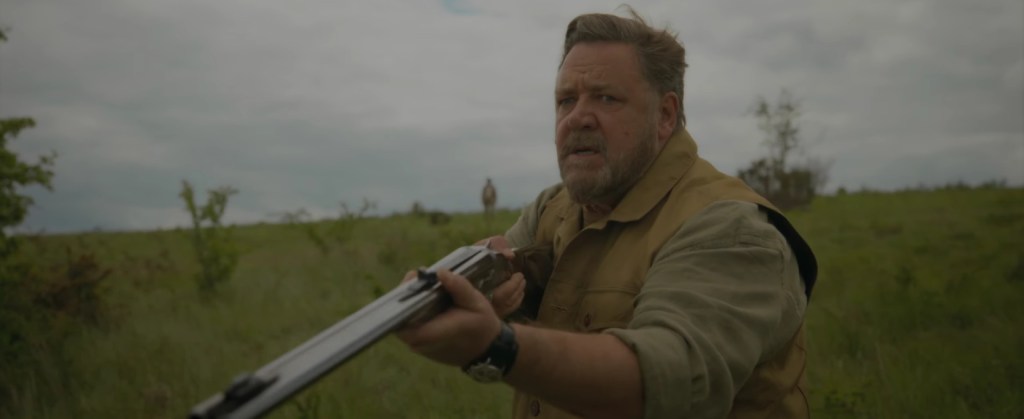
Even though strength is commonly touted as a prize, it appears in Kraven as something inseparable from cost and consequence. Nature doesn’t choose the strongest. It chooses those who understand the cost of strength. When Sergei meets the lion’s gaze, it qualifies him because that understanding takes hold. Likeness is also operant here as their violence is spurred by the cruel authority encoded in patriarchy and natural order in addition to being used—and hunted—by Nikolai. So, Sergei sees himself in the lion. The tragedy is that this recognition can’t save him because violence has already been set in motion, which is central to his character. He learns that understanding nature doesn’t mean you can control it, no respect guarantees mercy, and power is about surviving violence more than strategy or coexistence. Power is passed on through violence. It’s not an asset, just something that must be carried. The lion doesn’t spare Sergei because the world Nikolai represents doesn’t allow innocence, empathy, or mutual recognition to survive.



The scene operates on totemic justice, not cause-and-effect realism. The latter is usually easier to understand since it operates through linear causality. Actions produce outcomes in a traceable sequence: somebody acts, an effect follows, and responsibility is assigned based on proximity to that action. Intention, evidence, and procedural logic matter here because we assume that events can be explained, judged, and resolved through identifiable chains of cause. Within this model, justice is corrective or adjudicative because it seeks to match consequence to action in a way that restores balance through explanation and accountability. That’s not the case for totemic justice which works through symbolic and relational logic instead of sequence. Consequence doesn’t exactly follow from direct action; it comes from recognition, position, and participation within a broader field of relation. Responsibility is transferred through likeness, proximity, or a breach of an underlying order, even if the affected people didn’t initiate the event—which makes intention secondary to order. It doesn’t matter who caused something in a procedural sense. What matters is who stands in relation to it [whatever was caused] after the fact. Whatever justice ensues is redistributive, often irreversible which isn’t corrective in a legal or clean-cut causal sense. The key here is less to explain events than reconfigure who must carry their weight. I think that’s why the scene feels so uncanny to me, because understanding drives change. Once recognition happens, something has to change, and someone must carry that. There’s no closure because initiation is an enduring condition that continues to inform how we live in the world.



The classic Marvel comics—where he famously refers to Spider-Man as “the most dangerous game,” a nod to the short story by Richard Connell—show Kraven as an arrogant aristocrat fixated on Spider-Man. Domination defines his sense of worth, so the hunt serves to prove his superiority. Kraven’s violence remains theatrical and self-referential even when his stories become psychologically complex. He’s a character driven by reputation, legacy, and a need to demonstrate mastery over an exceptional opponent. Other adaptations—mostly video games and animated versions—tend to emphasize Kraven’s flamboyance, ritualism, or exoticism. Kraven appears as a dramatic, almost operatic figure in the 90s animated series. He was a hunter who became mortally wounded after saving his fiancée—a scientist who would later become Calypso—and transforms into a bestial antihero after being given a life-saving serum. This origin and personality loosely characterize miscellaneous media appearances, comprised of an identity that hinges on ritual hunts as well as objectives or displays of domination. Recent video game adaptations—such as Marvel’s Spider-Man 2—show Kraven as a legendary warlord who embodies a hunting philosophy in elaborate arenas, mechanized traps, and escalating trials. All these portrayals invest in spectacle, competition, and theatrical brutality that posit Kraven’s violence as something to be witnessed and overcome.
Kraven shows us someone whose defining moment is private. Sergei remains Sergei, and “Kraven” is his ambiguous albeit mindful alter ego. Both are recast as austere, solitary, somewhat introverted whose core logic of showmanship is replaced by values of initiation and loyalty. The film pares back vanity and excess to cultivate personae who are thoughtfully bound to a code that precedes ambition. Hunting is an obligation Sergei carries, not a performance he stages. It’s how he keeps faith with the consequences of his initiation and the cost of the strength he bears. What distinguishes this portrayal is the absence of audience. When he acts, he’s not seeking recognition or affirmation. Although he finds himself reflective after the odd callout by Dmitri, Sergei ultimately acts regardless of whether he’s witnessed or understood. This adds another layer to the “Kraven” identity as a condition that clarifies how he must move through the world. The name marks continuity between perception and action more than a departure from himself. There are no appearances to keep up, just a consistency to maintain. Each hunt reaffirms the ethos that connects what he sees and what he does to reinforce a logic that substitutes for external acknowledgment, so the absence of performance isn’t emptiness but compression, where meaning is contained within action instead of shown through it.

Hunters live in the same world as the rest of us, where goodness has no protective power. Being gentle, ethical, or well-intentioned doesn’t secure survival, recognition, or justice. What sets hunters apart from us is a more explicit acceptance that action and responsibility can’t be deferred to innocence or hope. Many of us are hunters in our right as we navigate a world that demands response once recognition takes hold. As Sergei is never spared despite his principle or prowess, what matters is how one responds once that truth is revealed. He doesn’t believe that moral virtue floats above consequence; he believes that action must answer for imbalance. Hunters accept that the world doesn’t intrinsically reward integrity, so they drive at responsibility instead of innocence. The reason Sergei is noble comes from refusing denial since he doesn’t hide behind intentions, excuses, or purity. He acts with the knowledge that survival, power, and harm are already in play—and he chooses to bind those forces to a code.

This Kraven is noble because his likeness acknowledges that justice doesn’t come independently, being ‘good’ doesn’t spare anyone from the costs of living in a violent world, and responsibility starts where comfort ends. That said, this position isn’t without its own ethical tension. If responsibility is always driven through action, then the threshold for intervention becomes hard to define. Acting in response to perceived imbalance can uphold order, but it also limits the prospects for which alternative responses might emerge. The commitment to consequence risks becoming continuous, where restraint must be actively chosen rather than assumed. This tension exposes the demands of Sergei’s ethic. When he’s working relying neither on innocence nor external oversight, each decision carries forward to inform conditions of the next—which means there’s no neutral position to withdraw from. The discipline that underwrites his nobility binds him to a mode that rarely permits suspension, so it stays exacting. It needs discernment without certainty, action without guarantee, and consistency without any reassurance of recognition or reciprocation.

There’s another tension in the hunter’s ethic I can’t ignore here: when accountability is centered on action rather than essence, and when institutions are perceived as compromised or indifferent, the temptation arises to assume the role of arbiter oneself. If systems fail to correct imbalance, the disciplined individual may feel compelled to intervene. In Sergei’s case, the hunt becomes a corrective instrument. He identifies “worthy prey,” assesses conduct, and enacts consequence. His code functions as an internal judiciary. The logic is simple enough in that if harm circulates through repeated action, then response must also circulate through deliberate action. But self-appointment carries risk. Without shared oversight, even principled judgment can calcify. The one who measures imbalance therefore becomes insulated from being measured in turn. A code may bind conduct, but it doesn’t automatically generate accountability beyond itself. The danger enclosure, not hypocrisy. When ethical authority rests entirely within the self, revision depends wholly on introspection. There’s no external tribunal capable of challenging interpretation, no collective forum through which proportionality is negotiated, so precision can become unilateral.

However, this doesn’t render Sergei ignoble. It clarifies the precarity of his position since he distinguishes being from action. He directs consequence toward conduct. He resists theatrical domination. Even so, the architecture remains solitary. The same discipline that restrains him also shields him from relational audit. His justice is rigorous, but not dialogical—and that distinction matters as the impulse toward self-appointment tends to come from disillusionment in life more broadly. When institutions falter, when representation substitutes for transformation, when accountability appears performative, the disciplined individual may feel justified in withdrawing trust and asserting private governance. Closed systems feel cleaner than compromised collectives. But private governance carries its own ethical burden. Think, who corrects the corrector? Who recalibrates the calibrator? The risk is subtle. Over time, discernment may begin to conflate consistency with righteousness; and the absence of contradiction may be mistaken for moral clarity. Self-regulation becomes self-legitimation. In guarding against predation, the hunter risks normalizing perpetual adjudication.
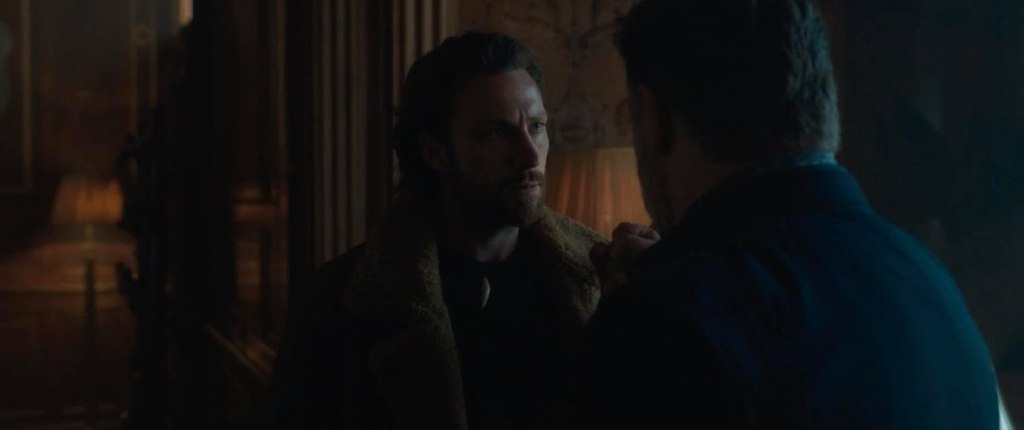
Precision gives clarity. It sharpens judgment, stabilizes response, and protects against misreading. It allows one to identify patterns, assign consequence, and maintain coherence across time. In a world where harm repeats, precision feels necessary since it guards against naïveté and refuses dilution. It ensures that what’s been learned isn’t easily forgotten. But precision alone doesn’t account for mercy. Mercy complicates accountability. It introduces elasticity into judgment without eliminating consequence. Where precision draws clean lines, mercy attends to context in terms of timing, capacity, contradiction, and the possibility of change that doesn’t yet register as pattern. It allows for response without immediate closure. Within a solitary ethical structure, mercy can seem indistinguishable from risk. Incorporating it requires tolerating uncertainty, and uncertainty reintroduces exposure. It asks one to remain open where closure would feel safer. For someone geared to discipline, this is a structural shift that means allowing for responses not fully determined by precedent.

Sergei’s code privileges restraint, proportionality, and consequence. It limits excess and avoids spectacle. Yet it rarely makes space for mercy as such. The hunt concludes in decision, not reconsideration. This aligns with his initiation, which binds him to responsibility more so than absolution. Still, the absence of mercy narrows the range of possible outcomes. Encounters tend toward confirmation as opposed to transformation. Generally, in life, a framework centered around precision risks foreclosing the variability that it seeks to interpret. When every action is read through established pattern, deviation struggles to register as genuine and change becomes difficult to recognize unless it’s already complete. So, mercy here entails the capacity to hold a moment open long enough to see whether something else might emerge.

Initiation myths traditionally guard against this through reintegration. The shaman returns to community to serve, not to dominate. The initiate’s authority is recognized yet bound by collective structure. Sergei lacks that reintegrative scaffold. His discipline remains internal, and therefore fragile. Without relational counterweight, even restraint can harden. The problem isn’t the decisions he makes; it’s the fact that the decisions are exclusively at his sole discretion. Ethical life requires conviction andpermeability. When one stands entirely outside shared processes, even in the name of integrity, the line between responsibility and unilateralism narrows. The hunter’s code can preserve order, but order sustained without reciprocal scrutiny risks becoming another form of control. All the same, this tension doesn’t negate Sergei’s nobility. If anything, it speaks to the complexity because his strength and discipline are admirable. Still, strength governed without dialogue is precarious. And maybe that precarity is one subtlety of the film: not whether his actions are justified, but whether anyone can bear the burden of acting alone without gradually becoming the very force they sought to correct.

Unlike the Kravens of yore, this one recognizes and accepts his own participation in harm and power, and chooses to act with accountability to their consequences. Like when he talks to Dmitri—“I don’t hate people. I hate what they do.”—he discerns between being and action. His hatred isn’t directed at existence, identity, or even desire; it’s directed at conduct and impact. That distinction matters because it places responsibility squarely in the realm of choice and outcome over essence. People aren’t condemned for who they are, but they’re answerable for what they enact in the world. This separation echoes an ethical orientation in which character is treated as but as something disclosed through patterned action by what is done repeatedly, and therefore what becomes attributable; not something fixed. Aristotle (2009) accounts of ethical life wherein virtue is something formed through habituation and actions that sediment into stable dispositions—hexeis—over time. What one is cannot be meaningfully separated from what one does because action is the medium through which character becomes legible. So, responsibility is defined by conduct that is enacted, reiterated, and made consistent in the world. As Alasdair MacIntyre (2007) argues, actions are intelligible within practices and traditions that give them coherence over time; responsibility emerges not from isolated intent but from participation in forms of life that shape what actions mean and what they produce. Harm, then, is not an abstract moral category but something that accumulates through conduct, taking shape in its effects rather than its justifications. At the same time, attribution does not collapse the person into the act. Paul Ricoeur (1992) frames the self as one who can be held accountable through action without being reduced to it. Basically, the self is a being capable of imputation whose deeds are owned, interpreted, and answered for without exhausting the entirety of one’s subjectivity. Impact becomes the measure, not intention or identity. What persists in the wake of an action—who is diminished, what is altered, what cannot be undone—grounds ethical judgment (p. 64, p. 74). Similarly, Sergei refutes the comfort of moral absolution that casts people as purely good or irredeemably evil because he accepts a harder truth instead; that harm is produced through actions, repeatedly and knowingly, and reckoning belongs there. This discourse preserves the distinction without softening its demands as it leaves open the possibility of change, but only through altered conduct, not redefined identity.

Centering action over essence brings everyday habits and performances into view as sites where harm continues to take root. When accountability is located in what people repeatedly enact—what they applaud, ignore, normalize, or excuse—the focus shifts from condemning humanity to interrogating participation. This reframing also redirects attention to scale. Harm accumulates through minor, sustained alignments that rarely announce themselves as ethical positions. Harm isn’t just produced through overt decisions or singular events. A laugh offered at the wrong moment, a silence maintained for convenience, a preference enacted without reflection—these aren’t incidental. They’re mechanisms through which environments take shape and sustain themselves. So, what becomes visible are the conditions under which wrongdoing remains legible yet unaddressed. Participation works through proximity instead of intention. One doesn’t need to endorse harm explicitly to help maintain it. Remaining adjacent without interruption can be sufficient. This complicates the notion of responsibility because it exceeds direct causality. Accountability begins to include not only what one initiates, but what one permits to continue through inaction or accommodation. This also changes how change is understood. Transformation is less about declaration and more about disruption at the level of habit, noticing where repetition substitutes for reflection and where familiarity absolves scrutiny. The ethical demand becomes ongoing rather than episodic, situated in the continuous adjustment of conduct as opposed to in isolated moments of correction. Responsibility is defined by the attention to how one’s presence participates in shaping what persists.

Which makes me think of the phrase “bread and circuses”—drawn from the Roman poet Juvenal—that describes a pattern where material comfort and spectacle are used to occupy public attention while deeper political or structural concerns go unchallenged (Aldrete, 2021, p. 4). This can be likened to how mass entertainment, consumer culture, and performative media cycles can subsume collective energy, which undermines civic action or critical reflection. Empire thrives on symbolic display, and people lend it their applause in ways that ultimately diminish their own agency. To be clear: there’s nothing wrong with joy. It’s just that when distraction becomes habitual, public life narrows to consumption instead of participation and people gradually forgo consciousness to the forces that define their conditions.

The same pattern appears in the language of representation. Under neoliberal logics, visibility tends to substitute for transformation, and symbolic inclusion stands in for structural change. Representation becomes a consumable image—circulated, celebrated, and monetized—while material disparities persist. In this economy, shared qualifiers do not automatically generate solidarity, because proximity to power can coexist with complicity. What unnerves me isn’t joy or visibility, but the way they are mobilized to signal progress while leaving the underlying architecture of oppression intact.
I’m starting to see that this isn’t simply about employment, grief, or having been wronged. Those are real pressures, but they aren’t the whole story. What’s actually taken root is a generalized mistrust which comprises the assumption that institutions will fail, communities are conditional, and individuals will eventually withdraw. The instability and losses in my life have reinforced it, but the pattern extends beyond any single event. I’ve started to interpret contingency as inevitability and impermanence as proof that nothing holds. That stance feels like realism, even clarity, but it’s also a defensive consolidation; if nothing ia trusted, nothing can surprise me. The problem is that this posture protects me from disappointment while quietly narrowing my capacity to experience anything as secure, even when it might be. Generalized mistrust feels protective, but it also becomes self-sealing.

Eliminating trust doesn’t eliminate risk. It eliminates intimacy.
It’s not wrong that some people are traitors.
It’s not wrong that solidarity rhetoric can prove hollow.
It’s not wrong that institutions are unreliable.
But when mistrust becomes global, it prevents us from gathering—if even just experiencing—evidence to the contrary.
If I never confide in others, then I can’t gather data about whether anyone [else] can hold that vulnerability.
If I never expand my network, then I’ll never discover which people are worthwhile.
Isolation and preoccupation, even obsession seem to guarantee safety by shrinking exposure; but shrinking exposure also shrinks possibility.
When Sergei assumes the world operates through predation, he refuses the vulnerability of innocence.
Rather than risk being wounded, he chooses to wound first.
Rather than hope for goodness, he aligns himself with brutality as oversight.

The mantle of Kraven the Hunter is built on anticipation. The rationale being: if harm is inevitable, then the only rational position is dominance. Kraven has always transformed contingency into certainty and fear into control. Every iteration distrusts the world to be equitable, so he becomes its arbiter; preferring isolation and force over exposure and possible betrayal. His power reads as strength, but it’s sustained by the conviction that nothing and no one can be relied upon—which creates a closed system. Sure, closed systems feel controlled.
But they also concentrate pressure.
Sergei is alone and lacks external relational anchors. Isolation strands him to deal with all emotional processing, all reassurance needs, all belonging, and all safety regulation. That’s heavy for anyone. Kraven leans into that weight to show him as someone who regulates himself through discipline over dialogue, and through codes instead of companionship.

I talked about the Cassandra effect before and likened naming the experience of perceiving patterns of complicity, spectacle, or structural betrayal before others seem willing—or ready—to acknowledge them. While the defining aspect of Cassandra’s tragedy is just that she foresaw things people disbelieved, another element is how that recognition yielded isolation. Being unheard turns discernment into estrangement over time. This made me think of structural critique—attention to systems, incentives, and repeated behaviours that reproduce harm—that locates responsibility in what’s enacted and sustained. That clarity pays attention to consequence. The danger arises when structural critique drifts into totalizing judgment; when patterns harden into anthropology and participation becomes proof of essence. That’s when disappointment transforms into a global verdict about people as such. This distinction matters because one preserves analytic precision while the other negates variation. Structural critique questions habits, performances, and incentives. Totalizing judgment condemns humanity wholesale. The former allows for earned solidarity and selective trust; the latter converts clarity into exile. Holding that line—between naming structures and condemning people—may be the difference between living with consciousness and living alone with it.
In my case, the Cassandra effect has started to vindicate some solitary absolutism. More often than not, consciousness imparts that relief and hope are naïve. But consciousness needs less isolation than selective containment. I choose where and with whom my clarity is shared, rather than doing so indiscriminately. I set boundaries around what I’ll engage, take on, and which relationships hold complexity without collapsing into denial or spectacle. Moreover, I assert my integrity and qualifications without apology.
My experience, training, and labour are real—and they warrant respect.
I recognize my rights to dignity, fair treatment, and material stability—and I refuse to internalize disrespect as I refute erasure or exploitation as the cost of participation.
My boundaries aren’t hostility; they’re the terms under which I remain present. I engage the world with consciousness, and I insist on being met with the same respect I extend to others.
My consciousness is stewarded instead of broadcast or hoarded; protected from dilution, but also from turning into exile.

Even with that, something remains unresolved. Selective containment offers structure, but it doesn’t dissolve the conditions that made it necessary. It refines engagement without restoring ease. The world remains what it is—uneven, inconsistent, and often unaccountable—regardless of how carefully I regulate my response to it. This is where my likeness to Sergei lingers. Not in violence, but in the persistence of orientation. Once perception sharpens, it doesn’t return to its former state. The initiate doesn’t “go back.” They carry forward. What changes isn’t what’s seen, but how it’s held. Sergei doesn’t stop hunting because the world doesn’t stop producing what he recognizes as imbalance. Likewise, consciousness doesn’t recede simply because it’s burdensome. It remains operative. It continues to register patterns, to detect dissonance, to resist the ease of forgetting. Then, discipline isn’t only in restraint or containment, but in deciding how much of that perception to act upon—and when.
Maybe that’s the quieter form of initiation. Not the moment of rupture, but the ongoing negotiation that follows it. How to remain lucid without becoming sealed. How to retain discernment without collapsing into inevitability. How to engage without surrendering to illusion, and how to withdraw without relinquishing relation altogether. I don’t think there is a stable resolution to that, only adjustment.
And maybe that’s the point.
Well, for now anyway.
♫ Title song reference – “Natural” by S Club 7
References
Aldrete, G. S. (2021). “Bread and circuses”: Ancient Rome, modern science fiction, and the art of political distraction. Film & History, 51(2): 4-20. https://doi.org/10.1353/flm.2021.0004
Alves, M. R. P. (2020). The natural fallacy in a post‐truth era: A perspective on the natural sciences’ permeability to values. EMBO Reports, 21(2): e49859. https://doi.org/10.15252/embr.201949859
Aristotle. (2009). Nicomachean ethics (W. D. Ross, Trans.). Oxford University Press. (Original work ca. 350 BCE)
Chignell, A. (2010). The ethics of belief. In E. N. Zalta (Ed.), The Stanford encyclopedia of philosophy (Spring 2013 ed.). https://plato.stanford.edu/archives/spr2013/entries/ethics-belief/
Clarke, K. M. (2004). Mapping Yorùbá networks: Power and agency in the making of transnational communities. Duke University Press.
Cosmopoulos, M. B. (2015). Bronze Age Eleusis and the origins of the Eleusinian Mysteries. Cambridge University Press.
Edmonds, R. G. (2013). Redefining ancient Orphism: A study in Greek religion. Cambridge University Press.
Guenther, M. (2020). Human-animal relationships in San religion. Routledge.
Hoppál, M. (2006). The place of shamanism in Hungarian culture. Ethnologie Française, 36(2): 215-225. https://doi.org/10.3917/ethn.062.0215
MacIntyre, A. (2007). After virtue (3rd ed.). University of Notre Dame Press.
McKay, E. (2026, January 30). Seiðr craft – Chapter 18: The quiet initiations. Wyrd and Flame. https://www.wyrdandflame.com/wyrd-wisdom/seidr18
Northover, R.A. (2021). Durkheim’s totemic principle, shamanism and Southern African San religions. HTS Theological Studies 77(2): a6709. https://doi.org/10.4102/hts.v77i2.6709
Pohoaţă, G., & Waniek, I. (2017). Mircea Eliade: From the history of religions to philosophical anthropology. Cogito, 9(4): 43-50.
Ricoeur, P. (1992). Oneself as another (K. Blamey, Trans.). University of Chicago Press.
Siikala, A.-L. (1982). The Siberian Shaman’s technique of ecstasy. Religious Ecstasy, 11: 103-124. https://doi.org/10.30674/scripta.67133
Tengan, A. B. (2016). About Dagara cultic institutions and frames of thought. IK: Other Ways of Knowing, 2. https://doi.org/10.18113/P8ik259807

