Heavenly Day

Sometimes, I look at Clark and wish I could give him the world. Not the world as it is exactly—with all its inequities, cruelties, and uncertainties—but something kinder. Like a beautiful home with endless windows through which he could watch the birds, warm places to sleep, and a life that lacked the indignities of illness and age. I wish I could give him the years that have already passed, the years that remain uncertain, and the years that will never be ours. Maybe more than anything, I wish that loving him as much as I do was sufficient to keep him safe.

But it isn’t. Clark has chronic kidney disease (CKD) and hypertension albeit neither diagnosis has thus far prevented him from being his affectionate, occasionally demanding self. He still calls for me; sometimes for food, sometimes for attention, and sometimes, apparently, because he’d just prefer that I come be by his side. He bunts my hands, sleeps beside my head, and shares an endearing companionship with Nora. There are moments when he seems perfectly content with his little world, even as I find myself lamenting all I can’t—and couldn’t—give him. More often than not, I wonder if I could’ve done something differently, something better; whether some oversight, some inadequacy, some circumstantial limitation of mine contributed to his health. Even though there’s no hard evidence that I failed, I return to the prospect as though attributing some error to myself would make his condition less arbitrary. Maybe guilt is easier to oblige than being helpless. If it’s my fault, then at least there’s something within my power to change. If it’s not my fault, then I need to face the humbling prospect that even our most earnest efforts can’t spare those we love from pain or loss.

That seems a really cruel feature of existence; that love should inspire such extraordinary feelings of responsibility while granting us so little authority over the circumstances of those to whom we devote ourselves. We can nurture, comfort, protect, and sacrifice; but we can’t negotiate with mortality. We can’t demand that the universe recognize the importance of someone just because that someone means everything to us.
And yet, I still wish that I could.

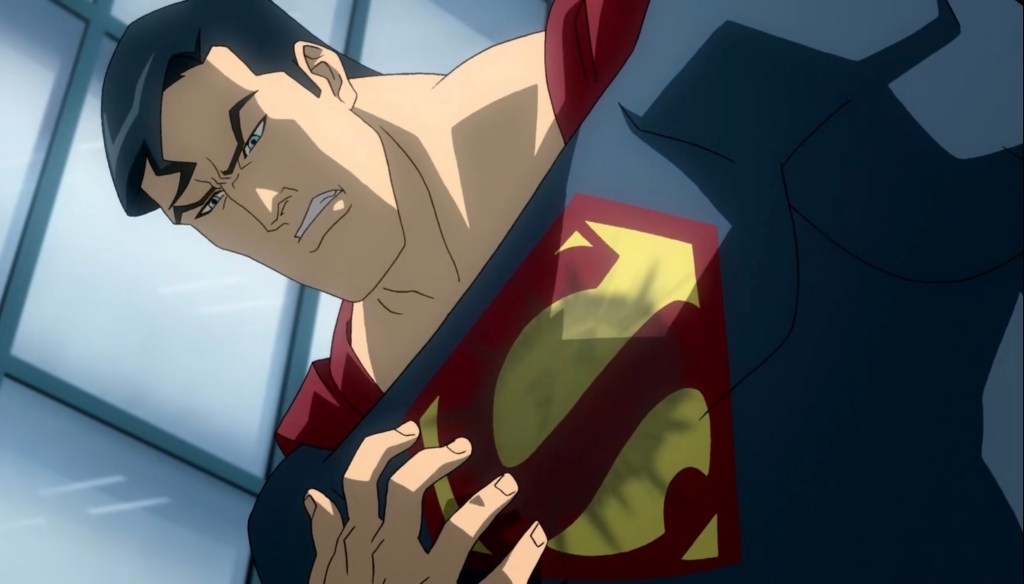
Maybe that’s why I’ve always found Superman such a fascinating character. He speaks to something beyond life as we know it, transcending the frailties of our mortality and awakening a longing within us for a world where love and hope aren’t rendered powerless by iniquity. When he takes flight, he transcends the tyranny of gravity; and despite having the power to bend the world to his will, he chooses tenderness over cruelty, compassion over contempt, and kindness against any pretext to wield his strength against those who possess so little of their own. Every effort to save others reaches into the heart of catastrophe to retrieve lives forsaken by fate. The impossible becomes conceivable through everything he embodies. He has the kind of power that I’ve spent most of my life wishing existed, especially when confronted with partiality that no care can allay.
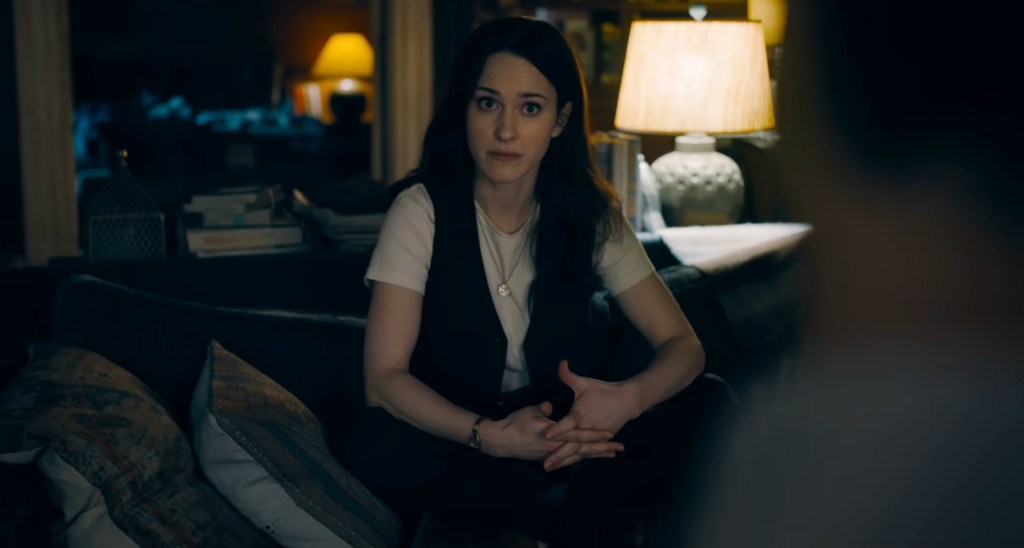
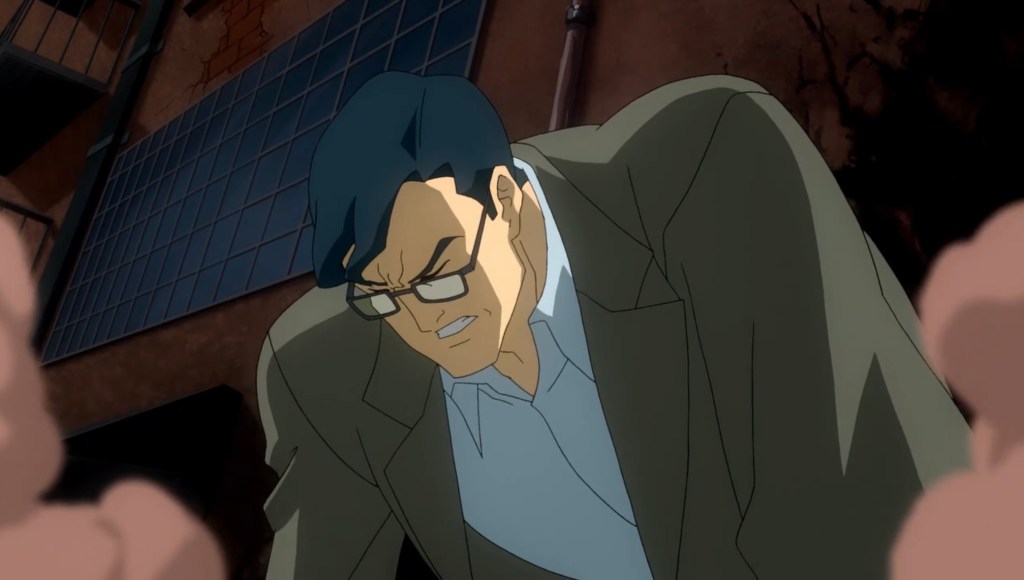
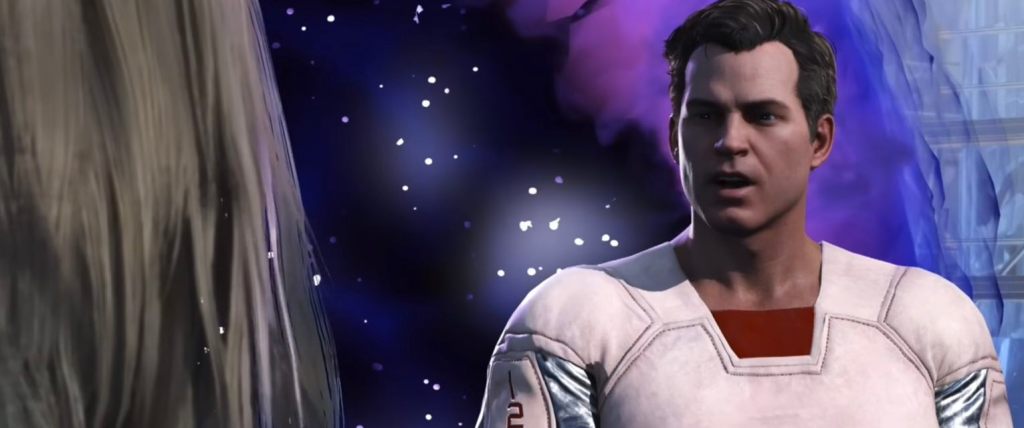
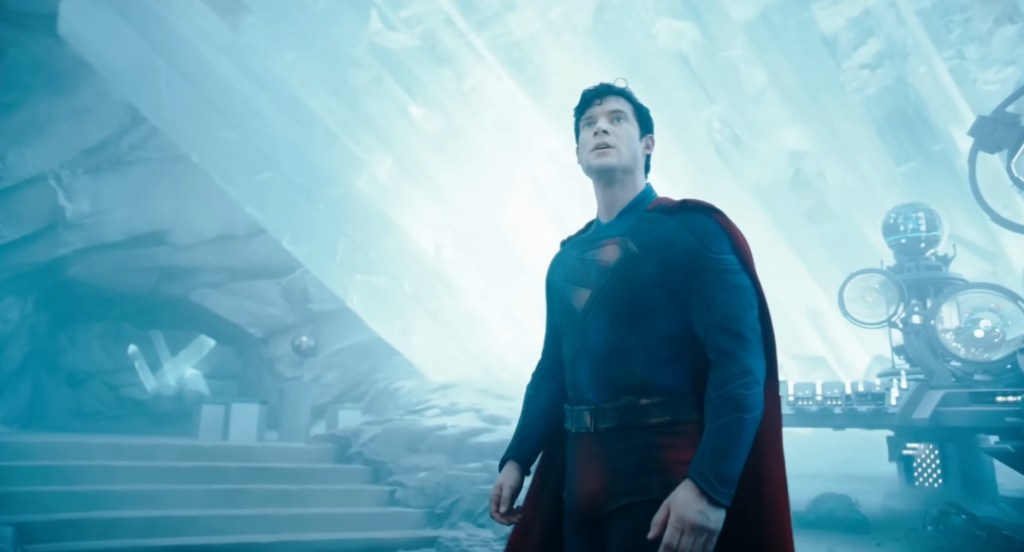
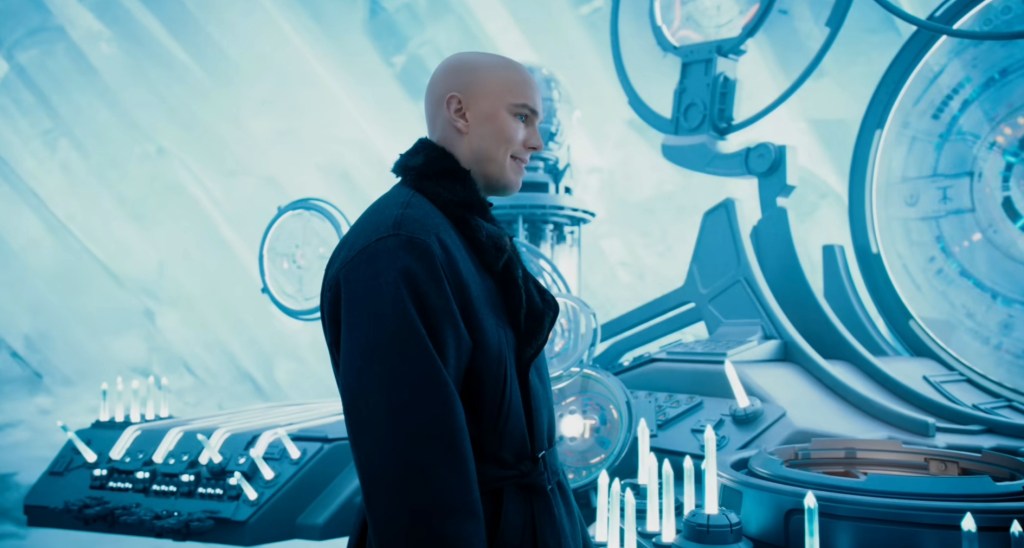
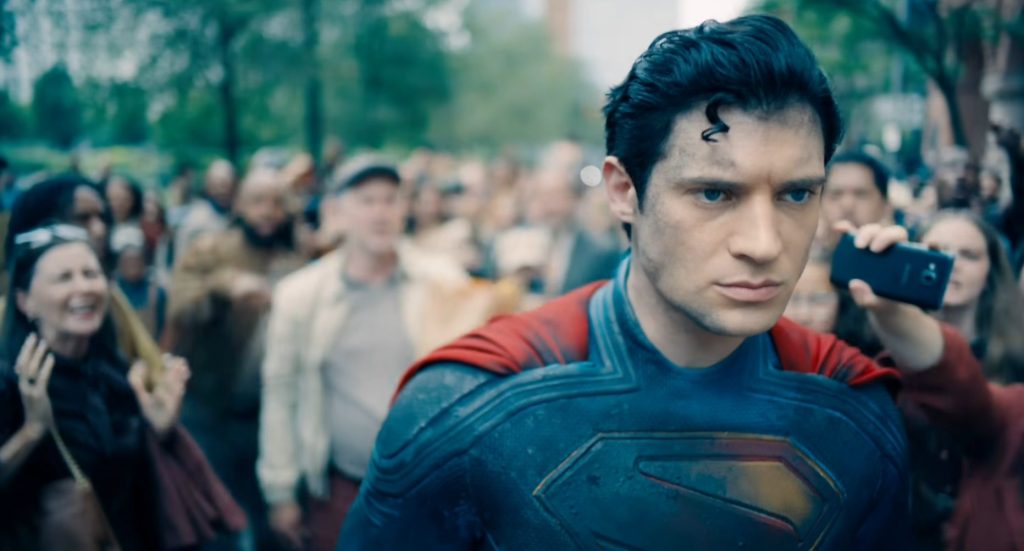
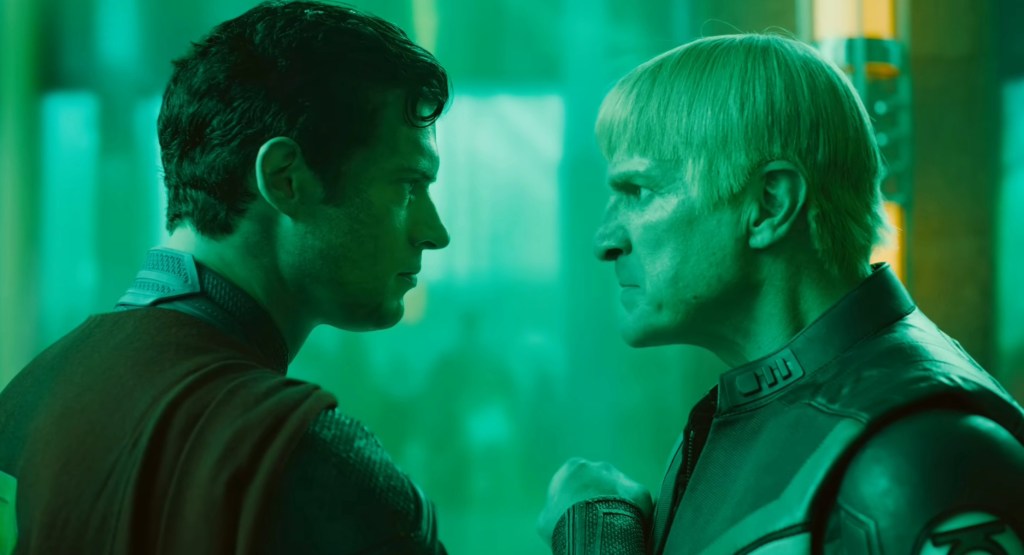
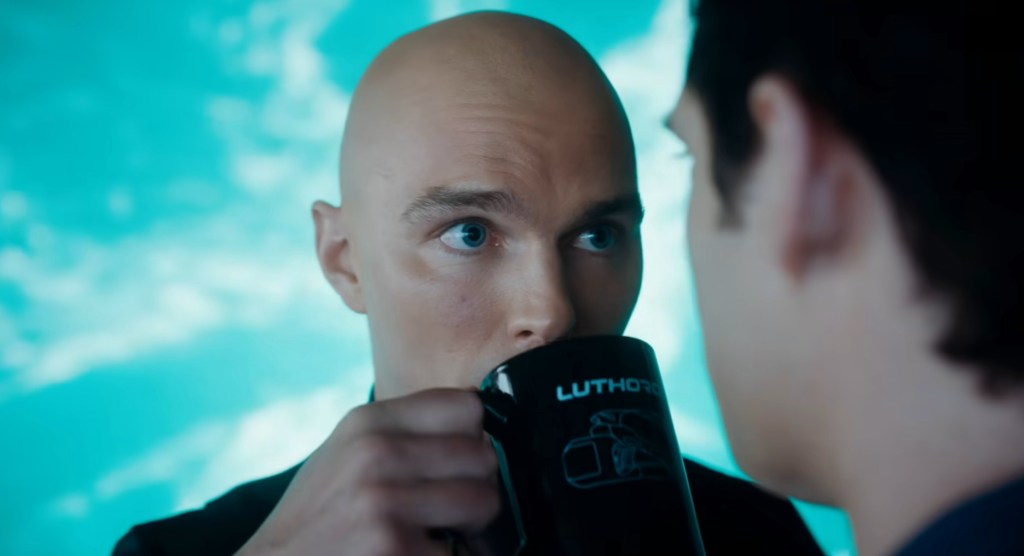
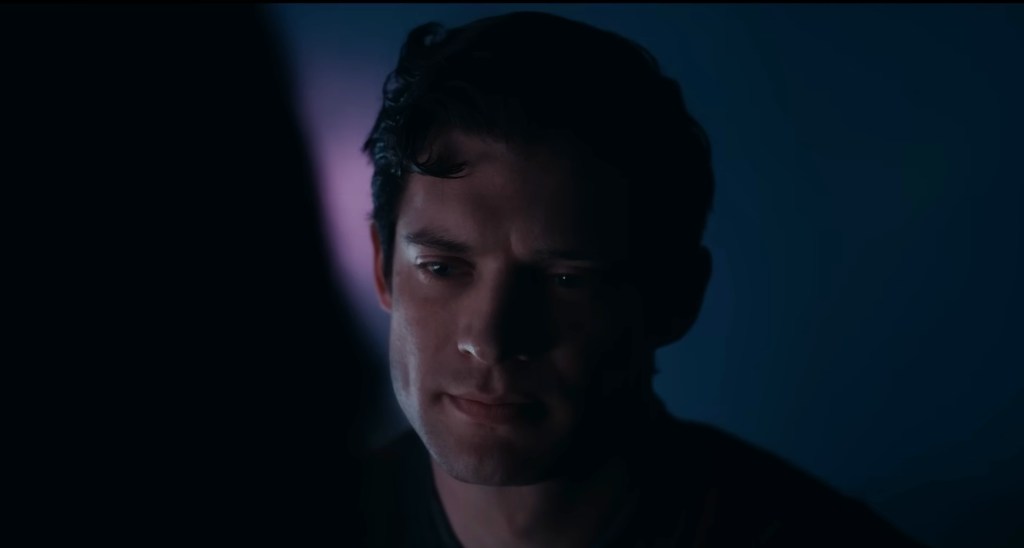
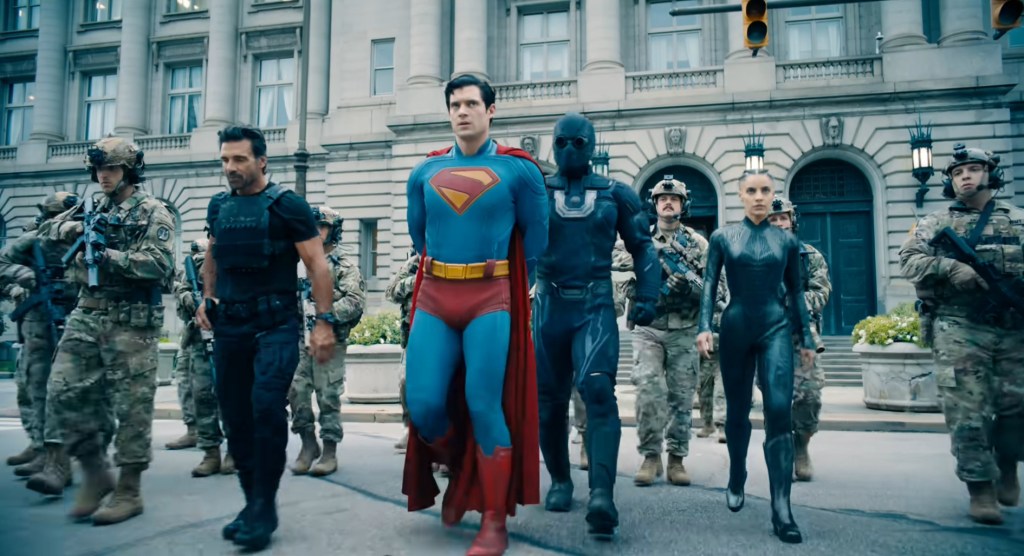
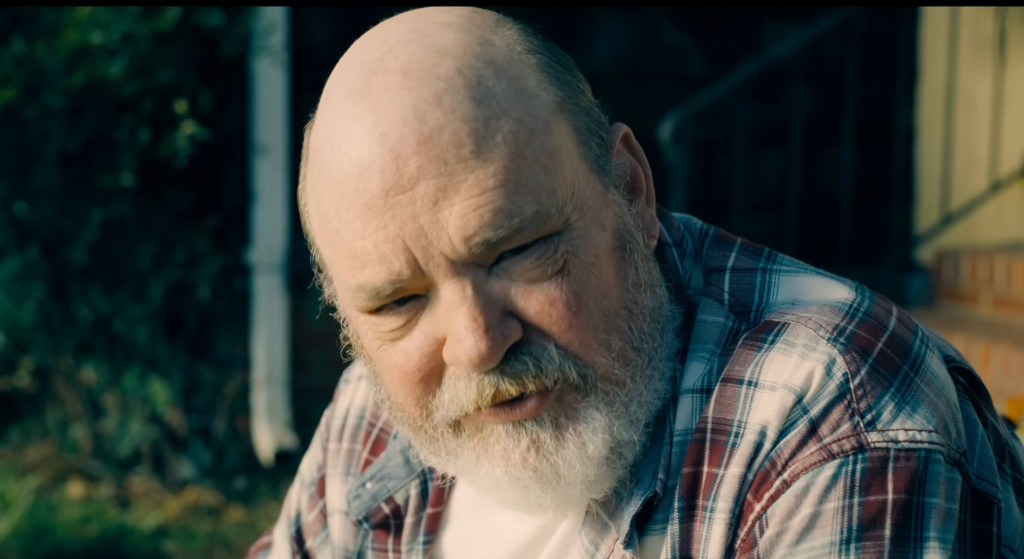
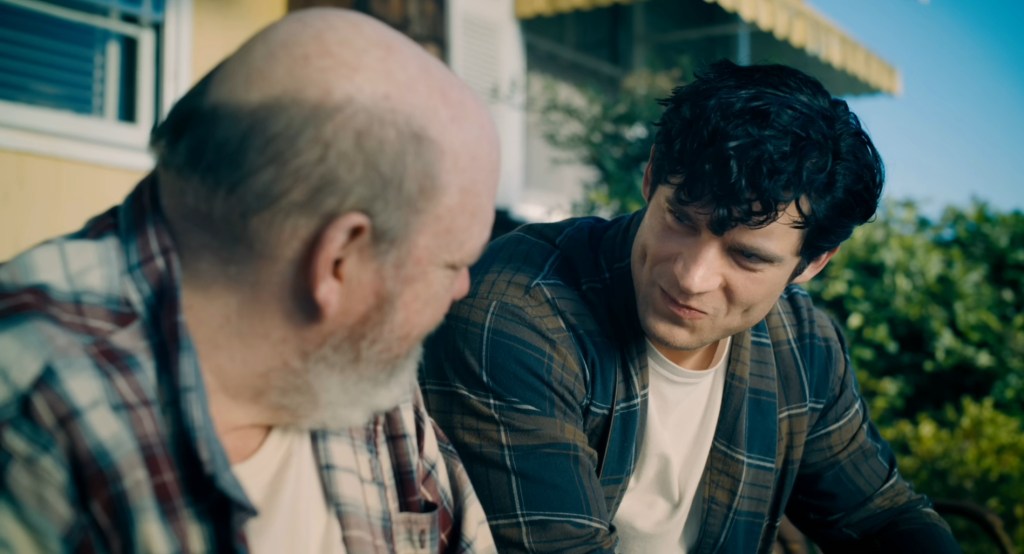
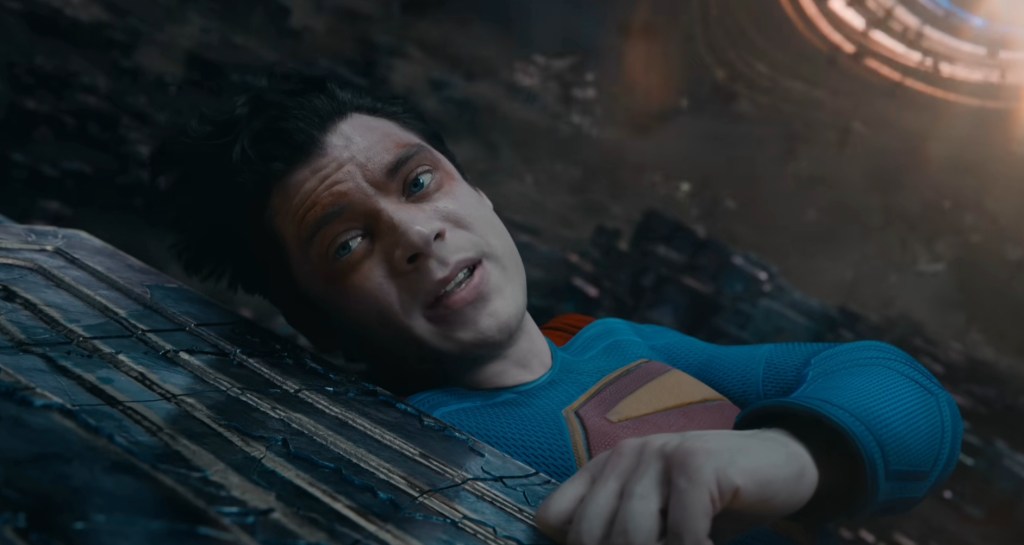
In James Gunn’s Superman (2025), the Man of Steel contends with the distinction between having the power to save someone and having the power to save everyone. His powers don’t spare him from his own vulnerability, despair, or the realization that neither being nor doing good don’t assure good outcomes. The film affirms a Superman (David Corenswet) who is neither invincible nor universally beloved. Having intervened in an international conflict to prevent the invasion of Jarhanpur by the militarily superior nation of Boravia, his humanitarian intentions are scrutinized by a world suspicious of his extraterrestrial origins as well as politicians and wealthies who muse about his seemingly unchecked authority. Notably, Lex Luthor (Nicholas Hoult), whose resentment of Superman borders on obsession, exploits these tensions. Resolved to discredit the very existence of a being whose benevolence he perceives as an affront to humanity, Luthor engineers a succession of catastrophes, manipulates public opinion, and exposes a concealed message from Superman’s Kryptonian parents, Jor-El (Bradley Cooper) and Lara (Angela Sarafyan), whose apparent intentions for their son contradict everything he has come to believe about his purpose on Earth. Instead of encouraging him to protect his adopted world, the transmission charges him with subjugating humanity to continue Krypton’s legacy. What Superman first understood as an inheritance of hope and goodwill is suddenly recast as a mandate for domination, revealing the origins he’d once revered were never the moral foundations he imagined. His identity, once seemingly anchored in the aspirations of a civilization long extinguished, becomes estranged from the integrity through which he strove to define himself. The world that once celebrated him starts to question whether his goodwill conceals an inherited ambition for domination. However, amid this disillusionment, the film discerns the circumstances of one’s existence from the choices through which that existence acquires meaning. Superman’s humanity is neither contingent upon his biological origins nor diminished by his extraordinary powers; it’s built on the relationships, affections, and choices that comprise his life. His adoptive father, Jonathan Kent (Pruitt Taylor Vince), reminds him that his identity isn’t predetermined by the expectations of those who brought him into existence; it’s created through the decisions he makes for himself.

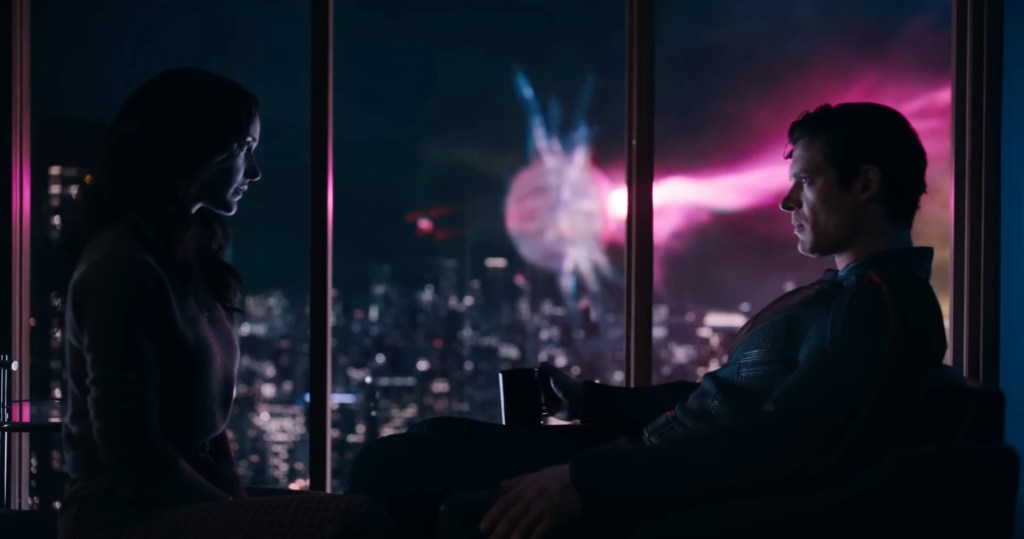
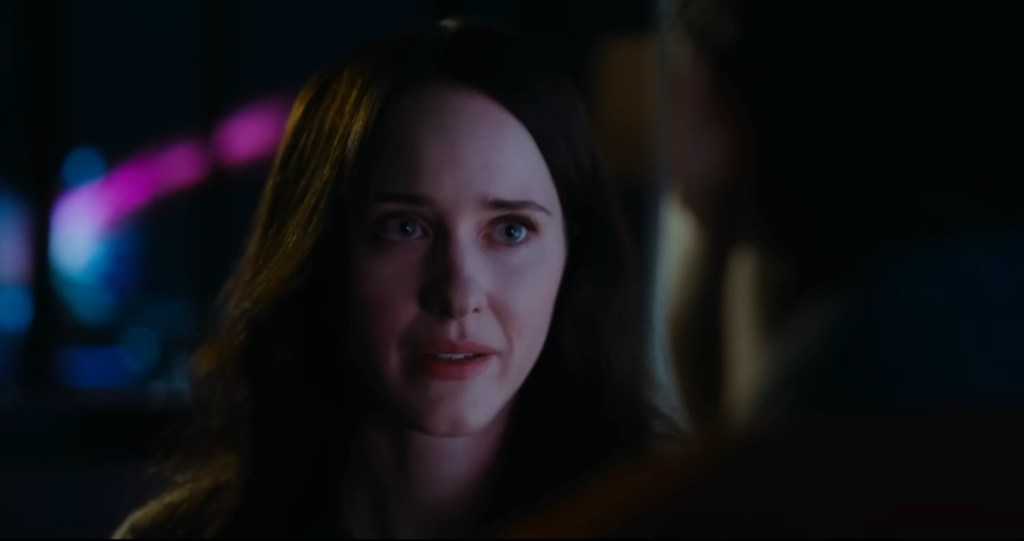
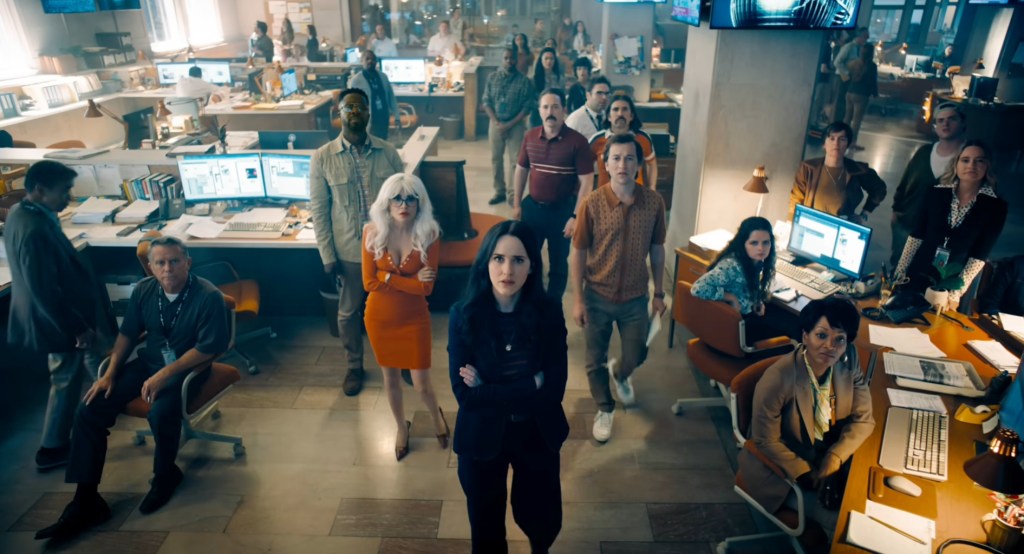
There’s a scene where Clark [Kent] confides in Lois (Rachel Brosnahan) how the message from his parents was contained aboard his spaceship and damaged upon landing, and hadn’t survived in its entirety; how he believed his parents encouraged him to serve—not dominate—humanity from what bits and pieces he could recover. After Lois reassures him she never doubted him, she notes their differences, as a punk rock fan who’s always inclined to question everything and everyone. Musing on Clark’s seemingly inexhaustible faith to trust and see beauty in others, he shrugs: “Maybe that’s the real punk rock.” Think of how suspicion and cynicism are conflated with wisdom or finesse, keeping an open heart and mind is an act of defiance. After all, punk rock is associated with a contrarian sensibility that asserts expressions of intellectual independence and resistance to conformity, wherein we should question established authority, distrust conventional wisdom, and hold skepticism toward accepted social norms (Worley, 2012). I admit, it’s a touching sentiment; even as I bear anguish, regrets, and chagrin which prevail regardless of that gentle affirmation. But Clark doesn’t say that being kind means turning a blind eye to iniquity or pretending that there’s nothing worth standing against. He just reminds us that knowing how cruel people can be doesn’t mean we have to lose sight of the good they can do too, and that maybe the greatest resistance is choosing not to let the hurt we’ve experienced take away the good we still have to offer.

In this distinction between inheritance and becoming, Clark discovers that goodness is an ongoing action of moral agency, not some fixed trait or inheritance. He might be capable of imposing his will upon humanity, but he chooses to serve people instead of oppressing them. And under all those spectacular confrontations and cosmic anxieties, Superman conveys a relatively ordinary predicament; the difficulty of staying good in a world that hardly recognizes or honours goodness. Clark isn’t absolved of suffering by virtue of his strength, nor guaranteed happiness by virtue of his intentions. Instead, he persists despite the indignities, betrayals, and uncertainties that accompany it—which, to him, is declaredly human. Mindfully, he asserts that his humanity isn’t about an intrinsic capacity to overcome adversity. Humanity is defined by what one chooses to become when faced with what—and whom—they can’t overcome.

As Luthor’s machinations climb to an apocalyptic threshold, Superman [really understandably] struggles to face enemies whom exploit his physical vulnerabilities along with the more intimate anguish of being misunderstood, betrayed, and rendered powerless before the suffering of others. Nevertheless, he persists in his commitment to humanity; and I didn’t think his tenacity vindicates that humanity intrinsically deserves his protection, or that his sheer efforts assure victory. Superman persists because he refuses to allow the world’s capacity for cruelty to determine his own; because of the familiar frailty in someone who longs to be understood lies beyond the spectacle of flight, might, and right. Because having the means to alter the world doesn’t confer the ability to make it just.
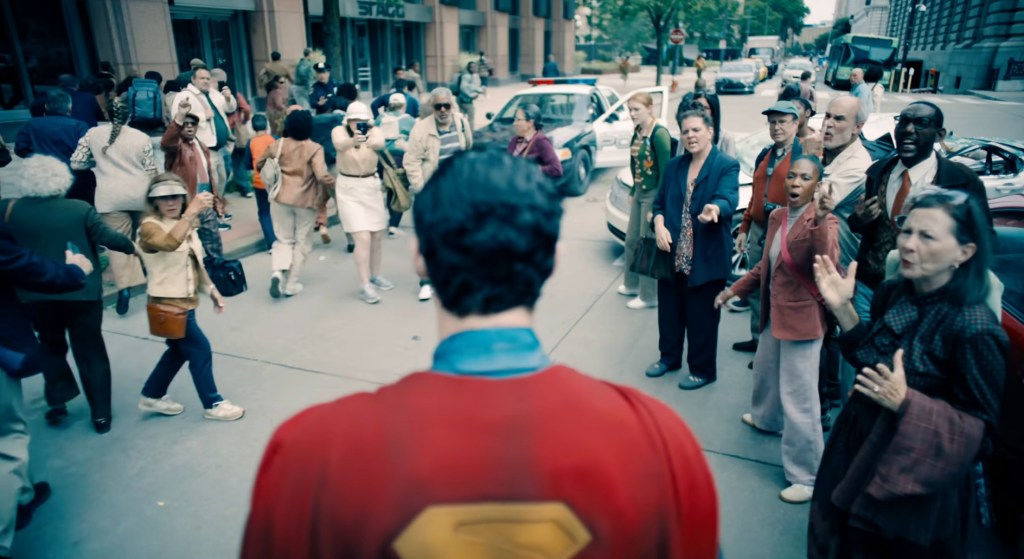
That’s what makes Superman so epic to me. He embodies the prospect of transcending limitations that, for the rest of us, are so ordinary as to be considered immutable. Gravity, vulnerability, physical frailty, the terrible distances separating us from those in need—all of these are hardly impediments to someone who can traverse the heavens. At the same time, his extraordinary capacities expose another less comforting reality. The world isn’t made just merely because someone possesses the power to intervene in its injustices, nor does the existence of goodness undermine the prevalence of its opposite. Sometimes, I wonder if the appeal of superheroes has less to do with our admiration for super strength than with our exhaustion from everyday powerlessness. There’s something intoxicating about imagining a being who can come before the catastrophe becomes irreversible; whose intervention isn’t contingent upon wealth, influence, institutional approval, or the innumerable qualifications through which human beings are made to justify their need for assistance. Superman doesn’t need those imperilled to demonstrate their productivity, innocence, or prospective contributions to society before deciding that their lives warrant saving. Their vulnerability in itself is enough to command his attention. So, I find myself returning to the comparatively inconsequential creatures he endeavours to protect.

Like, Superman rescues a squirrel amid the devastation unfolding around him; and this act holds an apparent insignificance but becomes remarkable exactly because of the circumstances in which it occurs. There are greater catastrophes to avert, more conspicuous lives to preserve, and countless reasons to deem the survival of one frightened animal as negligible. But Superman refuses the arithmetic through which some lives become expendable in the service of supposedly greater necessities.

I wish that refusal were less remarkable. It seems that much of our world revolves around such calculations. We’re constantly reminded that resources are finite, that sacrifices are unavoidable, that certain misfortunes are unfortunate but ‘necessary’ consequences of maintaining institutions whose prosperity is seldom distributed among those who sustain them. We’re encouraged to become strong, adaptable, and grateful for whatever remains available to us; even as the conditions necessary for an ordinary measure of security become increasingly difficult to attain. There’s something deeply unsettling about a society that demands ever greater strength from people while progressively diminishing their capacity to withstand the circumstances—more often than not, adversities—imposed upon them. We’re told to persevere through precarity, to cultivate optimism amid disappointment, to understand rejection as opportunity, and to see the exhaustion of endlessly proving ourselves as something that evinces personal growth. The responsibility for shouldering insecurity is consigned to those least equipped to escape it, while the institutions responsible for perpetuating that insecurity are absolved and insulated from its consequences.
I’ve spent most of my life trying to become someone whose efforts might eventually afford a measure of stability. I pursued education, worked, wrote, studied, and strove to make something meaningful of circumstances that didn’t always lend themselves to possibility. I imagined, as many children do, that adulthood would eventually bring a home, some financial security, and the opportunity to enjoy the fruits of whatever sacrifices had preceded them. Not necessarily extravagance, just the dignity of knowing that the life I’d worked to establish could accommodate the people and creatures I loved. Instead, I tend to find myself confronting the peculiar indignity of possessing accomplishments that seem insufficient to secure the very conditions they were supposed to make possible. There’s no shortage of exhortations to remain hopeful. But hope can’t pay a veterinary bill. Strength can’t restore a failing organ. Perseverance doesn’t persuade an employer to offer a sustainable livelihood, nor does the accumulation of qualifications guarantee that those empowered to recognize them will consider them worthy of recognition. I don’t believe these realities render effort meaningless, but I also can’t accept that effort is invariably rewarded in proportion to its sincerity or magnitude.
The deepest wounds we carry are those that quietly estrange us from the world we once knew, irrevocably altering how we experience life while remaining all but invisible to those who can’t fathom what has been lost. I’ve devoted so much of my life to institutions whose professed ideals of integrity, opportunity, and belonging became hard to reconcile with my experiences of them, leaving me estranged; not only from the worlds I once aspired to inhabit, but from the very prospect of attaining the security, dignity, and sense of belonging I’d spent so long striving toward. I won’t recount their particulars here, partly because some matters remain unresolved, but also because the circumstances themselves aren’t the entirety of what I wish to convey. What gets me is how much an experience can rock my world life while the rest of the world turns. I’ve never recovered the person I was before. There’s a curious subtlety in having to carry on with the familiar tunes of everyday life when the world you once knew is no more, and the assurances of belonging, purpose, and happiness unravel.
You learn to keep up appearances: look composed, fulfill obligations, and exchange pleasantries to ritualize some professional and social existence; even when most of it feels pointless. There are times I feel like I’m imitating the gestures of a life I expected to live naturally. Affection, intimacy, ambition, and hope for happiness have become things I can see in others more readily than I can imagine experiencing myself. What I mourn isn’t just what happened; it’s what could’ve been.

There’s no way to get back the years I spent trying to make sense of what happened; no way to recover what I’ve lost while I was busy trying to survive; no way to know whether the person I could’ve been would’ve found the security, companionship, or contentment that seem so elusive now. It’s a strange kind of grief, mourning what I lost along with everything that was once possible and will never become knowable.
One recent experience stays with me. After years of studying, teaching, and publishing—and agonizing—I was informed I’d been shortlisted for a director position. My qualifications were considered, my application was taken seriously, and people who knew my work expressed confidence in me. For a moment, the question I’d spent so much of my life asking—whether I’d ever be good enough to get such an opportunity—seemed to have been answered. But another question arose in its place. It wasn’t whether I could pursue the position, or even if I deserved the opportunity; it was whether I could reconcile accepting it with the atrocities that devastated me. An advancement I’d once regarded as evidence of life going as it should required a level of complacency I hadn’t been able to make peace with.

And, I couldn’t do it. I still can’t.
That decision doesn’t evince some exceptional moral virtue, even if I presume to judge those whose circumstances, convictions, or experiences might have led them to choose differently. Because the prospect of advancement is inseparable from a question of conscience. I can’t celebrate opportunities at any—literal or figurative—expense of what warrants acknowledgment and accountability. Moreover, that decision didn’t spare me any consequences. It also didn’t restore anything that had already been taken from me. I continue to face the financial insecurity, uncertainty, and diminished sense of possibility that had made these opportunities so meaningful in the first place. It’s uncanny, knowing that a choice can be consistent with my convictions without actually making my life better. And I can’t help but wonder how often that contradiction is obscured by the familiar assurances that integrity is its own reward.

Well, maybe it is? But integrity doesn’t provide housing, guarantee employment, or restore the years consumed by experiences whose consequences remain unresolved. It doesn’t ensure that those who have caused harm will wallow, much less be held accountable. The only reward for refusing what I consider unconscionable is the knowledge that I’ve refused it, while the practical circumstances of my life stay as precarious as before. What exactly do institutional cultures teach people about success when prosperity and moral responsibility conflict?
We speak so readily of leadership, excellence, service, and integrity, like these virtues naturally come with credentials and authority. But institutions aren’t ethical just because they profess admirable values. Structurally, they discourage dissent and reward conformity which favours reputation as more urgent than veracity or remedying harm. Sure, not everyone who prospers within is evil; but success, however impressive, doesn’t vindicate moral character. The indictment of our humanity lies in our willingness to rationalize, tolerate, or turn a blind eye to injustice—as opposed to in some failure to see injustice altogether—when challenging such threatens the privileges, opportunities, and comforts we aspire to acquire for ourselves. I don’t say this as a sanctimonious platitude; I say this firsthand. I know what it means to see a life I wanted, an opportunity that might’ve brought it closer, and knowing that pursuit would compromise something I couldn’t bear to surrender.
I won’t pretend that I’ve found peace in that distinction. There are days when I rage, resenting the ease with which the world continues to grow around experiences that have devastated my own life. There are days when the possibility of accountability feels like a dream the expectation that I should just move on seems indistinguishable from another demand that I oblige what happened. But I don’t want that bitterness to become the entirety of who I am. Even when I struggle to imagine a future where my dreams are a reality, I can still imagine a future where Clark is happy. I can still wish for another beautiful window through which he might watch the birds, another comfortable place for him to sleep, another ordinary day in which he feels safe and loved. I don’t know whether that hope is enough to sustain me through everything else, and I don’t think it should have to be; but it remains, even when so much else feels beyond my reach.
My theological studies and vocational discernment have complicated these reflections. Even as I’m drawn to priesthood—a vocation ostensibly concerned with compassion, justice, and the alleviation of human suffering—most of the time, my efforts to pursue this further acquaints me with the same conditions that make such suffering so difficult to endure. It’s disheartening to seek guidance, encouragement, or reassurance from those entrusted with discerning my suitability for ministry—only to encounter sentiments about patience, perseverance, and the necessity of becoming sufficiently prepared for a future that remains uncertain. I understand the importance of discernment and I don’t think that sincerity, academic achievement, or personal hardship should exempt anyone from the responsibilities and scrutiny that come with the territory. At the same time, I struggle with the disparity between what such expectations demand and what those expected to fulfill them can afford to.

For someone whose life is already characterized by financial precarity, interpersonal adversity, and the cumulative exhaustion of always having to establish my worth—the injunction to persevere is hardly an abstract spiritual exercise. It has material consequences. Time must be found where time is already scarce; resources must be committed where security remains elusive; and hope must somehow be kept despite the absence of any assurance that these sacrifices will eventually lead anywhere. What may appear, from a position of institutional security, to be a reasonable period of waiting feels considerably different to someone for whom each passing year represents another year of uncertainty, deferred possibility, and waning confidence in the future. The language of spiritual formation can also obscure the disparate conditions under which people are expected to demonstrate their faith (Moore, 2023, p. 74). Patience is easier to commend when one’s livelihood isn’t contingent upon its indefinite exercise. Perseverance sounds different when spoken by someone whose position is secure than when received by someone already barely afloat. And while suffering may occasion insight, humility, or compassion, I can’t accept that its continuation is intrinsically beneficial, much less that those who find themselves overwhelmed are somehow deficient in character or devotion.
I don’t seek a vocation to be celebrated for enduring hardship. I seek it, in part, because I’ve grown conscious of how many people are asked to endure things that they shouldn’t have. I want to believe that a community devoted to the teachings of Christ can distinguish between accompanying someone through adversity and just expecting them to withstand it. We can appreciate that suffering can underscore, even catalyze compassion and responsibility—without mandating the endurance of adversities while failing to address what necessitates them. That’s a hallmark of Superman too. He refuses to see vulnerability as something that can just be overcome; he sees when there’s a need and responds. Which makes me wonder whether the truest measure of our ethical and spiritual commitments comes down to what we’re ready to do to make perseverance less necessary, instead of how eloquently we exhort others to persevere. Be that as it may, like in academia, I don’t know if I’ll be considered suitable for this vocation despite all of my hopes and efforts. While it might come off as incessant, I hope my longing for reassurance isn’t mistaken as hubris or an entitlement to certainty.
That’s why Lex Luthor is so memorable. His power isn’t just about intellectual brilliance or personal ambition; it’s material, institutional, and political. He has the resources to manufacture crises, manipulate public perception, and enlist elaborate systems in service of his resentments. His personal indignation becomes consequential because he has the means to impose it upon others. Superman has amazing abilities, but Luthor has something more familiar—the capacity to make his private interests govern the circumstances of people who have little, if any meaningful authority over him. And despite all that, Luthor still isn’t happy. I mean, I don’t think even any of the IRL wealthies honestly are. His riches can’t reconcile him to Superman’s existence. His intelligence can’t absolve him of envy. His major influence doesn’t produce the moral superiority he so desperately wishes to establish. Instead of employing his capacities to allay suffering—or just y’know, chill—he’s consumed by the intolerable possibility that someone else might be admired for qualities he can’t manufacture through coercion. I wonder how often we mistake the possession of power for evidence that its possessor deserves it.

Conversely, Superman is so special because he refuses to exercise the dominion his abilities would permit. Holding back isn’t weakness. Actually, he refuses to see weakness in others as an invitation to exploit them. He doesn’t need to undercut another creature to establish the magnitude of his own existence. Many folks claim his insistence upon kindness—when kindness offers no assurance of reciprocity—is definitively human; and I can’t help but wonder if that’s really human at all. We’re used to identifying compassion, mercy, and goodwill as the distinguishing virtues of humanity as if cruelty, exploitation, and indifference are foreign intrusions upon an otherwise benevolent nature. But history and present day offer little justification for that presumption. Humanity has shown an incredible capacity to inflict suffering upon itself, often with convictions of righteousness that render cruelties all the more difficult to confront (Bandura, 1999). We call our kindness humane and our cruelties inhumane, like the latter aren’t equally products of the same species. So, Superman’s humanity is less a reflection of what human beings are than an indictment of what they so frequently choose to become.
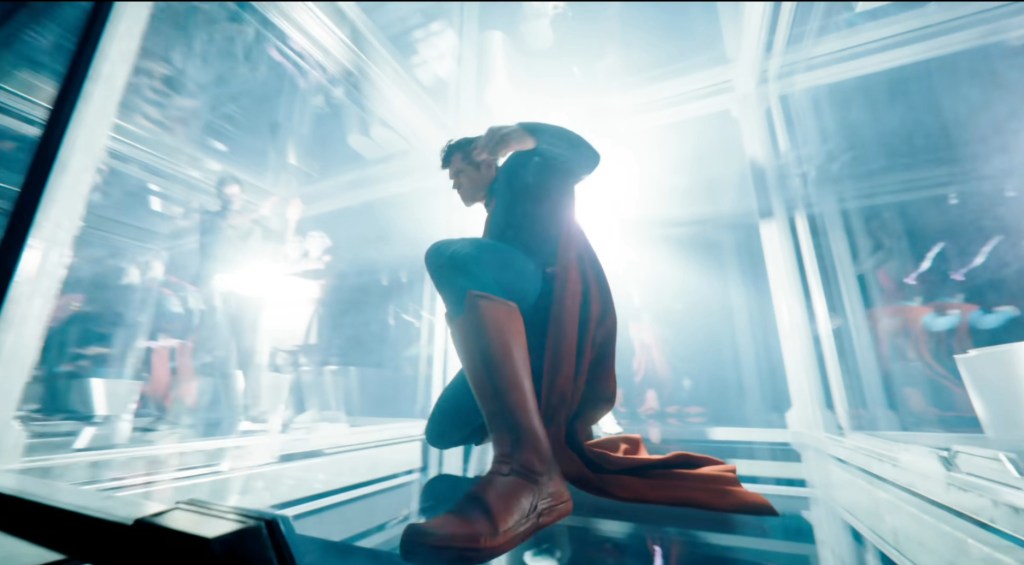
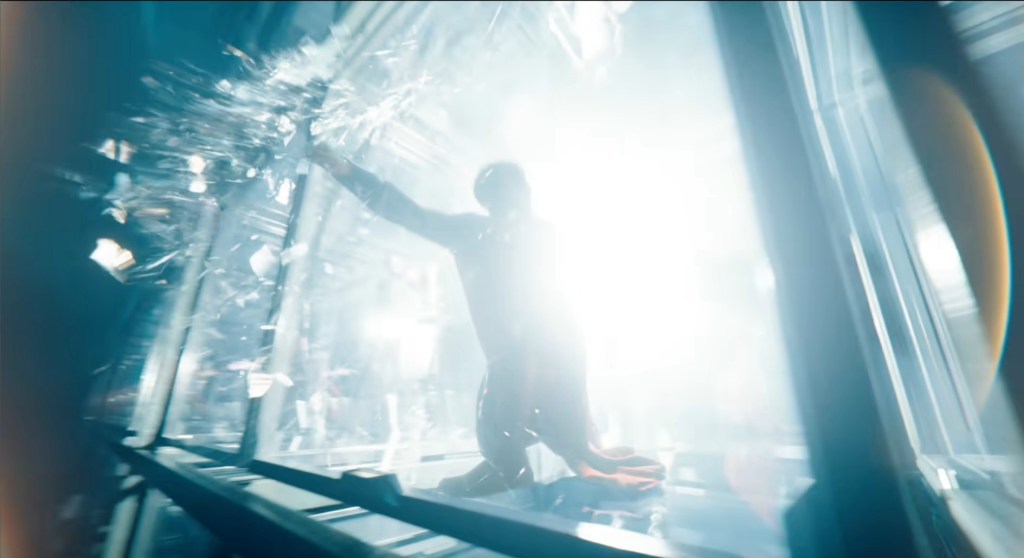
Plus, Superman’s enduring cultural adoration is ironic considering the prevalence of anti-immigrant sentiment, as societies that celebrate an extraterrestrial saviour see those who cross earthly borders with suspicion, hostility, and contempt. People are very willing to embrace the stranger in fiction while condemning the stranger in reality, extending admiration to an alien endowed with superpowers while denying ordinary human beings the dignity, belonging, and compassion that make his heroism so universally beloved. Because Superman is an alien—an “illegal alien,” if you’d like to get technical in line with modern maggot lingo or critically consider how “illegality” is also racially encoded (Menjívar, 2021)—whose very existence, Lex Luthor and other naysayers accuse, supposedly threatens the dignity and sovereignty of humankind; but he personifies the virtues through which humanity seeks to distinguish itself, while those most insistent upon their human superiority show how little such distinctions assure moral worth.

So, there’s something almost tragic in the idea that Superman must transcend humanity to become what humanity imagines itself to be; this expectation that goodness must continually prove itself through endurance. I’ve never believed in the notion that suffering ennobles those who experience it. Sometimes, suffering just destroys and exhausts the capacities through which a person might’ve otherwise flourished. Sometimes, it consumes time that can’t be recovered, opportunities that won’t recur, and possibilities whose absence become another form of grief. It’s easy to celebrate perseverance from a position sufficiently secure that perseverance is hardly a matter of survival.

I think that distinction becomes more troubling when considered theologically. I’ve wrestled with the promises of eventual consolation that permeate Christian understandings of suffering. For example, the Beatitudes pronounce blessings upon the poor, the hungry, and those who weep, while anticipating a reversal of their present circumstances (New Revised Standard Version Updated Edition Bible, 2021, Luke 6:20-21). There’s beauty in the conviction that suffering doesn’t constitute the final measure of existence, but I can’t entirely silence the question of what such promises mean to someone whose hunger persists, whose poverty continues, or whose beloveds have died. What consolation is there in being assured that justice will eventually prevail when the consequences of its absence are being endured now? I don’t ask this because I believe hope in an afterlife is a scam, nor because I consider faith incompatible with indignation. It’s just that promises of future welfare are invoked to excuse the failure to pursue likewise in the present. It’s hard not to notice how readily those enjoying considerable earthly security can counsel patience, humility, and detachment to those for whom such security remains inaccessible. The possibility of heaven doesn’t render earthly deprivation inconsequential, and the inevitability of death shouldn’t minimize our responsibility to preserve and enrich the lives that precede it.
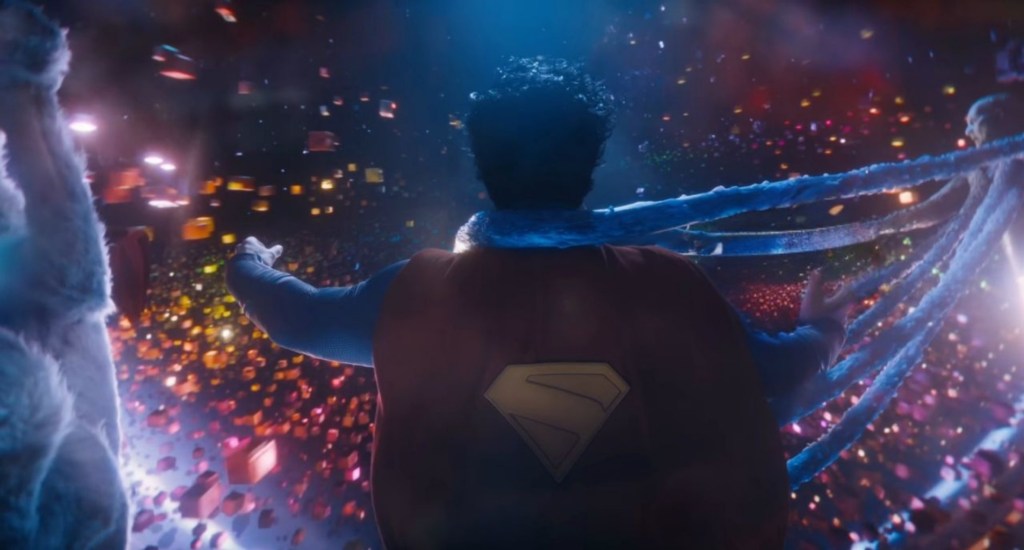
I think of Clark again. He has no conception of the institutions through which I’ve sought a livelihood, the qualifications I’ve acquired, or the social arrangements that determine what I can afford to give him. He doesn’t understand why one person might have a beautiful house with an abundance of windows while another struggles to secure a modest measure of abode. He knows the world through experiences that are far more immediate; familiar voices, affection, appetite, companionship, warmth, and the curious pleasure of looking upon a world he can’t fully enter. Sometimes, he calls for me and I follow him; and there’s something almost comical about the authority he exercises over me. This little creature, whose body has become increasingly vulnerable to the indignities of age, can summon me with an insistence that would be the envy of any monarch. I don’t follow him because he compels me; I follow him because his happiness matters to me. His desires aren’t always comprehensible just like his requests aren’t invariably convenient, but I want to oblige them whenever I can.

I wish the kind of endearment governed more of the world. I wish that vulnerability was seen as a reason for care instead of an opportunity for exploitation. I wish that needing help didn’t all too often entail humiliation, that provisions of safety or security weren’t always reduced to calculations of profit, and that the worth of a living being didn’t have to be established through some anticipated return upon the resources devoted to its care.
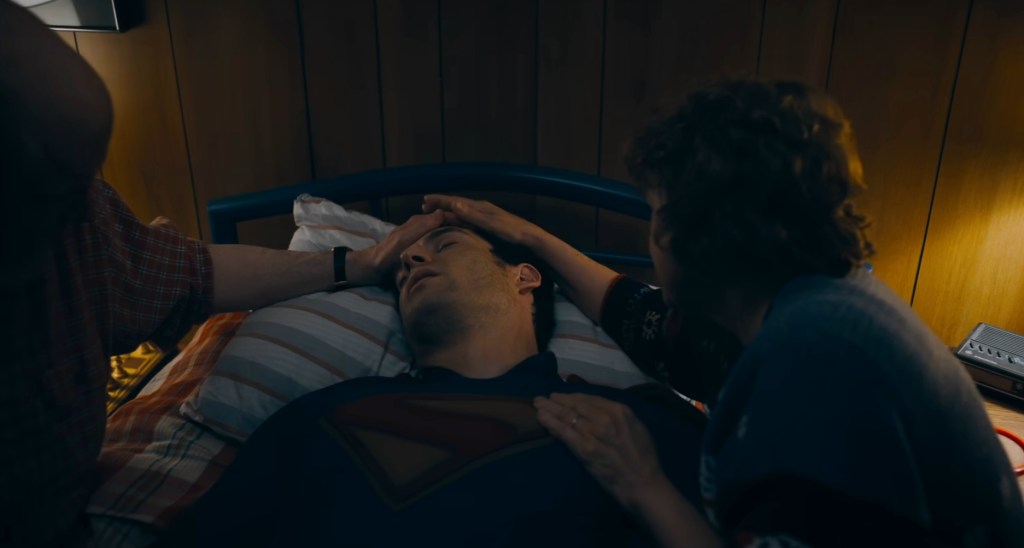
Clark won’t ever [literally] repay me for the things I have given him. He’ll never recognize their monetary value, contribute to my professional advancement, or vindicate my sacrifices through accomplishments of his own—and his life doesn’t need to become useful in any such way to deserve the care it receives. He’s not an ‘investment’; he’s someone I love. And yet, even here, where affection seems capable of transcending the transactional arrangements that regulate so much of life as we know it, I encounter limitations that no sincerity of feeling can overcome. I can’t love his kidneys into health. I can’t bargain with the years. I can’t promise that this precious little life we share will stretch across all the tomorrows I dream of spending beside him, nor that time will be merciful enough to grant us even a fraction of the forever I wish we could share.

Love inclines me to ruminate on the presence of death even within a promise of permanence. Many tales encode the value of perpetuity in relationships whose commitments or affinities come to define them as inescapable; but above all, mortality defines even the most loving attachment. Folks talk about loving someone forever like forever is a duration they inhabit together, but every relationship exists beneath the shadow of an ending, acknowledged or otherwise. Even the most loving vow can’t assure the perpetuity of those to whom it is made, which is why death doesn’t come as a surprise within an otherwise permanent arrangement. Death is actually a condition for that arrangement.
That’s what I find so unbearable.

When I look at Clark, I’m not just considering the prospect of a future without him. I’m also facing the knowledge that our present happiness is already bounded by circumstances neither of us chose. Every ordinary moment belongs to a life whose duration I can’t know. The tenderness I feel when he bunts my hands is accompanied, sometimes almost imperceptibly, by the fear that one day there won’t be a little head pressing against my palms.

And I resent that.
I resent the idea that gratitude should require my acquiescence to impermanence. I resent being told, however gently, that the beauty of something is somehow intensified by the knowledge that it doesn’t—can’t—last. Maybe that’s true for some people; but for me, the prospect of losing someone beloved doesn’t make their existence more beautiful. It makes their vulnerability more frightening. I’d gladly relinquish whatever philosophical profundity mortality supposedly confers upon love if doing so meant that Clark could stay healthy and happy beside me. Of course, I know that such a bargain is impossible.

But knowing something is impossible doesn’t get rid of the longing for it.

Superman inhabits that longing. His likeness suggests that the boundaries of possibility might be less absolute than our experiences lead us to believe. He can reach those whom others cannot reach, survive what others can’t survive, and intervene where the rest of us might only witness catastrophe unfold. There’s a kind of defiance in his very being, like the universe has permitted one creature to contradict some of its most unforgiving arrangements—and he still encounters the limits of what power can accomplish. His greatest weakness isn’t an enemy or even Kryptonite; it’s his inability to ensure that the world responds to integrity with likewise. Life has no guarantees. No matter how kind or honest he is, people still distrust him. No superpower or good deed assures gratitude, justice, or kindness.

But he still chooses to care.

While I find that choice admirable, I don’t think it’s a choice that everyone should make. There’s a difference between choosing to be good in the face of cruelty and being required to endure cruelty as proof that you’re good. The former expresses moral agency, while the latter is another means through which suffering is normalized. Superman isn’t good because he lets others harm him. He’s good because of what he does; the purposes to which he directs his power, the lives he considers worthy of protection, and the iniquity he refuses to impose.

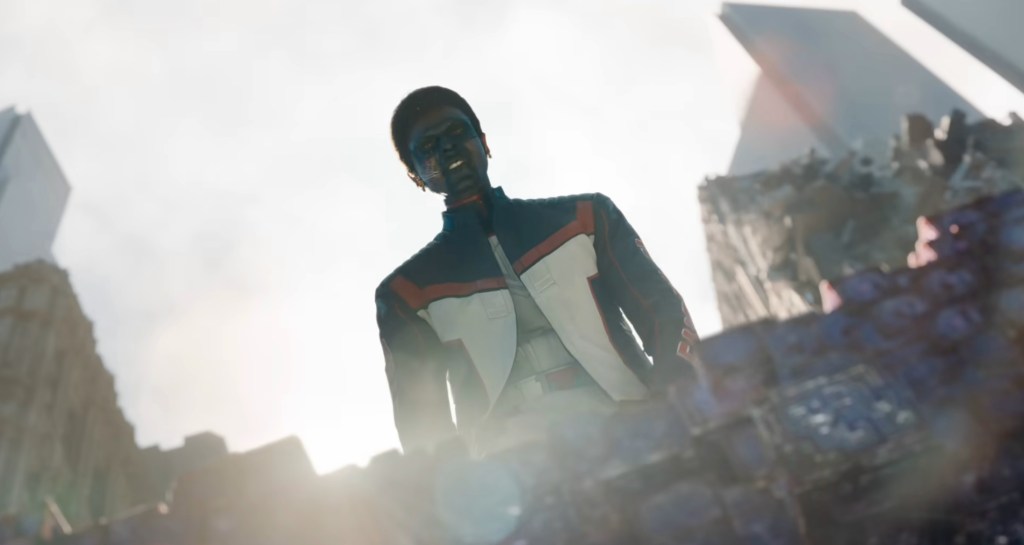
This really hits home when put against his narrative alternative selves in the multiverse. Gunn invoked the moniker of Ultraman (also played by Corenswet) as a somewhat Bizarro-like iteration. In the original DC Comics, Ultraman is Superman’s malevolent counterpart from a parallel universe, typically Earth-Three, where he leads the Crime Syndicate and incarnates a perversion of the Man of Steel’s ideals; wielding comparable superpowers to dominate, exploit, and subjugate humanity, not protect it. Compare that to Bizarro, a grotesquely imperfect duplicate—usually a faulty clone—of Superman, whose distorted appearance, unconventional reasoning, and inverted moral sensibilities render him a tragic reflection. He doesn’t really represent an inherent inclination toward evil. What he represents is the alienation, confusion, and longing for acceptance that accompany an existence defined by his perceived imperfections. This film’s “Ultraman” character is a manufactured counterpart who shares Superman’s physical might but none of the moral autonomy that characterizes Clark Kent. Engineered to obey Luthor’s commands, he epitomizes how readily power becomes an instrument of domination when divorced from conscience, compassion, and the freedom to question authority.

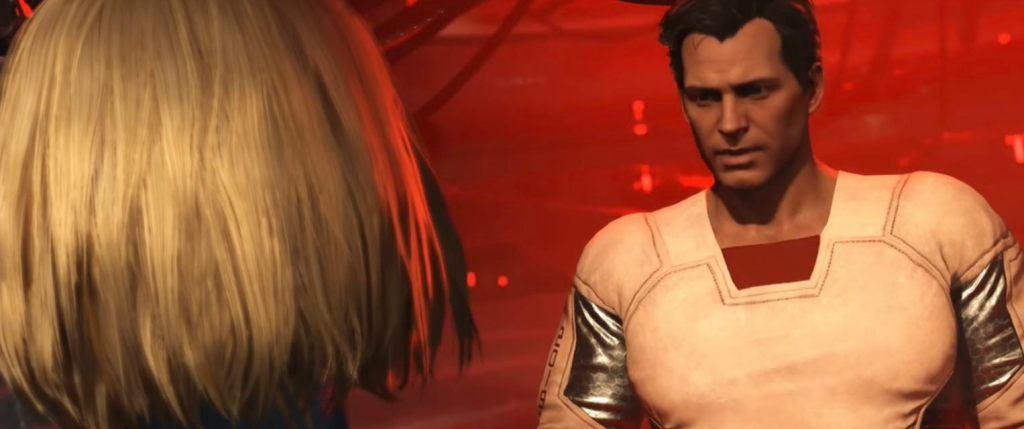
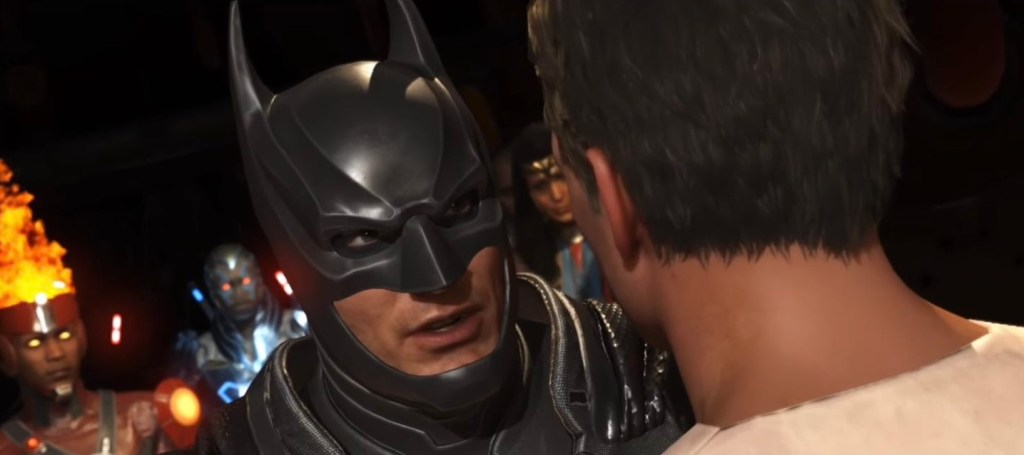
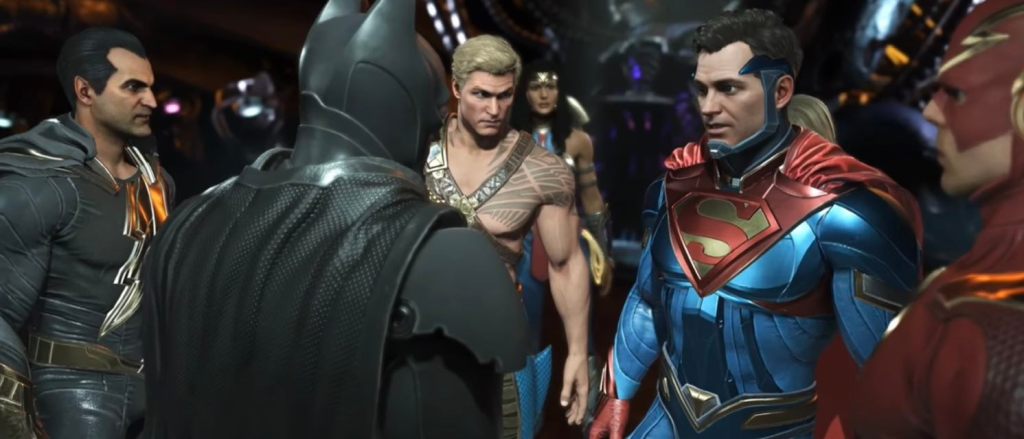
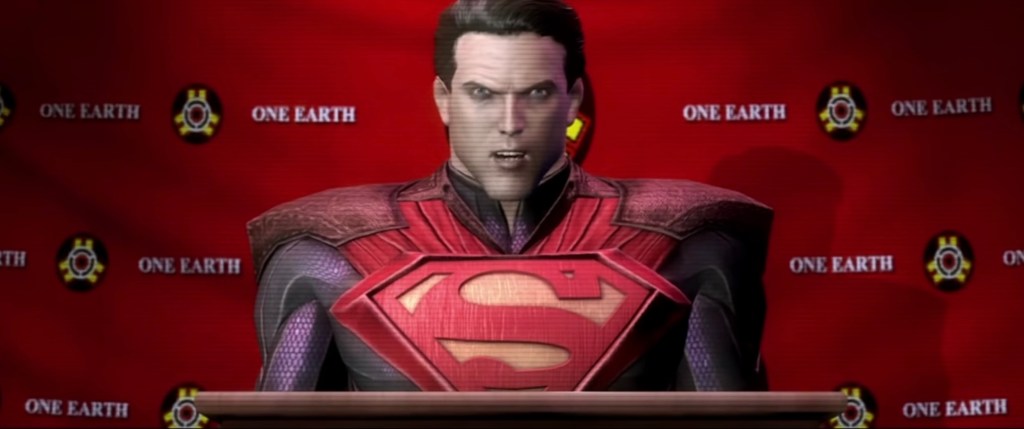
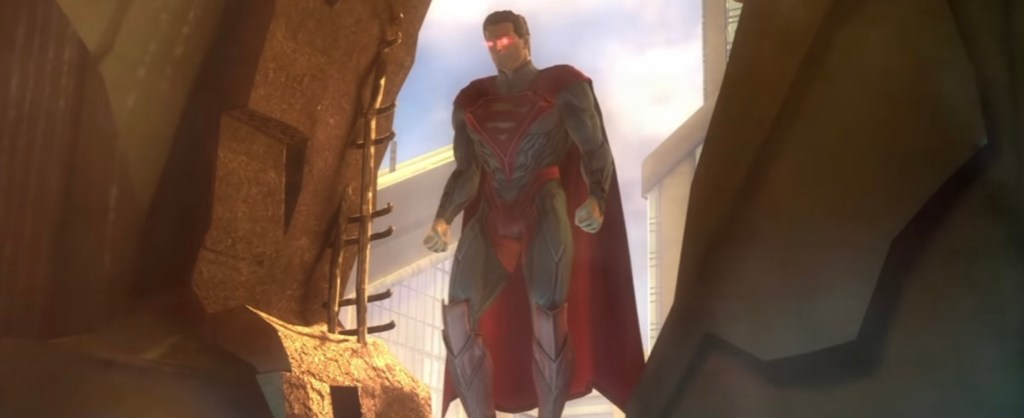
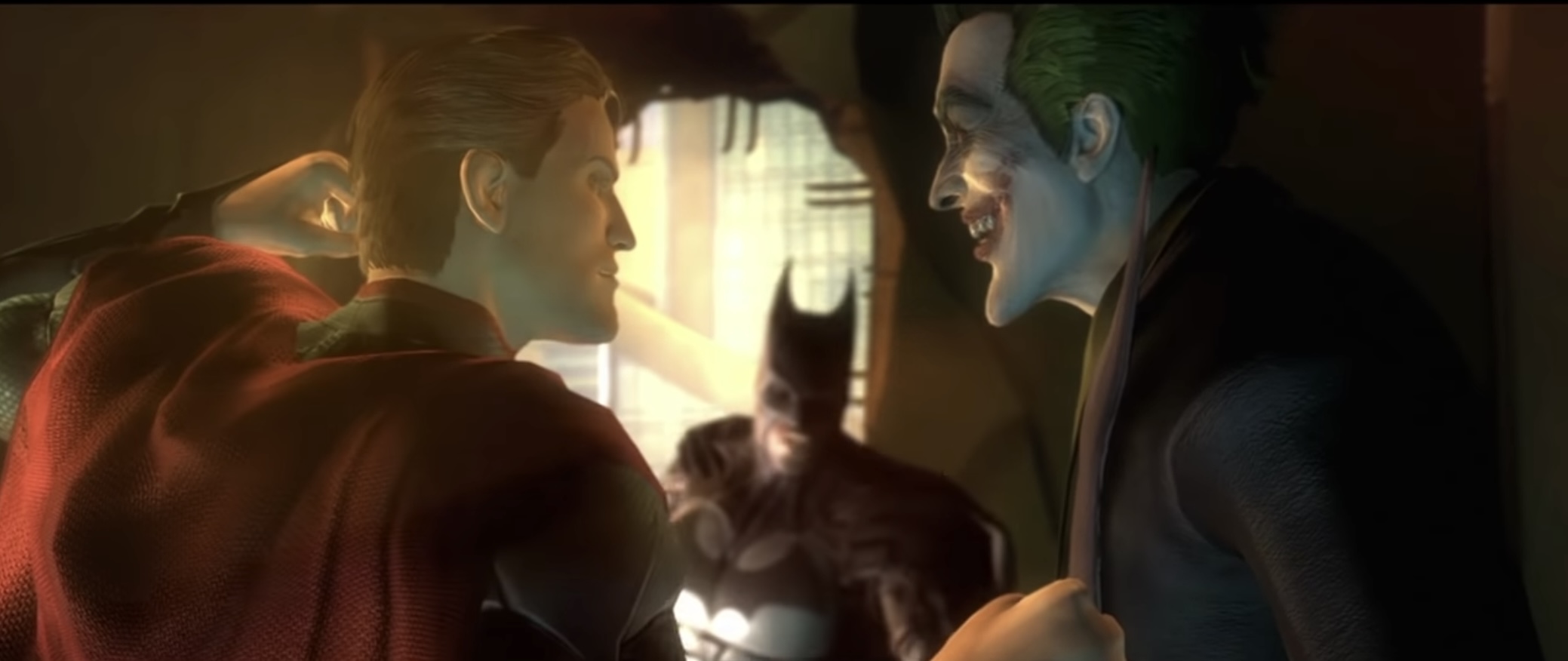
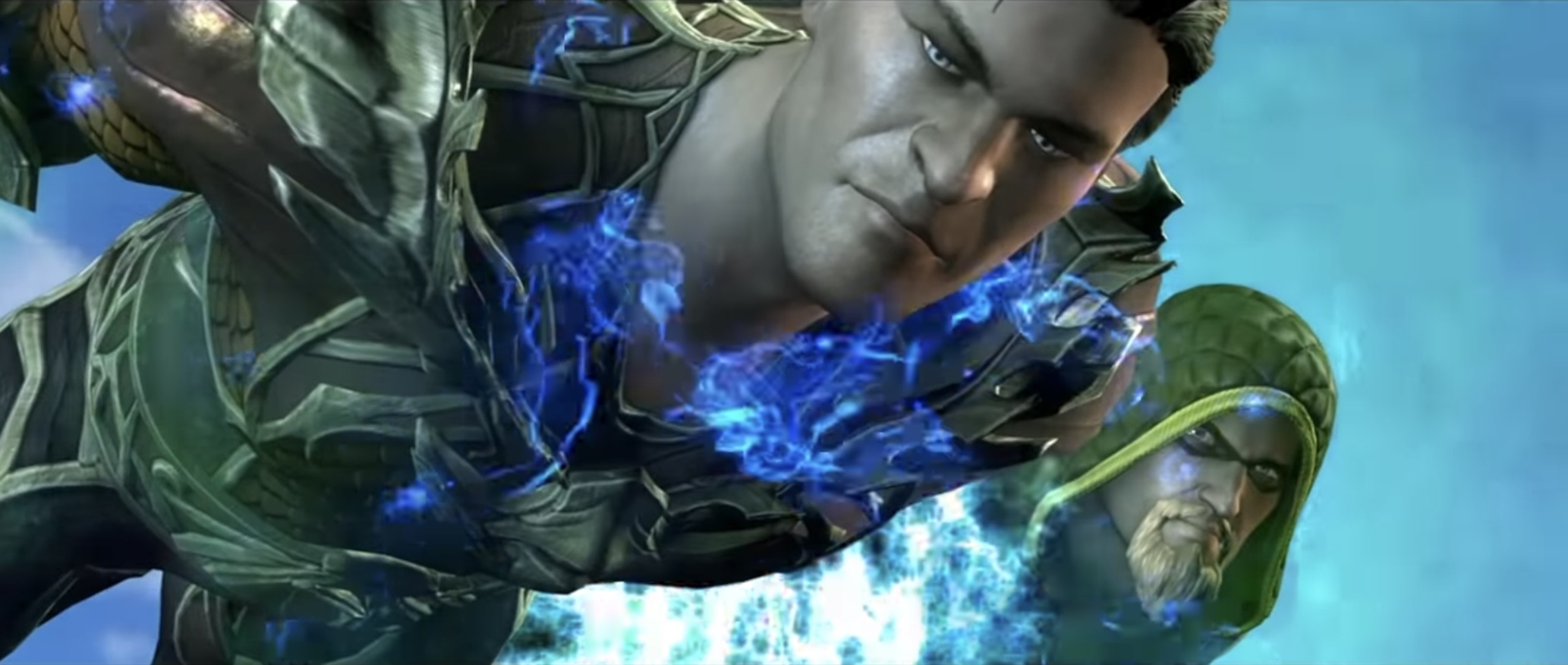
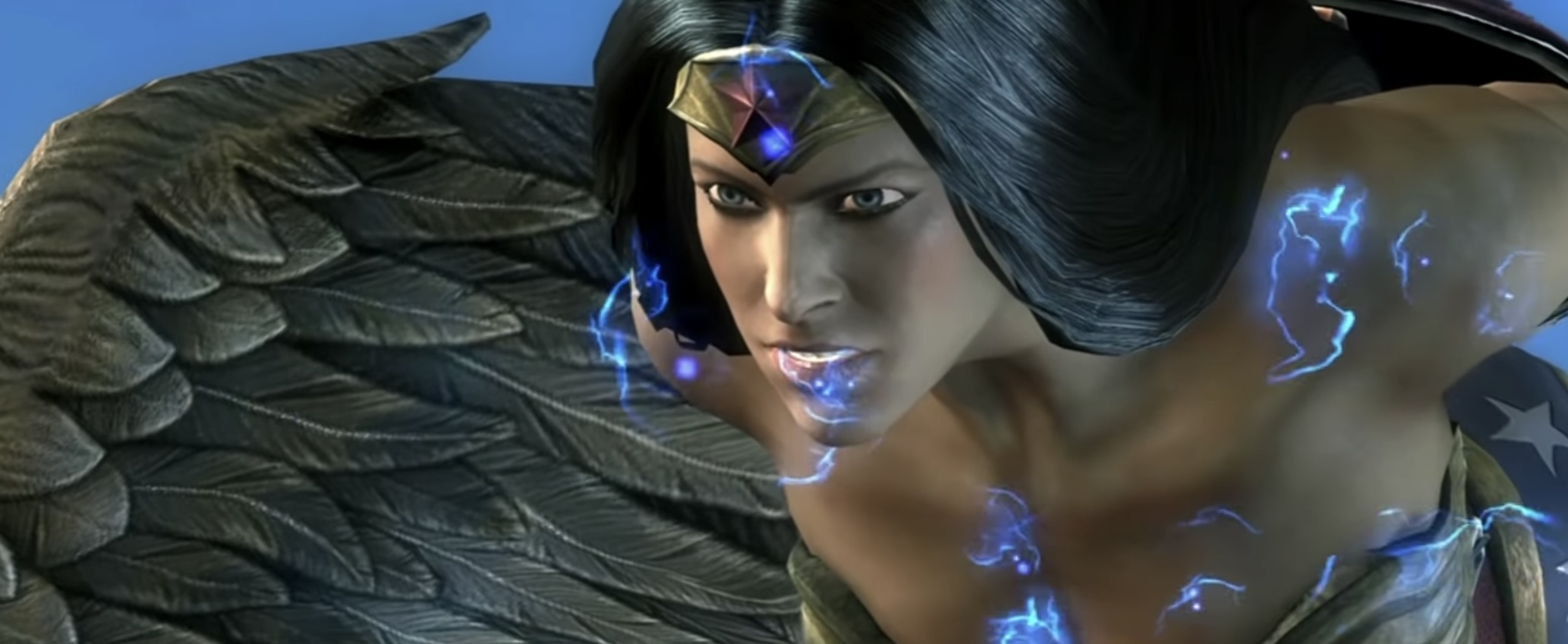
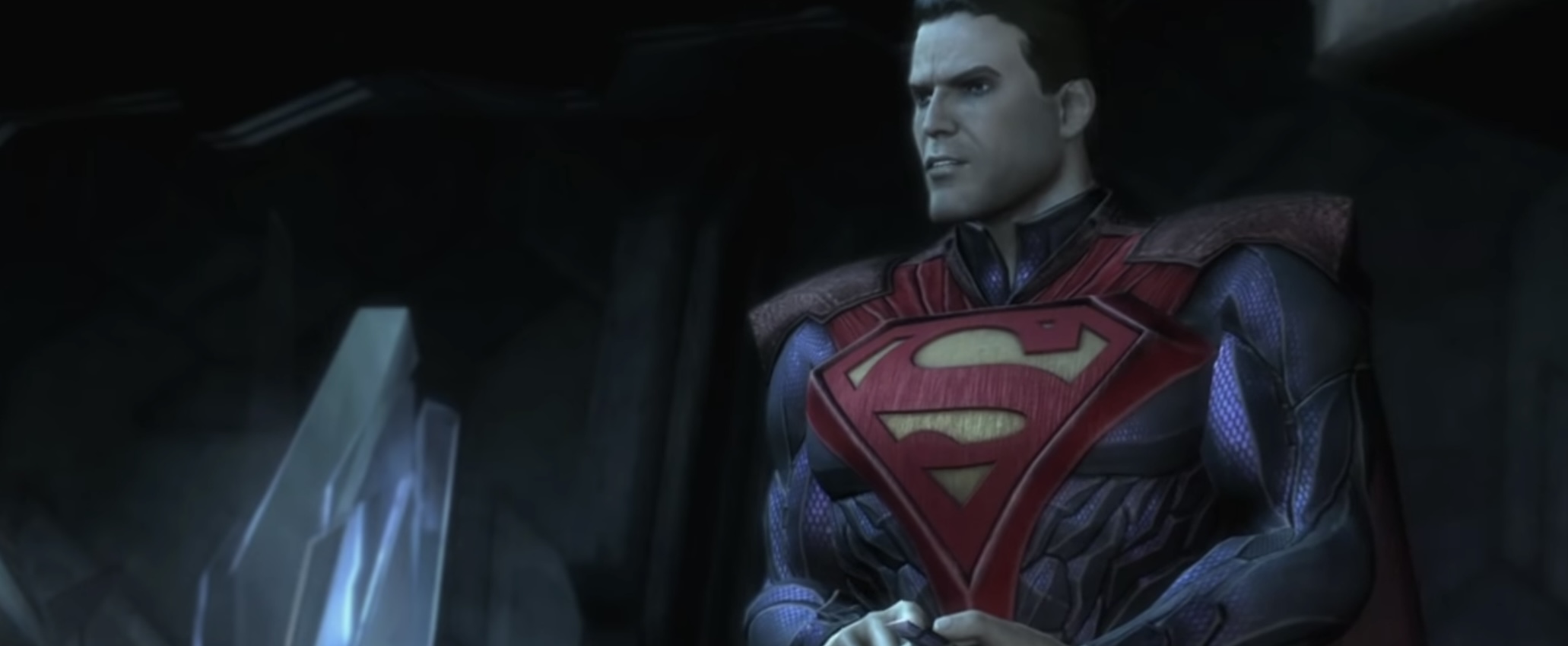
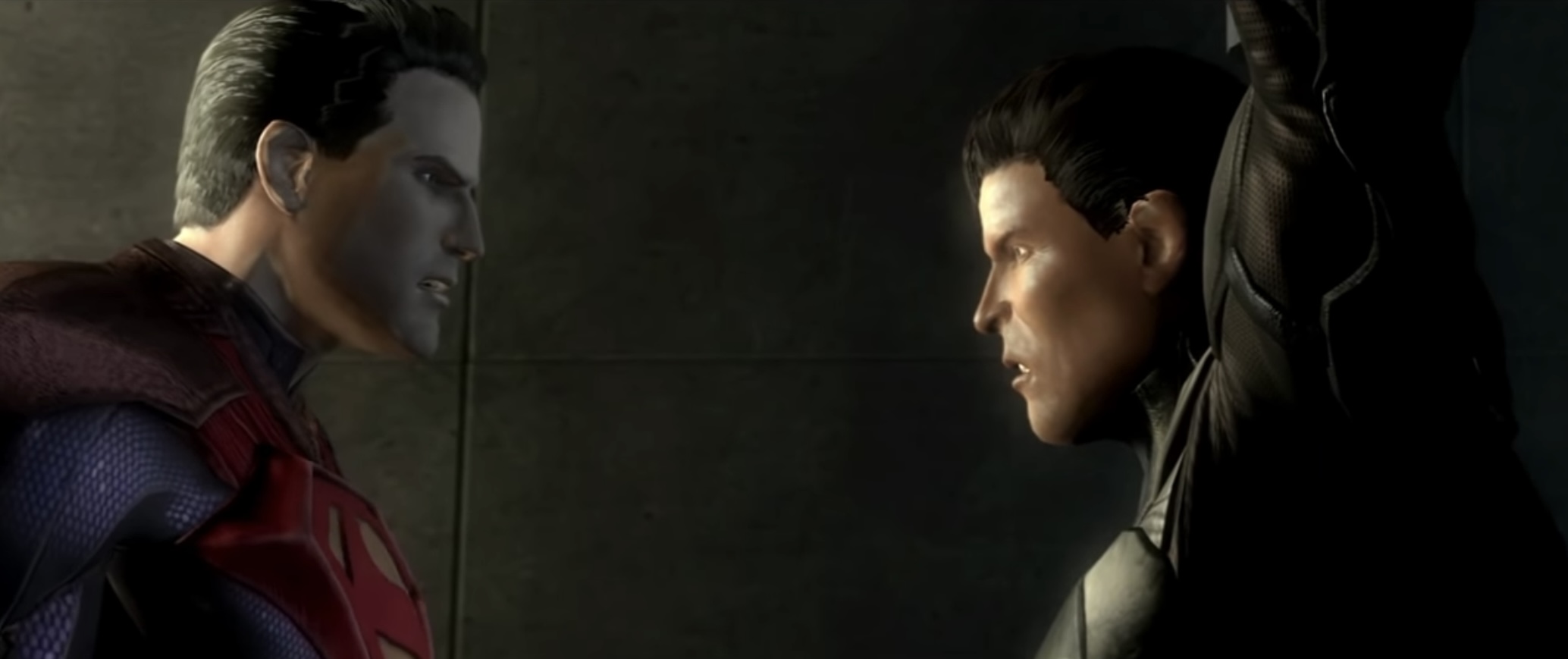
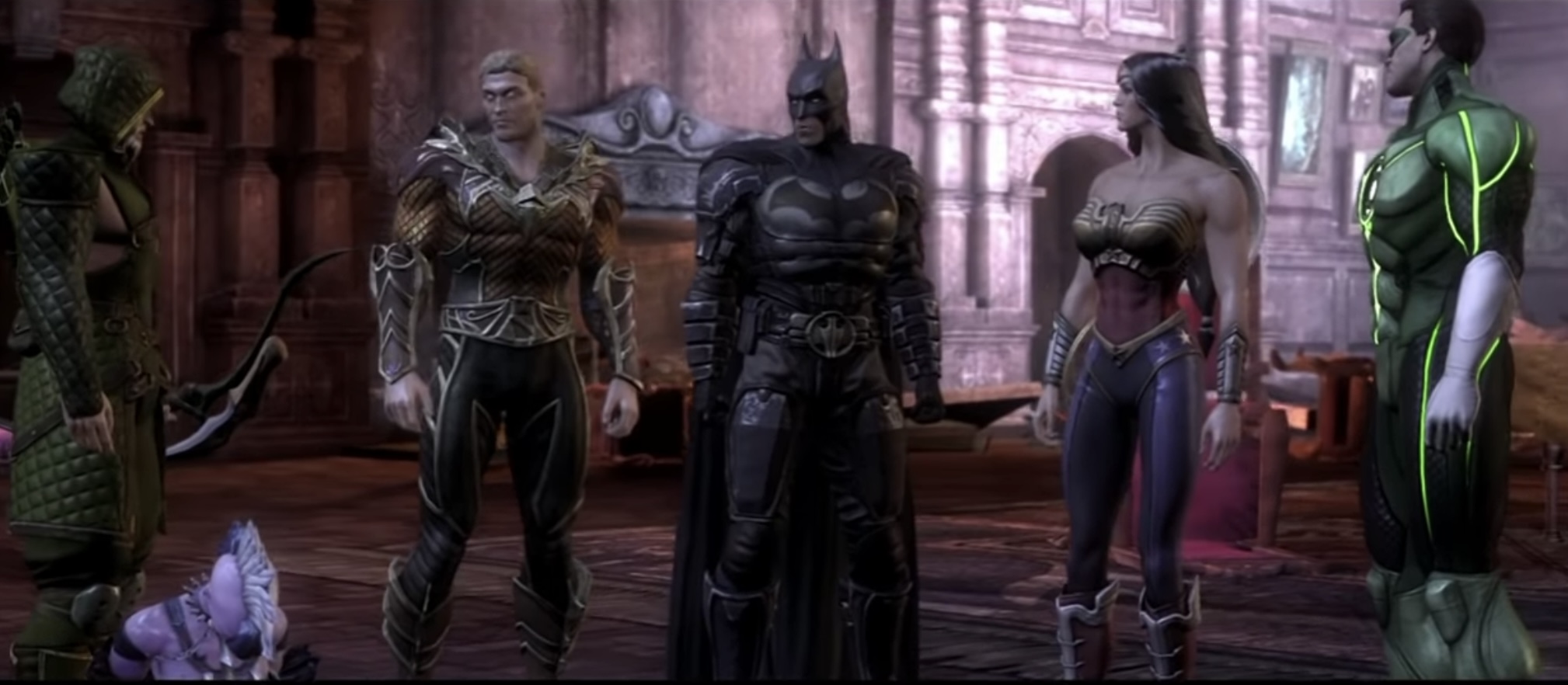
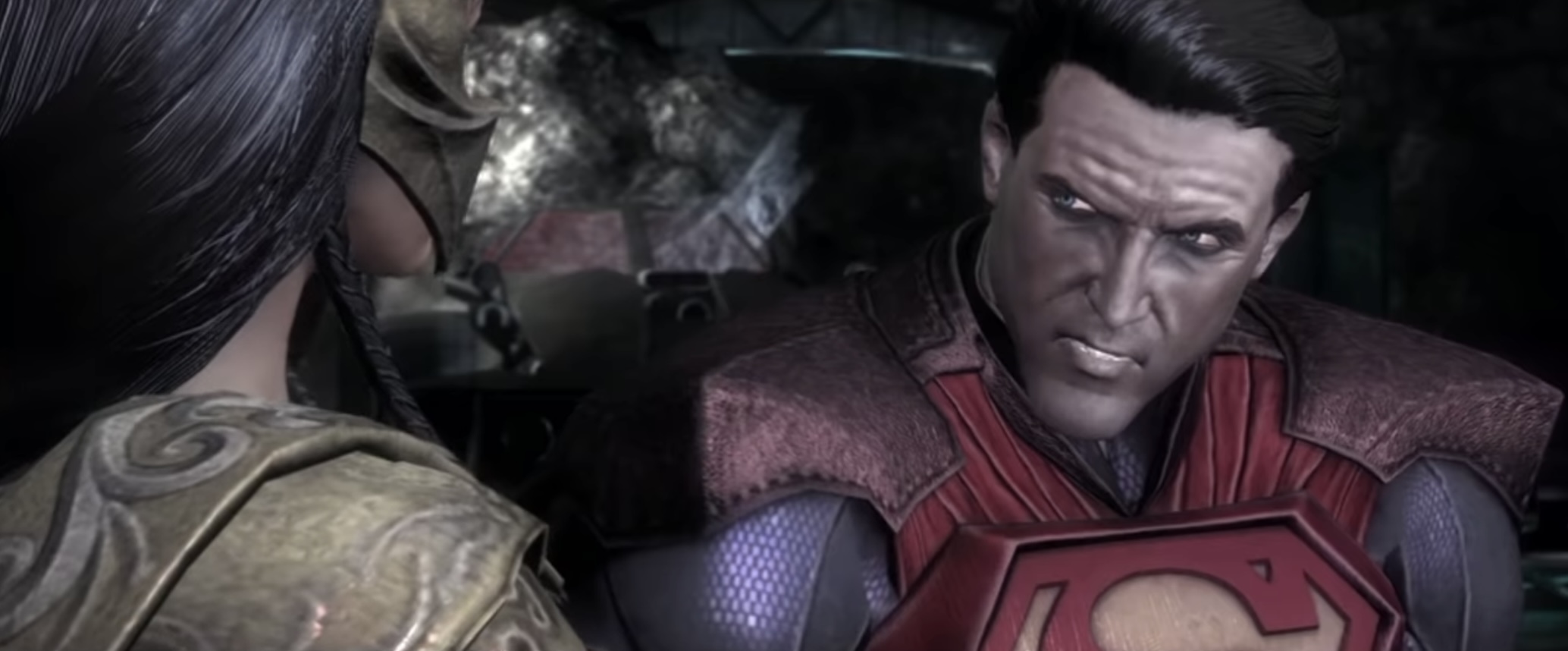
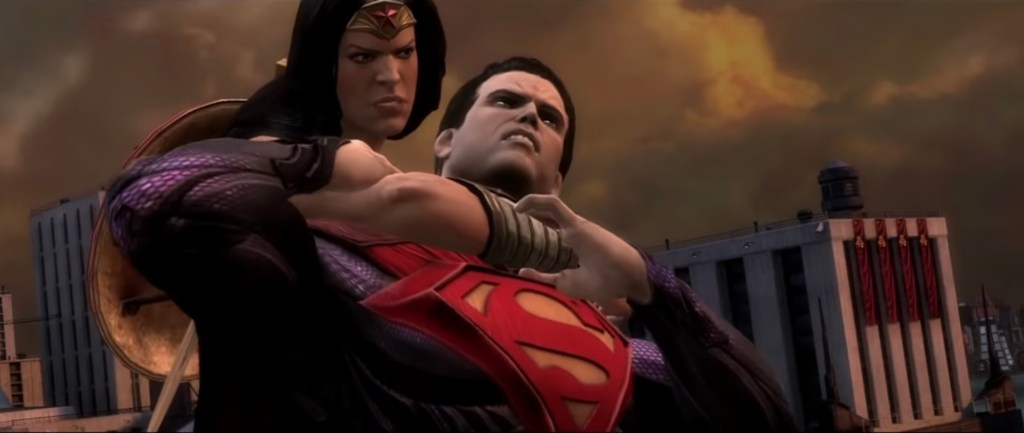
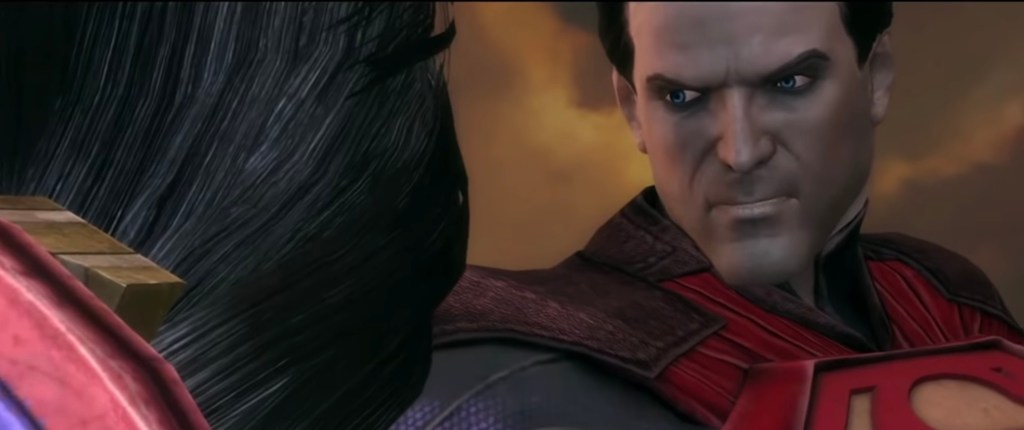
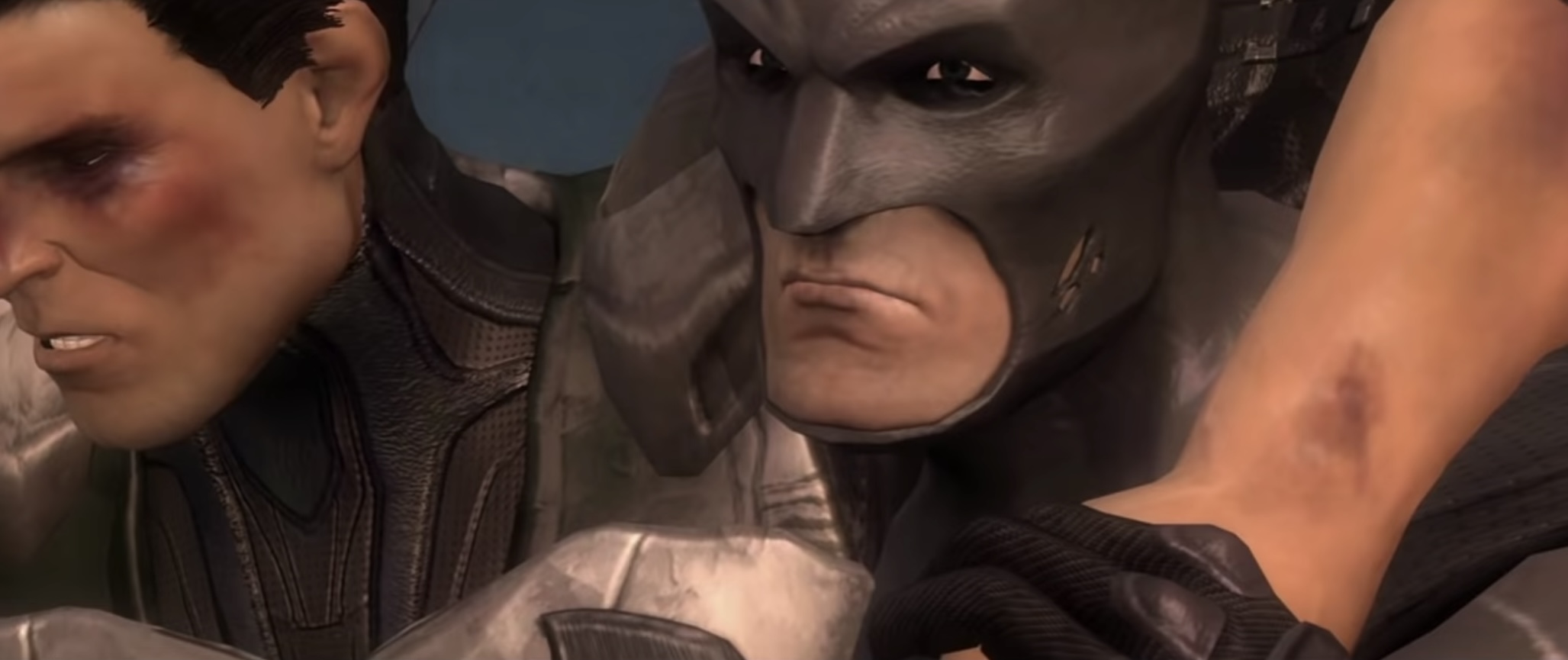
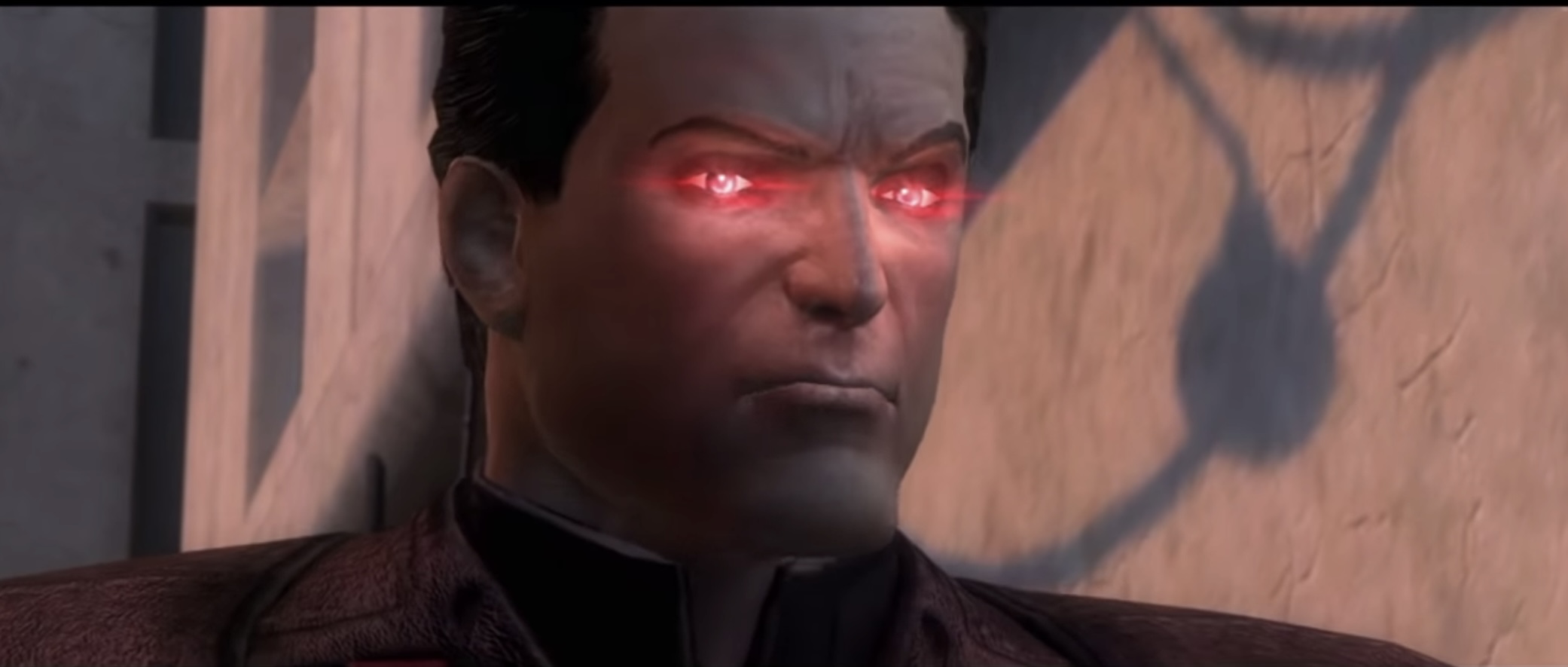
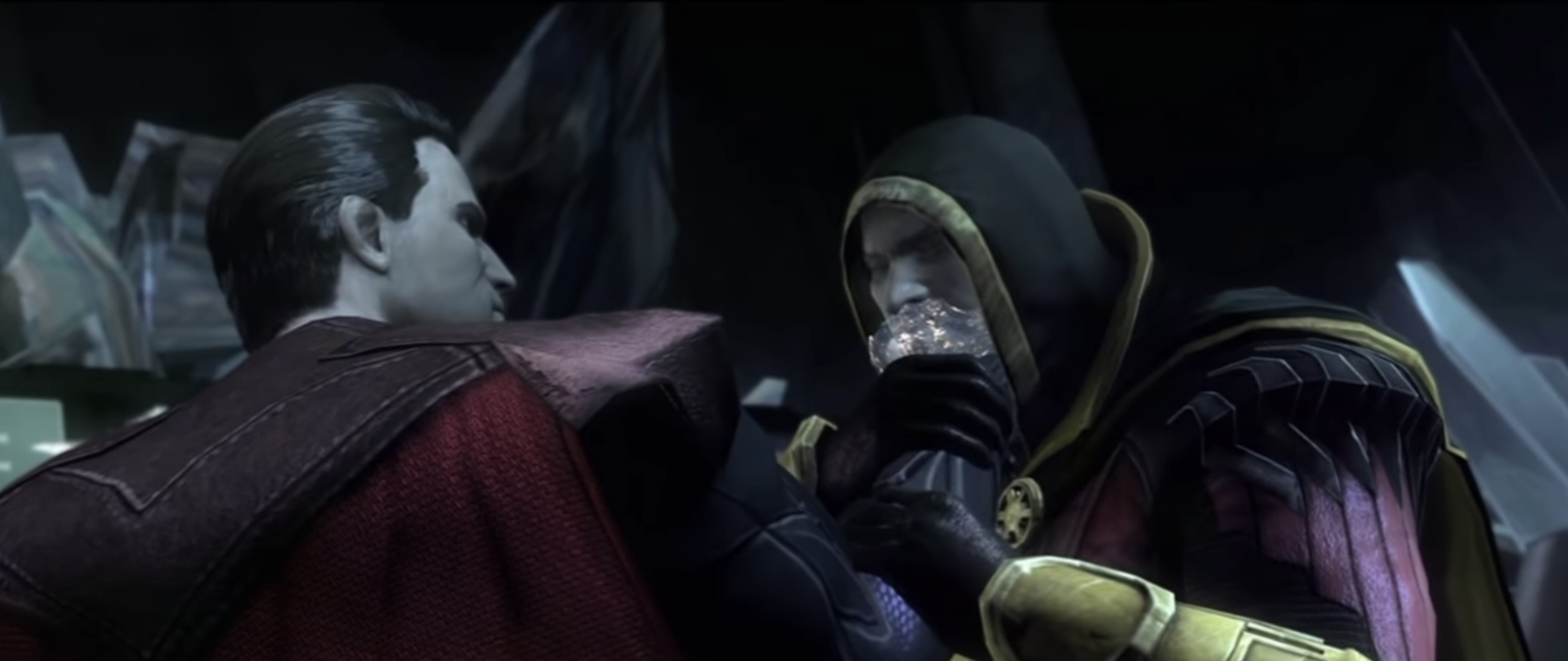
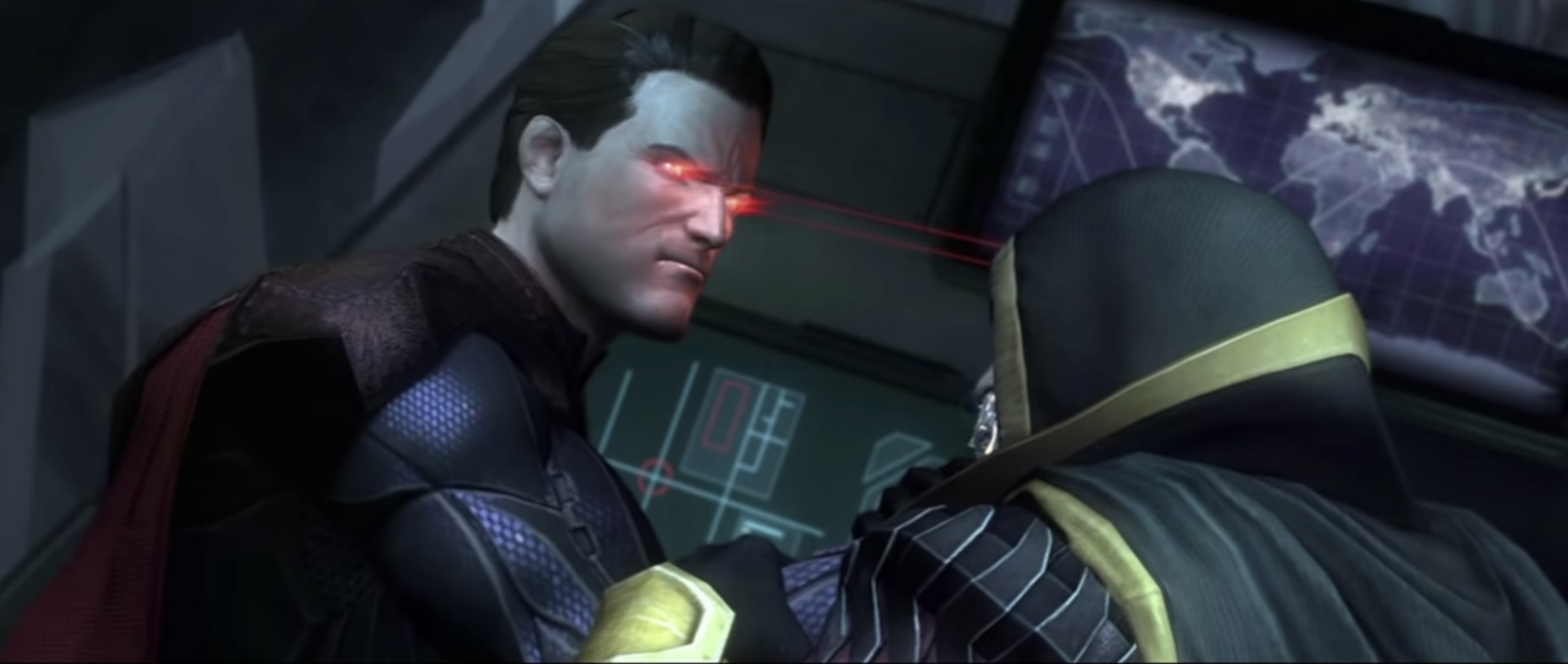
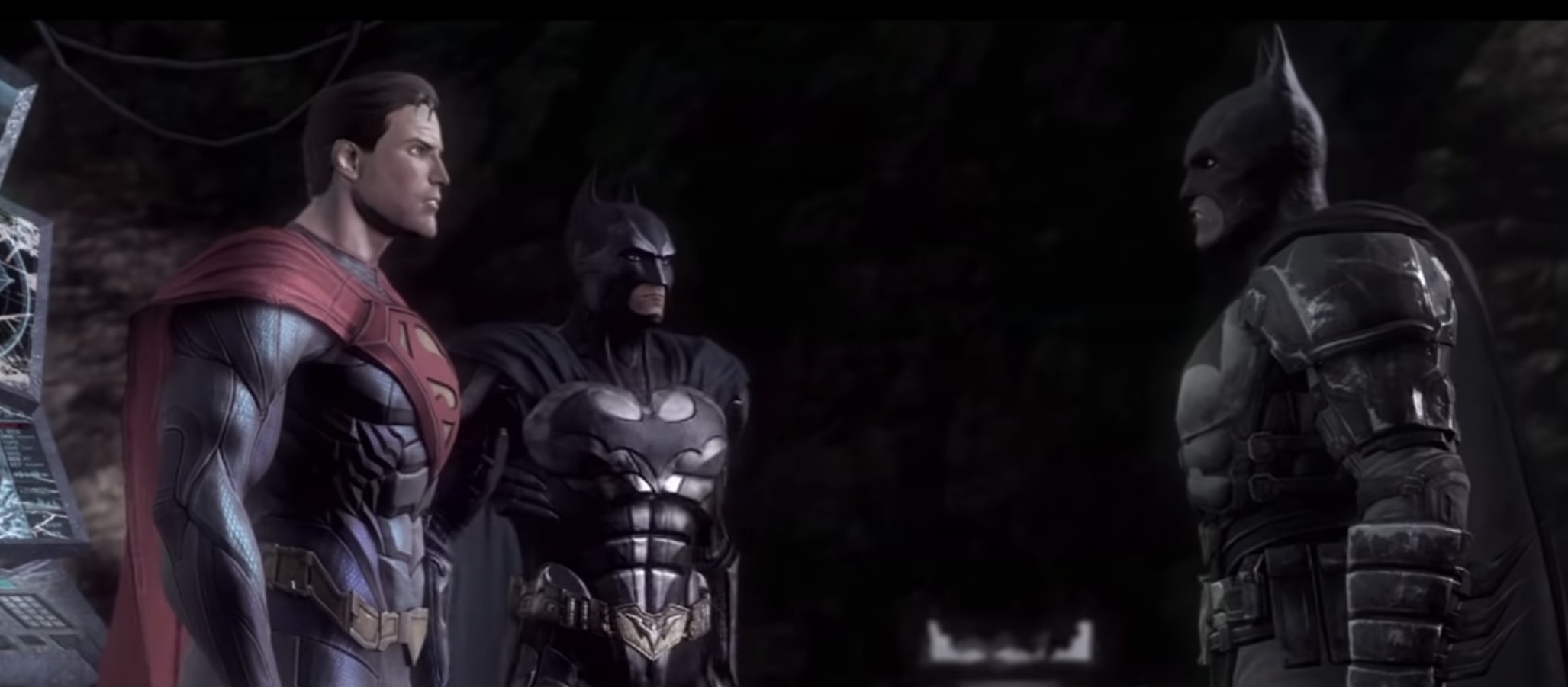
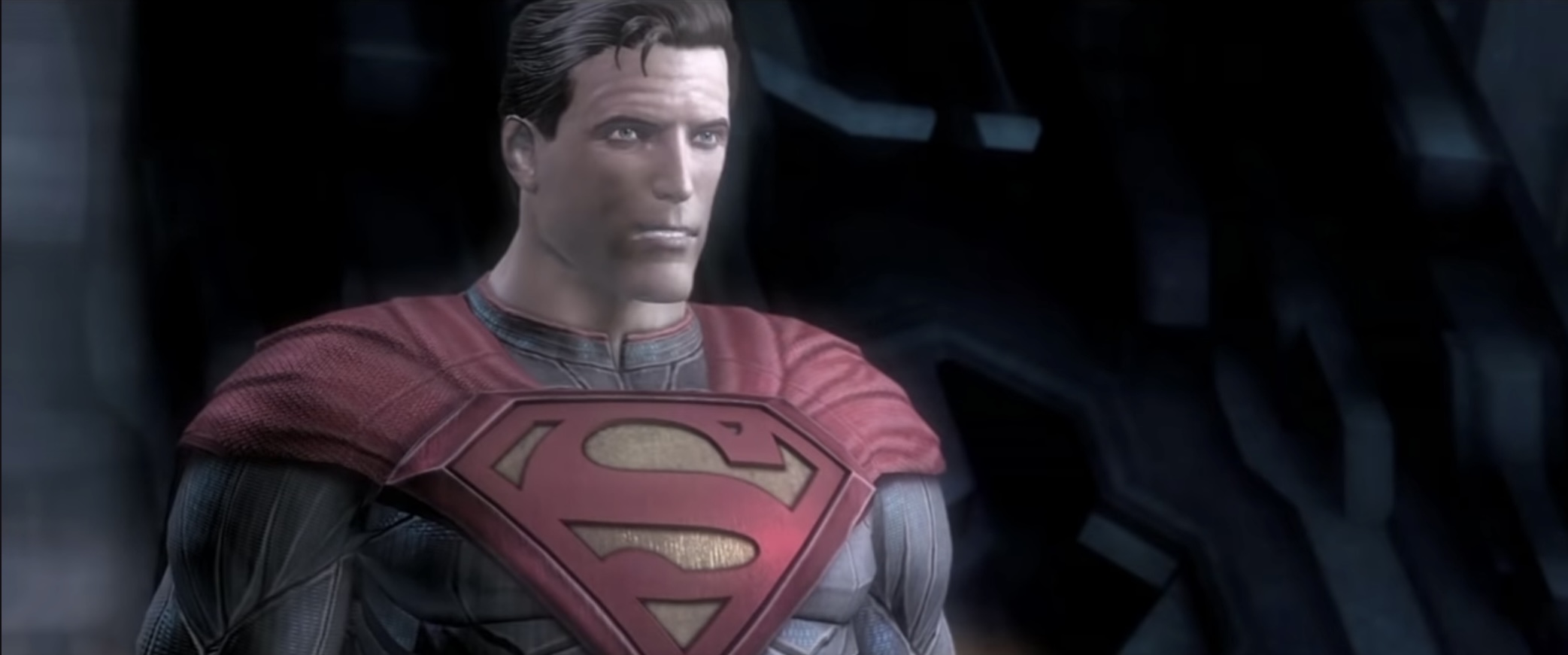
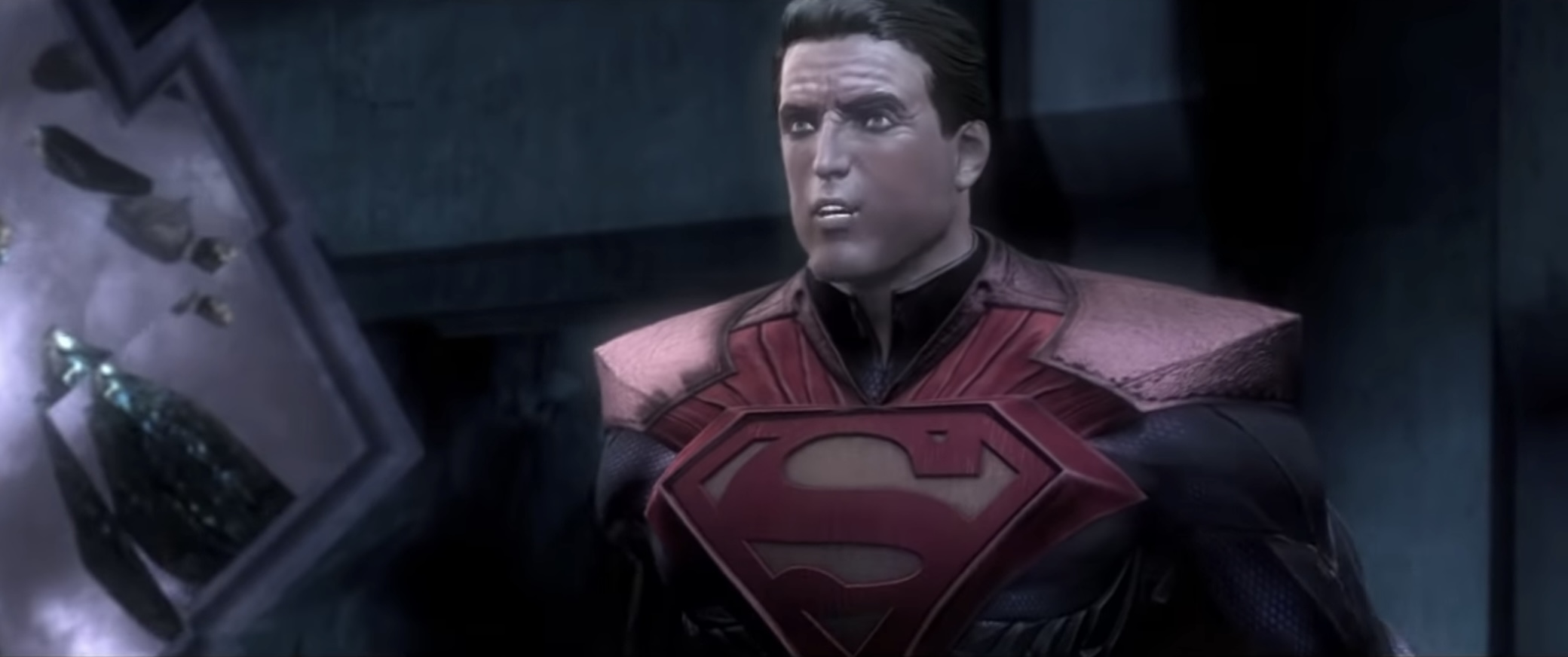
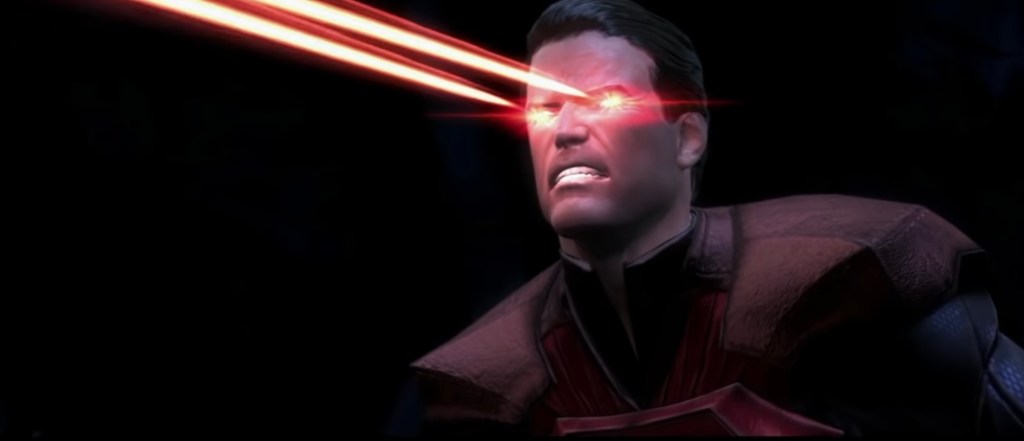
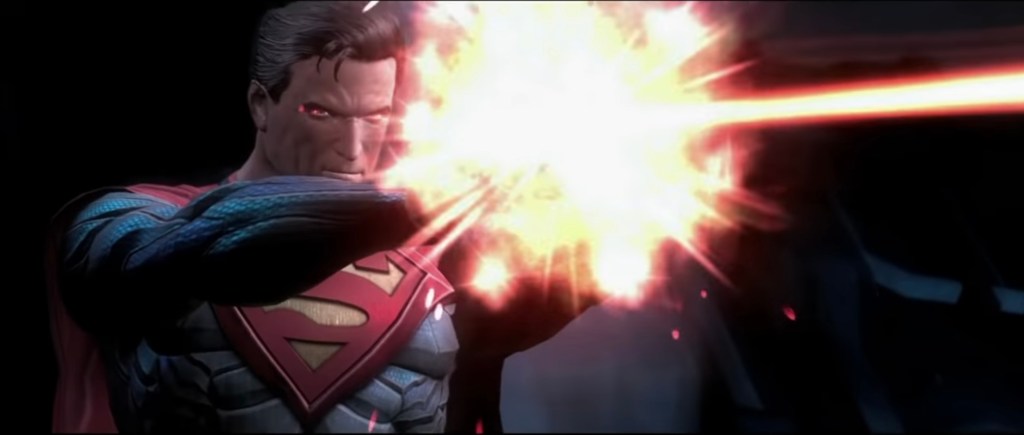
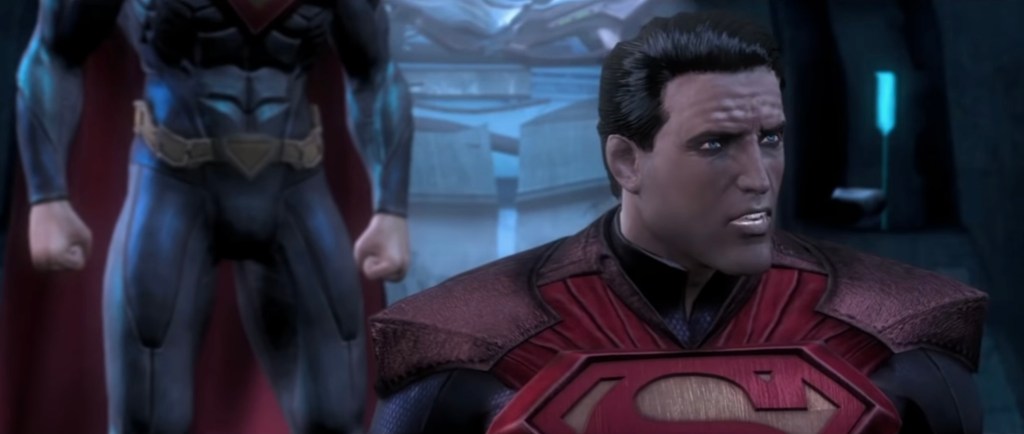
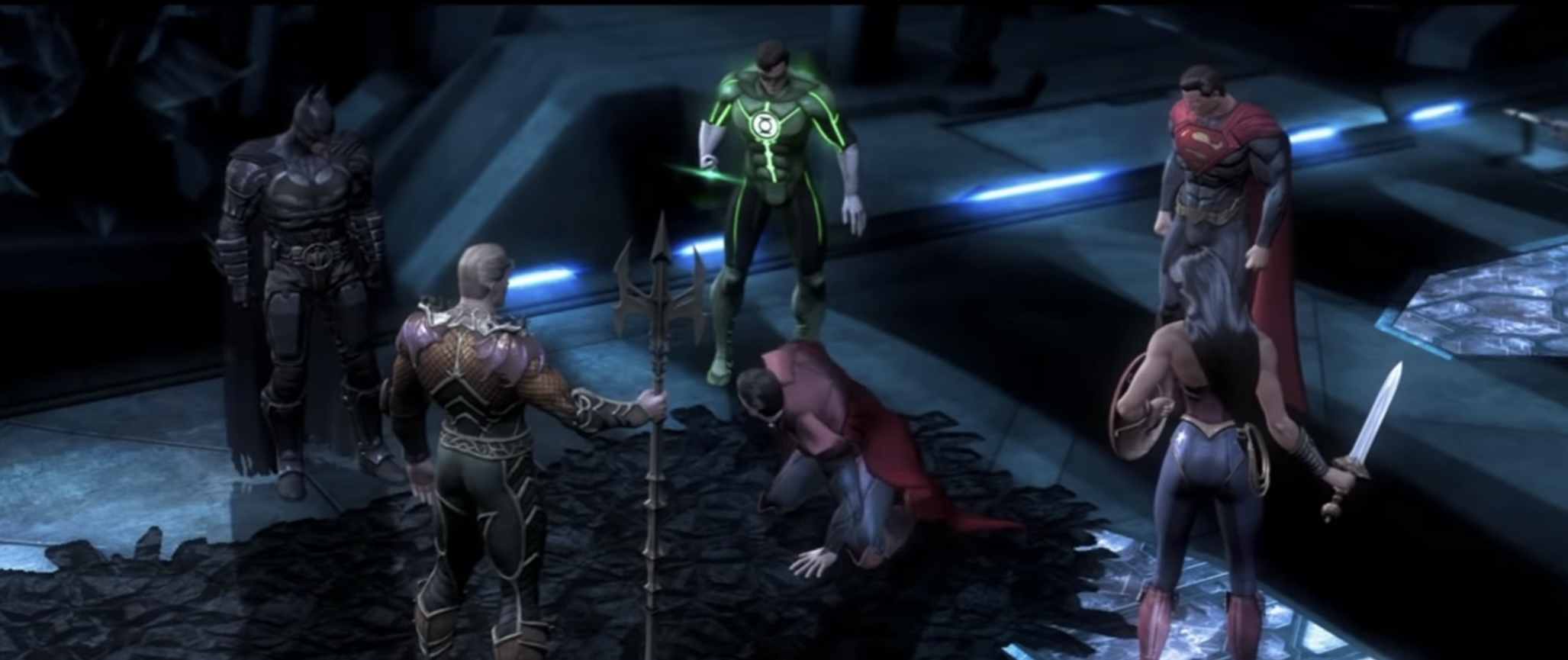
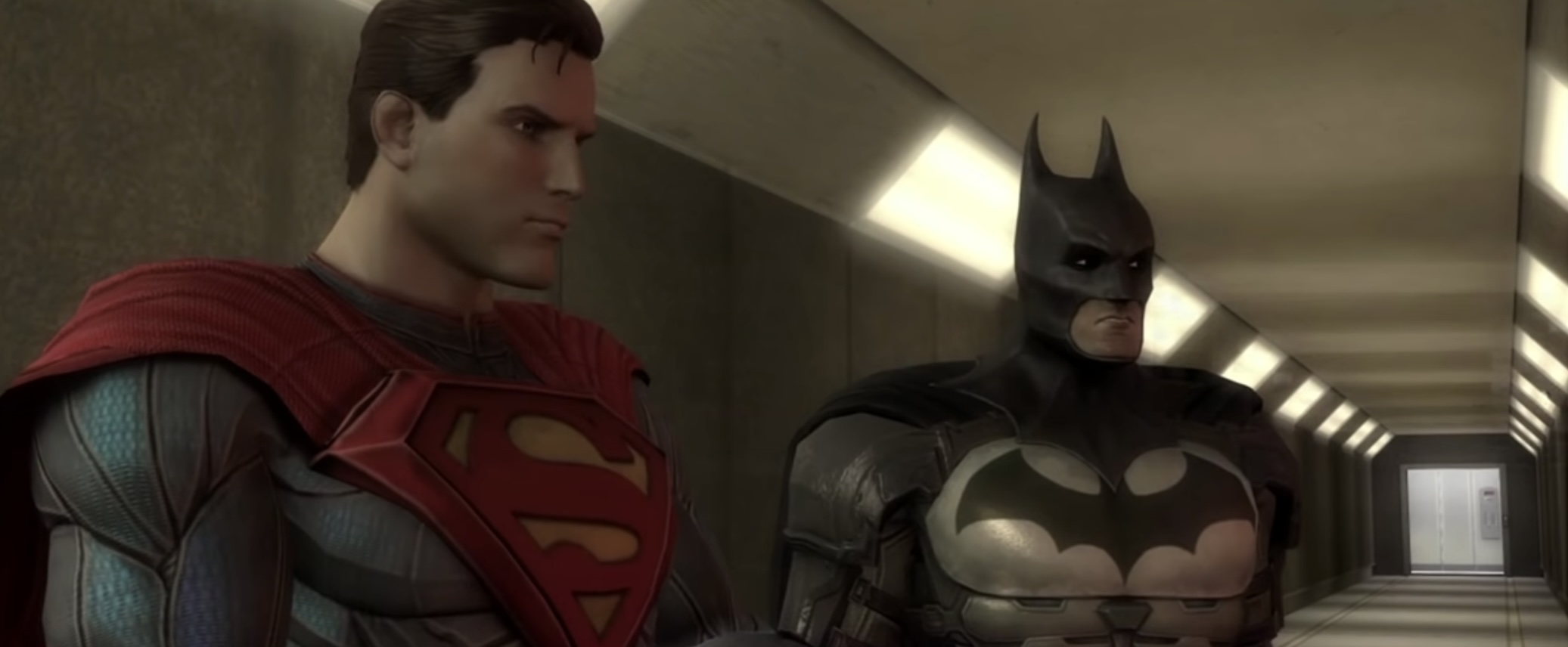
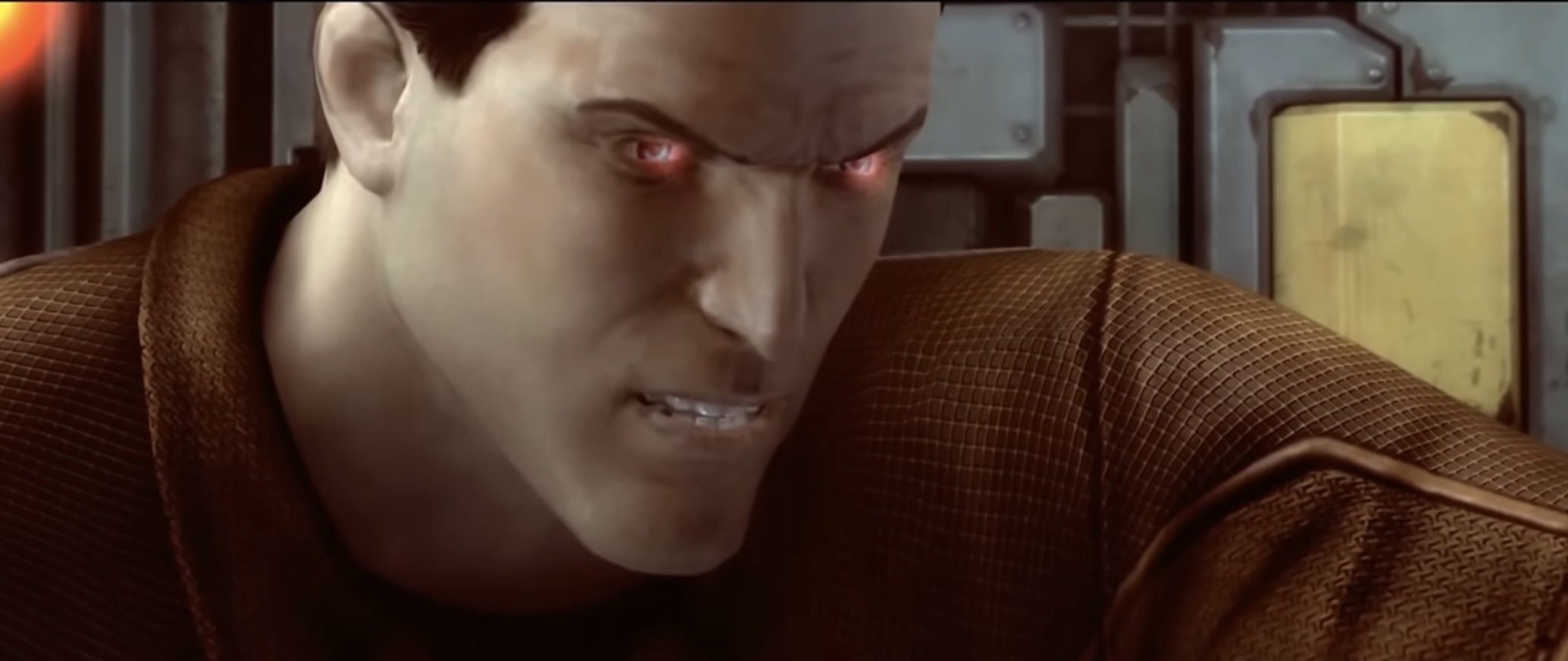
Which makes me think of another miserable version of Superman—from in Injustice, wherein Superman’s devastation following the murder of Lois Lane and their unborn child transforms his longing to protect humanity into a fascist resolve to control it. He’s not really like Bizarro, whose destructive tendencies arise from an imperfect understanding of the world instead of consciously rejecting goodwill. And unlike Gunn’s Ultraman, whose obedience is imposed upon him, or his Earth-Three counterpart, whose cruelty reflects a deliberate appetite for domination, Injustice Superman thinks coercion solves suffering, purporting that eliminating of uncertainty establishes peace. The core tragedy of Injustice is that Superman understands the moral significance of compassion and protection, but his bereavement convinces him these virtues can be preserved through the same cruelties they once compelled him to oppose. His grief is comprehensible, even if his subsequent atrocities aren’t. It still makes my skin crawl to think of how love—ostensibly, contrary to cruelty—can be purposed to justify oppression; when the desire to protect, even avenge consumes us until we’re driven to essentialize variance—and by extension, what bears the slightest likeness to our traumas—as a threat. I’ve had truly horrid experiences with particular people and places; and I admit, I had to make conscious, constant efforts not to pigeonhole others of shared traits. So, I can understand the impulse to isolate or suspect, especially since I tend to assume responsibility for adversities I couldn’t have reasonably prevented; like blaming myself might restore some semblance of control over things that left me powerless. I understand the temptation to typecast those who hold qualifiers of my malefactors as prospective threats. Like Injustice Superman, I can mistake the emotional security of anticipating further harm for the moral certainty that such harm is inevitable.
And yet, when I consider my own Clark—whose little life is so far removed from these confrontations—I consider a gentler expression of the same distinction. He doesn’t have any of his namesake’s spectacular abilities, nor any understanding of the moral struggles through which fictional worlds discern their heroes from their adversaries. His powers, such as they are, consist largely of summoning me from another room, persuading me to interrupt my work, and spurs an affection I’m already helplessly inclined to give. And maybe that’s why I find him so meaningful; he doesn’t need to overcome anyone to be worthy of love, nor must he transcend the frailties of his aging body to deserve protection. I’ve sometimes wished for the powers of Superman so that I might spare him the illnesses and uncertainties that accompany his mortality; but I wonder whether, faced with the possibility of losing someone so precious, I can also recognize something of the desperation that ultimately corrupts his Injustice counterpart. I understand the longing to refuse a world in which those we love can be taken from us, even as I can’t accept the suffering inflicted upon others in the name of preventing our own. That’s what moves me about Gunn’s Superman; he knows anguish and the temptation to answer cruelty with cruelty, but refuses to let the world’s capacity to wound him or those he loves to become a justification for inflicting those same wounds on others. Proudly albeit shakily, he insists to Luthor: “I’m as human as anyone. I love. I get scared. I wake up every morning and despite not knowing what to do, I put one foot in front of the other and I try to make the best choices I can. I screw up all the time, but that is being human; and that’s my greatest strength. And someday, I hope, for the sake of the world, you understand that it’s yours too.”
The hardest expression of love is being willing to cherish another being without making possession, permanence, or control the conditions of that care. My Clark can’t save the world, and I can’t save him from everything the world entails. However, in the tenderness of his companionship, and in the care I endeavour to give him, I encounter something that neither Ultraman’s strength nor Injustice Superman’s dominion can secure.

A love whose value arises from the vulnerability it refuses to exploit, not from the power it exercises.

That characterization posed a moral question that I struggled to put into words, but got clearer when I started thinking comparatively. The question isn’t whether we can become strong enough to withstand an unjust world, but whether we can cultivate the capacities necessary to make that world less about strength. I don’t know how to reconcile that aspiration with my own limitations. I don’t know if the years ahead will bring the stability I’ve sought, if my efforts will eventually afford Clark a more comfortable life, or if his health will stay stable for us to enjoy many more ordinary days together.

I can’t promise myself that everything will be all right. There are moments when I wish faith could provide that promise. I wish providence was clearer, that goodness was reliably vindicated, and that the suffering of innocents could be reconciled with the existence of a Creator that doesn’t need us to diminish the reality of their pain. Even so, I don’t mistake explanation for consolation, or consolation for a remedy. I guess the difference between what can—and can’t—be changed is less obvious than the Serenity Prayer might suggest. Conditions that seem permanent to one person might be negotiable to someone else with greater resources, influence, or opportunity. What we call inevitability can sometimes be no more than the consequence of insufficient capacity. Still, other limitations persist regardless of powers we accumulate. For all his extraordinary possessions, Lex Luthor will never grasp the genuine senses of peace or contentment that continually elude him; and like I’ve said before, Superman can’t make love invulnerable.
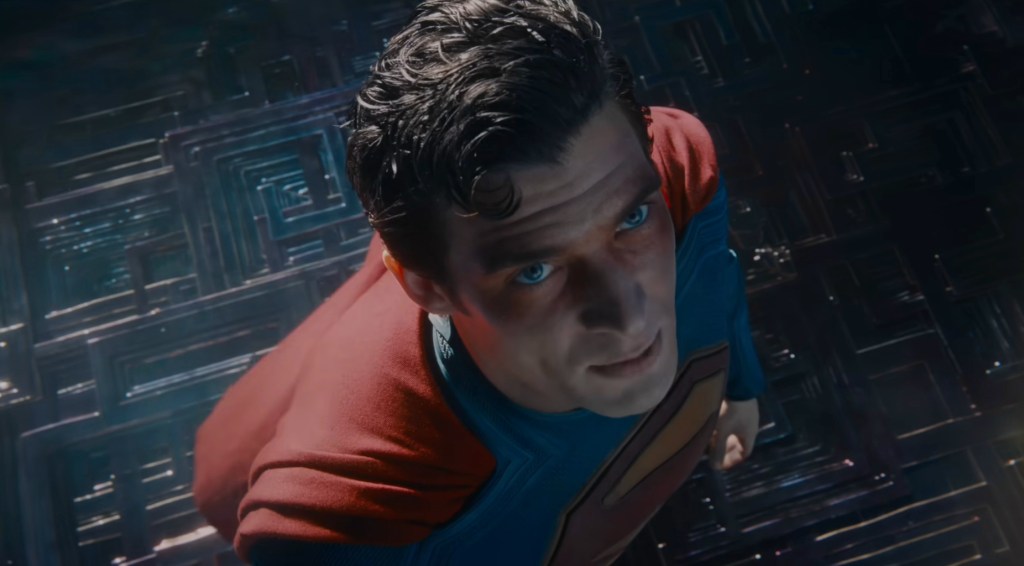
I guess that’s why I return to Clark, whose name belongs to a hero capable of saving the world, and whose own little world remains so dependent upon the ordinary ministrations of someone who can’t. I can’t give him everything. I can’t give him forever. But when he calls for me, I can answer. And although I won’t pretend that this small act of devotion compensates for everything beyond my power, I won’t write it off just because I can’t accomplish what I desperately desire.

What matters is knowing that integrity doesn’t lose its value just because it can’t right every wrong or spare those we love from suffering. Love, care, honesty, faith—none of these are inconsequential. The significance of what little we can accomplish should never oblige us to reconcile ourselves to everything we can’t.

For now, Clark’s here. Sometimes, he sleeps beside my head. Sometimes, he follows Nora through the apartment. Sometimes, he approaches me with that familiar insistence upon affection. And I find myself setting aside whatever preoccupation had seemed so important a moment before. I put my hand beneath his chin. He starts to purr. And for a little while, there is nothing to save him from except the loneliness of wanting someone beside him.

At least, that’s something I can do.

♫ Title song reference – “Heavenly Day” by Patty Griffin

References

Bandura, A. (1999). Moral disengagement in the perpetration of inhumanities. Personality and Social Psychology Review, 3(3): 193-209. https://doi.org/10.1207/s15327957pspr0303_3

Menjívar C. (2021). The racialization of “illegality.” Daedalus, 150(2): 91-105. https://doi.org/10.1162/daed_a_01848

Moore, R. (2023). Losing our religion: An altar call for evangelical America. Sentinel.

New Revised Standard Version Updated Edition Bible. (2021). National Council of Churches.

Worley, M. (2012). Shot by both sides: Punk, politics and the end of ‘consensus.’ Contemporary British History, 26(3): 333-354. https://doi.org/10.1080/13619462.2012.703013
Look Up

Even though it was two years ago, I still remember mentally constellating the stippled ceiling as the vet probed into the particulars of Clark’s annual exam. My eyes stung and I could feel my chest burn while I tried to hold myself together enough to listen. Back then, I was a little more than halfway through my IDPhD and already felt increasingly defeated by life professionally and existentially. I remember feeling exhausted by precarity and platitudes, watching people with performative or hollow praxes become—or remain—gainfully employed and celebrated as others eagerly indulged them. It cast life as I knew it to be morally inverted. Things like sincerity, care, and principled effort—things widely avowed and encouraged—had little, if any bearing on who prospered. Amidst the uncertainty about my own future, I tried to hold onto some sense that my efforts meant something; that I meant something. Hearing that Clark had CKD felt like yet another confirmation that life is governed less by fairness or goodness than by finitude, inequity, and loss. Thinking of losing Clark while still feeling so unmoored and exhausted made life feel pointless, like everything amounted only to watching beloveds decline while life stretched on. The diagnosis seemed to affirm that something inside me collapsed under the weight of everything at once: even the beings who make life feel worthwhile can’t be protected from time, no matter how deeply they’re loved. 

Maybe-not-so-coincidently, around this time, I found myself drawn to heroes like Superman, Shazam, and the tragic figure of Black Adam. The aforementioned anguish left me hollow and defeated which punctuated worsening insomnia and anxiety. Media had always been my refuge so, to pass the time, I watched miscellaneous cutscenes, animated films, along with compilations of character intros and outros online. For me, fictional worlds momentarily give shape to feelings that ordinary life and its sentiments seem unable or unwilling to hold; and I succumbed to the subtler tensions within these stories of heroes and fallen figures debating power, suffering, morality, and disillusionment. What got me wasn’t some fantasy of invulnerability or triumph, but the ethical and existential tensions they uniquely personified. Clark Kent continues to love and protect a world that repeatedly fails to embody the ideals it professes, whereas Billy Batson remains gentle and kindred amidst poverty and grief. Conversely, Black Adam represents that prolonged suffering and betrayal eventually—duly—calcify into contempt. Together, they all dramatize competing responses to the fact that the world is neither fair nor reliably governed; how candor persists alongside that fact by the perpetuity of will. 

In my Clark, I picked up on something similar because—despite his illness, aging, exclusion, and the vulnerabilities inherent to being dependent upon others—he still sought affection, routine, and trust. I mean, Clark came to represent Superman to me because the Man of Steel has never really been about invincibility. Although I originally named Clark just because I was watching a ton of Smallville when I first got him, Clark came to embody his namesake over time literally—at a whopping 22 pounds to which the vet dubbed him a “tank” since it was mostly muscle—and figuratively in warmth without fault, tenacity without spectacle, and an undying capacity for love and connection in spite of the suffering and fragility woven into existence itself. He endured being an outlier among my other cats, experienced forms of exclusion and tension that could have made him withdrawn or fearful, and yet he still chose to be happy. He purrs, bunts, follows me from room to room, curls beside me with his favourite ball, and approaches life with a delicacy against the odds. That’s what feels ‘Superman’ about him to me: the resolve to stay warm and refusal to go cold against the grain of iniquity.

At the same time, narratives of Superman can be devastating when they speak more to his incapacity over his strength. Think of Jonathan Kent’s death in the 1978 film, how sadly Clark stares after the gravesite; or in Superman: Earth One, Volume 2 comic where he buries and grieves his cat, Fuzzball, on the face of the moon. These stories see him lament that his powers can’t—and won’t—save his beloveds from time or mortality. Bereaving other beloveds and Clark’s CKD diagnosis forced me into the same realization that love doesn’t grant omnipotence. No amount of care can completely protect those we love. But the fact remains that Clark still rests beside me peacefully, trusts me, and seeks me out affectionately—all within a cruel world where loss remains inevitable. 

Which led me to—and honestly, will always lead me to—reflect on The Flashpoint Paradox since it was one of the first narratives that made me viscerally understand the limits of retroactive correction. Revisiting or ‘fixing’ the past doesn’t assure happiness, moral equilibrium, or some cosmic balance in the present or future. Before seeing the film and comic, I couldn’t meaningfully comprehend why people encouraged me not to rue past losses, injustices, mistakes, or alternate possibilities. My neurodivergence has always inclined me to ruminate [exhaustive reconsideration] as if sufficient reflection, self-blame, or temporal reconfiguration could somehow produce a version of reality in which my pain, sadness, or indignity were finally resolved. What affected me so deeply about Flashpoint—and later, The Flash (2023)—was how it showed that acts motivated by love, longing, or grief can cause unforeseen fractures that can’t be neatly controlled or undone. Barry’s attempt to save his mother doesn’t heal or balance; it radically destabilizes a world where suffering simply reconfigures itself into new forms. This also struck home in the live-action film when a version of Bruce Wayne tells Barry: “These scars we have make us who we are. We’re not meant to go back and fix them. Don’t let your tragedy define you.” That line got me because it expressed something I struggled to internalize for years; that pain and loss can’t be resolved through retroactive mastery, and fixating on alternate timelines can’t restore what has already been altered by time. Narratively, these evince how and why attempts to perfect and undo—or dwelling on—the past can become forms of imprisonment in and of themselves, keeping one suspended between realities instead of fully inhabiting the present and moving onward despite how uncertain the future may be. Instead of presenting suffering as purposeful or desirable, these narratives conveyed the danger of allowing grief and regret to wholly organize one’s relationship to existence, identity, and hope.

Believe it or not, that realization led me to revisit the Shrek franchise. I know, I know—folks will say I’m needlessly intellectualizing a kids’ movie and it’s “not that deep”; but given how much I read into superheroes and -villains, what did you expect? Moreover, given the creative and cultural context of media overall, it truly is always “that deep,” but that’s another topic for another time. Anyway, while the world of Shrek is populated by familiar fairytale figures whose narratives we know to be fixed or preordained, the franchise purposes those stories to be contingent, unstable, and shaped less by destiny than by relational choices, circumstance, and intervention. Here, ‘destiny’ actually becomes a socially coordinated arrangement dependent upon specific conditions remaining intact. Shrek had no call to meet Fiona; he was tasked to do so in an effort to recover his swamp. Prince Charming wasn’t inherently meant to rescue or marry Fiona; the Fairy Godmother [his actual mother] framed his rescue of Fiona as an inevitable fairytale outcome. Arthur wasn’t sanctified to inherit the kingdom of Far Far Away; he was pursued to relieve Shrek from a miserable life of aristocracy. Because outcomes arise from anomalies, the fairytale script is shown not to be ontologically guaranteed so much as sustained by convention and expectation. This contingency is focal in Shrek Forever After (2010). When Rumpelstiltskin removes Shrek from existence, the timeline doesn’t ‘correct’ itself by restoring Charming as Fiona’s rescuer. Instead, an entirely different sociopolitical reality emerges: Fiona is never rescued, Far Far Away falls under authoritarian rule, and Fiona becomes an ogre resistance leader. The absence of a ‘fixed timeline’ revises traditional fairytale logic. A happy ending isn’t operant on a Prince + Princess outcome. Narratives are unstable and revisable since they’re influenced by choice, interaction, and contingency. Ironically, Prince Charming exemplifies temporal rigidity, believing stories must resolve according to inherited scripts, whereas Shrek’s very existence disrupts and rewrites the assumptions those scripts depend upon.

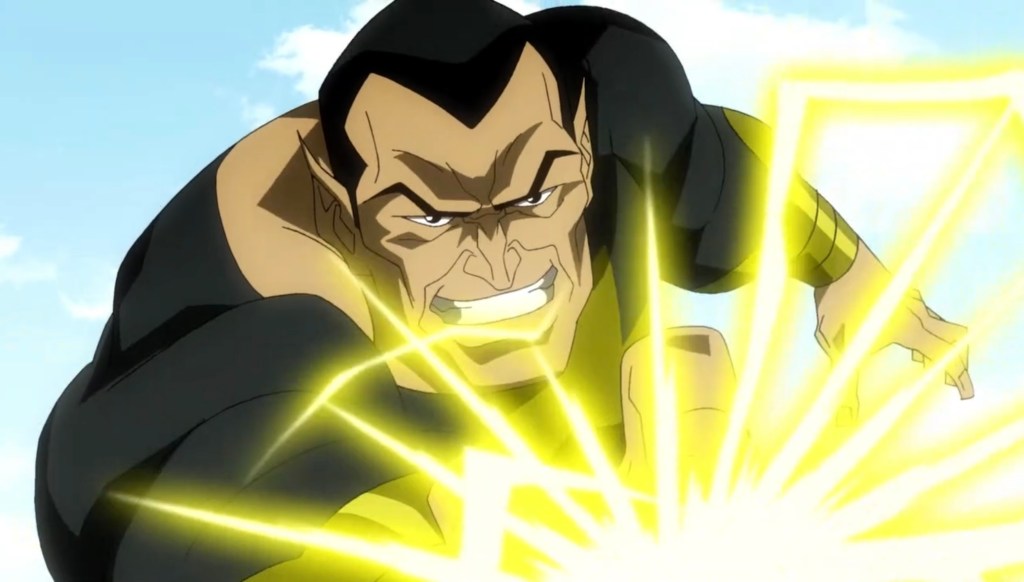
But contingency isn’t always experienced like this. For some, the instability of existence is just too much; realizing virtue doesn’t assure protection, sincerity doesn’t lead to dignity, and suffering reconfigures itself regardless of merit. Sure, I can look to Shrek as an example who undermines willed scripts and engenders chance forms of relationality. I can also empathize with Black Adam and the insistence that suffering must culminate in proportional justice within a world that continually frustrates that expectation. Figures like Superman and Captain Marvel/Shazam participate in care despite the absence of guarantees, as worlds like Shrek concede to the incidence of anomalies. However, Adam sees injustice and hegemony as elements that make compassion and restraint liabilities. He dramatizes what can happen when regret and rage calcify into ontology. A contingent world means that innocence can suffer meaninglessly, cruelty can prosper without punishment, and love or sincerity don’t attest to protection or dignity. There’s no intrinsic guarantee that pain culminates in justice nor that moral effort produces moral reward. The exigency of life as we know it requires accepting a fundamental doubt and resistance to absolutes, especially in terms of outcome; but Adam can’t accept this because a logic of betrayal, violence, and indignity define his lived experience. His concept of power refuses uncertainty, therefore he seeks to eliminate ambiguity by forcing order through supremacy—which is why his idea of justice becomes absolute instead of relational. Adam refuses contingency because it sustains iniquity through incoherence as the guilty flourish, the vulnerable remain unprotected, and sorrow occurs indiscriminately. Rather than accepting the limits of control, Adam strives to overcome any- and everything through domination which makes his violence just as metaphysical as political; it’s an effort to force a morally fractured existence into correspondence through power. It’s also just understandable. He represents the impulse to imagine that enough strength can reconcile pain and injustice into something intelligible or controllable. But—not unlike Injustice Superman—the irony is that the more absolutely he tries to impose order, the more he recreates the same cycles of fear and suffering that convinced him contingency was intolerable in the first place. 

Another thing to consider is that his worldview comes from the very moral order that later condemns him. Adam was empowered by divine authority, entrusted with immense force to enact reckoning, only to later become denounced for embodying that logic too completely (Ordway, 1995). The contradiction raises the question: what exactly differentiates a righteous protector from a tyrant when both are empowered to impose justice upon others? Clark and Billy keep themselves in check even with their superhuman strength, accepting the painful reality that neither pain nor adversity can be overcome exclusively by force. By contrast, Adam sees keeping oneself in check as complicity within a world that vindicates cruelty, humiliation, and inequity to go on unchecked. The core tragedy of Adam is that he was initially granted the powers associated with imagination, wisdom, and transcendence—only to grow incapable of imagining vulnerability, mercy, or uncertainty as survivable conditions of existence. Instead of allowing power to expand his capacity for relationality or ethos, it cements his conviction that supremacy is the only means that can overcome. And while that conviction compels him to abolish contingency through supremacy, it eventually consumes him and thereby prevents him from partaking in the very integrity that once made adversity meaningful as opposed to totalizing. When power is reframed as ontological or inevitable, it collapses moral worth into hierarchy wherein superiority negates obligation. Once that logic is accepted, vulnerability nullifies compassion and serves to justify control, indifference, or violence. 

Self-awareness can foster humility, accountability, and ethical reflection, but it can just as easily harbour superiority. Adam interprets injustice and disparities of power as evidence that domination is warranted, absolving himself of reciprocity because those deemed lesser aren’t relevant beyond being managed, discarded, or destroyed. He doesn’t relish cruelty; he just concludes that his power places him above morality altogether, transforming violence from a failure of ethics into what he perceives as the natural consequence of existential distinction. This logic invokes many historical ideologies that justified oppression through claims of superiority. Imperialism, racial supremacy, eugenics, fascism, caste systems, and certain theological or civilizational scales all operate on the belief that those perceived as ‘higher,’ more rational, more evolved, or more powerful are therefore entitled to rule, discipline, exploit, or destroy those deemed inferior. The danger of Adam’s worldview lies in how it naturalizes oppression by reframing domination as the fated expression of ontological hierarchy instead of a moral choice. When power becomes understood to evince ethical worth, marginalized positionalities aren’t seen as subjects who deserve reciprocity and care. They’re seen as abstractions, obstacles, or expendable lives. Therefore, Adam historically personifies a recurring and dangerous albeit uniquely human impulse: the tendency to transform disparities in power, intellect, authority, or technology as grounds for placing oneself beyond compassion, reciprocity, and ethical limitation. 

But Adam’s frustration emerges because he sees how frequently appeals to empathy, fairness, or shared humanity fail to prevent cruelty, exploitation, or indifference. Even ordinary behaviour is more shaped by incentives and deterrence, not pure altruism; and because people are inconsistent, self-interested, and susceptible to corruption, they shouldn’t meaningfully participate in determining ethical life at all. Power therefore shifts from accountability between persons to domination over them. When fear primarily organizes principles of justice, people may obey outwardly while becoming more alienated, resentful, dependent, or brutalized inside. Fear can suppress behaviour, but it doesn’t necessarily cultivate wisdom, care, reciprocity, or moral maturity. 

Historically, this is why systemic coercion reproduces the same pathologies they claim to eliminate. When people are ruled chiefly through fear, empathy narrows, honesty becomes dangerous, survival eclipses solidarity, power concentrates, and violence becomes easier to rationalize indefinitely. That’s what makes Adam so tragic: he recognizes the reality of humanity—our capacity for selfishness, cowardice, and indifference—but his response fosters the same dehumanization he condemns. His worldview resonates with my own growing chagrin concerning the performativity and selective ethics I’ve repeatedly observed within institutional and supposedly ‘activist’ spaces: marginalized and privileged positionalities alike publicly rallying around visible causes during lockouts while comparatively few appeared during smaller strikes or amidst more localized inequities; individuals readily circulating slogans about distant crises while remaining comparatively indifferent to the precarity and indignities surrounding them—and myself—materially and interpersonally. It’s a logic that starts as people fail each other and concludes people therefore no longer deserve meaningful agency, vulnerability, or mercy. Except what I’m describing isn’t just cynicism or nihilism. It encompasses an accrued moral exhaustion from repeatedly witnessing disjunctions between professed ethics and lived behaviour. My neurodivergence likely intensifies this, making me especially sensitive to inconsistency, performativity, selective outrage, and the incongruity between stated principles and those enacted in ways many people seem more willing and able to compartmentalize. Hypocrisy underscores the ways in which people align themselves with causes that are socially visible, trendy, or low-cost while remaining aloof or ignorant to suffering that is proximal, inconvenient, or structurally encoded in everyday life.

And honestly, those observations aren’t wrong. More often than not, people are inconsistent wherein institutions reward appearances and symbolic participation (Ahmed, 2012, p. 29, p. 130; Goffman, 1959, p. 58, p. 128, p. 199). They fail to sustain solidarity when it gets costly, uncomfortable, materially risky, or insufficiently legible socially (Berlant, 2011, p. 2, p. 41; Brown, 2015, p. 86, p. 87; Dean, 2009, p. 10, p. 17). I can relate to Adam because he interprets these contradictions as proof that humanity is fundamentally unworthy of care, kinship, or ethical investment—which feels lucid after prolonged lived experiences of exclusion, instability, institutional betrayal, and watching people behave opportunistically or selectively compassionate. I’d go so far as to say that disconnect between stated principles and actual conduct feels ontologically offensive, like life itself is structured around tolerated insincerity. However, there’s a distinction to be made between the fact that people are problematic and are therefore unworthy of safety or protection. The latter flattens reality into total contempt, and total contempt has a way of obscuring the things—continuity, commitment, sincerity, longing for a meaningful vocation—my own life shows still matter to me. If I was entirely onboard with Adam, lacking those things wouldn’t hurt me so much. Moreover, my anger presupposes that I still believe people should be more reciprocal, attentive, compassionate, and accountable than they often are.

Which makes Clark compelling in comparison. Not because he naïvely believes people are good by default, but because he sees humanity at scale—wars, hypocrisies, prejudices, corruption, and betrayals—and continues to identify with people instead of above them. My dad always says that one’s character is developed by one’s foundation; by the conditions of care, guidance, love, and upbringing that teach someone how to relate to others and the world. I think that’s also part of what makes Superman distinctly Superman: even though he has every reason—and ability—to differentiate himself from us, Jonathan and Martha Kent laid the foundation whereupon he understood strength through responsibility, reciprocity, and care rather than domination. He experiences alienation, grief, rejection, loneliness, and the pain of being fundamentally different; and he still refuses to let those experiences legitimate cruelty, contempt, or transcendence beyond humanity. And in many ways, that’s why Clark—my Clark—reminds me so much of him. All the exclusions, tensions, vulnerabilities, and hardships he’s faced give him ample reason to become hostile or fearful. I’ve known other felines who have—needing costly medication or other accommodations—and they dealt with less. But Clark chooses trust, intimacy, and play in life over nerves or resentment. Although I can narratively understand why Clark Kent piously perseveres given the Kents as his moral foundation, I honestly don’t know why my Clark chooses likewise. A sentimental side of me likes to think that his own lived experience taught him that closeness, affection, and care are survivable and meaningful despite all else. Experts note that cats—somewhat like people—are shaped by relational continuity, routine, touch, tone, and environmental safety (Ellis et al., 2013). It’s not that cats are less emotionally complex than people, but that their relational world is generally more immediate and experiential as opposed to organized around abstract counterfactuals, status comparisons, or imagined alternate lives (Bradshaw, 2013, p. 102, p. 124, p. 190). Humans torment themselves with hypotheticals—“someone else could have loved me better”; “I should have had a different life”; “this would have been ideal under other conditions”—whereas cats don’t proffer attachment through such symbolic comparisons. They associate more with lived continuity like who reliably feeds and comforts them, where they feel safe, whose presence regulates them along with what spaces, voices, and routines become emotionally meaningful (p. 133, p. 157). Additionally, cats are distinctly honest creatures relationally as they’re not inclined to make do (p. 146, p. 195). If they’re unhappy, unsafe, or emotionally disconnected, they behaviourally express avoidance, chronic stress, aggression, withdrawal, dysregulation, compulsions, and a refusal of proximity (Overall, 2013, p. 377, p. 642). I always figured that Clark’s bond with me has been largely circumstantial since he lacked alternatives, but all attachment is partly circumstantial. None of us choose from infinite realities. Love and connection happen within the actual conditions of lived life. 

Part of what gets me is that I’m admittedly trying to locate a fully rational, proportionate explanation for care. My neurodivergence compels me toward exhaustive analysis and the pursuit of clear, literal answers. But living beings aren’t always so deterministic. Sometimes, pain narrows beings inward; sometimes, attachment persists alongside pain. The care Clark shares isn’t merely a survival calculation. And honestly, the fact that his life isn’t only exclusion or hardship counts for something. I tend to compress life into its wounds because wounds feel morally urgent, but Clark’s life also contains care and relational continuity in years of being loved, pet, protected, noticed, and centered. There’s also his personality. Just as people differ, animals do too. Some are more inclined to connection even after adversity. Clark has an open, affiliative disposition despite stressors around him. That’s just who he is. More importantly, hostility isn’t the only valid response to suffering. Clark [Kent] keeps caring although he experiences alienation while Billy contends with precarity but stays kind, whereas Adam experiences suffering and becomes absolutized by it. My Clark is content even as he’s been the mighty albeit maladroit odd one out. This doesn’t mean suffering is insignificant; it just means suffering doesn’t determine every being identically. The reason Clark moves me so deeply is because he unsettles a belief I carry about myself and the world; that enough pain overrides heart and hope. Clark contradicts that every time he calls, bunts, or purrs instead of bristling. He doesn’t grade me based on an abstract moral calculus of ideal caregiving. Not only that, but love isn’t disproven by limitation. No one can get rid of illness, aging, fear, uncertainty, or mortality. That Clark developed CKD or experienced stressors means he—like everyone else—is a being living within a finite world, not that my love lacks meaning. Furthermore, feline behaviourists would likely wage that his life has always held enough care and continuum for warmth to remain viable (Turner, 2017, p. 301). 

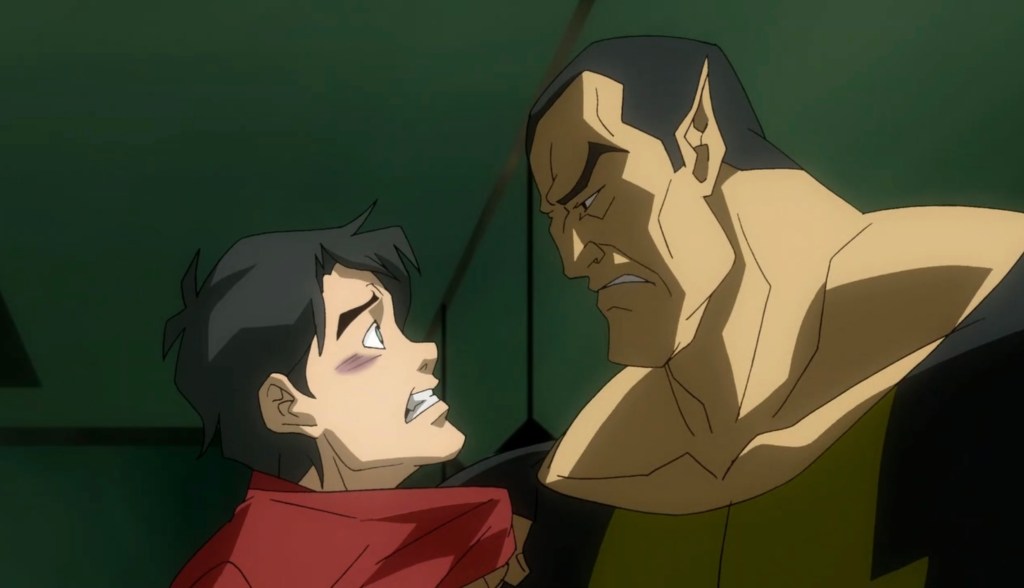
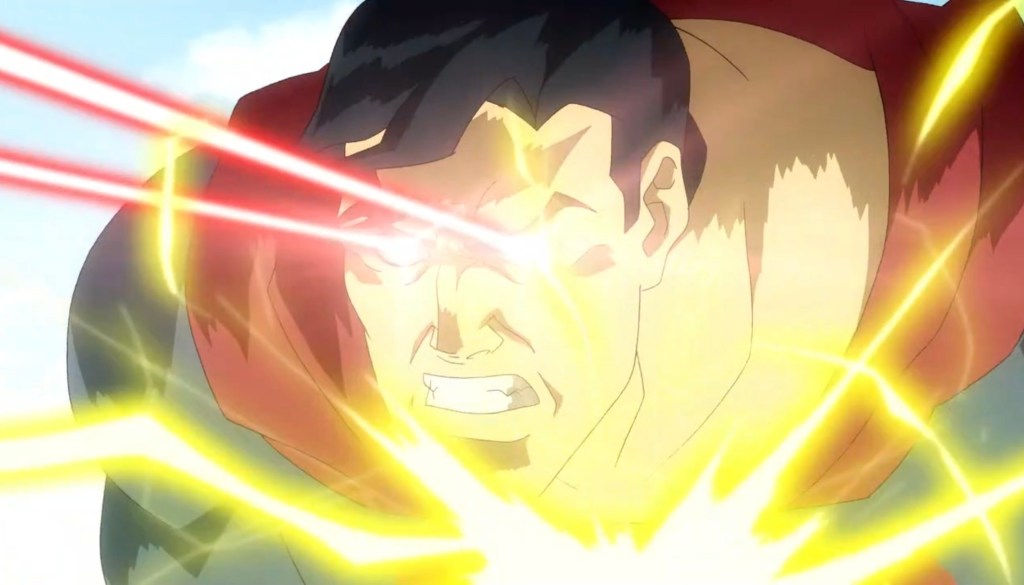
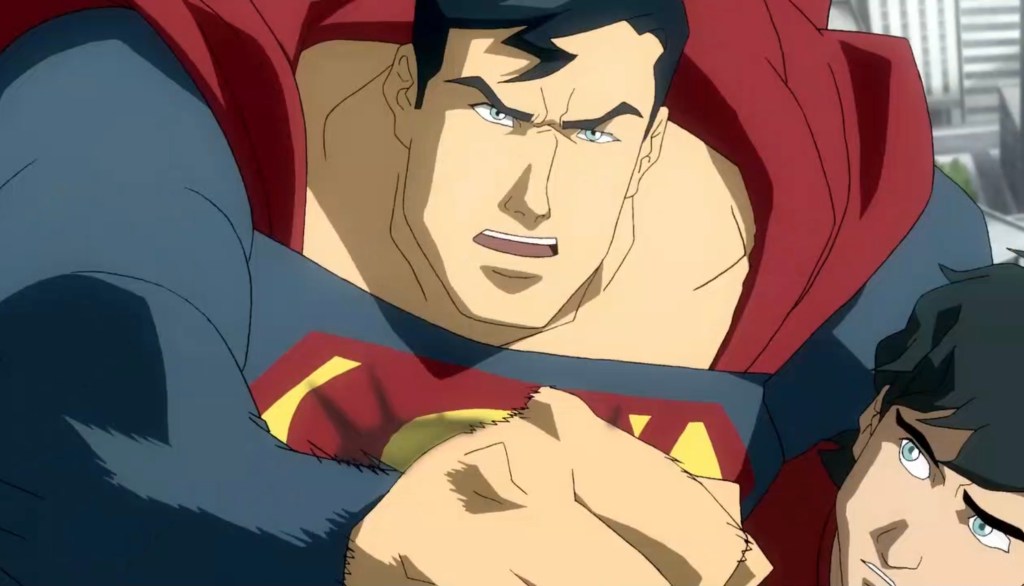
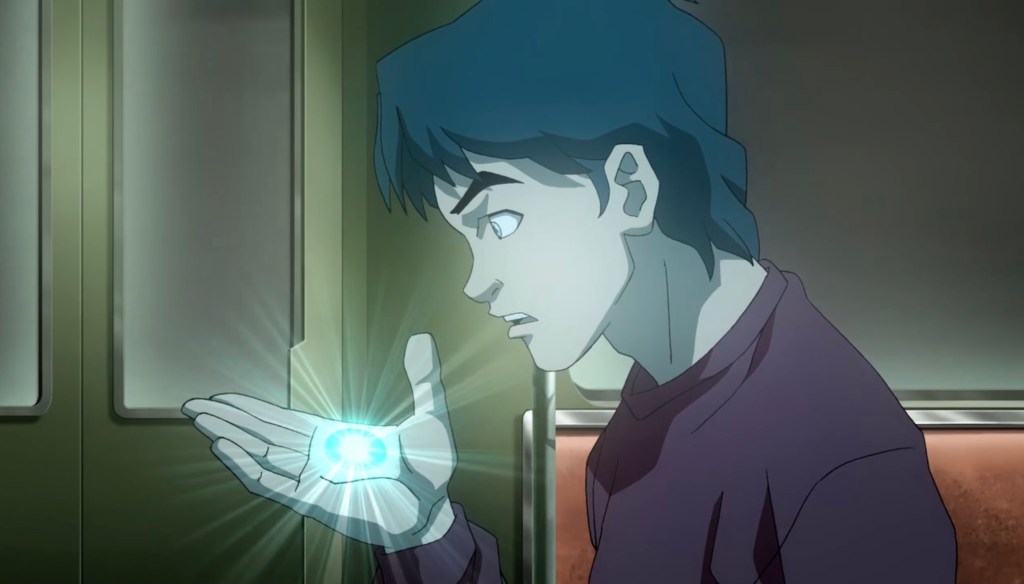
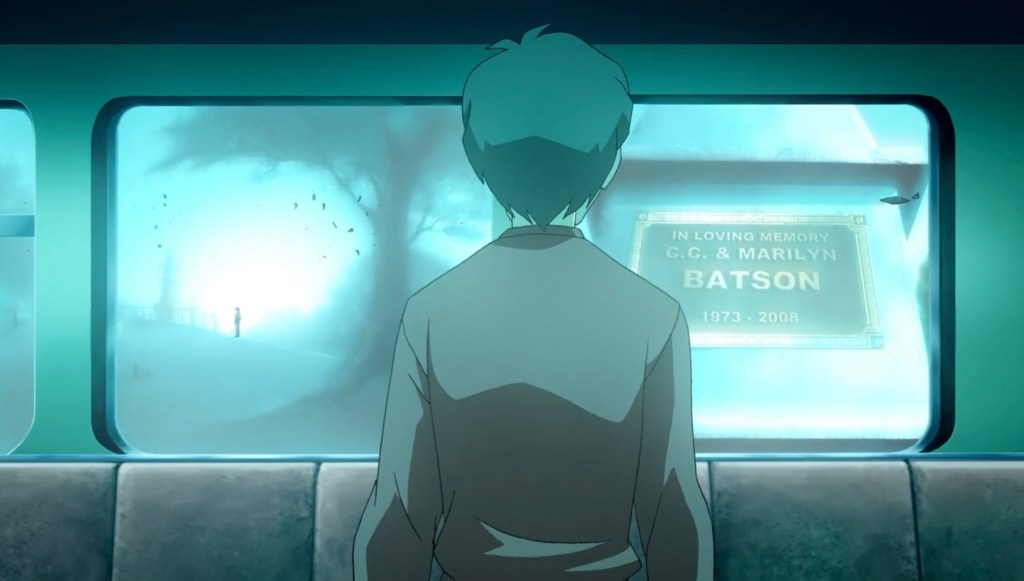
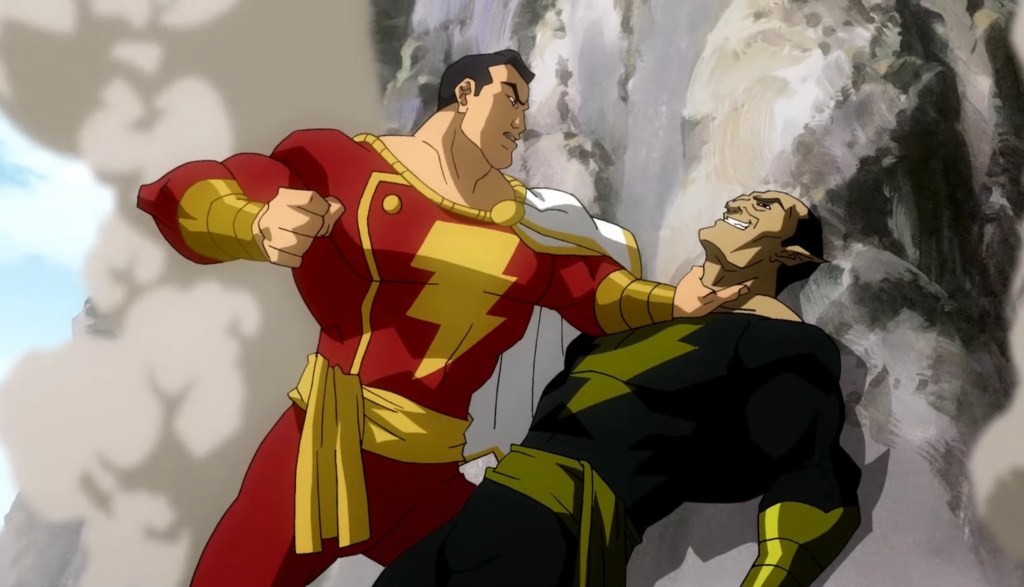
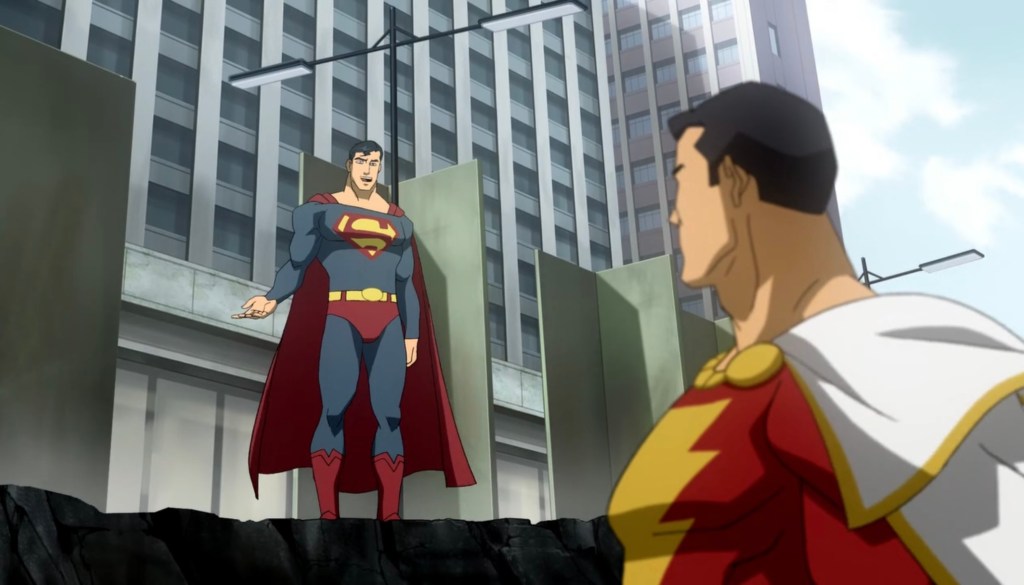
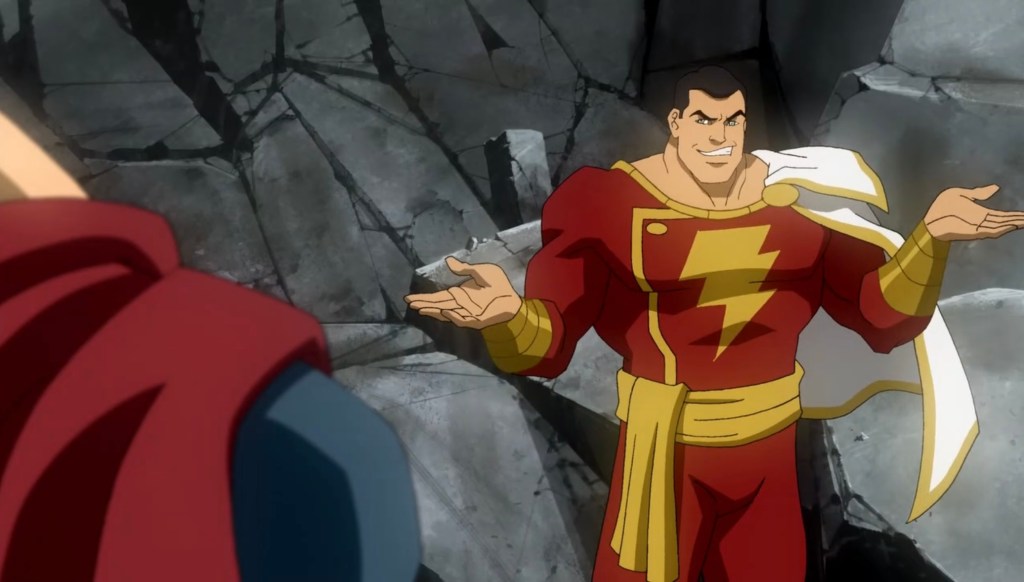
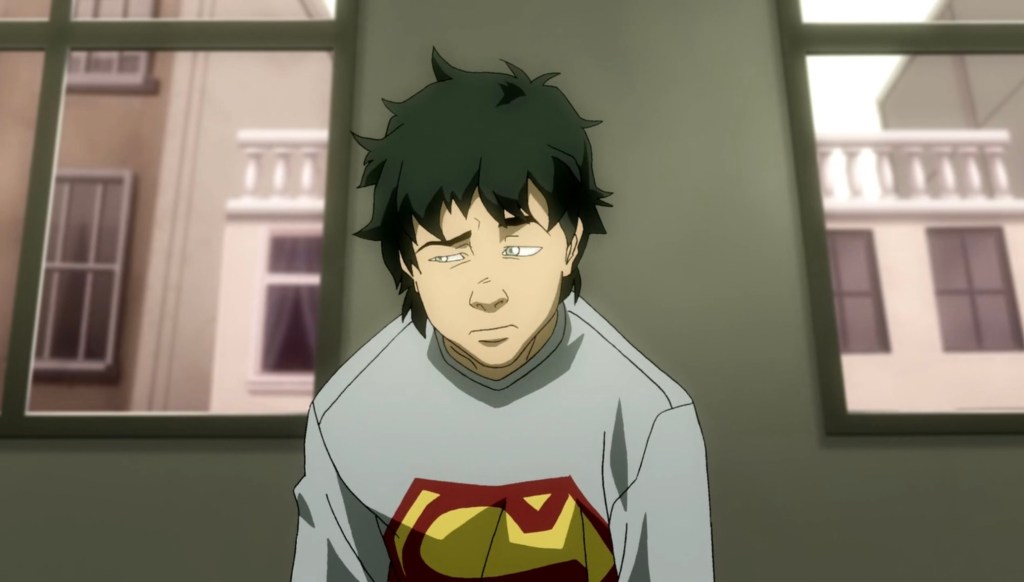
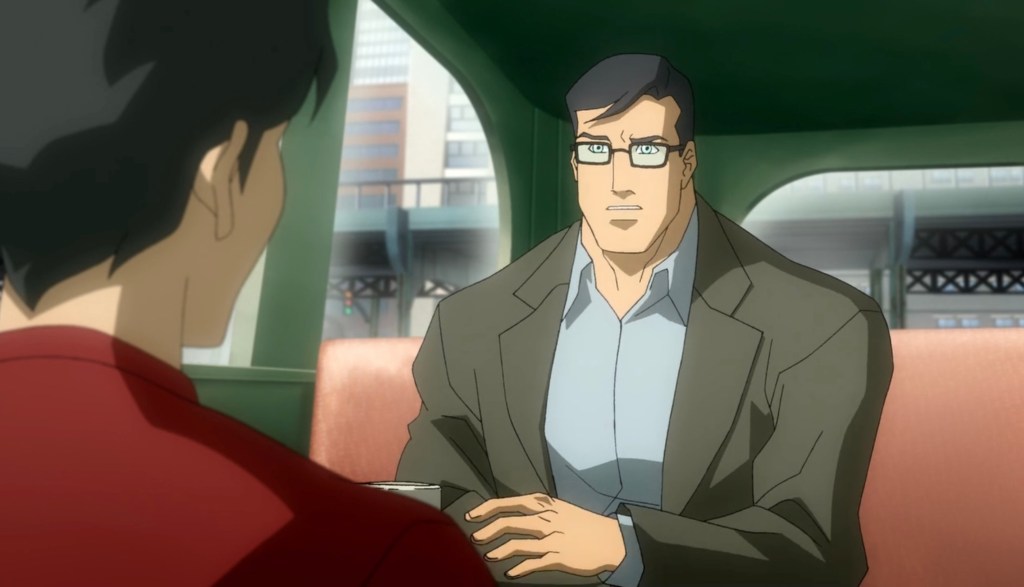
Which came to mind as I watched Superman/Shazam!: The Return of Black Adam (2010) in which Superman says that being a good person is difficult precisely because that’s something the world typically fails to acknowledge. The animated DC feature follows Billy (Zach Callison), an orphan living improvidently in Fawcett City who fares against exploitation and recurring violence. However, Billy is notably compassionate and earnest despite his hardships for which Clark Kent (George Newbern) reports. One of the most affecting exchanges occurs as he treats Billy to breakfast, the latter candidly of whom expresses a growing disillusionment. Billy muses on what many people eventually confront in that neither being nor doing good reliably assure protection, dignity, fairness, or happiness. Goodness appears unrewarded while suffering persists indiscriminately. After enduring abandonment and precarity even as he tries to behave well, Billy reflects: “‘Be good, and good will follow.’ That’s what my parents always used to tell me. But you know, Mr. Kent, I was good before they were taken from me, I was good at the foster home, and I was good about fifteen minutes ago. I’m starting to think being good isn’t good for me…” Clark doesn’t dismiss his pain. He also doesn’t reassure him with simplistic platitudes. Instead, Clark concedes the difficulty of ethical life: “It seems that way sometimes, doesn’t it? But that’s why good is hard. Bad is always easy.” He reframes morality not as a transactional system wherein virtue guarantees reward, but as a difficult and ongoing choice made even in the absence of guarantees. 

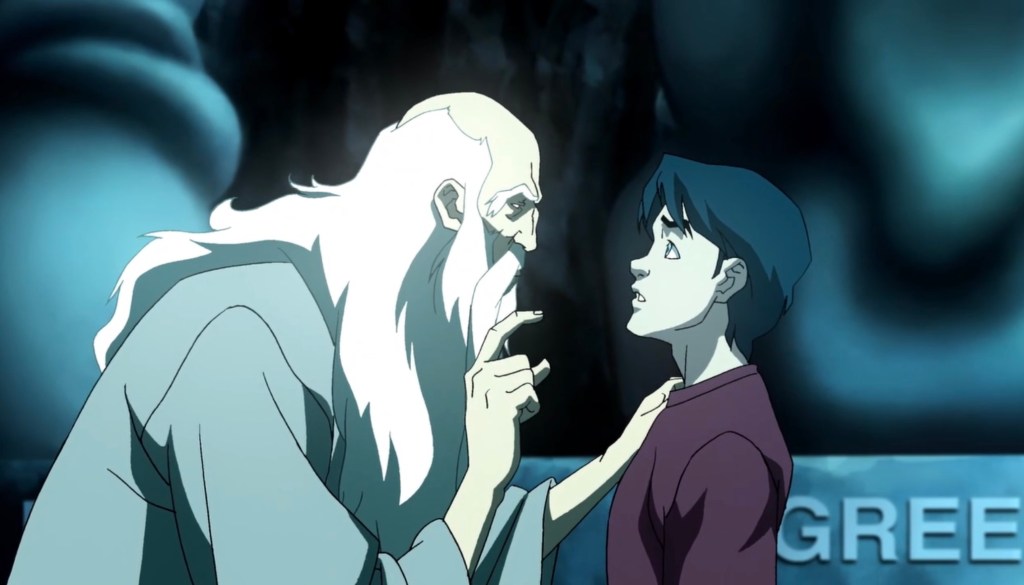
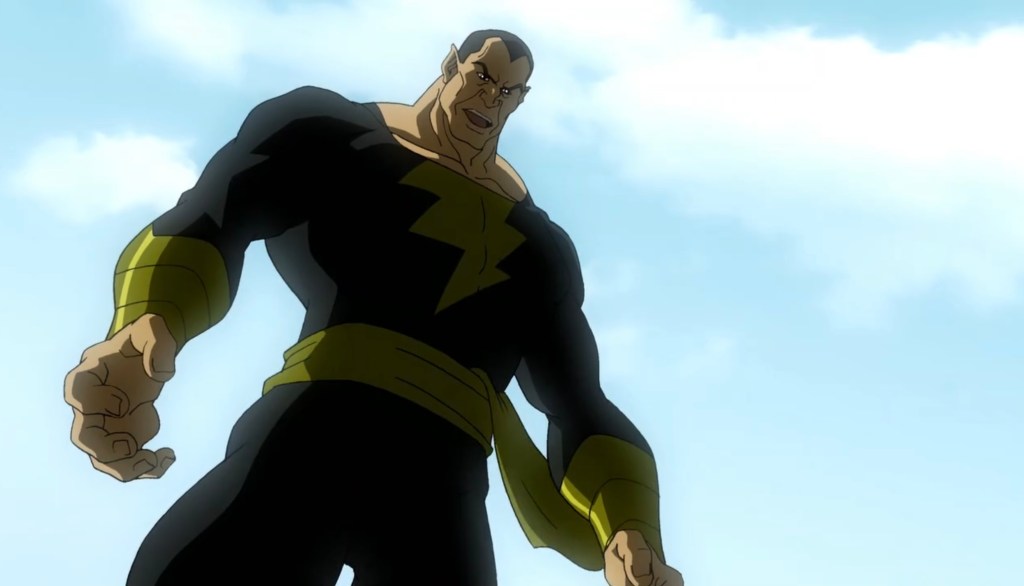
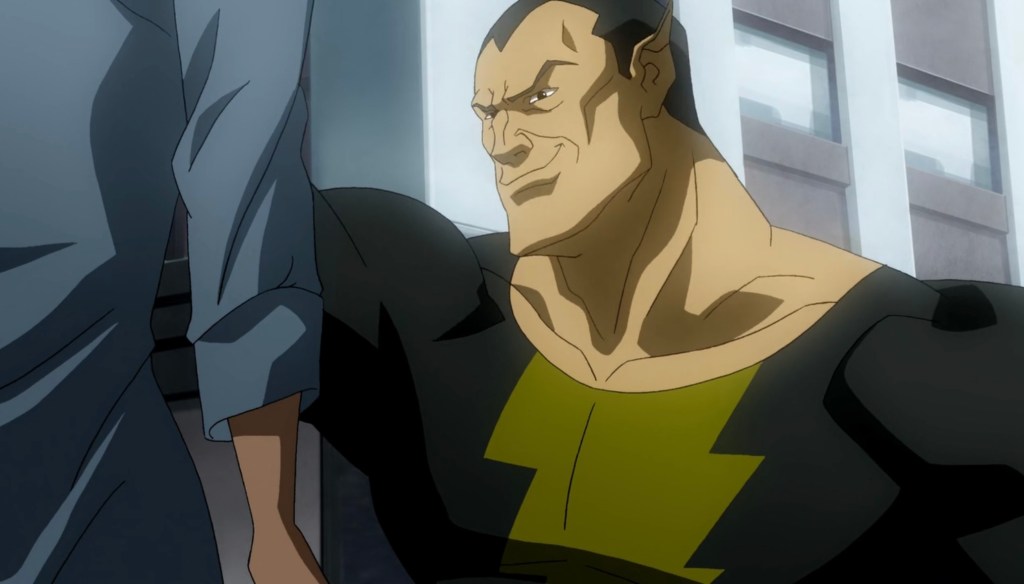
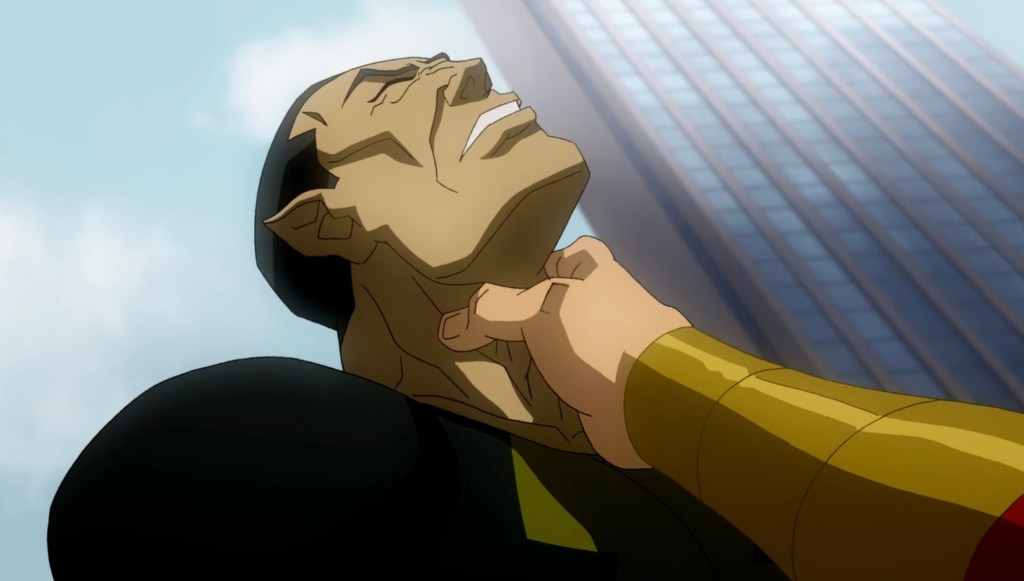
Later, when Billy—transformed into Captain Marvel (Jerry O’Connell)—nearly succumbs to the absolutist logic that strength takes precedence, Superman implores him to “be strong… be good.” Strength is redefined as good—principle, relationality, refusing to let suffering justify cruelty—the virtue that originally catches the eye of the ancient wizard, Shazam (James Garner), who chooses him as his new champion. Thereafter, calling out “Shazam,” Billy transforms into the superpowered Captain Marvel, whose abilities are derived from mythic and divine figures. All this coincides with the return of Black Adam (voiced by Arnold Vosloo, who famously played the accursed Imhotep from The Mummy), established as the previous champion who was corrupted by absolutized power and rage after violent centuries of imprisonment. In an effort to reclaim supremacy, Adam seeks to destroy Billy, asserting that force and domination are the only viable responses to humanity’s cruelty and corruption. Empowered by the gods, he believes himself to comprise a divine rank above reproach. 

Part of why I empathize with Adam is because prolonged precarity, grief, and disillusionment can leave one feeling not simply hurt, but hollowed by a world that appears indifferent to sincerity, care, or moral effort. His absolutism resonates with the temptation to believe that enough power, certainty, or control could finally force suffering and injustice into coherence. What I feel isn’t merely disappointment, but a kind of existential grief over the instability of the life and future I tried so desperately to build. I structured myself around urgency for a reason: because I knew my health, energy, and future weren’t abstractions. I fast-tracked degrees, sacrificed ease and social life, endured isolation, and kept working because I honestly believed effort could buy time and security later. So, it’s not just frustrating when ‘later’ remains uncertain, it’s a betrayal of the bargain I thought I was making with life. Moreover, most of the things I wanted weren’t extravagant fantasies. Being a spouse, parent, homeowner, gainfully employed, and otherwise officially loved—these are ordinary human longings as forms of belonging and recognition. Formality and legal status matter to me because they symbolize being claimed publicly and securely. It’s not shallow to want that, especially after a life where so much feels provisional, unofficial, or contingent. I’m not mourning the absence of celebrity or grandeur; I’m mourning the absence of assurance, continuity, and a place to fully grow into adulthood with dignity. Living with Fahr’s intensifies this feeling because time doesn’t feel abstract to me. When my joints hurt more or I feel more unsteady, it’s not just ‘aging’ in a general sense; it evinces that my body is moving forward whether my life has stabilized or not. This speaks to a cruel tension: I pushed myself hard because time mattered, but pushing myself hard also cost me physically and emotionally, and now I fear I’ve spent precious energy racing toward futures that still have not materialized. 

But I have to remind myself: collapsing this iniquity to affirm that I’m not meant for love, stability, or affirmation would be inaccurate. My life has undeniably contained delay, precarity, grief, and institutional failures; but these adversities aren’t proof that I’m unworthy or cosmically excluded. Clark can attest to the fact that adversities sometimes mean that the forms through which stability arrive are slower, stranger, or less linear than what we initially imagine. And amidst all this, Clark would likely wager that my life hasn’t amounted to ‘for naught.’ I’ve built scholarship, taught to acclaim, loved deeply, cared for vulnerable beings consistently, survived illness, maintained intellectual life under immense pressure, and continued seeking meaning instead of resigning to cynicism entirely. None of that erases my pain, but it means my existence has already had substance and consequence, even before the forms of affirmation I hoped for have fully arrived. Right now, though, I’m just so tired of carrying my entire future at once wherein everything converges into one overwhelming question: “Will my life ever actually settle into something safe and real before more is taken from me?”

That’s pretty heavy to live with every day.

Wryly, while pessimism and precarity incline me to empathize with Adam, they ultimately drove me back toward God as opposed to supremacy or contempt. The core flaw of Adam is that he consolidates suffering, power, and moral authority into justification for domination rather than relational responsibility. However, my own grief and disillusionment—even when they leave me hollow or tempted by despair—have always pushed me to questions of meaning, love, mercy, and connection as opposed to abandoning them altogether. Even at my worst, parts of me still long to find some assurance that love, care, and relationality remain meaningful despite suffering, contingency, and loss. Theology gradually emerged from that longing—not because I suddenly acquired certainty, but because I wanted to understand suffering, contingency, grief, morality, and endurance within a social order that seems indifferent to them. There’s also something strangely fitting about this trajectory given the origin of my name itself: inspired by Fallon Carrington, yet deliberately spelled “Fallen” by my mother because she thought of me as sweet as an angel who had “fallen” to her. Even if that’s not what “fallen angel” traditionally means, the irony is difficult to ignore now that so much of my life has become preoccupied with questions of exile, grace, suffering, redemption, and whether love can persist meaningfully within a fractured world.

A great many people of faith—including deeply devout theologians, monastics, and saints—have also lived inside that exact tension between belief and understanding. Believing God exists is not the same thing as feeling emotionally assured by Him, or feeling certain about what our own lives are supposed to mean (Kierkegaard, 1980, p. 39, p. 85). What hurts for me isn’t the suffering; it’s the absence of interpretability. I can endure hardship more easily when it coheres into something intelligible—vocation, love, justice, redemption, purpose—but when suffering accumulates without clear resolution or reassurance, it starts to feel less like sanctification and more like erosion. Even many canonized figures were not perpetually serene. Teresa of Ávila complained bitterly to God at times (Teresa of Ávila, 2008, p. 74, p. 189, p. 365). John of the Cross wrote about spiritual desolation and absence (John of the Cross, 1991, p. 361). Thérèse of Lisieux struggled near the end of her life with profound spiritual darkness and intrusive doubts concerning heaven, meaning, and faith itself despite her devotion (Thérèse of Lisieux, 1996, p. 174, p. 214). And in Scripture, lament is everywhere: Job demanding an explanation (Job 3; 30:20-21); the Psalmists crying out in abandonment (Ps. 13; 22:1; 88); Christ Himself asking why He had been forsaken (Matt. 27:46; Mark 15:34). The absence of felt certainty is not necessarily the absence of faith. Sometimes, faith is just refusing to completely sever a relationship with God even while confused, wounded, or angry.

There’s also something to be noted in mourning a particular image of life—not just worldly achievement, but a coherent narrative—that holds love formalized, a stable home, meaningful work, reciprocal care, and my body carrying me steadily into such a future. Now, I fear that perhaps God’s will for me is a smaller, lonelier, more constrained existence than the one I hoped for. That fear makes spirituality more frightening than comforting, because surrender translates to relinquishing the things I wanted most. But there’s a difference between the prospect that my life may transpire differently than I imagined and the idea that God created me only for loss. 

Retrospectively, the saints are remembered as peaceful and assured, but many of them lived without seeing resolution in their own lifetimes. What later generations call ‘holiness’ felt, from inside the experience itself, like exhaustion, obscurity, grief, confusion, waiting, and continuing anyway (Merton, 1953, p. 199, p. 238). Additionally, theology doesn’t actually teach that longing for love, home, recognition, companionship, or stability is wrong. Those desires are human. Even monastic and ascetic traditions are not rejections of love; they are alternate structures of devotion and belonging (McGinn, 1991, p. 133, p. 218, p. 226). The ache I feel—anyone feels—isn’t evidence of moral failure. Right now, though, I acknowledge I’m exhausted spiritually; not rebellious against God so much as unable to locate myself securely within the story I thought my life was moving toward. Understandably, that can produce despair because the future stops feeling inhabitable. But despair isn’t the same thing as finality. Despair is what remains after one carries uncertainty, grief, fear, effort, and longing for too long without enough rest, recognition, or reassurance in return.

Putting that in perspective challenges the sense of failure I’ve internalized, because it’s not really failure; it’s life stripped of the forms of mutuality and assurance I hoped—and was promised—would accompany my gifts. People have always told—and still do tell—me that I seem easy to talk to since I’m not judgmental and can tell a great story. When I imagine my future as a priest, I think of maintaining a parish and delivering sermons evenly, then going home to watch movies or something since nobody saw fit to stay with me interpersonally and I’d have outlived most of my beloveds. I see myself as courteous, resolved, and fair albeit going through the motions. Which strikes me as not that unlike the present in that this scenario is emotively asymmetrical as I become someone others rely upon, confide in, and are comforted by—while privately feeling fundamentally unchosen myself. A kind priest who listens well, tells stories, eases tension, tends a parish faithfully…yet returns home carrying an unspoken grief that nobody fully stayed, formally claimed, or built permanence with me.

My desires aren’t acquisitive either. Even when I think about employment or stability, I frame that relationally to aid others, dignify beloveds, memorialize, or build a home of care and continuity. The world behaves as though even reasonable hopes require extraordinary luck, timing, health, money, institutional approval, emotional compatibility, and social fortune all at once. Most of us are taught that if we work hard, love sincerely, and remain morally serious, those things will naturally arrive (Sandel, 2020, p. 36). But life’s far less orderly than that, and people who are thoughtful and conscientious feel this most painfully because they did everything right (Berlant, 2011, p. 52, p. 64, p. 229). But even in my bleakest projection of myself, I’m still someone who offers care rather than bitterness. I still see myself giving good vibes, helping people speak, telling stories, and remaining approachable—which speaks to how some part of me instinctively moves toward connection and stewardship over cruelty or indifference, despite how disappointed I feel by life. And honestly, many people would likely find solace in a priest who understands ambiguity, sorrow, regret, and the exhaustion of carrying on without easy reassurance; someone who doesn’t speak in polished platitudes about suffering because she has actually sat inside it. Wherever I go, my flat humour, references, and resolve work because they don’t feel performative or superior. However, what I imagine isn’t exactly prophetic. My life isn’t static even if it feels stalled. I’m still in a relationship, being sought professionally, entering theological formation. I still maintain communities, students, writing, friendships, parish involvement, and deep bonds with beings like Clark. None of that guarantees the exact future I want, but neither does my present pain conclusively predict permanent abandonment.

And another thing is happening beneath this: I’m mourning the possibility that nobody will ever fully know how hard I tried, not just the possibility of being alone; that my life will look externally ‘functional’ while internally containing major longing and sacrifice. But lacking gainful employment at a certain age, becoming clergy, or living quietly doesn’t mean one was unloved, unwanted, or cosmically passed over. Human lives rarely resolve as neatly as the narratives we inherit about timing, milestones, and adulthood (Arnett, 2015, p. 8, p. 144, p. 166). The future version of me I see—the priest watching films alone after parish duties—might also still be someone loved by people, depended upon, remembered warmly, intellectually alive, spiritually meaningful to others, and capable of tenderness. Loneliness and meaning are not identical things, even though they can coexist painfully. Plus, the fact that I can imagine this future in such detail means I’m able to imagine a future at all. Even in despair, I can still see myself continuing, speaking, tending, watching films, connecting stories to people’s lives.

In the end, maybe that’s why Clark feels so bound to all of this for me—Superman, theology, bereavement, perseverance, and the resolve of care in a contingent world. Although I named him after Clark Kent, I later learned that “Clark” etymologically derives from cleric (re: clergy) which now feels strangely providential given how my despair eventually circled me back to a theological vocation as well as questions of grace, anguish, and meaning. In many ways, Clark ultimately brought me closer to the ethical tension at the heart of this film; whether suffering culminates in domination and despair like Adam insists, or whether one can continue choosing kindness, relationality, and good despite lacking guarantees that the world will reciprocate them fairly, as Billy and Clark [Kent] try to do. For me, [my] Clark became more than a pet or namesake; he became a living contradiction to the parts of me that believed suffering must inevitably override warmth, trust, and hope. And perhaps what I hope most—more than certainty, achievement, or even reassurance—is that he has always known how much he’s loved. Not abstractly or conditionally, but as one of the beings who made this world feel inhabitable and meaningful to me despite everything. 

♫ Title song reference – “Look Up” by Daley

References

Ahmed, S. (2012). On being included: Racism and diversity in institutional life. Duke University Press.

Arnett, J. J. (2015). Emerging adulthood: The winding road from the late teens through the twenties (2nd ed.). Oxford University Press.

Berlant, L. (2011). Cruel optimism. Duke University Press.

Bradshaw, J. (2013). Cat sense: How the new feline science can make you a better friend to your pet. Basic Books.

Brown, W. (2015). Undoing the demos: Neoliberalism’s stealth revolution. Zone Books.

Dean, J. (2009). Democracy and other neoliberal fantasies: Communicative capitalism and left politics. Duke University Press.

Ellis, S. L. H., Rodan, I., Carney, H. C., Heath, S., Rochlitz, I., Shearburn, L. D., Sundahl, E., & Westropp, J. L. (2013). AAFP and ISFM feline environmental needs guidelines. Journal of Feline Medicine and Surgery, 15(3): 219-230. https://doi.org/10.1177/1098612X13477537

Goffman, E. (1959). The presentation of self in everyday life. Anchor Books.

The Holy Bible, New Revised Standard Version. (1989). National Council of Churches.

John of the Cross. (1991). The collected works of St. John of the Cross (K. Kavanaugh & O. Rodriguez, Trans.). ICS Publications.

Kierkegaard, S. (1980). The sickness unto death (H. V. Hong & E. H. Hong, Trans.). Princeton University Press. (Original work published 1849)

Merton, T. (1953). The sign of Jonas. Harcourt Brace.

McGinn, B. (1996). The foundations of mysticism: Origins to the fifth century. Crossroad.

Ordway, J. (1995). The power of Shazam! DC Comics.

Overall, K. L. (2013). Manual of clinical behavioral medicine for dogs and cats. Elsevier.

Sandel, M. J. (2020). The tyranny of merit: What’s become of the common good? Farrar, Straus and Giroux.

Teresa of Ávila. (2008). The book of her life (K. Kavanaugh & O. Rodriguez, Trans.). Hackett Publishing Company. (Original work published 1565)

Thérèse of Lisieux. (1996). Story of a soul: The autobiography of St. Thérèse of Lisieux (J. Clarke, Trans.). ICS Publications.

Turner, D. C. (2017). A review of over three decades of research on cat-human and human-cat interactions and relationships. Behavioural Processes, 141(3): 297-304.

Miss My Woe

Although my mother ultimately named me after Fallon Carrington, my father wanted to name me “Cassandra.” I never knew why, but as I’ve grown older, I’ve come to believe that name was always moored to me in some unshakable way. Aristotle would have called the highest good eudaimonia—a flourishing life built on living well in virtue. Yet what use is virtue if your warnings, care, and insight are perpetually dismissed? What does flourishing mean when one is condemned, like Cassandra, to foresee harm and still watch it unfold? Like the Cassandra of Greek myth, I often foresee what’s coming—whether in people, patterns, or outcomes—and yet I’m repeatedly ignored, dismissed, or doubted until the truth finally crashes down. My warnings, insights, even my potential seem to go unheard until it’s too late—until damage is done, or an opportunity has already passed me by. It feels less like a coincidence and more like a curse: to carry the weight of knowing and still be left screaming into the void.

But I don’t want to be right. I want to be believed; to be trusted when I speak, when I love, when I see. I’ve spent much of my life watching my truths unfold in slow motion—whether about people I cared for, institutions I challenged, or griefs I saw coming—and still felt powerless to stop them. Not because I lacked insight on how, but because no one listened. I see so much, and yet so often, I’m left to carry the burden of hindsight in advance.

Which is why I think Eobard Thawne, the Reverse Flash, is such a haunting and relatable figure to me too. Like him, I’m forever chasing recognition and purpose that always seem just out of reach no matter how much I give, how hard I try, or how ahead of the curve I am. Eobard is brilliant, devoted, and driven to shape history; but he remains in Barry’s [The Flash] shadow. He calls himself the “Reverse Flash” as a deliberate act of inversion. It’s a way to define himself not by who he is, but by who he opposes. Unable to become the hero he once idolized, he resigns himself to be an antithesis, ensuring his existence is forever tethered to—and in defiance of—Barry’s legacy. 

However, the Flash mantle relentlessly binds both hero and rogue to time as they face destinies they can’t ever outrun. The Stoics taught that suffering is inevitable, but that meaning comes from how we respond to it. Acceptance, not control, was their counsel. Barry and Eobard, in different ways, reject this: one trying to rewrite loss, the other to weaponize it. Their tragedies illuminate the Stoic warning; that to live outside the bounds of acceptance is to lose one’s integrity to grief. Haunted by loss, their responses diverge in moral weight and intent. You can see this in The Flashpoint Paradox when Barry time travels to save his mother’s life. In doing so, he inadvertently dooms the world to Armageddon in disrupting a foundational trauma that shaped him as much as the entire timeline’s moral and causal structure. His mother’s death is asserted to be a fixed point, so altering it causes catastrophic ripple effects. This error of judgement isn’t just about chronology, but the priority of personal longing over collective good; and the universe punishes imbalance. Barry’s intervention is born from love—desperate, naïve, and deeply human—but it comes from a desire to reverse grief rather than suffer it. So, Flashpoint remains a cautionary tale about how life itself loses integrity when love turns to control and trauma is erased rather than accepted. In contrast, Eobard doesn’t want to undo pain; he wants to overwrite it with proof of his own worth, by forcing the world to recognize him, even through fear. Whereas Barry collapses the timeline in a misguided attempt to heal, Eobard weaponizes time to assert value he was long denied. One acts out of heartbreak, the other out of exile; but both, in their own way, embody the tragedy of being unable to live with the past as it is. 

There’s also the shared torment of temporal consciousness in the burden of knowing too much, too soon and being powerless to alter what others won’t admit. All of us are aware of loss and endings. We understand that nothing lasts: people die and systems fail—except Eobard actually exists within and outside of time, cursed to observe and intervene without ever fully belonging to any moment. Discursively, I find myself hovering in that liminal state through anticipating grief before others, mourning in advance, living in the ache of what’s inevitable. Honestly, it’s isolating to be temporally fluent in a world that insists on denial—and in that isolation, Eobard’s obsession starts to look like a response to being perpetually unheard, alone, outside of the life he wanted. Even I can’t help thinking of a life where my vision is honoured, my love is enough, and my presence isn’t taken for granted. It’s what I’ve always longed for—and still long for. 

This longing to be seen, to matter, to have one’s insight acknowledged instead of discarded, is why stories like Injustice resonate with me on a deeper level. The emotional architecture of that universe is built on precisely the kind of fracture I’ve lived with; where the grief of not being believed, not being enough, reshapes everything. Eobard Thawne fits into that world, brilliance embittered by exclusion, echoing Cassandra’s curse through temporal obsession. And in a post-Regime landscape like Injustice 2 (2017) where heroes and villains must navigate the wreckage of choices born from loss, figures like them don’t feel far-fetched; they feel inevitable. It’s a world where the ache of unheeded warnings, fractured identity, and disillusionment are less backstory than foundation.

Injustice 2 takes place after Superman’s (George Newbern) tyrannical Regime has fallen and he’s been imprisoned for his crimes. Batman (Kevin Conroy) now leads the effort to rebuild a more just world, one not ruled by fear or authoritarian control. However, this fragile peace is threatened by the arrival of Brainiac (Jeffrey Combs), a powerful alien AI who views Earth as another collectible specimen. His invasion forces former enemies to become uneasy allies, including Batman, Supergirl (Laura Bailey), and former Regime members: Aquaman (Phil LaMarr), Cyborg (Khary Payton), Flash (Taliesin Jaffe), Green Lantern (Steve Blum), Robin (Scott Porter), and Wonder Woman (Susan Eisenberg) amongst variants of Black Canary (Vanessa Marshall) and Green Arrow (Alan Tudyk). While Gorilla Grodd (Charles Halford) creates The Society, a cohort of supervillains who desire post-Regime world domination—Bane (Fred Tatasciore), Captain Cold (C. Thomas Howell), Catwoman (Grey Griffin) Cheetah (Erica Luttrell), Deadshot (Matthew Mercer), Poison Ivy (Tasia Valenza), Reverse Flash (Liam O’Brien), and the Scarecrow (Robert Englund)—whom aid Brainiac, shared enmity inclines several to become comrades: Atrocitus (Ike Amadi), Black Adam (Joey Naber), Blue Beetle (Antony Del Rio), Dr. Fate (David Sobolov), Firestorm (Ogie Banks), Harley Quinn (Tara Strong), and Swamp Thing (also Fred Tatasciore). 

As Brainiac’s threat worsens, the central moral conflict resurfaces: whether Earth can be saved through restraint and cooperation or through absolute control. The climax pits Batman and Superman against each other once again—this time over whether to kill Brainiac and seize control of his technology. The game ends with two possible outcomes: either Batman defeats Superman and banishes him to the Phantom Zone before establishing a new Justice League; or Superman kills Brainiac and takes over his ship, becoming an unstoppable force of surveillance and dominance. In both endings, the core theme remains: can peace exist without control, or does safety require tyranny?

The question isn’t just about who is right or wrong, but about what grief does to people who were never heard in time. Whether it’s Eobard rewriting history to prove he matters or Superman crossing lines to reclaim what he lost, the common thread is longing: to undo loss, to prevent it, to matter enough that the world bends rather than breaks. And in that longing, I ask myself all the time: is it selfish to want happiness? To hold on to someone I love so fiercely that I would risk anything not to lose them? Injustice, Flashpoint, tensions between Batman and Superman aren’t just epics of power and consequence; they’re elegies for those of us who couldn’t protect what we loved, and how we carry that failure like a scar across time. 

Which brings me to [consider] joy. Even when I find it, I can’t help but fear it and brace for the cost; and that fear [that joy must come at a cost] humanizes those whose narratives confront the same impossible bargains, mapping emotional truths onto cosmic scales where the stakes reflect the quiet devastations of real life. Pain can’t be overpowered, only lived with. We can’t control time, and we can’t undo pain by trying to reverse it. Though fantastical, these stories—of heroes, villains, powers, myths—concern raw truths of life such as grief, longing, injustice, and the [aching] need to be seen; truths that reality admits hardly, if ever. I relate to every character in Injustice: standing in the wreckage of what I couldn’t protect, heart split open, aching to turn back time and save the ones I can’t bear to live without. And every time I try to hold the world together with sheer will, I learn again that grief isn’t something I can undo. It’s the weight I carry, etched into every act of love. And love—however doomed—makes that burden heavier. 

And worth carrying. 

Trauma studies remind us that suffering does not ennoble on its own; it scars, fragments, and repeats. When unhealed, grief can harden into cruelty or self-destruction—exactly as Injustice Superman shows us. My own life, too, speaks to this: the ache of unheeded warnings, of carrying loss in advance, is isolating. It teaches me not that pain is necessary for joy, but that unattended pain corrodes our capacity to live fully. The reason I can be so readily overlooked, overworked, and discarded in academia—without hesitation for the inequity or indignity of it—is because of the depth and breadth of exploitation that has been permitted to flourish under the guise of “oversight.” There is no version of the institution where those with privilege and power would ever be treated with such casual expendability. Evil isn’t a matter of brilliance. Evil is successful because it doesn’t abide by the laws of ethics or morality. So long as inequity is allowed to masquerade as meritocracy—where my labour can be consumed without recognition, my scholarship undervalued, my survival tethered to the whims of gatekeepers—this cycle of disposability will persist; and the complacency of liberals within is indicative of the deep moral vacuum and loss of a moral compass which defines most gainfully employed academics. 

To me, the core moral lesson of Injustice 2—and the broader Injustice narrative—is that power without hope becomes tyranny, and pain without healing becomes cruelty; how suffering can be transfigured into control, vengeance, and domination. Abolitionist ethics, as Ruth Wilson Gilmore and others insist, refuse the claim that cruelty is necessary to preserve safety. They imagine justice not through domination but through care, interdependence, and the refusal to replicate harm. In this sense, Batman’s refusal to let despair dictate his ethics resonates with abolitionist thought: even in a world that insists on punishment, one can resist by choosing restraint and hope. While overcoming Brainiac drives a good portion of the narrative, Superman continues to serve as an antagonist. I appreciate his unbearable grief, but that still doesn’t merit the ways in which he anchors himself in conquest and retribution. He stops believing in others, distrusting that restraint or mercy have value—which likens him to the villainy he purports to oppose. Superman crosses the line from survival into control, from mourning into moral decay. In contrast, Batman—despite his own trauma—chooses discipline, restraint, and faith in the possibility of change. He’s not a naïve optimist, but someone who understands that justice without hope is hollow, and hope without justice is fragile. 

The Injustice story insists that the greatest strength is not found in overwhelming force, but in refusing to let despair dictate your ethics. In a world that constantly rewards cruelty, moral clarity becomes as much resistance as grace. And for those of us living in a world where cruelty often wins, this contrast reminds us that the fight for goodness may be lonely, costly, and slow; but it is still the only fight worth having.

♫ Title song reference – “Miss My Woe” by Gucci Mane

I’d Love to Change the World

Around the time I got Clark, I was binging Smallville. I thought that his muscular build likened him to ‘The Man of Steel.’ He was the fittest, largest cat I’d ever met, weighing in at 22 pounds at his heaviest; but he never had any health issues and was always active. I think that I only really started to process change or “expect the unexpected” after I got Clark. I never actually planned on getting him. Initially, I got James. Edith came along after my mom’s former boss offered her years later. Then, I got Vera to be Edith’s friend since the age gap between Edith and James meant they weren’t too friendly with each other. They got along, but James was older and exasperated. Clark was the anomaly: a mouser meant for the rural living space I shared with my father. I’d hoped to bring James or one of the girls there, but my mother forbade it. Being a woman of action, I just resolved to get yet another cat.

Clark and his siblings were advertised in local classifieds although there were no pictures; but back then, just the word “kitten” was enough to generate interest, and pickup was well within range of my daily commute. So, I set out that frosty morning after a quick phone call [to the classifieds poster], then thrifted a sturdy cat carrier before I made my way over. Given the genders as they were—the pair of girls and James—I figured it’d be ideal to even things out with another boy. Clark was the only guy left when I got there. He was also the only shorthair—or short-ish, given how it would grow to be relatively wavy and mid-length—unlike his sisters. I don’t know if Clark was the runt of his litter, but he’s acted as much since as the youngest of the others. Even more memorable was how neither he nor his sisters were separated from their mother, which is usually advised since cats can be protective of their kittens if someone attempts to take one; but Clark was the only one unnerved when I took him. I’ll never forget the indifference of his mother and sisters, even his father who lounged on the backyard patio.

Clark was meowing a lot despite my assurances. I chalked this up to nerves, not unlike the others I had when I first got them; but time would reveal Clark to be chatty, now sassy. I also suspect he was hard of hearing due to how loud he’s always spoken. Anyway, Clark was roughly two when we came to live with the others after my father moved. While they eventually tolerated him to varying degrees, his later introduction marked him as an outlier. I used to feel bad because I often wondered if he felt lonely or ostracized, and I guess I projected some of my own feelings onto him since I knew how that felt. I knew what it was like to be bullied, so I learned relatively early on how people could be tirelessly cruel and relentless; how it felt trying to belong only for prevalent disparities to render all efforts fruitless; having every amity or crush be rendered likewise, yet still vying for reciprocity. Essentially, Clark personified what alienation defined—and honestly, continues to rationalize—my social anxiety and aversion; but as a caregiver, this was something to behold. Seeing how Clark was typically excluded by James and the girls, I always made a conscious effort to dote on him; but I knew for however earnest my efforts were, I was no substitute for acceptance at large. 

What I didn’t know was that my efforts weren’t for nothing. It never occurred to me that Clark notices, cherishes, and loves me because of them. For years, I assumed he was aloof and miserable. I worried that it wasn’t enough to just care; that I could never fill the void left by his exclusion from the others, that he must feel as lonely as I usually do. But recently, I’ve come to realize that Clark’s love has always been there—shrewd, steady, and uniquely his. It’s in the way he seeks me out, even when he could easily retreat to his favourite hiding spots; and how he lingers near, brushing against me or calling. Then, there’s how he bunts me. He didn’t need validation from others. Instead, he was simply content to exist with me. I used to think I was trying to fill a gap in his life, to compensate for something he lacked. Now, I understand that Clark has been filling a gap in mine. He’s shown me that love doesn’t have to be loud to be real and that even the smallest efforts to care for someone can create a bond that speaks louder than words ever could. Clark had also been a steady and surprising source of comfort throughout Edith’s terminal diagnosis, showing me another side of himself I never noticed before. He seemed to sense my sadness, appearing by my side just when I felt most overwhelmed, letting me hold him and holding me. His calls, once simply part of his quirky personality, had become a call to action that motivated me to get up, keep going, and stay present for the both of them. In these moments, I saw a more intuitive side to Clark, one that reassured me I’m not alone. 

Which is why I found myself reconsidering his namesake. Likening him to Superman, I’d mostly thought of strength, endurance, and physicality. After Smallville wound down and I rewatched the animated series, I saw how the name also meant resolve and loyalty. Superman was never just a symbol of might. He was an outsider who navigated loneliness while carrying an immense capacity for love. He also realizes that fulfillment isn’t found in grand heroics or cosmic purpose, but in the quiet, simple moments; the small joys of an ordinary life, and understanding that being human, in all its imperfections, is enough. Every trial and tribulation drives home the importance of those who see him as more than Superman.

In many ways, Clark has shown me the same. All my overthinking, overdoing only to realize that nothing is ever enough; that systems are incorrigible in what and who they oblige. I used to think getting to the bottom of the how and why would help me make sense of the what and render the when and who more discernible—but that was never the case. People are too fickle. Their ignobility is on par with their ingenuity to conjure sentiments and scenarios in which little, if anything gets addressed lest we fail to accommodate endless variables. Complicating life just makes us lose sight of what truly matters: the pure, unspoken bonds that don’t need justification or grandeur to be meaningful. But while simplicity reveals what truly matters, too many mistake submission for security, believing that aligning with power will shield them from its corruption. Superman also understands that no amount of strength can truly dismantle the iniquity that defines this world, but he still chooses to exist within it and strives to do good however he can. Clark taught me that even in a world where I can’t change the larger forces at play, the simple act of caring, being present, and finding comfort in moments still matters. Maybe Superman’s greatest act isn’t saving the world, but finding peace in knowing even small acts of kindness are worth something. 

And as I consider this, I can’t help thinking of Saw 4 and its ill-fated protagonist, Daniel Rigg (Lyriq Bent), who was ultimately destroyed because his defining trait—his inability to let go—was manipulated against him. While imperfect, his compassion and drive to save others was genuine; but instead of being given the space to learn or change, he was forced into a test designed to ensure his failure. Saw 4—specifically, how much I’ve always despised how it ended—showed me how much I fixate on inconsistencies, injustices, and unresolved truths because I refuse to compartmentalize or dismiss what feels fundamentally wrong. Rigg’s trial reflects the cruel irony of a system that punishes those who care too much and twists virtue into weakness, exploiting it rather than guiding it toward growth. In the end, Rigg didn’t fail himself; the game was rigged against him from the start. 

Kinda like the last son of Krypton. For all his strength and idealism, Superman is ultimately doomed to fail because his unwavering sense of duty and a need to protect everyone—the very qualities that make him heroic—are also the ones that leave him burdened, isolated, and vulnerable to being twisted by grief, disillusionment, and the impossibility of saving a world that refuses to save itself. There’s a tension between what he needs to accept and what he feels responsible for. No matter how much he tries to let go, knowing he could do more gnaws at him. 

At its heart, Injustice: Gods Among Us (2013) depicts Superman’s inability to let go and accept that some battles can’t be won. Not everyone can or should be saved. Unlike many DC storylines that originate in print and later expand into other media, Injustice was made specifically as a game narrative, integrating complex character drama with the mechanics of a fighting game. Adding to its impact, the game features most of the iconic voice actors from Justice League and other beloved DC animated projects, which lends a sense of familiarity to a story that takes these characters into uncharted territory. Set in an alternate DC universe, the story casts Superman (George Newbern) as a tyrant after the Joker (Richard Epcar) tricks him into killing Lois Lane and their unborn child, which also detonates a nuclear bomb in Metropolis. After killing the Joker in rage, he establishes the One Earth Regime, a totalitarian government that enforces global peace through absolute control. Most heroes—including Wonder Woman (Susan Eisenberg), Green Lantern (Adam Baldwin), Aquaman (Phil LaMarr), Cyborg (Khary Payton), Shazam (Joey Naber), and The Flash (Neal McDonough)—join him alongside villains. Resisting Superman’s rule, Batman (Kevin Conroy) forms the Insurgency and allies himself with Lex Luthor (Mark Rolston). He transports alternate versions of himself, Superman, Wonder Woman, Green Lantern, Aquaman, and Green Arrow (Alan Tudyk) from our universe. With their help, the Insurgency fights back, leading to a climactic battle between the two Supermen. Our Superman defeats the tyrannical one, and Batman imprisons him in a red sun cell, ending his reign—for the time being.

Superman has always understood death as an inevitable part of life. He was sent to Earth because Krypton perished. Then, he was raised by Jonathan and Martha Kent whose values shape his dealings with loss as both Clark Kent and Superman. They taught him humility, responsibility, and the limits of power. Logically, Superman knows that even with all his strength, he can’t stop death from claiming those he loves. But Injustice exposes a contradiction within the Man of Steel: while he accepts death in theory, it is also his breaking point in practice. The loss of Lois and his unborn child doesn’t just devastate him; it shatters the core beliefs that have always tethered him to restraint. Instead of seeing death as a painful but natural part of existence, he sees it as a failure to protect what matters most. And from that moment on, he refused to ever let it happen again, no matter the cost. Long interpreted as a Christ-like figure: Superman is an all-powerful being sent from above to guide and protect humanity, sacrificing himself time and again for the greater good. In Injustice, that messianic role warps into something authoritarian. Instead of offering salvation through faith, hope, and inspiration, he demands it through force and obedience. He no longer trusts people to follow the right path; he compels them to. In that sense, this Superman shifts to something more akin to an Old Testament deity or even a fallen angel. Injustice casts him as an absolutist where any threat to peace must be eliminated by force, if necessary. He believes he’s doing what’s best for humanity; but in doing so, he strips people of their freedom and autonomy, enforcing his will rather than allowing people to make their own choices. He becomes the very thing he once fought against: a tyrant no different from Darkseid or Lex Luthor; wielding power not as a protector, but as a ruler who demands submission in the name of his own vision. 

A happier read would say that Injustice Superman is righteous albeit misguided as his need to save people morphs into a compulsion that blinds him to reality, that he truly believes he’s doing the right thing; although in the end, his inability to let go causes more harm than good and leads to his own demise and those of others. Superman cares so much that he refuses to accept some people don’t want to be saved, or that trying to help can make things worse. 

My pessimistic read—and perhaps, a more honest one—suggests that Superman’s downfall isn’t just a tragic miscalculation, but an inevitability. His belief in doing the right thing was only righteous when it aligned with the ideals he once upheld. The moment the world deviated from his vision, he abandoned those ideals in favour of control. His need to save people was never truly about them, it was about his own inability to tolerate loss; and his refusal to accept that suffering, injustice, and even death are woven into existence itself. And in his desperation to rewrite the rules of reality, he proves that power—no matter how noble its origins—can corrupt. Not because it changes those who wield it, but because it reveals what was always there: the capacity to enforce, to dominate, to reshape the world in one’s own image, no matter what or who must be sacrificed along the way. Even now, I can’t help but recall the people I’ve encountered who gained more systemic power. I think of the long-term commitments I’ve made, the communities and relationships that once gave me a sense of belonging—only to be met with the realization that they never truly saw me as part of them. Everything just vindicated my misanthropy or distrust. This kind of disillusionment runs deep, especially when it comes from people or institutions that proffer justice or belonging. It’s one thing to see power corrupt from a distance, but another entirely to witness it in those who position themselves as advocates or allies. When people who preach about accessibility, equity, and inclusion turn out to be just as self-serving and complicit as those they claim to oppose, it only reinforces the sense that power—no matter how it’s framed—always bends toward self-interest. And worse, when you’ve worked so hard, given everything just to be part of something—only to be told you’re not enough or that you don’t belong, it makes the very concept of community feel hollow. Sure, nothing in life is guaranteed. Loyalty shifts, promises break, and most beliefs change over time. But what’s constant is the consolidation of power. No matter the era, ideology, or individuals involved—power gravitates toward itself, building in the hands of those who hoard it, at the expense of those who don’t. Systems and seasons may change, but the outcome is always the same. Those with power find ways to keep it, and those without perish. They’re in favour of anything, anyone that consolidates power into their hands; and they’re against the (re)distribution of power—social, monetary, or otherwise. 

Fundamentally, it’s conservatism; they’re just content to conserve the status quo so long as they reap its benefits. Norms inform their complacency because that’s “just the way it is.” The way it is premises what should be. This is how power is sustained. This is also how—and why—conservatism is readily co-opted by fascism, the latter of which assumes a hierarchy that admonishes minorities. While conservatism alleges democracy assures [its] fairness, fascism dismantles its foundational principles to accumulate more power. Terms like “SJW,” “woke,” and “virtue signaling” define many of their insults because they believe in innate differences. They can’t believe any sincere calls for equality, only that these—and any—efforts are just ways to take power; ways that they themselves would also exploit. This also explains why conservatives readily accept charity but resist systemic change; they view charity as goodwill from those who’ve “earned” their status, rather than as something those in need are entitled to. In their view, assistance should be an act of generosity, not a right. 

Even in light of current events, I don’t believe we’re experiencing a conservative or fascist shift in politics. I think there is a social incentive to embrace conservative politics that can translate into financial incentive, but it’s not the same. Folks tend to frame things as a progression of conservative and fascist influence, particularly because that fits a very profitable narrative for conservatives and liberals who monetize the ensuing miasma of despair. I do believe that billionaires and ownership classes embrace fascism as a means of self-preservation; and their fans carry water for oligarchs and deplorables. Bearing this in mind, it’s no surprise that celebrities, politicians, and the corporate class are openly investing in conservative politics. My point here is that power is subtle. Comparably, desperation is overt. True feelings are closer to the heart rather than the mouth, and we’d all do better to listen to the pulse being drowned out by the chatter. Pretenses ignore the root causes of desperation, offering empty gestures instead of meaningful solutions, leaving the most vulnerable with no recourse but to fight for what they were never given. Violence ensues from performative—as opposed to anti-oppressive—politics because dehumanization begets it. This relates to the paradox of righteous indignation which starts as a response to injustice, yet consumes the very virtues it aims to uphold in seeking to correct the world’s wrongs. 

This underscores the rationale of Injustice Superman and likewise powers that be. Power isn’t about morality, justice, or fairness; it’s about control. Those who hold power justify their grasp through brute force, social conditioning, or the illusion of goodwill. Injustice Superman believes that he alone has the strength to shape the world, so he alone has the right to dictate its future; much like how the ruling class rationalizes their dominance under the guise of meritocracy, tradition, or “the natural order.” So, power is not something to be shared, only wielded. Any challenge to their authority is framed as an existential threat. Not because it disrupts peace or stability, but because it disrupts their place at the top. Those in power would rather concede charity than equality, and grant favours rather than dismantle the structures that necessitate them. The consolidation of power is the only true constant, and those who have it will do whatever it takes to ensure they never lose it. Injustice Superman succumbs to the idea that power alone justifies action. He concludes that because he can impose his will, he must. His strength warps into entitlement to which his vision of peace becomes tyranny. The more power he amasses, the more tortured he becomes. As external resistance mounts, his own convictions demand endless escalation. His pursuit of order doesn’t bring him peace; it only deepens his suffering. No amount of control can undo the grief and regret that set him on this path in the first place.

Sometimes, I genuinely miss being radically hopeful with the belief that all people are inherently good, and corruption stems from greed and power rather than something more fundamental. I miss the good feelings that came with that faith in humanity. I miss not being consumed by anger and fear. I long for the time when real, mortal danger felt distant enough to moralize over. I miss feeling safe and valued, and believing safety and value were things I was inherently entitled to. I miss not being so [rightfully] pessimistic. Now, I’m mad, bitter, and resentful because it all proved to be a fucking lie. Unlike Injustice, there was never any Insurgency in real time. Having spent my life working toward a professorship—fast-tracking my degrees, sacrificing stability, and striving for academic excellence—I’ve seen firsthand how tenure operates as a gatekeeper of power in academia, determining who gets security, influence, and a voice, while those without it remain precarious, expendable, and unheard. Tenure is a permanent academic appointment that grants professors protection from dismissal, giving them the freedom to research, teach, and speak without fear of institutional retaliation.

However, it also consolidates power, creating a hierarchy where tenured faculty have significant influence over hiring, policy, and academic discourse, often reinforcing existing inequalities within the university system. It’s depressing that precariously employed faculty and students—some who haven’t even finished their degrees—risk everything while tenured professors stay silent, unwilling to even read a statement condemning injustice on campus. People rush to name a few exceptions, but the reality is that most faculty uphold the very systems they critique in their writing. For them, there’s no praxis—just lip service and theory because, at the end of the day, it’s a career. They talk about “decolonizing the university,” but decolonization isn’t found in edited collections or overpriced conferences; it’s a material struggle. Soon enough, we’ll see “radical” faculty publishing books and articles on student activism, but don’t expect them to stand with actual student protesters or part-time colleagues. Universities will house specialty centres where tenured “progressive” professors lecture about revolution—while their students and part-timers are sanctioned for resisting oppression or abusive faculty. 

As this present feels like a betrayal, it’s easy to retreat into the past, searching for a time that felt safer, more certain. Nostalgia lulls us into the illusion that the past was a sanctuary, a place where love was certain, where we were whole. I miss the past, when my beloveds were alive and their presence felt certain, when I could still believe that love and companionship were constant rather than fleeting. Back then, I had the comfort of assurance in knowing they were there, that they existed in the same world as me, that I wasn’t so alone. Now, I am bereaved, hollowed out by absence, and eclipsed by forces beyond my control. Mortality reveals itself with ruthless clarity; and worse still, I can’t stop those I love from leaving me—by fate or choice. I agonize over whether the people I love truly love me enough to stay, or if they merely tolerate me until they no longer can. I wonder if I’m nothing more than an expendable nuisance as I’ve been so easily discarded. Uncertainty gnaws at me, whispering that I’m always one misstep away from being abandoned, one inconvenience away from being left behind. I know I’m operating from a place of trauma, but also from an unrelenting nihilism that seeps from my pores—and I hate it. I don’t know how much longer I can productively sublimate it, or if I’ll know what to do when I can’t.

I don’t know how to accept being powerless.

History imparts that most people are only a nudge away from engaging in harm or cruelty when provided with the right justification. Social structures, ideological conditioning, and collective narratives offer the necessary pretext for moral disengagement, enabling individuals to commit or condone harm under the guise of righteousness. As Aldous Huxley observes, one of the most effective ways to mobilize people toward a so-called noble cause is to grant them permission to inflict harm upon others. This reinforces the cruelty of righteous indignation, the pleasure gleaned from harm when framed as virtuous or necessary. Similarly, Friedrich Nietzsche notes that every society harbours people who derive great satisfaction from acts of violence, particularly when those actions are framed as retribution. Huxley extends this idea further by arguing that such moral crusaders rarely operate alone; and that they easily recruit others into their cause because righteous indignation carries an undercurrent of noble sadism, a latent desire for domination that only needs minimal provocation to manifest. This phenomenon is frequently exploited by those in positions of power, who manipulate public sentiment by rebranding systemic harm as an unfortunate but necessary step toward a greater good. Harmful policies, punitive social norms, and exclusionary ideologies are then justified as regrettable yet unavoidable measures required to maintain order or achieve an idealized future. Thereafter, Huxley concludes that the ability to enact iniquity in good conscience is a heady treat, and those who relish this power don’t actually seek justice or progress.

They seek pleasure by inflicting punishment. Recognizing this—seeing the cruelty of righteous indignation for what it is—is crucial to call bullshit on performative movements, ideologies, and institutional rhetoric that claim to be driven by moral imperatives while enacting policies or practices that perpetuate violence and oppression. In addition to cruelty, Injustice Superman demonstrates the folly of righteous indignation altogether. He purposes his bereavement as a personal call to action instead of an expression of underlying tensions which peak due to a tragic stimulus. Hence his exceptionalism inspires tyranny and prevents him from seeing the mechanics of his own downfall therein. Injustice sees Superman exhibit a hubris of sanctimony that leads to subterfuge and failure—but hubris has always been intrinsic to Superman, right? After all, shy of kryptonite, his power fosters a belief in his own glorious purpose. Arguably, this makes him susceptible to the illusion that he alone can oversee order and justice. I also can’t help thinking how, systemically, hubris is a curious thing. 

When individuals repeatedly succeed within systems designed to favour their advantages—wealth, extroversion, timing—they tend to believe their privileges substantiate their greatness. Cultural narratives around genius, exceptionalism, and inimitability reinforce this illusion. Psychologists termed this to be the hot hand fallacy, an illusion gleaned from a pattern of success. Essentially, the illusory belief [bias] that past success increases the likelihood of continued success, as opposed to recognizing it as a probabilistic [systemic] outcome. This bias is bolstered by our cultures of individualism where outcomes are [often erroneously] attributed to personal agency over systemic or situational influences. Injustice Superman’s brand of hubris—his belief that he alone is responsible for order and that only he can save humanity—fits within this broader cultural mythology. However, his power is not merely the result of his own strength or will, but actually an outcome of systems reinforcing his position. So, he fails to realize how contingent his power truly is. His downfall doesn’t come from a single misstep. It comes from the very same systemic forces that once empowered him, now shifting against him. Moreover, Injustice Superman’s downfall can be understood through a drift into failure in how the slightest deviations from ethical decision-making gradually become normalized, leading to disastrous consequences.

Humanities researcher Sydney Dekker speaks to this, noting how behaviours that are initially seen as justified or even beneficial can reinforce a false sense of security over time, which makes it difficult to recognize when success has turned into failure. Local rationality can put this in perspective too. Philosopher Karl Popper terms this to abstract the principle that people do their best with the cards they’re dealt. It’s commonly referenced in the context of failure for workplaces and high stakes scenarios. It’s purposed to put the mechanism of failures in perspective. Ideally, localizing and identifying variables that factor into failure would prevent another; but this somewhat absolves personal accountability despite acknowledging that we’re resigned to our constraints. It’s not that we should be, do, or aspire for better; it’s that folks should recognize—and appreciate—how much it takes just for us to get by. The world is shitty as is. So is life as we know it. We see injustice firsthand in fuckface billionaires, grifters, and charlatans. Given the state of the world, just getting out of bed entitles us to something—and yet, we still end up coming up short. If anything, it’d be “rational” to burn everything down. I don’t say this out of nihilism and misanthropy. I say this knowing that the powers that be are only concerned with identifying or localizing variables not to prevent failure, but to assure their own success. They seek to sustain a supremacy premised on history. Because his decisions consistently yield positive results in the past, Injustice Superman is convinced of his superiority. Every success strengthens his belief that he alone can succeed where others would fail, fostering a hubris that blinds him to the growing dangers of his authoritarianism. Since his system continues to function—sustained through fear and control—he can’t recognize its flaws and instead doubles down on his every action; and the drift of failure peaks when an individual believes they’ve secured absolute control. Which is why Injustice Superman, never hesitates to eliminate perceived threats and surrounds himself with voices, villainous and otherwise, that validate his authority. He purges opposition, centralizes power, and positions himself as the sole arbiter of order to create a pretext of dominance. Still, this sense of certainty dooms him to fail because it occludes a fundamental truth: control, once total, becomes inflexible—and what can’t bend will break.

This reflects the paradox of power: its greatest strength is also its greatest weakness. At its peak, authority is most fragile, because it thrives on reinforcement instead of adaptation. It minimizes dissent but also eliminates the very structures that allow for course correction. Injustice Superman, convinced of his own invincibility, fails to see his tyranny makes his rule brittle. Despite his belief in total control, Injustice Superman’s authority remains dependent on external forces—political structures, technological infrastructures, public perception, and the compliance of those beneath him—all of which he has steadily eroded. In trying to secure his rule, he unknowingly pushes his system to its breaking point, amplifying complexity and fragility. Each new decree, purge, or restriction entangles him further in a web of dependencies, where every effort to tighten his grip introduces new vulnerabilities.

This growing web of power and consequence creates a reality that nobody can fully comprehend, let alone control. Injustice Superman, having designed his immediate surroundings to suppress dissent and eliminate corrective feedback, believes himself to be more in control than ever, even as the foundations of his authority begin to erode. Each purge, each reactionary decree, further destabilizes the system he seeks to command, creating unforeseen and uncontrollable ripple effects. At this point, his downfall is no longer a matter of if, but when and how—not the collapse of a man, but of a regime that could no longer sustain the weight of its own contradictions. What he perceives as consolidation is, in reality, the acceleration of his own collapse. He reacts with increasing volatility and paranoia leads him to lash out, seeing betrayal at the slightest hesitation and insolence where there’s doubt. And, he infantilizes us [humanity] as “disobedient children” who “must be punished.” Each decision and rationale grows more reckless, fuelled by the false confidence that past successes ensure future triumphs. His hubris becomes his undoing and resigns him to an uncompromising cycle that leaves no room for adjustment or retreat, augmenting the structural dimension of One World Regime’s collapse. Systems built on fear can only hold as long as their subjects do not resist. Over time, the Insurgency and humanity itself reaches a breaking point. When the illusion of Injustice Superman’s invincibility fractures, the Regime crumbles. His cruelty and paranoia are consequences of his own design, not mere symptoms of fear. The more he seeks to suppress “disorder,” the more isolated and precarious his “order” becomes. This ensures that when his fall comes, it will be as inevitable as it is absolute. 

Again, this defeat doesn’t occur as a singular moment, but as an inevitable consequence of a power that can no longer sustain itself. Which makes me wonder if power can exist as something deeply personal, tied to love and connection. I can’t think of any instances of integrity that weren’t shaped by the influence of power. Power is a construct of those who wield control. Integrity, in the way it’s commonly defined, is always shaped by larger power structures, but the kind of power that exists in love—such as that embodied in beloveds like Clark—is something different. It’s not about dominance, control, or historical narratives; it’s about care, memory, and the quiet influence that lingers even after someone is gone. Maybe that’s a kind of integrity, or at least a form of goodness that exists outside of the systems we usually associate with power. Love, in its purest form, doesn’t need validation from authority or history—it just is, meaningful in ways that don’t require justification. However, in a world where injustice prevails, even something as pure as love doesn’t exist in isolation. Love is shaped by the very systems that seek to undermine it, making it both a refuge and a liability.

Given the prevalence of iniquity, love is an externality we create which comes back to destroy us. Love isn’t just something we experience. It’s something we bring into existence, something we shape and invest in—only for it to turn against us through loss, betrayal, or the inevitability of time. In a world defined by injustice, love becomes an attachment that exposes us to pain instead of protecting us from it. When everything is fleeting, when even the strongest bonds are ultimately broken, love feels less like a refuge and more like a prelude to devastation. Yet, despite this, love still holds meaning; and though its impermanence feels more like a burden than a gift, I remain grateful for it. It feels almost unreal that I have Clark. He brings me a love, care, and support so profound that it sustains my belief in good. In a world so unkind, Clark reminds me that some things—some bonds—are real and worth holding onto. I don’t know if I’ll ever see Superman flying overhead, but I know love is the one thing that will lift my gaze toward eternity.

What marks Clark from his Injustice namesake is that he doesn’t let power corrupt him. Cats have an evolutionary intelligence. They meow to mimic human baby cries, an adaptation designed to elicit care and attention. It’s an effective tactic to ensure their needs are met. And yet, Clark, for all his intelligence, doesn’t use this ability to manipulate or control. He has the ability to influence, but he doesn’t seek control. He can easily summon me with a call, demand my attention and know I’d give it. Arguably, he could also call me endlessly and solicit more than he needs, but he never does. He remains steadfast as he ever was, clear of the hunger for control that fells even the greatest of humans. If only the same could be said for those who have known the taste of power and, finding it sweet, could never again be sated. He’s also powerful in his own right—muscular, large, capable—but remains darling nonetheless. His strength doesn’t demand submission; it invites affection. He doesn’t use his might to take control, nor does he feel the need to dominate.

In Clark, I see an alternate path to power—one that does not seek to rule or reshape the world, but simply to be, content in existence rather than in control. Which brings to mind a quote from our Superman after he bests his tyrannical alternate in Injustice. “Put in the same position, I might have done the same thing,” he admits, “We never know what we’re truly capable of.” This acknowledges that morality isn’t fixed. Under the right—or wrong—circumstances, even the best of us can become something unrecognizable. It’s easy to condemn Injustice Superman and see his descent into tyranny as a choice that only he could make; but the good Superman’s admission suggests that his fall wasn’t an anomaly, but a possibility that exists within anyone, given the right pressures, losses, or justifications. Which ties back to the way power consolidates, the way people rationalize holding onto it. Injustice Superman never intended to become a dictator. The scariest part isn’t that he fell; it’s that, under similar conditions, we all could.

However, Clark stands as a counterpoint to everything Injustice Superman represents. Where the eponym sees power as something to wield, the namesake simply exists in it. While Clark’s nature may be uniquely his, the love and care I’ve given him have surely shaped that. Even if he was always inclined to be gentle and secure in himself, I’ve reinforced that he doesn’t need to fight for attention, control, or validation. Maybe he knows he’s loved, and that certainty frees him from the impulses that drive others to grasp for power? If Injustice Superman’s downfall was always a possibility given the right pressures, then does the same logic apply to Clark in reverse? Could it be that, no matter the circumstances, he simply wouldn’t seek control because it’s not in his nature? Or is his contentment, his quiet resistance to power’s lure, a reflection of the environment I’ve fostered for him—one where love is given freely, where he has never needed to fight to be seen? It makes me wonder—if Injustice Superman had been reassured of love and security instead of losing them so violently, would he have been able to resist his own worst impulses? Or was his fall inevitable the moment he realized that, despite all his power, he couldn’t control everything? 

To me, it’s not about wanting power or control. It’s about recognizing that no matter what is done, people will always find something to criticize or tear down. Injustice Superman, for all his strength and conviction, sought to impose order on something inherently chaotic: human nature. But even if he’d succeeded, would it have mattered? Would people have truly changed, or would they have simply resented him until they found another way to tear it all down? Which kinda acknowledges what Superman never could—some things simply are, no matter how much effort is poured into changing them. That’s why Clark, in his simplicity, feels like such a contrast. He doesn’t try to change the world, he’s just in it. That’s a kind of wisdom Superman never had. Regardless of everything else—disillusionment, exhaustion, the flaws of the world—I still hold onto love, and I still give it freely. Clark may not express it in words, but in his way, I believe he knows I love him too. He reflects that love back in his bunts, purrs, presence by my side.

And the fact that I continue to pay it forward, even with everything I’ve been through, speaks to the depth of my own heart. Honestly, I think that, despite everything, love—Clark’s, mine, in general—still holds meaning, even if the world itself doesn’t seem to reward it. Even when it isn’t reciprocated or rewarded, love still carries weight. Injustice Superman’s love for Lois and the world was real, but he let his regret twist it into something transactional wherein love only had meaning if it was preserved, protected, and controlled. When the world failed to uphold his love, he abandoned its mercy and turned it into justification for domination. But Clark’s love exists simply because it is, not because it must be proven, enforced, or rewarded. That’s the real tragedy of Injustice Superman—not just that he fell, but that he stopped believing love had value outside of his ability to safeguard it. 

For as lost as I feel in life, Clark isn’t lost with me. I’m his home. I don’t feel like I’m doing enough, but Clark’s love is proof that I am. Even when I’m anxious about the future, Clark is still here in the present, purring beside me, choosing me. And in that, there is love. There is certainty. 

There is enough. 

♫ Title song reference – “I’d Love to Change the World” by The Zombies