
Although my mother ultimately named me after Fallon Carrington, my father wanted to name me “Cassandra.” I never knew why, but as I’ve grown older, I’ve come to believe that name was always moored to me in some unshakable way. Aristotle would have called the highest good eudaimonia—a flourishing life built on living well in virtue. Yet what use is virtue if your warnings, care, and insight are perpetually dismissed? What does flourishing mean when one is condemned, like Cassandra, to foresee harm and still watch it unfold? Like the Cassandra of Greek myth, I often foresee what’s coming—whether in people, patterns, or outcomes—and yet I’m repeatedly ignored, dismissed, or doubted until the truth finally crashes down. My warnings, insights, even my potential seem to go unheard until it’s too late—until damage is done, or an opportunity has already passed me by. It feels less like a coincidence and more like a curse: to carry the weight of knowing and still be left screaming into the void.

But I don’t want to be right. I want to be believed; to be trusted when I speak, when I love, when I see. I’ve spent much of my life watching my truths unfold in slow motion—whether about people I cared for, institutions I challenged, or griefs I saw coming—and still felt powerless to stop them. Not because I lacked insight on how, but because no one listened. I see so much, and yet so often, I’m left to carry the burden of hindsight in advance.

Which is why I think Eobard Thawne, the Reverse Flash, is such a haunting and relatable figure to me too. Like him, I’m forever chasing recognition and purpose that always seem just out of reach no matter how much I give, how hard I try, or how ahead of the curve I am. Eobard is brilliant, devoted, and driven to shape history; but he remains in Barry’s [The Flash] shadow. He calls himself the “Reverse Flash” as a deliberate act of inversion. It’s a way to define himself not by who he is, but by who he opposes. Unable to become the hero he once idolized, he resigns himself to be an antithesis, ensuring his existence is forever tethered to—and in defiance of—Barry’s legacy.

However, the Flash mantle relentlessly binds both hero and rogue to time as they face destinies they can’t ever outrun. The Stoics taught that suffering is inevitable, but that meaning comes from how we respond to it. Acceptance, not control, was their counsel. Barry and Eobard, in different ways, reject this: one trying to rewrite loss, the other to weaponize it. Their tragedies illuminate the Stoic warning; that to live outside the bounds of acceptance is to lose one’s integrity to grief. Haunted by loss, their responses diverge in moral weight and intent. You can see this in The Flashpoint Paradox when Barry time travels to save his mother’s life. In doing so, he inadvertently dooms the world to Armageddon in disrupting a foundational trauma that shaped him as much as the entire timeline’s moral and causal structure. His mother’s death is asserted to be a fixed point, so altering it causes catastrophic ripple effects. This error of judgement isn’t just about chronology, but the priority of personal longing over collective good; and the universe punishes imbalance. Barry’s intervention is born from love—desperate, naïve, and deeply human—but it comes from a desire to reverse grief rather than suffer it. So, Flashpoint remains a cautionary tale about how life itself loses integrity when love turns to control and trauma is erased rather than accepted. In contrast, Eobard doesn’t want to undo pain; he wants to overwrite it with proof of his own worth, by forcing the world to recognize him, even through fear. Whereas Barry collapses the timeline in a misguided attempt to heal, Eobard weaponizes time to assert value he was long denied. One acts out of heartbreak, the other out of exile; but both, in their own way, embody the tragedy of being unable to live with the past as it is.

There’s also the shared torment of temporal consciousness in the burden of knowing too much, too soon and being powerless to alter what others won’t admit. All of us are aware of loss and endings. We understand that nothing lasts: people die and systems fail—except Eobard actually exists within and outside of time, cursed to observe and intervene without ever fully belonging to any moment. Discursively, I find myself hovering in that liminal state through anticipating grief before others, mourning in advance, living in the ache of what’s inevitable. Honestly, it’s isolating to be temporally fluent in a world that insists on denial—and in that isolation, Eobard’s obsession starts to look like a response to being perpetually unheard, alone, outside of the life he wanted. Even I can’t help thinking of a life where my vision is honoured, my love is enough, and my presence isn’t taken for granted. It’s what I’ve always longed for—and still long for.

This longing to be seen, to matter, to have one’s insight acknowledged instead of discarded, is why stories like Injustice resonate with me on a deeper level. The emotional architecture of that universe is built on precisely the kind of fracture I’ve lived with; where the grief of not being believed, not being enough, reshapes everything. Eobard Thawne fits into that world, brilliance embittered by exclusion, echoing Cassandra’s curse through temporal obsession. And in a post-Regime landscape like Injustice 2 (2017) where heroes and villains must navigate the wreckage of choices born from loss, figures like them don’t feel far-fetched; they feel inevitable. It’s a world where the ache of unheeded warnings, fractured identity, and disillusionment are less backstory than foundation.
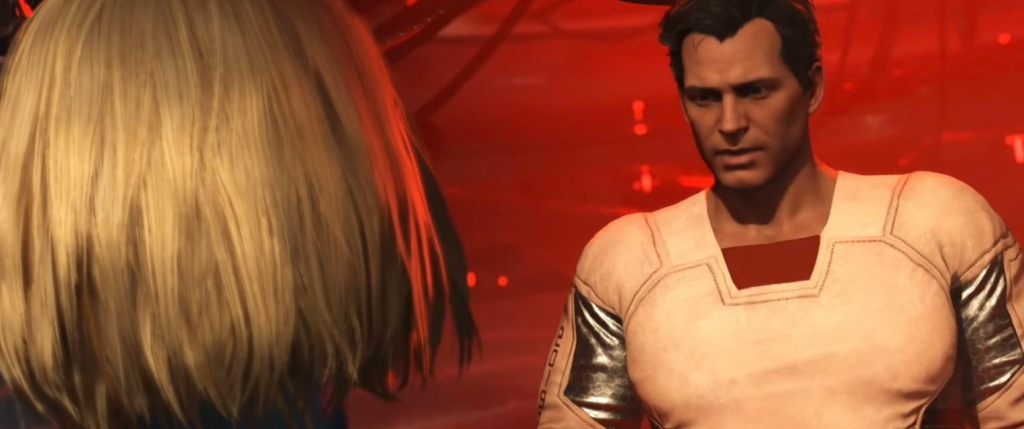
Injustice 2 takes place after Superman’s (George Newbern) tyrannical Regime has fallen and he’s been imprisoned for his crimes. Batman (Kevin Conroy) now leads the effort to rebuild a more just world, one not ruled by fear or authoritarian control. However, this fragile peace is threatened by the arrival of Brainiac (Jeffrey Combs), a powerful alien AI who views Earth as another collectible specimen. His invasion forces former enemies to become uneasy allies, including Batman, Supergirl (Laura Bailey), and former Regime members: Aquaman (Phil LaMarr), Cyborg (Khary Payton), Flash (Taliesin Jaffe), Green Lantern (Steve Blum), Robin (Scott Porter), and Wonder Woman (Susan Eisenberg) amongst variants of Black Canary (Vanessa Marshall) and Green Arrow (Alan Tudyk). While Gorilla Grodd (Charles Halford) creates The Society, a cohort of supervillains who desire post-Regime world domination—Bane (Fred Tatasciore), Captain Cold (C. Thomas Howell), Catwoman (Grey Griffin) Cheetah (Erica Luttrell), Deadshot (Matthew Mercer), Poison Ivy (Tasia Valenza), Reverse Flash (Liam O’Brien), and the Scarecrow (Robert Englund)—whom aid Brainiac, shared enmity inclines several to become comrades: Atrocitus (Ike Amadi), Black Adam (Joey Naber), Blue Beetle (Antony Del Rio), Dr. Fate (David Sobolov), Firestorm (Ogie Banks), Harley Quinn (Tara Strong), and Swamp Thing (also Fred Tatasciore).
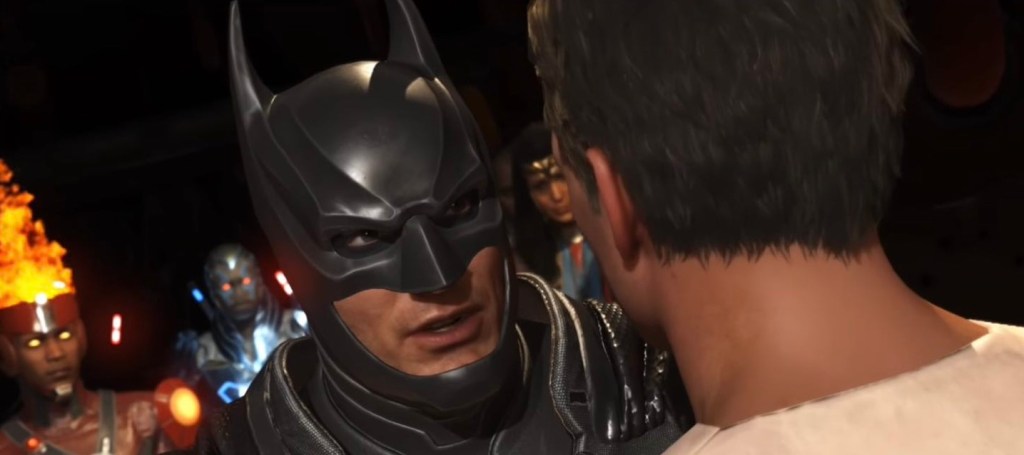
As Brainiac’s threat worsens, the central moral conflict resurfaces: whether Earth can be saved through restraint and cooperation or through absolute control. The climax pits Batman and Superman against each other once again—this time over whether to kill Brainiac and seize control of his technology. The game ends with two possible outcomes: either Batman defeats Superman and banishes him to the Phantom Zone before establishing a new Justice League; or Superman kills Brainiac and takes over his ship, becoming an unstoppable force of surveillance and dominance. In both endings, the core theme remains: can peace exist without control, or does safety require tyranny?

The question isn’t just about who is right or wrong, but about what grief does to people who were never heard in time. Whether it’s Eobard rewriting history to prove he matters or Superman crossing lines to reclaim what he lost, the common thread is longing: to undo loss, to prevent it, to matter enough that the world bends rather than breaks. And in that longing, I ask myself all the time: is it selfish to want happiness? To hold on to someone I love so fiercely that I would risk anything not to lose them? Injustice, Flashpoint, tensions between Batman and Superman aren’t just epics of power and consequence; they’re elegies for those of us who couldn’t protect what we loved, and how we carry that failure like a scar across time.

Which brings me to [consider] joy. Even when I find it, I can’t help but fear it and brace for the cost; and that fear [that joy must come at a cost] humanizes those whose narratives confront the same impossible bargains, mapping emotional truths onto cosmic scales where the stakes reflect the quiet devastations of real life. Pain can’t be overpowered, only lived with. We can’t control time, and we can’t undo pain by trying to reverse it. Though fantastical, these stories—of heroes, villains, powers, myths—concern raw truths of life such as grief, longing, injustice, and the [aching] need to be seen; truths that reality admits hardly, if ever. I relate to every character in Injustice: standing in the wreckage of what I couldn’t protect, heart split open, aching to turn back time and save the ones I can’t bear to live without. And every time I try to hold the world together with sheer will, I learn again that grief isn’t something I can undo. It’s the weight I carry, etched into every act of love. And love—however doomed—makes that burden heavier.
And worth carrying.
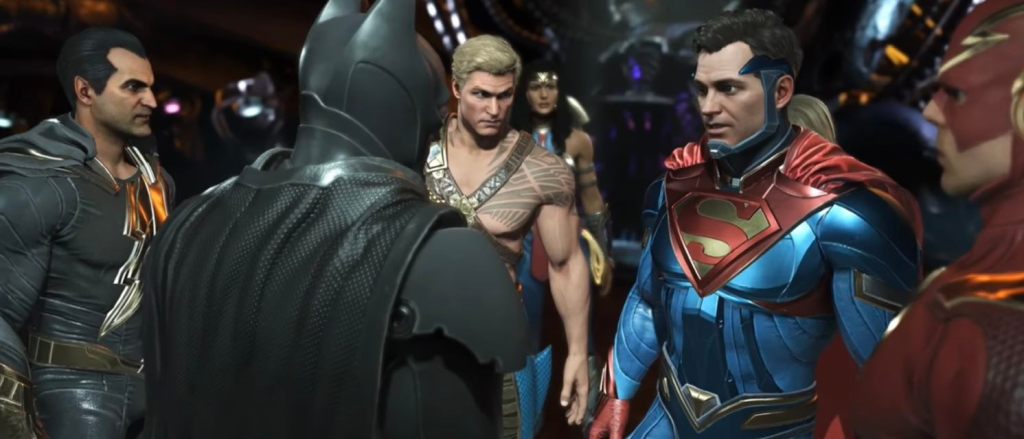
Trauma studies remind us that suffering does not ennoble on its own; it scars, fragments, and repeats. When unhealed, grief can harden into cruelty or self-destruction—exactly as Injustice Superman shows us. My own life, too, speaks to this: the ache of unheeded warnings, of carrying loss in advance, is isolating. It teaches me not that pain is necessary for joy, but that unattended pain corrodes our capacity to live fully. The reason I can be so readily overlooked, overworked, and discarded in academia—without hesitation for the inequity or indignity of it—is because of the depth and breadth of exploitation that has been permitted to flourish under the guise of “oversight.” There is no version of the institution where those with privilege and power would ever be treated with such casual expendability. Evil isn’t a matter of brilliance. Evil is successful because it doesn’t abide by the laws of ethics or morality. So long as inequity is allowed to masquerade as meritocracy—where my labour can be consumed without recognition, my scholarship undervalued, my survival tethered to the whims of gatekeepers—this cycle of disposability will persist; and the complacency of liberals within is indicative of the deep moral vacuum and loss of a moral compass which defines most gainfully employed academics.
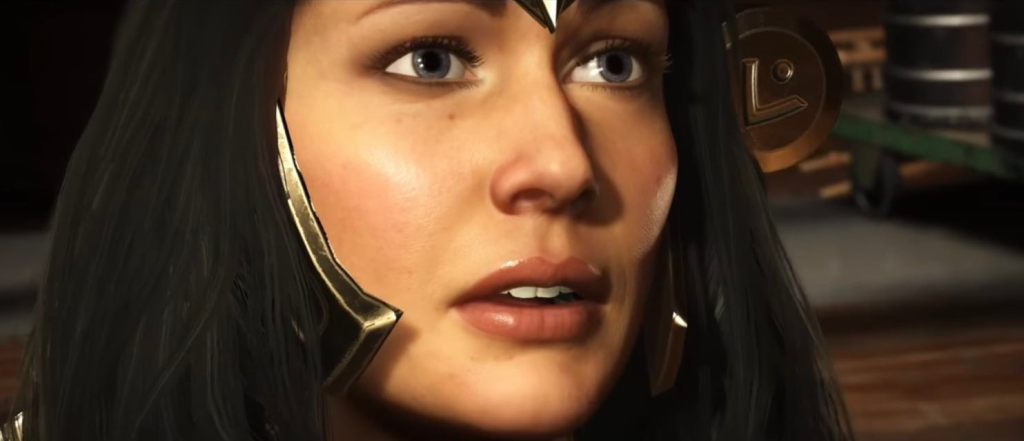
To me, the core moral lesson of Injustice 2—and the broader Injustice narrative—is that power without hope becomes tyranny, and pain without healing becomes cruelty; how suffering can be transfigured into control, vengeance, and domination. Abolitionist ethics, as Ruth Wilson Gilmore and others insist, refuse the claim that cruelty is necessary to preserve safety. They imagine justice not through domination but through care, interdependence, and the refusal to replicate harm. In this sense, Batman’s refusal to let despair dictate his ethics resonates with abolitionist thought: even in a world that insists on punishment, one can resist by choosing restraint and hope. While overcoming Brainiac drives a good portion of the narrative, Superman continues to serve as an antagonist. I appreciate his unbearable grief, but that still doesn’t merit the ways in which he anchors himself in conquest and retribution. He stops believing in others, distrusting that restraint or mercy have value—which likens him to the villainy he purports to oppose. Superman crosses the line from survival into control, from mourning into moral decay. In contrast, Batman—despite his own trauma—chooses discipline, restraint, and faith in the possibility of change. He’s not a naïve optimist, but someone who understands that justice without hope is hollow, and hope without justice is fragile.
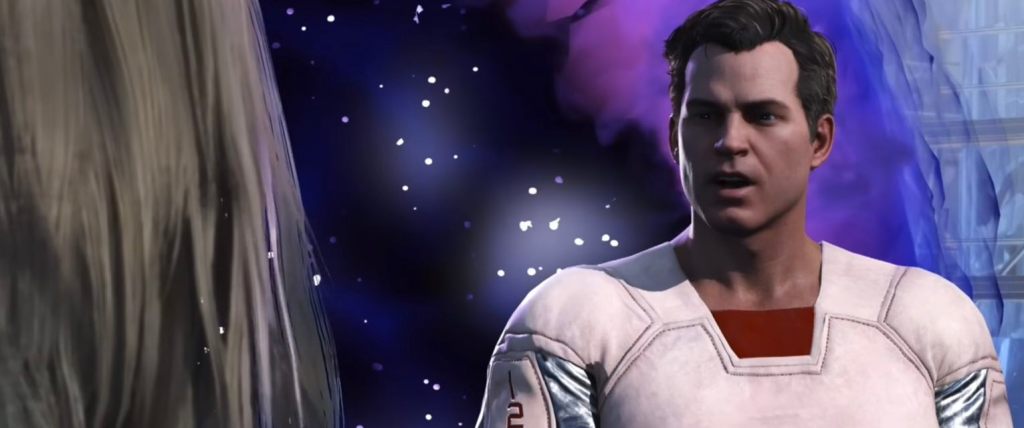
The Injustice story insists that the greatest strength is not found in overwhelming force, but in refusing to let despair dictate your ethics. In a world that constantly rewards cruelty, moral clarity becomes as much resistance as grace. And for those of us living in a world where cruelty often wins, this contrast reminds us that the fight for goodness may be lonely, costly, and slow; but it is still the only fight worth having.
♫ Title song reference – “Miss My Woe” by Gucci Mane
 Fallen Kittie